Győr's Logistics Market Is Shifting from Engines to Batteries. The Talent Pipeline Has Not Followed.

Győr's logistics sector handled over 1.2 million tonnes of automotive freight through its railway terminal alone in 2024. The M1 corridor between Budapest and Vienna has concentrated more automotive inbound logistics per square kilometre than any comparable stretch in Central Europe, with Audi Hungaria generating an estimated €450 to €500 million in annual logistics services demand. For two decades, this cluster operated on a simple premise: engines in, vehicles out, and a labour force trained to move dense, heavy components through just-in-time sequencing lines.
That premise is now breaking apart. Audi confirmed a 30% reduction in internal combustion engine production by 2026, while simultaneously scaling electric vehicle assembly. The logistics infrastructure built around engine blocks, turbocharger housings, and powertrain components is not suited to lithium-ion battery handling, temperature-controlled storage, or the UN 38.3 certification protocols that EV supply chains demand. The workforce trained on one system is not interchangeable with the workforce needed for the other. Yet the transition is already underway.
What follows is an analysis of the forces reshaping Győr's logistics market, the talent dynamics those forces have created, and what organisations hiring supply chain and logistics leadership in this region need to understand before they commit to a search that most conventional methods will fail to complete.
The Monoculture That Made Győr, and Now Constrains It
Győr's identity as a logistics hub is inseparable from Audi Hungaria. The company directly employs over 12,000 people and indirectly supports approximately 25,000 logistics and supplier jobs within a 50-kilometre radius. DHL Supply Chain operates an 85,000-square-metre contract logistics campus in the Győr Industrial Park, employing roughly 1,200 people, almost entirely in service of Audi's inbound and outbound flows. Gebrüder Weiss maintains 32,000 square metres in Győr-Szabadhegy, serving tier-1 suppliers Continental and Bosch. Kuehne+Nagel runs inbound sequencing centres for powertrain components.
The cluster's 140 SME logistics providers, aggregated through the Győr-Moson-Sopron County Logistics and Supply Chain Cluster, tell the same story. Sixty percent of them derive more than 70% of their revenue from Audi-linked contracts. This is not a diversified logistics hub in the way that Rotterdam, Bratislava, or even Budapest functions. It is an automotive supply chain monoculture. Every warehouse bay, every forklift shift, and every logistics management role in this region has been shaped by what Audi needs.
That dependency has been lucrative for two decades. It is now the source of the market's greatest vulnerability. When the anchor client's product architecture changes, every logistics provider, every staffing model, and every warehouse specification changes with it. The question for hiring leaders is not whether this transition is happening. It is whether the professionals capable of managing it exist in sufficient numbers.
The answer, as of 2026, is that they do not.
The EV Transition Is Not Replacing One Supply Chain with Another. It Is Creating a Different Kind of Operation.
The instinct is to view Audi's shift from ICE to EV production as a substitution. Fewer engines, more batteries. Same logistics, different cargo. This reading is wrong, and it is the source of a hiring miscalculation that has already cost several 3PLs in the region months of unfilled leadership positions.
Why Battery Logistics Demands More Labour Per Unit of Revenue
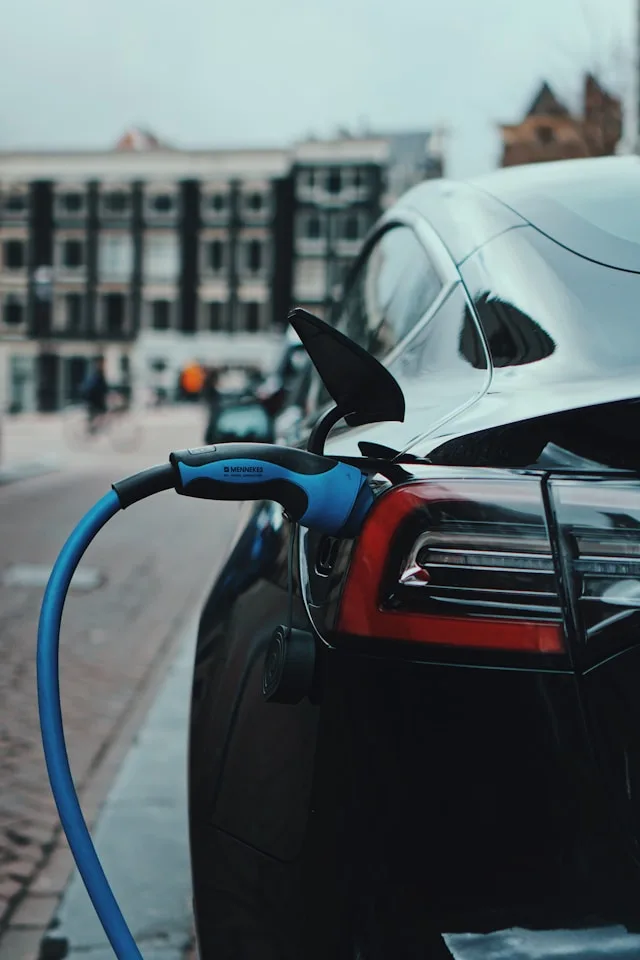
Engine blocks are dense, heavy, and mechanically inert. They require robust racking and heavy-load handling equipment, but the storage environment is straightforward. Lithium-ion battery modules, by contrast, require temperature-controlled facilities, fire suppression systems rated for thermal runaway events, UN 38.3 certified handling protocols, and high-security storage to prevent damage or theft of components that carry substantial per-unit value.
The retrofit investment alone is material. Third-party logistics providers operating in the Győr ecosystem face an estimated €40 to €60 million in facility upgrades through 2026, according to Audi Hungaria's board statement on e-mobility strategy from September 2024. But the capital cost is only half the problem. Battery logistics commands more labour input per unit of OEM revenue than traditional engine supply chains. Each battery module requires more handling steps, more documentation, more quality checkpoints, and more specialised supervision than the engine components it replaces.
The Divergent Hiring Signal
This explains a pattern that would otherwise appear contradictory. Audi has publicly confirmed a 30% reduction in engine production volumes by 2026. Logic would suggest reduced logistics demand. Instead, DHL Supply Chain and Gebrüder Weiss accelerated hiring for battery logistics specialists and temperature-controlled warehouse operators through the final quarter of 2024, with job postings up 22% year-on-year despite the ICE decline.
The ICE phase-out is reducing one category of logistics work while creating another that is more labour-intensive per unit. The net effect is not a contraction in headcount demand. It is a skills mismatch at the management tier, where professionals who spent their careers optimising heavy-load sequencing are being asked to oversee hazardous materials protocols they were never trained for. Hiring leaders who read the engine production decline as a sign of loosening talent supply are misreading the market entirely.
Where the Talent Gaps Are Most Acute
Hungary's logistics sector carries a national deficit of 48,000 to 55,000 workers, according to the Hungarian Logistics Association's 2024 labour market report. In Győr, however, the shortage is concentrated not at the warehouse floor but at the middle-management and technical specialist tier, the layer that determines whether a facility operates safely, efficiently, and in compliance with automotive quality standards.
Plant Logistics Managers with German Language Proficiency
As of the final quarter of 2024, more than 40 Plant Logistics Manager positions were open in Győr county. The typical time-to-fill for roles requiring German language proficiency at B2 or above and SAP EWM expertise exceeds seven to nine months. One tier-1 German automotive supplier operating in the Győr Industrial Park reported to the County Chamber of Commerce that a Plant Logistics Manager role overseeing Audi JIT deliveries remained vacant from January to October 2024. The position was eventually filled by recruiting a Hungarian national from Bratislava at a 35% compensation premium above standard Győr market rates.
That premium is a market signal. When employers must pay 35% above local benchmarks and source from across national borders to fill a single mid-management role, the pipeline has broken.
VDA 6.3 Certified Operations Managers
Fewer than 200 professionals in Hungary's western Transdanubian region hold VDA 6.3 certification, the German automotive quality standard required by every 3PL serving Audi. DHL Supply Chain restructured its regional management in 2024, relocating a Senior Operations Manager from its Budapest pharmaceutical logistics hub to Győr. The transfer required a housing allowance and a €15,000 relocation bonus. The fact that a global logistics provider with mature internal talent mobility programmes had to pull a manager from a different business unit in a different city to fill a Győr role illustrates the depth of the local scarcity.
ADR-Licensed Forklift Operators
Despite 1,200 registered unemployed in Győr county, forklift operators holding Dangerous Goods (ADR) licences maintain zero unemployment. Eighty-five percent of hires in this category are direct poaches from competitors, according to the National Employment Service. This is not a recruitment problem. It is a closed market. Every hire is someone else's loss.
The scarcity at these three levels creates a compounding effect. A plant cannot run without certified floor operators. A facility cannot pass Audi's quality audits without VDA 6.3 certified management. A regional logistics network cannot function without bilingual plant managers who can coordinate with German OEM headquarters. Fail to fill at any tier and the entire chain stalls.
Compensation Patterns and the Geographic Squeeze
Győr occupies an uncomfortable position in Central Europe's logistics compensation hierarchy. It pays less than Bratislava, considerably less than Vienna, and 10 to 15% below Budapest for equivalent roles. At the same time, it pays 20 to 25% more than eastern Hungarian cities such as Debrecen and Miskolc. This means Győr is too expensive to attract talent from the east with moderate offers, and too cheap to retain talent against competition from the west and the capital.
At the executive level, the numbers clarify the problem. A Country Logistics Director or Regional Supply Chain VP in Győr earns HUF 2.8 to 4.2 million gross monthly, equivalent to roughly €7,100 to €10,650. The same role in Bratislava pays €8,000 to €12,000. In Vienna, equivalent positions command €15,000 to €25,000. The Bratislava differential is 25 to 35%. The Vienna differential is 3.5 to 4 times Győr levels.
Approximately 300 Hungarian logistics professionals commute or relocate to Bratislava annually, drawn by Eurozone salaries and career progression in larger EU corporate structures. The flow is one-directional. Győr is losing experienced professionals to Bratislava at the exact seniority level where the EV transition demands the most experienced leadership.
This geographic compensation squeeze is the reason that executive salary negotiation in this market rarely follows standard benchmarking logic. A candidate who can command Bratislava rates will not move to Győr for Győr rates. The offer must account for what the candidate is giving up, not what the local market historically pays.
Infrastructure Constraints Are Amplifying the Talent Problem
The physical infrastructure of Győr's logistics cluster compounds every hiring challenge. Rail capacity on the Budapest to Hegyeshalom line runs at 94% utilisation during peak automotive production cycles. The single-track section west of Győr limits freight paths to 12 trains per day, well below the 20-plus daily block trains Audi's projected EV battery transport will require by 2027, according to Rail Cargo Hungary's 2025 network statement.
The M1 motorway's Győr section operates at 142% of designed capacity during peak hours. Truck delays of six to eight hours at the Győr bypass interchange are routine, compromising JIT delivery windows for 8 to 12% of supplier shipments. The Hungarian government's V0 Railway Ring project, intended to bypass Budapest for east-west freight, remains stalled at the planning phase with no construction expected before 2028.
Road dependency forces logistics providers to employ more drivers, schedule more shifts, and absorb more transport cost volatility than a rail-served cluster would require. It also means that the logistics leadership roles in this market carry a higher operational complexity premium than equivalent roles in better-connected hubs. Managers here are not simply overseeing warehouse operations. They are managing chronic infrastructure failure.
The land constraint adds a further dimension. Vacant development land suitable for modern logistics within 15 kilometres of Győr's city centre is effectively exhausted. Prices reached €85 to €110 per square metre in 2024, a 340% increase from 2019 levels. Only 45,000 square metres of new logistics space is under construction, against projected demand of 80,000 square metres. This supply deficit means facilities are pushing outward to Lébény (22 kilometres from Audi's plant) and Mosonmagyaróvár (35 kilometres), stretching commute distances and further reducing the attractiveness of roles already competing against Bratislava and Budapest for talent.
A logistics manager's willingness to accept a role depends partly on the role itself and partly on the lived reality of working in the location. In Győr, that reality includes congested roads, constrained rail, and a facility that may be 40 kilometres from the nearest city centre. These are not abstract conditions. They are concrete factors that passive candidates weigh when deciding whether to engage with an approach.
Why This Market Is a Closed System for Senior Talent
The research is unambiguous on one point. For roles above HUF 3 million per month, 80% of qualified candidates are employed, not actively searching, and not visible on any job board. Supply Chain Directors and VP Operations candidates in this market receive three to five unsolicited recruiter approaches per month. SAP EWM and TM consultants average 4.2 years in their current role. These professionals are not browsing Profession.hu. They are not attending career fairs. They are embedded in roles where they solve problems that most other employers in the region cannot yet define.
At the other end of the seniority spectrum, the picture is different but equally challenging. Warehouse supervisors and team leaders turn over at 18 to 24% annually. Entry-level logistics coordinators graduating from Széchenyi István University's programme (80 to 100 graduates per year) provide a thin but real pipeline, though 40% of them leave Győr for Budapest within 24 months.
The result is a bifurcated talent market. At the operational tier, high volume and low retention. At the leadership tier, a closed pool where proactive direct search is the only viable method. The organisations that treat both tiers as the same recruitment challenge will fail at both.
Here is the original synthesis this analysis demands: Győr's capital investment in EV logistics infrastructure has moved faster than its human capital could follow. The €40 to €60 million being spent to retrofit warehouses for battery handling will create facilities that cannot be staffed at management level by the local talent market. The money is flowing. The people are not. This is not a problem that more job postings can solve. It is a structural misalignment between the speed of industrial transformation and the speed at which a specialist workforce can be built, retrained, or relocated.
What This Means for Organisations Hiring in the Győr Logistics Market
The 30 to 40% volume volatility created by automotive production shutdowns in July, August, December, and January further complicates hiring. 3PLs such as DHL Supply Chain and Gebrüder Weiss deploy temporary labour pools or cross-dock inventory to Bratislava during these periods. This seasonality means that building a stable talent pipeline requires planning around predictable demand troughs as well as peaks.
Regulatory pressure is also rising. The EU Corporate Sustainability Reporting Directive, applicable to Audi and large 3PLs from 2025, requires Scope 3 logistics emissions reporting. This exposes the carbon inefficiency of Győr's road-dependent operations and creates new demand for sustainability reporting expertise at the management level. Hungary's 2025 labour code amendments, increasing overtime caps to 400 hours annually and raising the minimum wage to HUF 290,800 gross per month, increase logistics labour costs by 8 to 10%.
The practical implications for hiring are clear. First, conventional search methods will not reach the candidates these roles require. Eighty percent of senior logistics talent in this market is passive. Job advertising on Hungarian portals reaches at most 20% of the viable candidate pool. The remaining 80% must be identified through systematic talent mapping and direct approach.
Second, the search must account for the geographic competition. Any credible shortlist for a senior logistics role in Győr must include candidates who are currently considering Bratislava and Budapest offers. Understanding what those competing offers look like, in real time, is the difference between an offer that lands and one that is declined.
Third, speed matters disproportionately in a closed market. When the same search that takes nine months through conventional channels could be completed in weeks through direct headhunting, the cost of choosing the wrong method is measured not just in vacancy duration but in lost production continuity and quality audit risk.
For organisations competing for logistics and supply chain leadership in Győr's EV-transitioning automotive cluster, where the candidates who can manage battery logistics, pass VDA 6.3 audits, and communicate in German at B2 level are not visible on any job board, speak with our executive search team about how KiTalent approaches this market. With interview-ready candidates delivered within 7 to 10 days through AI-enhanced direct headhunting, a pay-per-interview model that eliminates upfront retainer risk, and a 96% one-year retention rate across 1,450-plus executive placements, KiTalent is built for exactly this kind of closed, specialist talent market.
Frequently Asked Questions
What types of logistics roles are hardest to fill in Győr?
Plant Logistics Managers requiring German language proficiency and SAP EWM expertise are the most difficult, with time-to-fill exceeding seven to nine months. Warehouse Operations Managers holding VDA 6.3 certification are similarly scarce, with fewer than 200 certified professionals in the western Transdanubian region. ADR-licensed forklift operators maintain zero unemployment locally. The EV transition has added battery logistics specialists and temperature-controlled warehouse managers to the critical shortage list, creating a new category of role that barely existed in the region before 2024.
How does Győr logistics compensation compare to Bratislava and Budapest?
Győr-based logistics roles typically pay 10 to 15% below Budapest equivalents and 25 to 35% below Bratislava for senior positions. A Country Logistics Director in Győr earns approximately €7,100 to €10,650 monthly, compared to €8,000 to €12,000 in Bratislava. Vienna roles command 3.5 to 4 times Győr levels. This geographic pay gap drives a net negative talent flow, with roughly 300 Hungarian logistics professionals relocating or commuting to Bratislava annually. Organisations hiring in Győr must benchmark against cross-border competitors, not just the local market.
Why is Győr's logistics talent market considered a closed system?
For roles paying above HUF 3 million per month, 80% of qualified candidates are employed and not actively searching. Senior supply chain directors receive three to five recruiter approaches monthly. This means job postings reach at most 20% of viable candidates. KiTalent's direct headhunting methodology is designed for exactly this profile: identifying, approaching, and securing passive executives who would never appear in an applicant pool through conventional advertising.
How is the EV transition affecting logistics hiring in Győr?
Audi's 30% reduction in ICE engine production by 2026 has not reduced logistics headcount demand. Battery logistics requires more labour input per unit of revenue due to temperature-controlled handling, UN 38.3 certification protocols, and higher security requirements. DHL and Gebrüder Weiss increased battery logistics job postings by 22% year-on-year through late 2024 despite the ICE decline. The net effect is a skills mismatch rather than a surplus, with management trained on heavy-load engine logistics unable to transfer directly to hazardous materials battery operations.
What infrastructure constraints affect logistics operations in Győr?
The M1 motorway operates at 142% of designed capacity during peak hours, causing six to eight hour truck delays. Rail capacity on the Budapest to Hegyeshalom line runs at 94% utilisation, with single-track sections limiting freight to 12 trains daily. Available logistics development land within 15 kilometres of the city centre is exhausted, with prices up 340% since 2019. New development is pushing to locations 22 to 35 kilometres from Audi's plant, stretching commute distances and reducing the appeal of roles to candidates weighing offers in better-connected markets.
How can executive search firms help with logistics hiring in Győr?
In a market where 80% of senior candidates are passive, conventional recruitment methods consistently fail. Executive search firms with direct headhunting capability can identify and approach candidates across Győr, Bratislava, Budapest, and Vienna, mapping the full competitive talent pool rather than relying on applications from a fraction of it. KiTalent's pay-per-interview model means organisations only invest when they meet qualified, interview-ready candidates, reducing the financial risk of a prolonged search in a market where time-to-fill regularly exceeds seven months.