Győr's EV Pivot Is Creating Talent Demand the City Cannot Fill From Within
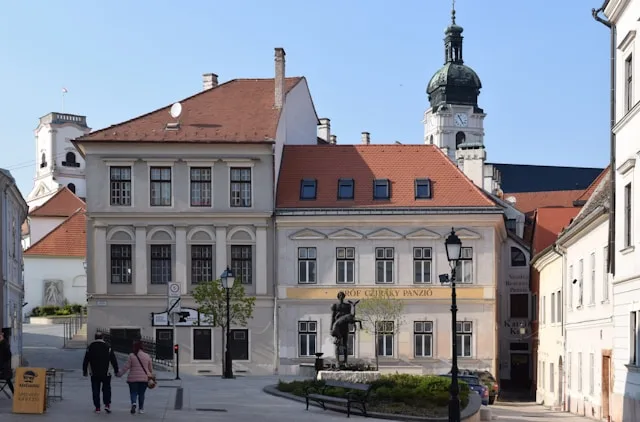
Győr has spent three decades building one of Central Europe's most concentrated automotive manufacturing ecosystems. A single plant, Audi Hungaria, employs 12,000 people in a city of 129,000. Forty-two suppliers cluster around it. The local university sends 60% of its engineering graduates straight into the OEM's R&D centre. By any measure, this is a talent pipeline that works.
It worked, at least, when the product was internal combustion engines.
The transition now underway is different in kind from anything this market has absorbed before. Győr is not adding capacity in a discipline it already masters. It is building an entirely new capability set: battery management systems, 800-volt power electronics, embedded software for software-defined vehicles. The investment is committed. Audi has deployed over €600 million since 2022 into electric motor production and battery assembly. But the engineers these facilities require do not exist in sufficient numbers anywhere in Hungary, let alone in a mid-sized city 120 kilometres from the nearest major tech talent pool. What follows is an analysis of how Győr's automotive sector reached this inflection point, where the deepest talent gaps sit, and what organisations hiring in this market need to understand before they begin a search that conventional methods are unlikely to close.
The Ecosystem That Built Győr's Automotive Dominance
Győr's automotive economy is not simply large. It is structurally integrated in a way that few European manufacturing cities can match. Audi Hungaria alone manufactured 1.95 million engines and approximately 135,000 vehicles in 2023, including the Audi TT, Q3, and A3 Sedan lines. The Audi Hungaria Supplier Park physically co-locates 42 Tier-1 and Tier-2 suppliers, including Brose, Mann+Hummel, and Mahle, employing an estimated 8,000 to 10,000 additional workers. Total automotive sector employment in Győr-Moson-Sopron county stands at approximately 35,000, with Audi representing 34% of that total.
This concentration created a self-reinforcing talent cycle. Széchenyi István University, the primary engineering pipeline, enrols 5,200 students in mechanical, electrical, and vehicle engineering programmes. The Audi Hungaria Academy runs dual-training partnerships with 12 technical schools, graduating 400 to 500 apprentices annually. The regional unemployment rate sits at 3.2%, well below Hungary's national average of 4.3%.
For decades, the model worked because the skills Győr produced were the skills Győr consumed. Mechanical engineers, toolmakers, powertrain specialists. The university taught them. Audi hired them. Suppliers absorbed the rest. The question now confronting every employer in this ecosystem is whether the same pipeline can produce a fundamentally different kind of engineer at the pace the EV transition demands.
It cannot. And the data through 2025 makes this clear.
The Investment Has Arrived. The Workforce Has Not
Audi Hungaria initiated series production of high-voltage electric motors for the Premium Platform Electric architecture in July 2023. The plant now assembles electric motors for the Audi Q6 e-tron and Porsche Macan EV. A €320 million facility expansion for battery assembly operations reached completion in late 2025. The next-generation Audi Q3, confirmed as a fully electric variant, will be manufactured at Győr.
These are not incremental additions. They represent a categorical shift in what the plant produces and the skills required to produce it.
The Numbers Behind the Gap
The Hungarian Public Employment Service reported 4,200 unfilled manufacturing positions in the region as of Q4 2024, with 1,800 classified as engineering and technical specialist roles. Average time-to-fill for engineering vacancies reached 98 days, compared to 45 days for administrative positions. EV-specific roles tell an even sharper story: 340 open positions for battery management system engineers and high-voltage safety specialists represented a 220% increase from Q4 2022, according to Randstad Hungary's automotive talent analysis.
The Western Transdanubia Regional Development Agency projects a systemic deficit of 2,500 electrical engineers and mechatronics specialists by Q4 2026. This projection accounts for EV investments not only at Audi but across the broader supplier base, including Novares, Bosch, and CATL supply operations.
Where the Skills Valley of Death Sits
The transition from ICE to EV powertrains has created what the Hungarian National Chamber of Commerce describes as a "skills valley of death." Current mechanical engineering graduates require 18 to 24 months of retraining for EV-specific roles. Demand is immediate. The MKIK estimates that 40% of current automotive production technicians in Győr require material upskilling by 2027 to remain employable in EV assembly.
The four skill categories in most acute scarcity are embedded software architecture (C++, AUTOSAR, ISO 26262 functional safety), battery cell engineering (electrochemistry, thermal management, BMS firmware), advanced automation (Siemens TIA Portal, Beckhoff PLC, robotics integration), and power electronics (inverter design, DC/DC converter development for 800V systems). None of these are skills the existing vocational training system was designed to produce at scale. The investment in new facilities moved faster than the human capital system could follow.
The Paradox at the Centre of Győr's Talent Pipeline
This is the original analytical claim at the heart of this article, and it is the point most hiring leaders in this market have not yet fully absorbed.
Audi Hungaria's Academy and Széchenyi István University have increased annual graduation rates for automotive technicians by 35% since 2020. Record numbers of qualified apprentices are entering the workforce. By every input metric, the training pipeline is performing. Yet vacancy rates for mid-level technicians in the region have simultaneously climbed from 8% to 14% over the same period.
Training supply is not the binding constraint. Retention is.
According to the German-Hungarian Chamber of Industry and Commerce Labour Market Survey 2024, 68% of surveyed German automotive firms active in Hungary reported recruiting from Audi's Győr engineering staff between 2022 and 2024. The premiums offered are substantial: 35% to 50% above local compensation for battery management system engineers and simulation specialists willing to relocate to Ingolstadt, Stuttgart, or Munich.
Győr is functioning as a training ground for German engineering centres. The city invests in developing engineers. Austrian and German employers harvest them. The local ecosystem bears the cost of development while the value migrates westward. Increasing training volume without addressing this retention dynamic simply accelerates the cycle: more graduates enter, more graduates are recruited away, and the net effect on Győr's available talent pool remains flat or negative.
This is not a hiring problem. It is an economic structure problem. And it shapes every executive search conducted in this market.
Four Borders, Four Competitors: The Geography of Talent Leakage
Győr's geographic position, which was once its greatest advantage for logistics and supply chain integration, has become a talent retention liability. The city sits within commuting or easy relocation distance of four distinct competitor markets, each offering something Győr cannot match.
Vienna: The Premium Pull
Ninety minutes by car, Vienna's automotive R&D centres, including Magna Steyr and AVL List, offer €70,000 to €95,000 annually for senior engineer roles. That represents a 40% to 60% premium over equivalent Győr compensation. Vienna also provides English-language working environments and international schooling, making it particularly attractive to dual-career households. For a senior battery simulation engineer in Győr earning €6,000 monthly, a Vienna offer at €8,500 with superior quality of life is nearly impossible to counter without matching the economics.
Bratislava: The Commuter Alternative
At just 60 minutes away, Volkswagen's Bratislava plant and emerging Kia EV operations compete directly for Hungarian talent. Euro-denominated salaries averaging €3,500 to €5,000 for mid-level engineers, combined with lower effective tax burdens, create an attractive package. The proximity enables cross-border commuting: engineers can live in lower-cost Hungarian towns like Mosonmagyaróvár or Sopron while earning Slovak wages.
[Budapest](/budapest-hungary-executive-search): The Software Magnet
Hungary's capital is 120 kilometres southeast, but it competes most directly for the skill category Győr needs most urgently. Budapest's automotive technology employers, including NXP, Bosch Engineering Center, and Continental Autonomous Mobility, offer 15% to 20% salary premiums for embedded software roles. More critically, Budapest offers hybrid and remote work flexibility that Győr's manufacturing-heavy environment cannot replicate. This is why, according to the Hungarian Association of Management and Business Consulting, 40% of automotive suppliers in Győr have now opened satellite offices in Budapest's Infopark district specifically for software-defined vehicle development teams.
Germany: The Headquarters Drain
For senior R&D and executive roles, German headquarters operations remain the primary destination for Győr's most experienced engineers. Relocation packages typically include 30% to 50% base salary premiums plus relocation support, targeting battery simulation engineers and ADAS specialists specifically. Audi Hungaria reported that 18% of departures from its R&D centre in 2023 were emigrations to EU14 countries, according to Works Council data reported in Világgazdaság.
Each of these competitor markets addresses a different segment of Győr's talent pool. Together, they create a retention environment where any engineer with transferable EV or software skills has permanent optionality. The candidates Győr's employers most need to keep are exactly the candidates these four markets most want to attract.
Compensation in Győr's Automotive Sector: What Roles Actually Pay
Understanding compensation dynamics in this market is essential for any organisation planning to hire here. The figures below, converted at the Q1 2025 rate of 390 HUF per euro, reveal the premium that EV and digital roles now command over traditional manufacturing leadership.
EV powertrain and battery engineering roles at the senior specialist level (8 to 12 years of experience) command HUF 1.8 to 2.4 million gross monthly, equivalent to €4,600 to €6,150. This carries a 25% premium over traditional mechanical engineering roles at the same seniority. At VP Engineering or R&D Director level, compensation reaches HUF 4.5 to 7.0 million monthly (€11,500 to €17,950), plus performance bonuses of 20% to 40%. Audi Hungaria supplements these packages with company vehicles and housing allowances to compete with Austrian market offers.
Manufacturing and plant operations leadership pays HUF 2.8 to 4.2 million monthly (€7,180 to €10,770) for plant managers at large facilities. Multi-site VP Operations roles reach HUF 4.0 to 6.5 million (€10,260 to €16,670), with long-term incentive plans common for multinational assignments.
The most revealing category is embedded software and digitalisation. Senior automotive software architects command HUF 2.2 to 3.2 million monthly (€5,640 to €8,205), reflecting direct competition with Budapest's broader technology sector. At CTO or Digital Transformation Director level, packages reach HUF 5.0 to 8.5 million (€12,820 to €21,795), with these roles typically recruited from international markets and accompanied by expatriate packages.
The compensation gap between Győr and its competitor markets is not closing. Audi Hungaria's salary premiums for senior software roles run 20% to 25% above the Győr average. But Budapest's tech sector offers 40% to 50% above that same baseline, and remote opportunities for Western European firms offer 60% to 80% premiums. The facility's strategic technological upgrade depends on talent categories for which its traditional compensation structure is least competitive. This suggests either a material salary inflation event ahead or a deeper strategic shift toward nearshoring software development to Budapest hubs.
Structural Constraints Beyond Talent: Energy, Logistics, and Demographics
The talent challenge in Győr does not exist in isolation. It compounds against three additional pressures that constrain the market's ability to grow and retain its workforce.
Energy Cost Disadvantage
Industrial electricity prices in Hungary averaged €95 per megawatt-hour in Q3 2024, compared to €65/MWh in Slovakia and €75/MWh in the Czech Republic. For energy-intensive battery cell manufacturing, this differential erodes Győr's cost competitiveness directly. It also limits the appetite for the kind of facility investment that creates new senior roles.
Supply Chain Fragility
Győr's just-in-time supply network remains exposed to Ukraine war disruptions. Alternative routes through Romania have been established, but logistics costs have increased by 15% to 20% on a permanent basis compared to pre-2022 baselines, according to MAJOSZ analysis. Semiconductor dependencies persist, with 45-day inventory buffers now standard, up from 7 days before the pandemic, increasing working capital requirements across the supplier base.
Demographic Decline
Hungary's working-age population is declining at 1.1% annually. Western Transdanubia experiences accelerated emigration of 25-to-35-year-old engineers to Austria and Germany. This is not a cyclical labour market tightness. It is a foundational demographic contraction that will intensify every talent shortage in this market for the foreseeable future.
For organisations hiring senior leadership in Győr, these constraints shape every search. A candidate evaluating a relocation to Győr is also evaluating the city's medium-term viability as an automotive centre. The proposition must address not just compensation but trajectory.
Why Conventional Search Methods Fail in This Market
The data on candidate behaviour in Győr's automotive sector explains why standard recruitment approaches consistently underperform. Senior embedded software architects in this market exhibit unemployment rates below 2% nationally. Average tenure at Audi Hungaria for engineers over 35 exceeds eight years. Annual turnover for this cohort runs below 4%.
These are not candidates who respond to job advertisements.
Industry data from Randstad Hungary indicates that 75% to 80% of successful placements in the senior embedded software category are made through direct headhunting or executive search rather than application-based recruitment. For high-voltage battery engineers, the ratio is even more pronounced: for every one applicant responding to a posted role, four qualified candidates must be proactively approached. Morgan Philips' E-Mobility Talent Market Assessment estimates the active-to-passive candidate ratio at 1:4 in this specialisation.
Traditional manufacturing roles, including mechanical fitters and toolmakers, remain active candidate markets with unemployment rates of 6% to 8% and strong responsiveness to job advertising. But these are the roles the EV transition is reducing. The roles the transition is creating are precisely the ones where passive candidate dynamics dominate most completely.
A senior automation engineering role at a Tier-1 supplier in the Győr industrial zone typically remains unfilled for 120 to 180 days, compared to the national engineering average of 60 days. Analysis of job posting data indicates that Continental Automotive Hungary's Győr facility maintained 45 active postings for manufacturing automation engineers continuously between March and December 2024. These are not roles that go unfilled because employers are not trying. They go unfilled because the candidates who could fill them are employed, satisfied, and invisible to any method that relies on inbound applications.
For organisations competing for automotive and industrial leadership talent in this environment, the method of search determines the outcome more than the compensation package or the employer brand. Reaching the 80% of qualified candidates who will never see a job posting requires a fundamentally different approach.
What Győr's Market Demands From Executive Search
The combination of factors in this market, acute skill-specific shortages, geographic talent leakage to four competitor markets, a passive candidate pool that standard methods cannot reach, and a compensation gap that traditional structures have not yet closed, creates a hiring environment where speed, precision, and candidate access define the difference between a successful placement and a search that stalls indefinitely.
KiTalent's approach to executive search across automotive and manufacturing markets addresses exactly these dynamics. AI-powered talent mapping identifies passive candidates across Győr, Budapest, Vienna, and Bratislava simultaneously, reaching professionals who are not on any job board and will not respond to any advertisement. The pay-per-interview model means organisations invest only when they meet qualified, interview-ready candidates. Delivered within 7 to 10 days, this is a search cycle that matches the urgency of a market where 120-day vacancy durations are the norm.
KiTalent's 96% one-year retention rate matters particularly in Győr, where the cost of a failed placement is not just the search fee but the six months of lost production capability while a second search runs its course. With over 1,450 executive placements completed and an NPS score of 72, the methodology is built for markets where the candidate you need is employed, content, and being actively courted by three or four competing employers at any given time.
For senior hiring leaders responsible for filling battery engineering, embedded software, or plant leadership roles in Győr's automotive sector, where every qualified candidate is passive and every competitor market is closer than it has ever been, start a conversation with our automotive executive search team about how we map and reach the talent this market requires.
Frequently Asked Questions
What is the average time-to-fill for engineering roles in Győr's automotive sector?
Engineering vacancies in Győr-Moson-Sopron county take an average of 98 days to fill, compared to 45 days for administrative roles. Senior automation and embedded software positions at Tier-1 suppliers often remain open for 120 to 180 days, more than double the national average for engineering positions. EV-specific roles such as battery management system engineers and high-voltage safety specialists face the longest vacancy durations, driven by a candidate pool that is overwhelmingly passive and actively courted by employers in Vienna, Bratislava, and Germany.
Why is Győr experiencing an automotive talent shortage despite strong training programmes?
Győr's training infrastructure, including the Audi Hungaria Academy and Széchenyi István University, has increased graduate output by 35% since 2020. However, vacancy rates have simultaneously risen from 8% to 14%. The issue is not supply volume. It is retention. According to the German-Hungarian Chamber of Industry and Commerce, 68% of German automotive firms active in Hungary recruited from Audi's Győr engineering staff between 2022 and 2024, offering 35% to 50% salary premiums. Training investment is effectively subsidising competitor markets rather than stabilising local supply.
What do senior automotive engineers earn in Győr compared to Vienna or Budapest?
A senior EV powertrain specialist in Győr earns approximately €4,600 to €6,150 monthly. The equivalent role in Vienna commands €5,800 to €7,900, a 40% to 60% premium. Budapest's tech sector offers 15% to 20% above Győr for embedded software roles, with the additional advantage of hybrid working arrangements. At CTO or R&D Director level, Győr packages reach €12,820 to €21,795, but these roles typically require international executive search and expatriate-level packages to attract candidates from outside Hungary.
What are the most in-demand automotive roles in Győr in 2026?
The four most critical skill categories are embedded software architecture (AUTOSAR, C++, ISO 26262 functional safety), battery cell engineering (electrochemistry, thermal management, BMS firmware), advanced manufacturing automation (PLC programming, robotics integration), and power electronics (800V inverter and DC/DC converter design). These roles reflect the EV transition underway at Audi Hungaria and across the regional supplier base, where a projected deficit of 2,500 electrical engineers and mechatronics specialists is expected by Q4 2026.
How does executive search differ from standard recruitment in Győr's automotive market?
In Győr's automotive sector, 75% to 80% of successful senior placements are made through direct headhunting rather than application-based recruitment. For high-voltage battery engineers, the active-to-passive candidate ratio is approximately 1:4. Standard job postings reach only the small fraction of qualified professionals who happen to be looking. KiTalent's AI-enhanced direct search methodology maps the full candidate market across Győr, Budapest, Vienna, and Bratislava, identifying and engaging the passive majority within 7 to 10 days, a critical advantage in a market where vacancy durations routinely exceed 120 days.
What structural risks affect Győr's automotive sector beyond talent shortages?
Three pressures compound the talent challenge. Hungary's industrial electricity prices average €95/MWh, versus €65/MWh in Slovakia, eroding competitiveness for energy-intensive battery manufacturing. Supply chain logistics costs have risen 15% to 20% permanently due to Ukraine war disruptions. And Hungary's working-age population is declining at 1.1% annually, with Western Transdanubia experiencing accelerated emigration of younger engineers to Austria and Germany. These factors shape not only current hiring difficulty but also candidate perceptions of the market's long-term trajectory.