Hasselt's Retail and Hospitality Market Is Splitting in Two: What It Means for Every Senior Hire in 2026

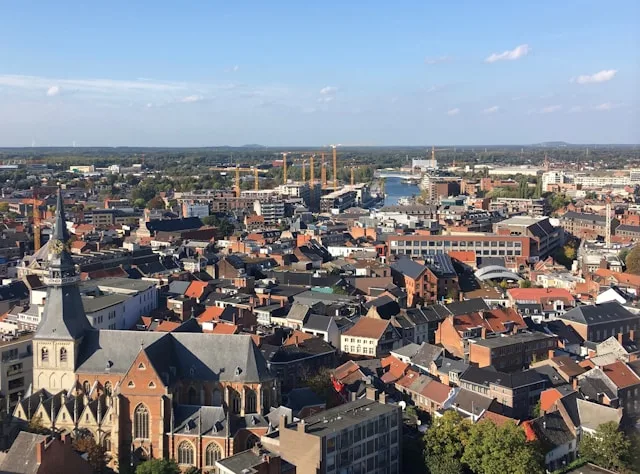
Hasselt's city centre tells two stories at once. Walk the Demerstraat and you will count vacant shopfronts at a rate above the Flemish average. Turn toward the Japanese Garden or the newly renovated National Jenever Museum and you will find visitor numbers climbing, hotel investment accelerating, and hospitality employers unable to fill the roles that keep their operations running. The 8.5% retail vacancy rate recorded in late 2024 and the 14% year-over-year growth in hospitality employment are not contradictory data points. They describe two halves of the same market moving in opposite directions.
This bifurcation is the central challenge for any senior leader hiring in Hasselt's retail, hospitality, or tourism sectors. The skills, compensation structures, and candidate profiles required for a shrinking mid-market retail operation are fundamentally different from those required for an expanding experience-led hospitality concept. Yet the two sectors share the same labour pool, the same geographic constraints, and the same regulatory framework. They compete for the same multilingual, digitally literate managers in a region where 80% or more of the best candidates are already employed and not looking.
What follows is a ground-level analysis of the forces reshaping Hasselt's commercial core, the talent dynamics that matter most for hiring leaders, and what organisations operating in this market need to understand before they commit to their next senior appointment. The data covers compensation benchmarks, vacancy patterns, competitive pressure from Maastricht and Brussels, and the structural constraints that make this market harder to hire in than its size suggests.
Hasselt's Economy in 2026: Retail Contraction Meets Hospitality Expansion
The numbers are unambiguous. Retail vacancy in Hasselt's inner city reached 8.5% by late 2024, according to CBRE Belgium's Retail Market Report, exceeding the Flemish average of 7.2%. Prime high-street rents fell 4% year-over-year. Mid-market fashion, the category that once anchored secondary Belgian city centres, is projected to lose a further 3% of its unit count through 2026.
The retail floor is not collapsing everywhere
The contraction is selective. Inno's department store on the Demerstraat remains the anchor tenant. H&M, Zara, C&A, and the Belgian childrenswear chain JBC maintain flagship locations. Independent boutiques still comprise roughly 60% of retail units in the historic "Quartier Latin" district, according to UNIZO Limburg's retail monitor. The growth categories are food service, health and beauty, and what the industry calls "retailtainment" concepts, projected to add 5% in unit count. The net effect is a market that is not dying but transforming: fewer stores selling things, more spaces offering experiences.
The hospitality side tells a different story
The Japanese Garden recorded 235,000 visitors in 2024, maintaining its position as Europe's largest Japanese garden and Hasselt's primary paid attraction. The National Jenever Museum, following its 2023-2024 renovation, attracted 42,000 visitors and projects 55,000 for 2025. YUST Hasselt, a mixed-use hospitality concept, opened in 2025 with 100 rooms and a projected 40 new full-time positions. Radisson Blu Hotel Hasselt employs approximately 85 FTEs across its 156-room property.
Employment data from VDAB confirms the divergence: hospitality FTEs in the Hasselt employment zone grew 14% year-over-year in 2024, reaching 3,450. Retail employment stood at 3,980 FTEs but showed no equivalent growth trajectory. Toerisme Limburg projects a further 4-5% growth in overnight stays across the province through 2026, driven by domestic staycation trends and cycling tourism infrastructure.
The Kanaalkom urban development is expected to deliver 12,000 square metres of mixed retail and leisure space by Q4 2026, absorbing an estimated 200-250 new hospitality and retail FTEs. For hiring leaders, this is not a distant planning milestone. It is an imminent surge in demand for experienced managers in a market that already cannot fill what it has.
The Cross-Border Shift That Changes Who You Are Hiring For
Hasselt's commercial identity was built in part on Dutch cross-border shopping. For decades, Belgian Sunday trading restrictions and favourable pricing drew Dutch day-trippers south across the border. That dynamic has not vanished, but it has changed in ways that directly affect talent requirements.
Dutch visitors still accounted for 35% of weekend footfall in Hasselt's city centre in 2024, according to Toerisme Limburg's cross-border monitor. But that figure was 48% in 2015. The decline reflects Dutch Sunday shopping liberalisation and price convergence across the border. The arbitrage incentive that once drove volume traffic has weakened considerably.
What replaced it is more interesting than what disappeared. Dutch overnight stays in Hasselt hotels increased 8% year-over-year in 2024. The Dutch visitor is no longer arriving at 10am, shopping, and leaving by 4pm. They are booking a hotel, dining, visiting the Jenever Museum, and spending across hospitality and experience categories rather than retail alone.
This shift has a direct hiring implication. A retail workforce built for high-volume transaction processing on Saturday afternoons needs different skills than a hospitality workforce built for multi-day guest experience management. The trilingual service capability (Dutch, French, English) required for 78% of customer-facing roles, according to VDAB competency analysis, remains non-negotiable. But the context in which those languages are used has shifted from checkout counter to concierge desk, restaurant floor, and cultural interpretation.
Hasselt's municipal tourism strategy through 2026 continues to prioritise Dutch day-tripper marketing campaigns. The data suggests the market has already moved past that model. Organisations hiring senior commercial or visitor experience leaders need candidates who understand the experiential tourism model, not the retail arbitrage model that is structurally declining.
Why 72 Days Is the Number That Should Concern Every Hiring Leader in Limburg
VDAB data for the Limburg region shows hospitality and retail consistently among the top three sectors for unfilled vacancies. In Q3 2024, horeca accounted for 19% of all unfilled vacancies in the region. The average time-to-fill was 72 days.
That figure alone understates the problem. Seventy-two days is the average across all hospitality roles, including entry-level positions. For the senior and executive roles that determine operational performance, the timeline stretches considerably further.
Culinary professionals: 89 days and rising
UNIZO Limburg reports that 71% of restaurants and hotels in the province face "severe difficulty" recruiting qualified cooks and kitchen chefs. Positions remain open an average of 89 days before being filled or withdrawn. That 89-day figure represents a 34% increase in time-to-fill compared to 2019. The pandemic did not create this shortage. It accelerated an existing trend and removed a cohort of mid-career professionals who left the sector permanently.
Retail management with digital fluency
Comeos data indicates that 58% of Limburg retailers cite omnichannel management skills as their primary hiring constraint. Store manager vacancies for hybrid brick-and-click operations average 64 days unfilled. The traditional retail manager who understood merchandising, staff scheduling, and P&L management is no longer sufficient. The role now requires fluency in e-commerce integration, click-and-collect logistics, and digital marketing attribution. The candidate who possesses both the traditional and digital skill sets is rare in a secondary Belgian market.
Event technical producers
With Hasselt's Ethias Arena and Grenslandhallen venue complex hosting over 120 events annually, technical event producers and stage managers show vacancy rates 45% above the regional average. AV-technical and rigging specialisms are particularly scarce. This is a niche that illustrates a broader pattern: Hasselt's event and experience economy has grown faster than the technical workforce required to support it.
Every additional week a senior role remains unfilled in this market carries a cost that extends beyond the vacancy itself. In hospitality, it means revenue left on the table during peak season. In retail, it means the omnichannel transition stalls. In the events sector, it means productions are scaled back or outsourced at premium rates. The hidden cost of a prolonged executive vacancy compounds in ways that rarely appear on a quarterly P&L but are visible in customer satisfaction scores, staff turnover, and competitive positioning.
Compensation: What Senior Roles Actually Pay and Why It Matters for Retention
Belgian compensation in retail and hospitality operates within a distinctive framework. Joint Committee PC 202 governs retail; PC 302 governs hospitality. Both mandate minimum wages and automatic indexation tied to inflation, with wages adjusted two to three times annually. Since 2021, this automatic indexation has increased hospitality and retail labour costs by a cumulative 18%, according to the National Bank of Belgium.
Executive roles typically exceed collective agreement scales by 40-100%. The following benchmarks, drawn from Robert Half, Michael Page, and Hays salary surveys for Belgium, define the market as of 2024.
In retail, a senior store manager at a flagship location with five or more years of experience earns between €49,000 and €65,000 gross annually, excluding benefits. A retail operations director with multi-site P&L responsibility and oversight of 50 or more FTEs commands €98,000 to €142,000, with bonus potential of 15-25%.
In hospitality, a hotel general manager running a 150-200 room four-star property earns between €75,000 and €98,000 gross, including bonus and benefits. A regional general manager overseeing three or more properties or a resort complex earns €115,000 to €165,000, with access to long-term incentive plans. An executive chef at a high-volume independent or hotel property without Michelin recognition earns €58,000 to €78,000 gross.
These figures tell one story. The competitive context tells another.
Brussels and Antwerp offer 18-28% compensation premiums for equivalent executive retail and hospitality management roles, according to Michael Page's salary data. More critically, they offer greater career mobility. A retail operations director in Hasselt manages a regional portfolio. The same professional in Brussels manages a national or Benelux portfolio with a clear path to European responsibility. For senior talent weighing a move, the compensation gap is only part of the calculation. The career trajectory gap may matter more.
Maastricht, 28 kilometres north, presents a different kind of competitive pressure. Dutch minimum wages exceeded Belgian indexed minimums in 2024 (€13.68 per hour gross versus the Belgian equivalent of approximately €11.65). Dutch labour law permits zero-hour and min-max contract structures that Belgian regulation prohibits. This creates a measurable pull effect on bilingual service staff under 30, who can earn more per hour with greater scheduling flexibility by crossing the border.
The implication for compensation benchmarking in this market is that Hasselt employers are not competing against a single reference point. They are squeezed between Brussels pulling their senior talent upward and Maastricht pulling their operational talent sideways. Matching one competitor's offer does not solve the problem if the other competitor's proposition is what the candidate actually values.
The Passive Candidate Problem: Why Job Boards Cannot Reach Who You Need
The most consequential hiring reality in Hasselt's retail and hospitality market is that the candidates who can fill the most critical roles are not looking. This is not a metaphor. The data is specific.
Hotel general managers and regional directors in the Hasselt region are estimated to be 80-85% passive, according to Hays' hospitality market analysis. Recruitment for these roles relies on executive search and direct headhunting rather than advertising. A job posting for a hotel GM in Limburg reaches, at best, 15-20% of the qualified candidate pool. The other 80% must be found, approached, and persuaded individually.
Retail buying directors and category managers exhibit even more extreme passivity. Average tenure in these roles is 4.2 years. The active-to-passive ratio is approximately 1:9, according to Michael Page's retail insights. Nine out of ten qualified candidates will never see your vacancy, no matter where you post it.
Executive chefs with Gault&Millau recognition operate in what is effectively a closed market. Transitions occur through network referral rather than application. The traditional search model of posting, waiting, and screening inbound applications is structurally incapable of reaching these candidates.
This passive candidate concentration is not unique to Hasselt. But it is more consequential here than in larger markets. In Brussels or Amsterdam, the absolute number of passive candidates is large enough that even a low conversion rate produces a workable shortlist. In a secondary market like Hasselt, the total pool is smaller. The passive share is equivalent. The mathematics produce a search that is objectively harder to execute.
A retail district manager search in Hasselt may involve a total addressable market of 25-35 qualified professionals across the Limburg and Maastricht corridor. If 90% are passive, the search is targeting three to four active candidates. If one declines and one accepts a counteroffer, the shortlist collapses. This is why searches in this market stall not because of insufficient demand, but because of insufficient method.
Structural Constraints That Make Hasselt Harder Than It Looks
Beyond the talent dynamics themselves, Hasselt's retail and hospitality market operates within a regulatory and geographic framework that constrains every hiring decision.
Sunday trading and scheduling rigidity
Flemish regulations restrict commercial Sunday opening to a maximum of eight designated shopping Sundays annually in Hasselt. This was temporarily increased to twelve in 2024-2025. By comparison, the Netherlands permits unrestricted Sunday trading. France allows 12-15 Sundays. For a cross-border market where weekend footfall outperforms weekdays, this restriction directly limits revenue potential and, by extension, the business case for investing in senior retail talent.
Joint Committee PC 302 imposes strict premium pay for unsocial hours: a minimum 50% Sunday premium and 100% on public holidays. These mandated premiums are non-negotiable under Belgian law. They compress margins on exactly the days when customer traffic is highest. A hospitality operator weighing whether to hire a senior F&B director at €70,000-plus must factor in an operational cost structure where weekend and holiday staffing costs 50-100% more per hour than weekday equivalents.
The parking and accessibility constraint
Hasselt's medieval city centre imposes physical limits on logistics and customer parking. The Mobility Plan Hasselt 2024-2030 introduces further pedestrianisation, which improves the visitor experience but, according to retailer feedback, may deter car-borne cross-border shoppers accustomed to driving directly to large commercial centres. For hospitality businesses, pedestrianisation is broadly positive. For retailers dependent on Dutch day-trippers arriving by car, it represents a further erosion of the model that sustained their business for two decades.
E-commerce displacement
Non-food retail in Hasselt faces sustained competitive pressure from Dutch and pan-European e-commerce platforms. Bol.com and Zalando are the most frequently cited competitors. Twenty-six per cent of Limburg retailers reported declining footfall attributed to online competition in 2024, according to Comeos' State of Retail report. The implication for hiring is that every senior retail role in this market now requires a candidate who can compete on experience, curation, and local relevance, because competing on price or convenience against e-commerce is a losing proposition.
These constraints are not temporary market conditions. They are embedded features of operating in this geography. Any executive talent acquisition strategy for the Hasselt market must account for them, not as obstacles to be overcome but as permanent parameters within which the right candidate must be able to operate.
What This Market Actually Requires: A Different Approach to Senior Hiring
The original analytical claim that emerges from this data is not that Hasselt faces a talent shortage. Every market faces some version of that story. The more precise observation is this: Hasselt's retail and hospitality sectors are diverging so rapidly that the executive profiles they need have split into two entirely separate candidate markets, but both sectors are still recruiting from the same geographic pool using the same methods. The hospitality side needs leaders who can build and scale experience-based propositions for a visitor base that is shifting from transactional to experiential. The retail side needs leaders who can manage controlled contraction while pivoting to omnichannel and retailtainment models. These are different people. They read different trade publications, attend different conferences, and respond to different value propositions. Treating them as a single "retail and hospitality" candidate pool is the foundational error that causes searches to stall.
For the hospitality sector, the search challenge is one of geography and aspiration. A hotel general manager qualified to run a 150-room four-star property in Hasselt is likely already employed in a comparable or larger property in Brussels, Antwerp, Maastricht, or Amsterdam. Moving them to Hasselt requires a proposition that addresses not only compensation but also career trajectory and quality of life. The candidate must believe that Hasselt's hospitality growth story, anchored by the Kanaalkom development and rising experiential tourism, represents a better next chapter than staying where they are.
For the retail sector, the challenge is different. The candidate who can manage a shrinking portfolio while building digital capability is not typically found in a secondary market. These professionals gravitate toward headquarters roles in larger cities where the transformation agenda is set. Attracting them to a regional operations role requires a different kind of conversation, one that emphasises autonomy, P&L ownership, and the opportunity to lead a transformation rather than execute one designed elsewhere.
In both cases, the conventional recruitment approach fails. Posting on Belgian job boards, waiting for applications, and screening inbound candidates reaches at most 15-20% of the viable market for senior roles. The other 80% must be identified through systematic talent mapping, approached directly, and engaged in a process that respects their current position while making a compelling case for change.
KiTalent's approach to this challenge is built for exactly these conditions. By combining AI-powered talent identification across passive candidate pools with direct headhunting methodology, KiTalent delivers interview-ready executive candidates within 7-10 days. The pay-per-interview model means organisations only invest when they meet candidates who match the brief. In a market where the 96% one-year retention rate matters as much as the initial placement, particularly when replacing a senior hospitality or retail leader costs six to twelve months of disrupted operations, the method of finding the candidate matters as much as the candidate themselves.
For organisations hiring senior retail or hospitality leaders in the Hasselt and Limburg region, where the candidate pool is smaller than Brussels but the complexity of the hire is no less demanding, start a conversation with our executive search team about how we approach this market differently.
Frequently Asked Questions
What is the average time to fill a hospitality role in Hasselt?
The average time-to-fill for hospitality vacancies in the Limburg region, which includes Hasselt, was 72 days in Q3 2024 according to VDAB data. For specialised roles such as qualified cooks and kitchen chefs, that average extends to 89 days. Executive-level hospitality roles such as hotel general managers take longer still, as 80-85% of qualified candidates are passive and not reachable through standard job advertising. These timelines make proactive direct search methods for senior hospitality roles essential rather than optional.
What does a hotel general manager earn in Hasselt, Belgium?
A hotel general manager running a 150-200 room four-star property in the Hasselt area earns between €75,000 and €98,000 gross annually, including bonus and benefits, based on 2024 salary survey data from Hays. Regional general managers overseeing three or more properties command €115,000 to €165,000 with long-term incentive plans. Brussels and Antwerp offer 18-28% premiums for equivalent roles, which creates competitive pressure on Hasselt employers seeking to attract or retain experienced hotel leadership.
Why is retail hiring in Hasselt so difficult in 2026?
Hasselt's retail sector faces a convergence of pressures. Mid-market fashion is contracting, e-commerce is displacing non-food purchases, and 58% of Limburg retailers identify omnichannel management skills as their primary hiring constraint. Store manager vacancies for hybrid operations average 64 days unfilled. The candidate profile now required, combining traditional retail P&L management with digital commerce fluency, is scarce in secondary Belgian markets where such professionals are more likely to be based in Brussels or Antwerp headquarters.
How does cross-border competition from the Netherlands affect Hasselt hiring?
Maastricht, located 28 kilometres north, competes directly for bilingual service staff. Dutch minimum wages exceeded Belgian indexed equivalents in 2024, and Dutch labour law permits flexible contract structures that Belgian regulation prohibits. This creates measurable talent pull for workers under 30. At the senior level, Amsterdam and other Dutch cities offer broader career progression. For Hasselt employers, this means compensation packages must account for cross-border alternatives, and retention strategies must address lifestyle and career factors beyond salary alone.
How does KiTalent approach executive search in Hasselt's hospitality and retail market?
KiTalent uses AI-enhanced talent mapping and direct headhunting to reach the 80-85% of senior hospitality and retail candidates who are employed and not actively looking. In a market as geographically concentrated as Hasselt, where the total pool of qualified executives for any given role may number only 25-35 professionals across the Limburg corridor, reaching passive candidates is not a preference but a necessity. KiTalent delivers interview-ready candidates within 7-10 days on a pay-per-interview basis, with a 96% one-year retention rate on placed executives.
What new hospitality developments are creating hiring demand in Hasselt?
The Kanaalkom urban development is expected to deliver 12,000 square metres of mixed retail and leisure space by Q4 2026, creating an estimated 200-250 new hospitality and retail positions. YUST Hasselt opened in 2025 with 100 rooms and approximately 40 new roles. The Jenever Museum projects visitor growth from 42,000 to 55,000 following its renovation. Combined with Toerisme Limburg's projection of 4-5% growth in provincial overnight stays, these developments represent sustained new demand for experienced hospitality managers and operational leaders in a market already facing acute shortages.