Hasselt Logistics Hiring in 2026: Automation Moved Faster Than the Talent Could Follow
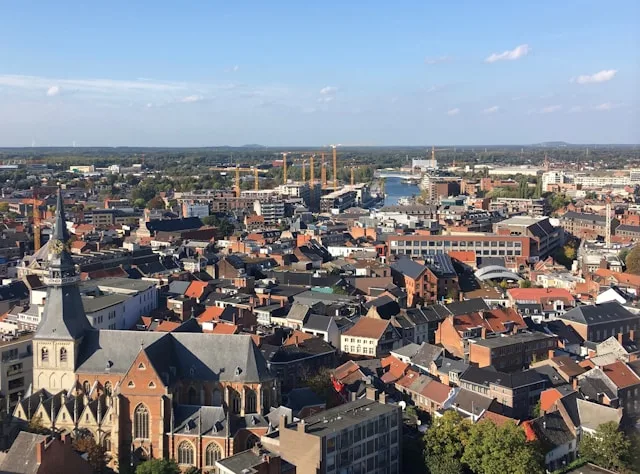
Hasselt's logistics and light manufacturing sector employs 8,400 workers across 142 active establishments. That workforce represents 18.3% of the city's total private employment, well above the Flemish average. The industrial zones at Kiewit and Hasselt-Zuid are running at near-full capacity, with Class A logistics vacancy at just 3.2% across the arrondissement. By every standard infrastructure metric, this is a thriving mid-sized logistics hub with a strategic position inside the Antwerp-Brussels-Liège triangle.
The numbers underneath that picture tell a different story. Immediately developable logistics land has collapsed from 45 hectares in 2020 to just 12 hectares as of early 2025. Environmental permits in Limburg province now take 14 to 16 months to process. And the sector's aggressive push toward warehouse automation, while intended to ease chronic labour shortages, has created a new and more difficult problem: a severe deficit of the mechatronics technicians, PLC programmers, and maintenance engineers required to keep automated systems running.
What follows is an analysis of the force reshaping Hasselt's logistics and distribution market from the inside out. It examines how automation investment is rewriting the talent requirements for the entire sector, why the skills that powered this market five years ago are not the skills it needs now, and what senior hiring leaders must understand before attempting to fill the roles that keep this corridor operational.
The Golden Triangle Position and Its Double Edge
Hasselt sits at the centre of what logistics planners call the "Golden Triangle" between Antwerp, Brussels, and Liège. The E313 and E314 motorway interchange at Hasselt-Zuid places Antwerp port, Liège airport, and the Dutch logistics hub at Eindhoven all within 90 minutes by truck. Approximately 60% of freight movements from Hasselt-Zuid are cross-border, with 45% heading to the Netherlands and 35% to Germany, according to the FOD Mobiliteit freight flow analysis.
This connectivity is the sector's primary asset. It is also the source of its most persistent talent problem.
The same border proximity that makes Hasselt attractive for distribution makes Dutch employers in Maastricht and Venlo visible and accessible to Hasselt's workforce. Dutch employers offer 15 to 20% higher gross wages for equivalent SAP and WMS roles. The Netherlands' 30% ruling for highly skilled migrants adds further pull. Belgian contracts counter with stronger secondary benefits: meal vouchers, company cars, group insurance. But for technical specialists, the net wage gap is difficult to close.
Commute patterns reveal the extent of the exposure. Roughly 18% of Hasselt's logistics managers already live closer to Genk than to their Hasselt workplace. Genk's "Logistics Valley" and the redeveloped Ford Genk Campus offer larger modern warehouses and access to automotive OEM contracts, creating a retention challenge that conventional salary adjustments alone cannot address. The talent does not need to relocate to leave. It needs only to shift its commute by 20 minutes.
For executive and senior supply chain roles, the gravitational pull comes from Antwerp, which offers 25 to 30% higher compensation and a clearer trajectory into global supply chain director positions. Hasselt is not losing these candidates because the work is unattractive. It is losing them because a career ceiling becomes visible earlier in a market with fewer headquarters-level employers.
What 142 Establishments Actually Do
The common shorthand for Hasselt's industrial zones is "distribution." The reality is more specialised and more vulnerable to the wrong kind of hiring.
Last-Mile and Urban Logistics at Kiewit
Kiewit in North Hasselt hosts last-mile distribution facilities and light assembly operations. Plot sizes run small, typically two to five hectares, making the zone better suited to urban logistics than large-scale regional distribution. DHL Supply Chain operates its Limburg e-commerce hub here with a permanent headcount of 210 that rises to 280 during seasonal peaks. Coca-Cola Europacific Partners runs a beverage concentration and bottling facility employing 165 permanent staff.
Occupancy exceeds 94% for Class A stock. There is no room for additional entrants without brownfield redevelopment, which carries a 40 to 50% cost premium over greenfield sites in Limburg's eastern municipalities.
Heavy Logistics and Pharma at Hasselt-Zuid
Hasselt-Zuid is the heavier node. Katoen Natie operates a 28,000 square metre chemicals and pharmaceuticals distribution centre here with approximately 340 staff. H.Essers, headquartered in nearby Genk, maintains a 15,000 square metre cross-dock facility for pharmaceutical distribution employing 85 specialised drivers and logistics coordinators.
Beyond pure distribution, Hasselt-Zuid hosts pharmaceutical packaging operations for clinical trials (soft-gel and blister packaging) and high-value food processing including gluten-free bakery products and specialty coffee roasting. These operations are smaller by footprint but higher by skill requirement. They are also the operations most affected by automation investment, because their processes demand precision, temperature control, and regulatory compliance that a standard warehouse does not.
The mix matters for hiring. A facility that packages pharmaceutical products for clinical trials does not need the same workforce as one that moves pallets. It needs technicians who understand cold chain temperature mapping, quality assurance protocols, and environmental compliance. Recruiting for one kind of facility using the methods suited to the other produces consistent failure.
The Automation Shift That Changed the Talent Equation
By 2026, an estimated 35% of Hasselt-based logistics facilities will have implemented Goods-to-Person systems or Autonomous Mobile Robots. This is a pace of adoption that reflects genuine operational pressure. The chronic shortage of forklift operators and manual pickers has made automation not a strategic choice but a survival mechanism.
The expectation, widely held across the sector, was that automation would relieve the hiring pressure. The opposite has occurred.
The adoption of AMRs and G2P systems is projected to reduce demand for unskilled pickers by 15 to 20%. But it simultaneously increases demand for mechatronics technicians by 40%. The net effect is not fewer vacancies. It is different vacancies that are harder to fill.
This is the core analytical tension in Hasselt's logistics market: capital moved faster than human capital could follow. Firms invested in automation to solve a labour shortage in operational roles and created a more acute labour shortage in technical roles that are harder to source, harder to retain, and concentrated in a talent pool with 1.8% unemployment in the relevant micro-segment. The standard assumption that technology investment in industrial operations reduces headcount pressure does not hold here. It transfers the pressure to a smaller, more specialised, and more mobile population of workers.
The specific skills now in critical demand include PLC programming on Siemens and Allen-Bradley platforms, WMS configuration for Manhattan Associates and Blue Yonder systems, and AGV maintenance certification. These are not skills that a retraining programme produces in six months. They require a foundation in electromechanical engineering and years of applied experience in automated environments.
UHasselt's Transportation Research Institute provides applied research in supply chain optimisation, but its pipeline is primarily academic rather than vocational. The gap between what the university produces and what the warehouse floor requires is not a coordination failure. It is a structural mismatch between two different kinds of training.
Three Searches That Show Where the Market Breaks
Aggregate data on vacancy duration and skills gaps tells one story. Specific search patterns tell a more precise one.
The 11-Month Operations Manager Vacancy
A senior warehouse operations manager role at a major Hasselt-Zuid employer remained unfilled for 11 months before being resolved through an external hire from Genk. The successful placement required a 22% salary premium, from €68,000 to €83,000 base, plus relocation support. The candidate was given a 72-hour decision window. According to the Voka Ondernemersbarometer Logistics 2024, this pattern is typical across Limburg logistics operations, where supervisory roles at this level routinely exceed six months' vacancy duration.
That 22% premium is not an anomaly. It is the market-clearing price for a candidate who already holds the right certifications, has managed a facility of comparable complexity, and is willing to change employers. The premium reflects not just salary competition but the cost of speed: the hiring organisation paid more because it could not afford to wait any longer.
The Restructured Inventory Control Role
A mid-sized pharmaceutical 3PL in Hasselt-Zuid abandoned its search for a bilingual Inventory Control Manager after eight months. The organisation restructured the role into two part-time positions: a Dutch-speaking operations lead and an English-speaking systems analyst. The combined cost of the two roles exceeded the original position by 35%. This is a common pattern in markets where bilingual requirements narrow an already thin candidate pool to the point where a single role simply cannot be filled as designed. The restructuring is not a creative solution. It is a concession that costs more and delivers less coordination.
The 14-Month Fleet Supervisor Search
DHL Supply Chain's Kiewit facility held an open requisition for a Transport Fleet Supervisor with CE licence and dangerous goods certification for 14 consecutive months. The role was eventually filled by recruiting from the Port of Rotterdam labour market with a €15,000 signing bonus. That the search required going to Rotterdam, more than 150 kilometres away and across a national border, is evidence of how depleted the local candidate pool is for ADR-certified supervisory profiles. The signing bonus was not generosity. It was the minimum intervention required to make a cross-border move economically rational for the candidate.
Each of these examples illustrates the same dynamic. The roles that matter most to operational continuity are the roles the market is least equipped to fill through conventional methods.
Compensation: What Roles Pay and Where Hasselt Sits
Hasselt-based employers pay a 5 to 8% wage premium over Antwerp for equivalent logistics roles, compensating for the perceived peripheral location relative to the Port of Antwerp-Bruges labour pool. This premium still leaves Hasselt 12 to 15% below compensation levels in Dutch Maastricht and Venlo for comparable positions.
At the senior specialist and manager level, the compensation structure runs as follows. Senior Warehouse Operations Managers earn €58,000 to €72,000 base plus a 13th month and benefits. At regional logistics director level, this rises to €95,000 to €125,000 with a 20 to 30% bonus and car allowance. Supply Chain Analysts with SAP or ERP specialisation command €52,000 to €65,000 at senior level and €85,000 to €110,000 as Head of Supply Chain Planning. Electromechanical maintenance technicians, the profile in most acute shortage, earn €48,000 to €62,000 at senior level, rising to €78,000 to €95,000 for multi-site maintenance managers.
The compensation gap between Hasselt and its Dutch competitors is not narrowing. Belgium's automatic wage indexation mechanism triggered a 2.5% adjustment in January 2025, with a further 1.8% projected for October 2025. This creates predictable but inflexible cost inflation. Dutch employers, by contrast, negotiate wages with productivity offsets built in, giving them more room to adjust packages for scarce profiles without raising costs across the entire workforce.
For a hiring leader in Hasselt, this means the compensation conversation with a target candidate is not just about salary. It is about total package design. Belgian secondary benefits, including meal vouchers, company cars, hospitalisation insurance, and pension contributions, carry meaningful value but require explanation. A candidate comparing a Dutch gross figure to a Belgian gross figure will see a gap that does not fully exist once secondary benefits are included. The problem is that candidates make their first decision based on the gross number. The nuance comes later, often too late.
Land, Permits, and the Physical Ceiling on Growth
The talent shortage in Hasselt's logistics sector does not exist in isolation. It operates inside a set of physical constraints that amplify every hiring challenge.
The Disappearing Land Supply
Immediately developable logistics land in the Hasselt sub-region has fallen to 12 hectares, down from 45 hectares in 2020. The Flemish Spatial Planning Policy designates Hasselt as a "consolidation city," which in practice means greenfield industrial development is politically and legally constrained. New entrants must pursue brownfield redevelopment at significantly higher cost.
LRM projects demand for an additional 45,000 square metres of logistics space in Hasselt by the end of 2026, driven by e-commerce fulfilment and pharmaceutical cold chain expansion. Supply will likely meet only 60% of that demand. The 40% gap does not vanish. It either relocates to Genk or Venlo, taking the associated jobs and talent demand with it, or it forces existing operators to extract more productivity from current footprints through automation, which returns to the mechatronics hiring problem described above.
Environmental and Energy Compliance
The Vlaams Klimaatpact 2050 mandates that logistics facilities over 5,000 square metres achieve minimum EPC B+ energy ratings by 2027. Retrofitting costs for Hasselt's older Kiewit stock, where the average building age is 18 years, are estimated at €180 to €220 per square metre. This could render 25% of current Class B stock economically obsolete. Facilities that cannot justify the retrofit investment will close or relocate, and the workforce associated with them will need to be absorbed or lost.
Environmental permits for logistics expansion in Limburg face processing delays of 14 to 16 months, compared to 8 to 10 months in East Flanders. The delay stems from nitrogen deposition concerns and cumulative environmental impact assessments under the Omgevingsvergunning framework. For a firm that has identified a brownfield site, secured financing, and planned a facility, the 16-month permit window means the talent pipeline must be built before the building is approved. Waiting until operations begin to start hiring guarantees that the most critical roles will be vacant on day one.
What This Means for Hiring Leaders in This Market
The combined effect of automation acceleration, land constraints, permit delays, cross-border wage competition, and a shrinking pool of qualified technical candidates creates a hiring environment with very specific characteristics.
First, approximately 80% of qualified WMS and ERP implementation specialists in the Hasselt catchment area are passive candidates. They are employed, not actively looking, and average 4.2 years of tenure at their current employers. They will not respond to job postings. They will not appear on any job board. They move through direct headhunting or trusted network referrals, and they require a proposition that addresses not just salary but scope, autonomy, and the specific technical environment they will work in.
Second, the active candidate market for entry-level warehouse operators shows a 65% active job seeker ratio, but quality mismatch persists around VCA safety certifications. High applicant volume at the operational level creates the illusion that hiring is easy. It is not. The roles that drive operational continuity, the supervisory and technical roles, sit in a fundamentally different market with different dynamics, different timelines, and different methods required to fill them.
Third, the bilingual requirement that runs through the sector, Dutch-English at minimum and often Dutch-German for cross-border operations, eliminates a large portion of otherwise qualified candidates. A technically excellent maintenance engineer who speaks only French, for instance, cannot function in a Dutch-language operational environment in Hasselt. This is not a soft preference. It is a hard operational requirement that narrows candidate pools in ways that standard talent mapping often underestimates.
The Smart Border digital freight corridor implementation, scheduled for Q2 2026, promises a 30% reduction in customs processing times along the Maastricht-Hasselt axis and a potential 12 to 15% annual increase in freight volume through Hasselt-Zuid, according to the Benelux Union Secretariat. More volume means more hires. But the corridor does not create technicians. It creates demand for them.
How KiTalent Approaches the Hasselt Logistics Market
The standard recruitment model in logistics markets relies on job advertising, database searches, and volume-driven shortlisting. In a market where the most critical candidates are passive, bilingual, and being actively courted by Dutch and German employers paying 15 to 20% more, that model systematically misses the candidates who matter most.
KiTalent's approach to executive hiring in industrial and manufacturing sectors is built for exactly this kind of market. AI-powered talent mapping identifies qualified candidates across the Benelux and German border regions, including professionals currently employed at competitors and adjacent sectors who would not surface through any conventional channel. The result is interview-ready candidates delivered within 7 to 10 days, with full pipeline transparency and weekly reporting throughout.
For hiring leaders in Hasselt's logistics sector, where an operations manager vacancy costs 11 months of diminished throughput and a maintenance technician gap means automated systems sitting idle, the cost of a slow or failed search is measured in operational output, not just recruitment fees. KiTalent's pay-per-interview model means clients pay only when they meet qualified candidates. There is no upfront retainer. The risk sits with the search firm, not the hiring organisation.
With a 96% one-year retention rate across 1,450 executive placements and an average client relationship exceeding eight years, the model is designed for markets where the margin for error in a senior hire is close to zero.
For organisations competing for mechatronics, supply chain, and operations leadership talent in the Hasselt corridor, where the candidates who keep automated facilities running are not visible on any job board and the competition for them crosses three national borders, speak with our executive search team about how we approach this market differently.
Frequently Asked Questions
What logistics and distribution roles are hardest to fill in Hasselt in 2026?
The three most acute shortages are certified forklift operators with ADR dangerous goods certification, bilingual (Dutch-English) Supply Chain Analysts with SAP or ERP proficiency, and electromechanical maintenance technicians for automated material handling systems. Maintenance technician demand has increased by 40% as warehouse automation accelerates across the Hasselt-Zuid and Kiewit zones. Unemployment in the mechatronics micro-segment is just 1.8%, making passive headhunting the only reliable method for reaching qualified candidates in this category.
What do logistics managers earn in Hasselt compared to the Netherlands?
Senior Warehouse Operations Managers in Hasselt earn €58,000 to €72,000 base salary plus a 13th month and benefits. Regional Logistics Directors earn €95,000 to €125,000 with bonus and car allowance. Hasselt employers pay a 5 to 8% premium over Antwerp, but compensation remains 12 to 15% below equivalent roles in Dutch Maastricht and Venlo. Belgian secondary benefits including company cars, meal vouchers, and pension contributions partially offset the gross wage gap.
Why is warehouse automation increasing hiring pressure in Hasselt?
An estimated 35% of Hasselt logistics facilities are implementing Goods-to-Person systems or Autonomous Mobile Robots by 2026. While this reduces demand for unskilled pickers by 15 to 20%, it increases demand for mechatronics technicians by 40%. The automation does not reduce total talent scarcity. It transfers it from operational roles that are difficult to fill to technical roles that are even more difficult to fill, because the qualified candidate pool is smaller and more geographically mobile.
How does cross-border competition affect logistics hiring in Hasselt?
Hasselt's position near the Dutch and German borders means employers compete directly with Maastricht, Venlo, and Aachen for technical profiles. Dutch employers offer 15 to 20% higher gross wages and the 30% tax ruling for skilled migrants. Belgian employers counter with stronger secondary benefits, but the gross wage comparison often drives initial candidate decisions. Approximately 18% of Hasselt's logistics managers live closer to competitor hub Genk, creating additional retention risk. KiTalent's international executive search capability is designed to work across these cross-border dynamics.
What is the outlook for logistics land availability in Hasselt?
Immediately developable logistics land has fallen to 12 hectares, from 45 hectares in 2020. Flemish spatial planning policy limits greenfield development, and environmental permits in Limburg take 14 to 16 months to process. LRM projects demand for 45,000 additional square metres of logistics space by late 2026, but supply will meet only 60% of that demand. New entrants face brownfield redevelopment costs 40 to 50% higher than greenfield alternatives in eastern Limburg.
How quickly can KiTalent deliver candidates for logistics leadership roles in Hasselt?
KiTalent delivers interview-ready executive candidates within 7 to 10 days using AI-powered talent mapping across the Benelux and German border regions. The firm operates on a pay-per-interview model with no upfront retainer, meaning clients pay only when they meet qualified candidates. With a 96% one-year retention rate and full pipeline transparency through weekly reporting, the approach is built for markets like Hasselt where critical technical and leadership roles require reaching passive candidates who are not visible through conventional recruitment channels.