Heraklion Port Logistics Hiring: Why 11% Unemployment and a 14% Vacancy Rate Exist in the Same Market
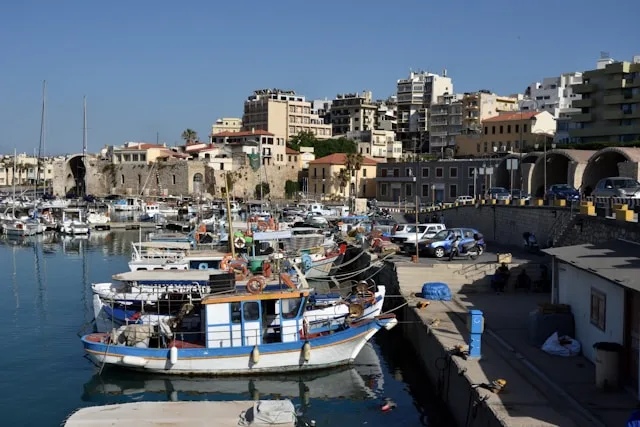
Heraklion's port processed 2.1 million TEU equivalent units in 2024, handled 680,000 cruise passengers, and served as the logistics gateway for 60% of Crete's containerised imports. The numbers describe a port operating at industrial scale. They also describe a port operating at 85% quay utilisation during peak season, with 127-day average vacancy durations for operations managers and a net talent outflow to Athens that has stripped the island of 18% of its mid-career supply chain professionals in two years.
The tension that defines Heraklion's logistics and maritime market in 2026 is not a simple talent shortage. It is a structural mismatch. The city's general unemployment rate sits at 11.2%, well above the EU average. Yet the port sector reports a 14% vacancy rate for technical positions. These two facts are not contradictory. They describe a market where the available workforce and the required workforce barely overlap. The certifications, the systems expertise, and the regulatory knowledge that port digitisation and EU emissions compliance now demand do not exist in sufficient quantity on the island. The people are there. The skills are not.
What follows is a ground-level analysis of the forces shaping Heraklion's port, logistics, and maritime hiring market: where the gaps are most acute, what is driving them, why conventional recruitment methods fail in this specific geography, and what organisations operating in or hiring for Crete's logistics sector need to understand before they begin their next search.
Heraklion's Port in 2026: Scale, Ambition, and the Infrastructure That Constrains Both
Heraklion Port Authority S.A. has set a clear trajectory. The Authority's 2024 to 2028 strategic plan projects 2.25 million TEU equivalent and 750,000 cruise passengers for 2026, supported by two new cruise berths capable of accommodating vessels over 300 metres. Shore power electrification for cruise berths 4 and 5 is funded through €18.2 million from the EU Recovery and Resilience Facility. The Port Community System digitisation module for customs pre-clearance reached 60% deployment by late 2024 and is expected to approach full operation this year.
These investments are real. So are the constraints they cannot solve.
The cargo bottleneck that cruise investment does not address
The Port Authority's capex allocation reveals a strategic tension. Of the €57 million in planned capital expenditure through 2028, approximately €45 million, or 70%, is directed toward cruise terminal expansion and passenger amenities. Only €12 million is earmarked for cargo quay extension. This is a deliberate bet on tourism revenue diversification. It is also a bet that leaves the cargo side of the port exposed at precisely the moment when demand is rising.
The port's 1,200-metre main quay already operates at 85% utilisation in Q3. A single 24-hour weather closure during peak season creates a backlog requiring over 72 hours to clear, at an estimated economic cost of €2.3 million per day in delayed agricultural exports, according to the Foundation for Economic and Industrial Research (IOBE). The 14 licensed cold-storage facilities within the port's immediate hinterland hold 45,000 pallet positions total. During the October to December harvest window, utilisation hits 95%, forcing overflow into rented truck refrigeration units.
The road network compounds the problem. Crete has no freight rail infrastructure. A 2024 feasibility study by ERGOSE S.A., funded under the Connecting Europe Facility, concluded that freight rail on the island is not economically viable. Every container, every pallet, every refrigerated load moves by truck on the VOAK national road, whose single-carriageway sections through mountainous terrain restrict heavy goods vehicles over 40 tonnes during high winds. Average truck turnaround time from port to Rethymno increases by 40% during August tourist peaks, according to the Hellenic Ministry of Infrastructure and Transport.
The VOAK Highway Phase B upgrade between Heraklion and Moires is scheduled for completion in Q4 2026. It promises to reduce truck transit times to southern Crete by 25%. That is a meaningful improvement. But it does not change the fundamental reality: 100% of hinterland distribution depends on a single road corridor, and no rail alternative is coming.
For hiring leaders, the infrastructure picture matters because it shapes every logistics role on the island. A supply chain director in Heraklion is not managing a standard distribution network. They are managing a system where a storm, a road closure, or a port backlog cascades through the entire island's food and pharmaceutical supply in hours. The role demands a different profile than the same title in Piraeus or Thessaloniki.
The Oligopoly That Shapes the Talent Pool
The ferry and shipping market serving Heraklion is concentrated in a way that directly determines how talent moves, what it costs, and where it goes. Attica Group, which now incorporates ANEK Lines operations, and Minoan Lines, a subsidiary of Italy's Grimaldi Group, together control 78% of the Piraeus to Heraklion Ro-Ro capacity. SeaJets dominates high-speed catamaran services on the Cyclades to Crete routes with 65% market share.
This oligopolistic structure has two consequences for hiring.
First, the number of employers large enough to sustain senior maritime operations roles is small. Attica Group maintains approximately 450 shore-based staff in Heraklion. Minoan Lines employs roughly 220. SeaJets has a smaller permanent shore footprint of about 80 staff, supplemented by heavy seasonal hiring. The Port Authority itself employs 380 directly. Add DHL Supply Chain's 12,000-square-metre distribution centre and a handful of local operators like Minoan Logistics with 85 trucks and three warehouse facilities, and the total addressable employer base for senior logistics and maritime roles in Heraklion numbers fewer than ten organisations.
Second, this concentration means that poaching is not an occasional event but a systemic pattern. When one of these employers loses a port operations manager or a cold chain logistics engineer, the replacement almost certainly comes from one of the other nine. The pool recirculates rather than grows. LinkedIn mobility data for the period 2022 to 2024 shows an 18% net outflow of supply chain professionals aged 30 to 45 from Crete to the Attica region. The island is not just circulating talent internally. It is losing it.
The destination is usually Piraeus, where Attica Group's headquarters and Greece's primary shipping cluster offer 30 to 40% higher base salaries for equivalent logistics roles, according to PwC Greece's 2024 Total Remuneration Survey. The cost of living in Piraeus runs 22% higher than Heraklion, but for a mid-career professional weighing the move, the salary premium more than compensates.
Limassol presents a different but equally damaging pull. Cyprus's non-domicile tax regime offers 0% tax on dividends for 17 years, combined with an English-language business environment that appeals to internationally mobile maritime executives. According to the Cyprus Shipping Chamber, Heraklion loses an estimated 15 to 20 senior maritime professionals annually to Limassol-based ship management firms. These are not junior staff. They are operations directors and fleet managers whose departure creates gaps that take months to fill.
The Skills Mismatch: 11% Unemployment and a 127-Day Vacancy
This is the analytical core of Heraklion's hiring challenge, and it is the point most frequently misunderstood by organisations approaching this market from outside.
Heraklion's general unemployment rate of 11.2% suggests a buyer's market. It is not. The unemployment figure describes a labour pool that is structurally disconnected from the roles the port and logistics sector needs to fill. The port's digitisation trajectory demands skills in Terminal Operating Systems such as Navis N4, cybersecurity for port-critical infrastructure, and GDP (Good Distribution Practice) compliance for pharmaceutical cold chain logistics. These are not skills that the broader unemployed workforce possesses or can acquire quickly.
The result is a 14% vacancy rate for technical positions in the port sector, according to the Hellenic Federation of Enterprises, running alongside double-digit general unemployment. The average time to fill a Port Operations Manager role in Heraklion is 127 days. The same role in Piraeus fills in 68 days. The difference is not about compensation alone. It reflects a market where fewer than 40 individuals hold the dual certifications in maritime safety (ISM Code) and Greek port regulations required for the role, and most of them are already employed.
Why the education pipeline has not closed the gap
The Hellenic Mediterranean University offers Maritime Studies and Logistics programmes from its Heraklion campus, and its ongoing relocation to Crete's Science and Technology Park should improve facilities. The Heraklion Chamber of Commerce runs logistics certification programmes through its 1,200 member firms. These are real interventions. But the gap between a university graduate with a logistics degree and a professional certified in ISM, ISPS, GDP compliance, and Navis N4 operations is measured in years, not semesters.
The specialisms the port needs most are exactly those that require the most time to develop: cold chain compliance engineers who understand pharmaceutical distribution regulations, port automation specialists who can implement and maintain Terminal Operating Systems, and dual-mode operations managers who can integrate cruise passenger flows with cargo operations during August without triggering the kind of cascading disruption that costs €2.3 million per day.
Here is the synthesis that the aggregate data points toward but does not state explicitly: Heraklion's investment in port digitisation and EU emissions compliance has not reduced the workforce requirement. It has replaced one category of worker with another that the island's education system and geographic location cannot produce fast enough. Capital has moved ahead of human capital, and every additional technology investment widens the gap rather than closing it.
This is not a problem that job postings solve. An employer advertising a Port Operations Manager role on a Greek job board is reaching, at best, the small fraction of qualified professionals who happen to be both active in the market and willing to remain on or relocate to Crete. The rest, the 80% who are employed, passive, and not browsing listings, require a fundamentally different approach.
What Roles Cost: Compensation in a Market That Cannot Compete on Salary Alone
Compensation in Heraklion's port and logistics sector sits consistently below Athens and Piraeus, and materially below Limassol for senior maritime roles. This is understood by most hiring leaders. What is less understood is where the gaps are widest and what non-salary elements are required to close them.
Port operations and maritime roles
A Port Operations Manager with 10-plus years of experience and ISM/ISPS certification earns between €45,000 and €58,000 base salary annually in Heraklion. This is approximately 15% below the Piraeus equivalent. Benefits frequently include a housing allowance for candidates relocating from the mainland, a signal of how often these roles must be filled from outside the island.
At the executive level, a Chief Operating Officer at the Port Authority or an Operations Director at a major ferry operator commands €95,000 to €140,000 annually, plus performance bonuses of up to 30%. The Port Authority's CEO total remuneration was publicly disclosed at €142,000 for FY2023. Roles requiring bilingual Greek and English capability alongside EU regulatory expertise sit in the top quartile. Those reporting to international parent companies, whether Grimaldi for Minoan Lines or Attica Group's holding structure, may receive stock options or long-term incentive plans valued at €20,000 to €40,000 annually.
Logistics and supply chain roles
A Logistics Manager with cold chain or pharmaceutical focus earns €32,000 to €42,000 annually. Salaries in this band rose 8% in 2024, driven specifically by the increasing GDP compliance burden, according to Adecco Greece. The compliance requirement is not optional: Crete's growing role as a regional medical supply hub means that cold chain expertise has shifted from a preference to a hard requirement for these positions.
The Supply Chain Director level is where the market becomes most constrained. The salary range of €70,000 to €95,000 annually is reasonable for the Greek market. The problem is that only three to four such roles exist in Heraklion, concentrated among DHL, Minoan Logistics, and major local distribution chains. Incumbents rarely leave voluntarily. According to a Korn Ferry executive briefing on Greek logistics, the combination of small role count and high retention means that when one of these positions does open, the search extends well beyond Crete by necessity.
The marine engineering premium
Shore-based Marine Engineer (Class I) technical superintendent roles now command €48,000 to €65,000 in Heraklion, reflecting a 20% premium above 2022 levels. The driver is EU ETS compliance engineering. From January 2026, the full implementation of the EU Emissions Trading System for maritime transport over 5,000 GT imposes compliance costs on Heraklion-based ferry operators estimated at €8 to €12 million annually for the Piraeus to Crete corridor alone. Someone must manage the engineering side of that compliance. The talent pool of engineers who understand both vessel systems and carbon accounting is vanishingly small in southern Greece.
For organisations attempting to benchmark compensation for these roles, the critical insight is that Heraklion cannot win a salary bidding war against Piraeus or Limassol. The differential is too wide and the structural cost-of-living advantage is not sufficient for mid-career professionals who also weigh career progression. The proposition that moves a passive candidate to Heraklion must include elements beyond base pay: the scope of the role, the autonomy it offers, the quality of life on Crete, and the clarity of the career trajectory within a smaller but operationally intensive market.
Regulatory Pressure and What It Means for Every Hiring Decision in 2026
The regulatory environment bearing down on Heraklion's port and maritime sector is not background context. It is the primary driver of the skills mismatch described above, and it is intensifying.
EU ETS and the cost of emissions compliance
The January 2026 full implementation of the EU ETS for maritime transport forces Heraklion's ferry operators into a new cost structure. Drewry Maritime Research estimates cumulative compliance costs of €45 to €60 million through 2030 for operators serving the island. Route profitability on secondary connections, such as Heraklion to Santorini, is directly threatened.
The operational response will likely involve a modal shift toward slower, more fuel-efficient vessels or LNG retrofits. Both responses require engineering talent that Crete does not currently have in sufficient numbers. The counteroffer dynamic intensifies: every qualified marine engineer on the island is simultaneously needed by the Port Authority for shore power implementation, by Attica Group for fleet compliance, and by Minoan Lines for their Grimaldi-mandated sustainability targets.
Port digitisation and cybersecurity
The deployment of the e-Port PCS module for customs pre-clearance introduces a different skills demand. ENISA's 2024 Port Cybersecurity Assessment highlighted port-critical infrastructure as a growing target. The skills required to secure a Port Community System differ from those required to operate it. Heraklion needs both, and neither category is well-represented in the local workforce.
The EU Port Services Regulation
The liberalisation of port services under EU Regulation 2017/352 has introduced competition for pilotage and mooring. But the local market remains thin. Heraklion has only two licensed pilotage providers, creating a single-point-of-failure risk that the Greek Regulatory Authority has flagged in its 2024 compliance report. The scarcity of licensed operators mirrors the broader talent constraint: the regulatory framework has expanded the range of services the market must provide without expanding the pool of people qualified to provide them.
Each of these regulatory pressures converts into a specific executive hiring requirement. A compliance engineer for ETS. A cybersecurity specialist for port IT systems. A dual-certified operations director who can manage both cruise and cargo flows under tightening environmental and safety regulations. The roles compound while the candidate pool does not.
Why Conventional Search Methods Fail in This Specific Market
Heraklion's logistics and maritime talent market has three characteristics that make standard recruitment approaches structurally ineffective.
The first is the passive candidate ratio. According to Michael Page Greece's 2024 maritime and logistics hiring trends report, an estimated 80% of qualified Maritime Operations Directors in the Heraklion market are passive. They are employed. They are not browsing job boards. Their average tenure at current employers exceeds seven years. Cold chain logistics engineers show similar patterns, with national unemployment in the specialism below 2%. A job posting on a Greek employment portal reaches the 20% who are active. It misses the 80% who are the actual targets.
The second is geographic isolation. Crete is an island. The candidate pool that is physically present and willing to remain is small and well-known to every employer. Any search that restricts itself to local candidates is searching a pond, not a sea. Expanding to mainland Greece or the wider Eastern Mediterranean requires a sourcing methodology that can identify, approach, and persuade professionals to relocate to an island market where the salary will be lower than their current role in Athens or Limassol. That is not a transaction. It is a negotiation.
The third is the speed penalty. At 127 days average time to fill for a Port Operations Manager, the conventional search timeline in Heraklion is nearly double the Piraeus benchmark. In a market where a single unfilled operations role during peak season can contribute to the kind of backlog that costs millions in delayed exports, that timeline is not merely inconvenient. It is operationally dangerous.
The combination of these three factors means that the organisations that fill critical roles fastest in Heraklion are not the ones with the best job advertisements. They are the ones with proactive talent pipelines and direct headhunting capability that reaches passive candidates before a vacancy is posted. In a market this small and this specialised, the search must begin before the role opens. Waiting for the vacancy to appear and then advertising it concedes a two-month head start to competitors who have already been mapping the market.
What Hiring Leaders Operating in Heraklion Need to Do Differently
The organisations that will secure the maritime operations directors, cold chain compliance engineers, and port automation specialists this market needs in 2026 will share three characteristics.
They will treat the search as a relocation proposition, not a local hire. The data is clear: the candidate pool on Crete is insufficient for the roles the port's digitisation and compliance trajectory demands. Every senior search must be scoped to include Piraeus, Thessaloniki, Limassol, and the wider Eastern Mediterranean from the outset. That means the compensation package must be structured to make relocation rational, including housing support, clear career progression timelines, and a quality-of-life narrative that offsets the salary differential against Athens.
They will begin the search before the role opens. In a market where 80% of targets are passive and time to fill runs 127 days, reactive hiring guarantees a missed season. Talent mapping conducted in Q1 for a Q3 peak-season role is the minimum viable timeline. Organisations that map the 40-odd qualified Port Operations Managers and the comparable number of cold chain engineers before a vacancy exists can move within days when one arises.
They will use a search partner that understands both the sector and the geography. Heraklion is not a market where a generalist recruiter can produce results by mining a database. The certifications are niche. The employer base is small enough that confidentiality matters acutely. The relocation conversation requires market intelligence about what competing offers look like in Piraeus and Limassol.
KiTalent's approach to executive hiring in industrial and maritime markets is built for exactly this profile of challenge: a small, specialised candidate pool where direct identification of passive professionals and confidential approach are not advantages but prerequisites. With AI-enhanced talent mapping that identifies interview-ready candidates within 7 to 10 days and a pay-per-interview model that eliminates the risk of upfront retainer expenditure, the methodology addresses the speed and access problems that define Heraklion's logistics hiring market.
For organisations recruiting maritime operations directors, cold chain engineers, or supply chain leaders for Crete, where 127-day vacancy durations are the norm and the strongest candidates are invisible to job boards, start a conversation with our executive search team about how we source and deliver leadership talent in markets conventional methods cannot reach.
Frequently Asked Questions
What is the average salary for a Port Operations Manager in Heraklion?
A Port Operations Manager with 10-plus years of experience and ISM/ISPS certification earns between €45,000 and €58,000 base salary annually in Heraklion. This is approximately 15% below the equivalent role in Piraeus. Housing allowances are common for candidates relocating from mainland Greece. At the executive level, operations directors at major ferry operators or the Port Authority earn €95,000 to €140,000 plus performance bonuses. Bilingual Greek and English capability and EU regulatory expertise push compensation toward the top quartile.
Why is it so hard to hire logistics professionals in Heraklion despite high unemployment?
Heraklion's general unemployment rate of 11.2% masks a deep skills mismatch. The port and logistics sector requires professionals with specific certifications in maritime safety, Terminal Operating Systems, cold chain GDP compliance, and cybersecurity. These skills are not present in the broader unemployed workforce and take years to develop. The result is a 14% technical vacancy rate coexisting with high general unemployment. The gap is structural, driven by port digitisation and EU emissions compliance requirements outpacing local education and training capacity.
How does Heraklion compete with Athens and Limassol for maritime talent?
It competes at a disadvantage on salary. Athens and Piraeus offer 30 to 40% higher base pay for equivalent logistics roles. Limassol attracts senior maritime executives with Cyprus's non-domicile tax regime. Heraklion's competitive proposition rests on operational scope, autonomy, quality of life on Crete, and the intensity of the role itself. Organisations that structure relocation packages and career progression narratives alongside competitive compensation are more successful at attracting mainland and international candidates to the island.
What are the most in-demand executive roles in Heraklion's port sector?
The most acute shortages are in Port Operations Manager roles requiring dual ISM and Greek port regulatory certification, cold chain logistics engineers with GDP pharmaceutical compliance expertise, marine engineers capable of managing EU ETS compliance, and port automation specialists skilled in Terminal Operating Systems and cybersecurity. Supply Chain Director roles are rare, with only three to four such positions on the island, and incumbents rarely move voluntarily.
How long does it take to fill a senior logistics role in Heraklion?
The average time to fill a Port Operations Manager role in Heraklion is 127 days, compared to 68 days for the equivalent role in Piraeus. This duration reflects the small qualified candidate pool, the high passive candidate ratio, and the relocation challenge. For Supply Chain Director roles, the timeline can extend further because the role scarcity means most searches must source from outside Crete. Organisations using direct headhunting and proactive talent mapping typically compress these timelines by reaching passive candidates before a vacancy becomes public.
What regulatory changes are affecting Heraklion's port and maritime employers in 2026?
The most consequential change is the full implementation of the EU Emissions Trading System for maritime transport over 5,000 GT from January 2026, imposing estimated annual compliance costs of €8 to €12 million on ferry operators serving the Piraeus to Crete corridor. The EU Port Services Regulation continues to reshape pilotage and mooring competition. Ongoing port digitisation, including the e-Port customs pre-clearance system, introduces cybersecurity requirements that ENISA has flagged as a priority for port-critical infrastructure across Europe.