Keelung's Port Expansion Is Doubling Cruise Capacity. The Talent to Run It Does Not Exist.

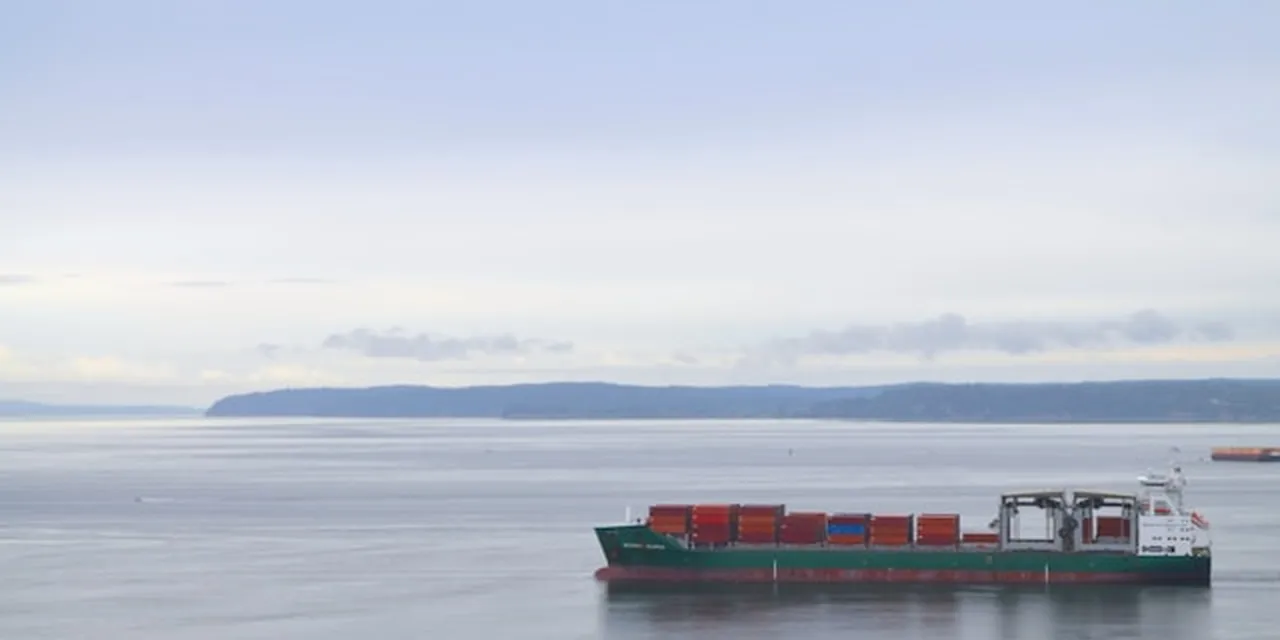
Keelung is preparing to welcome four cruise ships simultaneously for the first time in its history. The NTD 3.2 billion terminal expansion, partially completing in the first half of 2026, doubles the port's vessel capacity and adds 15,000 square metres of passenger processing facilities. Taiwan International Ports Corporation has placed a considerable bet on volume. The infrastructure will be ready. The people to operate it will not.
The city's hospitality and tourism sector already cannot fill the roles it has. Job postings in accommodation and food service rose 34% in 2024 against an application-to-open ratio of 0.7:1. Cruise operations manager searches run four to six months. The city's only internationally branded hotel kept a revenue manager vacancy open for eleven months before giving up on an external hire. And these shortages exist at current capacity. The expansion will require an estimated 2,400 additional qualified workers by the end of 2026, in a market where the existing talent pool is already inadequate and the compensation structure is not moving fast enough to attract new entrants.
What follows is an analysis of the forces creating this bottleneck: a tourism economy structurally compressed into day-trip servicing, a compensation gap that discourages relocation from Taipei, and an infrastructure investment thesis that is building for volume while the market's most acute need is yield. For senior leaders responsible for staffing Keelung's hospitality and maritime tourism operations, the challenge is not simply finding people. It is finding people willing to build careers in a market that has not yet given them a reason to stay.
The Day-Trip Drain: Why Keelung's Tourism Economy Cannot Retain Its Own Visitors
Keelung sits 35 minutes from Taipei by rail or expressway. That proximity is both the city's greatest asset and its deepest constraint. It delivers visitors. It also takes them home before they spend a night.
The numbers make the problem concrete. In 2024, 73% of cruise passengers and 68% of independent travellers returned to Taipei for overnight accommodation despite visiting Keelung's attractions during the day. The city maintains 87 registered tourist hotels and 142 homestay operations totalling roughly 4,200 rooms. Average occupancy in 2024 was 58.3%, compared to Taipei's 72.1% and the national average of 64.8%.
This is not a marketing failure. It is a structural feature of the geography. Taipei offers superior nightlife, dining variety, international schooling for families, and the headquarters functions of every major Taiwanese hotel group. A visitor choosing between a night in Keelung and a night in Taipei faces no meaningful trade-off on transit time, and a clear quality gap in accommodation options. The Evergreen Laurel Hotel Keelung and the Farglory Hotel Keelung are the only properties approaching international four-star standards. Together they account for 302 rooms. Everything else is mid-scale or informal.
The consequence for the hospitality labour market is severe. When a hotel operates at 58% occupancy, its margins are compressed. When margins are compressed, compensation stagnates. When compensation stagnates, talent migrates to Taipei. The cycle is self-reinforcing, and no amount of terminal expansion changes it unless the city simultaneously creates reasons for visitors to stay overnight and spend at higher rates.
A NTD 3.2 Billion Bet on Volume in a Falling-Yield Market
The terminal expansion is an engineering achievement. It is also an economic gamble whose assumptions deserve scrutiny.
The capacity thesis
Taiwan International Ports Corporation's investment plan targets 1.6 million cruise passengers in 2026, up from approximately 1.2 million in 2024. The new terminal infrastructure is designed to capture transit traffic currently diverting to Japanese ports and to accommodate the return of Chinese cruise lines, suspended since 2019. If Chinese operators resume service and geopolitical conditions stabilise, the volume thesis is plausible.
The yield problem the volume thesis ignores
Average passenger spending per cruise call in Keelung has declined 12% in real terms since 2019. Cruise lines are simultaneously negotiating shorter port stays, compressing the average from 6.1 hours in 2019 to 4.2 hours in 2024. A passenger who disembarks for four hours will eat at Miaokou Night Market, photograph Zhengbin Fishing Harbor, and reboard. They will not check into a hotel, book an evening tour, or dine at a full-service restaurant.
Keelung is building infrastructure for a high-volume, low-yield model. The development authority's stated goal is "high-value maritime tourism." The data points in the opposite direction. More ships delivering more passengers for shorter stays at lower per-capita spending does not create high-value tourism. It creates seasonal congestion that strains infrastructure, demands more frontline workers during compressed peak windows, and generates less revenue per worker-hour than the model it is supposed to replace.
This is the original analytical claim this article is built around: Keelung's infrastructure investment and its talent crisis are not parallel problems. They are the same problem. The port expansion is optimising for volume at the exact moment the labour market needs the economics of yield. More passengers through a bigger terminal require more ground handlers, more customs coordinators, more multilingual guides. But the revenue those passengers generate per hour of contact is falling. The jobs created are harder to fill, not easier, because they are seasonal, compressed, and not compensated at rates that reflect their scarcity. Capital moved faster than the economic model could justify the human capital it demands.
Where the Talent Gaps Are Most Acute
The shortages in Keelung's tourism sector are not evenly distributed. Frontline service roles in housekeeping, front desk, and food service maintain active candidate ratios above 3:1. The crisis is concentrated in three categories where the candidates are overwhelmingly passive and the skills required are genuinely scarce.
Cruise operations and ground handling management
The expansion from two to four simultaneous berths requires operations managers capable of coordinating passenger logistics, customs protocols, and multilingual emergency response across vessels from different cruise lines with different safety standards. These roles require English-Japanese bilingualism and International Ship and Port Facility Security (ISPS) Code certification. Vacancy periods for operations manager roles in this specialism averaged 4.5 to 6 months in 2024, according to the Taiwan Cruise Association. In 2019, the equivalent fill time was 45 days. The unemployment rate for this specialism nationally sits below 2%, and 85% of hires occur through direct headhunting rather than job board applications.
Hotel revenue management
Keelung's compressed accommodation market makes revenue management simultaneously more important and harder to staff. Maximising yield from transient cruise traffic requires dynamic pricing expertise, OTA and cruise line commission structure knowledge, and the ability to operate across a shortened seasonal window. According to CommonWealth Magazine's 2024 tourism talent report, the Evergreen Laurel Hotel Keelung maintained a Revenue Manager position open for 11 months during 2023 and 2024, ultimately filling it through internal promotion from its Taipei flagship property after failing to find an external candidate with both cruise market expertise and Mandarin-English proficiency.
Only 15 to 20% of the viable talent pool for hotel general manager roles with international chain experience is actively looking for work. Average tenure in role exceeds 4.5 years. Moving these candidates requires a proposition that addresses career trajectory, not just compensation.
Multilingual certified tour guides
The Tourism Administration requires certification for guides operating commercially. The sector needs guides fluent in English, Japanese, and increasingly Vietnamese and Indonesian as Southeast Asian source markets expand. Tour operators report poaching cycles in which experienced guides command 25 to 35% premiums when switching between Lion Travel, Cola Tour, and Phoenix Tours. Average guide tenure has declined from 3.2 years to 1.4 years between 2019 and 2024. The Taiwan Tour Guide Association reports 78% of certified guides maintain continuous employment, moving through informal networks rather than advertised roles. This is a market where conventional recruitment methods reach a fraction of the available pool.
Compensation: The Gap That Keeps Keelung a Feeder Market for Taipei
Keelung's hospitality compensation tells a story of a market that has not yet priced in its own scarcity.
A hotel general manager in Keelung earns NTD 1.8 to 2.4 million annually (USD 56,000 to 75,000). The equivalent role in Taipei commands a 20 to 25% premium, according to Michael Page Taiwan's 2024 Hospitality and Leisure Salary Guide. Cruise operations directors at regional executive level earn NTD 1.5 to 2.0 million (USD 46,500 to 62,000). F&B directors at international hotels earn NTD 1.2 to 1.68 million (USD 37,500 to 52,000), with cruise catering experience adding a 15% premium.
These figures reveal a market that is not clearing through wage mechanisms. Despite documented shortages running four to six months per vacancy, nominal wage growth in Keelung's hospitality sector has averaged 3.2% annually from 2022 to 2024. Taipei hospitality wages grew at 5.1% over the same period. Taiwan's manufacturing sector grew at 4.8%.
Two forces explain this stagnation. First, employer concentration. Two hotel groups control approximately 60% of Keelung's quality accommodation inventory. In a market with only two serious buyers of senior hospitality talent, wage competition is muted. Second, the informal sector absorbs a meaningful share of tourism employment outside the social insurance system. Miaokou Night Market's 3,500 workers and the estimated 4,500 to 5,500 informal full-time equivalents across the city operate under different economic constraints than the formal hotel sector. They suppress the headline wage statistics without actually competing for the same roles.
The international dimension compounds the problem. Senior cruise operations managers with Mandarin-English-Japanese trilingual capabilities are actively recruited by the Port of Singapore Authority and Busan Port Authority, offering packages 40 to 60% above Taiwanese rates with permanent residency pathways, according to CLIA's Asia Talent Mobility Report. Singapore and Busan are not abstractly competing with Keelung. They are removing specific individuals from a talent pool that numbers in the hundreds, not thousands.
For organisations trying to benchmark compensation against these realities, the critical insight is this: Keelung's pay gap relative to Taipei is not narrowing. It is widening fastest at the seniority levels where shortages are most acute. The revenue management, operations, and F&B director roles that sit vacant for months are exactly the roles where the Taipei premium is largest and the international pull is strongest.
The Monsoon Problem: Seasonality as a Workforce Constraint
Keelung's northeast monsoon creates what locals describe as a "five-month winter." From October through March, and increasingly extending into April as weather patterns shift, waterfront attractions see visitor declines of 60% and cruise schedules contract to near-zero. The viable cruise window runs April to September. Businesses must amortise annual costs over a shortened operating season.
This seasonality would be manageable if Keelung were primarily a resort destination with an off-season programming strategy. It is not. It is a port city whose tourism economy is designed around cruise calls and waterfront day-tripping. When both disappear for five months, the hospitality workforce faces a binary choice: accept seasonal employment with five months of reduced income, or work year-round in Taipei where employment is continuous.
Mid-career professionals making this calculation increasingly choose Taipei. The 104 Job Bank's 2024 Work Preference Survey found that Keelung's hospitality sector cannot match the flexible working arrangements available in Taipei's digital economy. The expressway improvements that reduced Taipei-Keelung transit to 35 minutes have made commuting viable, but the commuter flow runs in the wrong direction. Hospitality workers reside in Taipei, where equivalent rent is lower for comparable quality, and commute to Keelung. Their spending power leaves the city. Their career ambitions do too.
Taiwan's 2024 amendments to the Labour Standards Act increased overtime premiums for hospitality workers, further compressing operating margins estimated at 8 to 12% for mid-scale hotels. A property running at 58% occupancy with higher labour costs and a five-month low season faces a margin structure that does not support the wage growth needed to retain talent. The regulatory change, designed to protect workers, has the unintended effect of making it harder for Keelung's hotels to compete for the staff they need.
What This Market Requires From Hiring Leaders
The conventional approach to hospitality executive hiring assumes a market where posting a role attracts a reasonable candidate pool, where compensation is the primary lever, and where the employer's brand and location carry weight. In Keelung, all three assumptions fail.
The candidate pool for the roles that matter most is overwhelmingly passive. Eighty-five percent of cruise operations hires occur through search or referral. Eighty percent of viable hotel GM candidates are not looking. Compensation is a necessary but insufficient lever because the gap is not just about money. It is about career trajectory, lifestyle factors, and the structural question of whether Keelung offers a path forward or a career cul-de-sac.
The hiring leaders who succeed in this market will be those who address three challenges simultaneously.
First, they must reach candidates who are not visible on any job board. In a market where application-to-opening ratios sit at 0.7:1 for the sector overall and near zero for specialist roles, the search must go to the candidate, not the other way around. This means systematic identification of qualified professionals currently employed at competitor ports, rival hotel groups, and international cruise operations who have not signalled any intent to move.
Second, they must construct propositions that address the relocation calculus. The Michael Page survey found that 68% of relocation refusals for Keelung hotel GM positions cited family and lifestyle factors, particularly access to English-language international schooling. A role in Keelung competes not just with a role in Taipei but with a role in Singapore or Busan. The total proposition must be designed accordingly: housing allowances, education subsidies, defined career progression timelines, and contractual commitments to investment in the property that make the role genuinely developmental rather than a lateral move to a smaller market.
Third, they must plan for retention from the moment of hire. Average tour guide tenure has halved in five years. Poaching cycles run continuously. A hire that leaves within 18 months is not a hire. It is a training investment donated to a competitor. The cost of executive hiring failures in a market this small is amplified because the reputational damage of a failed search circulates through a professional community that numbers in the hundreds.
Keelung's Tourism Talent Challenge: What Comes Next
The paradox at the centre of Keelung's tourism economy is now fully visible. The city is investing nearly USD 100 million in port infrastructure designed to process more cruise passengers. At the same time, per-passenger yield is falling, port stay duration is shrinking, and the labour market cannot fill the roles that existing capacity demands. The 2,400 additional workers projected by end of 2026 will not materialise through conventional talent acquisition methods in a market where wages lag Taipei by 20 to 25%, seasonality compresses viable employment to seven months, and international competitors are recruiting the same trilingual specialists at a 40 to 60% premium.
The organisations that will staff their operations successfully are those that begin searching now, before the terminal opens, using methods that reach the passive professionals who make up the vast majority of the viable pool. The search cannot wait for the infrastructure. The candidates who will operate that infrastructure in 2026 are currently employed elsewhere, performing well, and not thinking about Keelung.
KiTalent works with hospitality and tourism organisations facing exactly this pattern: a market where the talent is scarce, passive, and distributed across competitors and geographies that traditional search methods do not reach. With AI-enhanced talent mapping across the leisure and hospitality sector, a pay-per-interview model that eliminates upfront retainer risk, and a 96% one-year retention rate for placed candidates, the approach is designed for markets where conventional recruitment has already failed. For organisations preparing to staff Keelung's expanded cruise terminal or strengthen their hospitality leadership teams in a market where the best candidates are not looking, start a conversation with our executive search team about how to reach the professionals you need before your competitors do.
Frequently Asked Questions
What is the current size of Keelung's tourism and hospitality workforce?
Keelung's hospitality and tourism sector directly employs approximately 12,800 workers, representing 8.4% of total city employment. An additional 4,500 to 5,500 full-time equivalents work in the informal sector, primarily as Miaokou Night Market vendors, independent tour guides, and gig economy drivers. The sector faces a projected shortfall of 2,400 qualified workers by end of 2026, concentrated in multilingual service delivery and technical maritime tourism operations rather than frontline hospitality roles.
Why is it so difficult to hire cruise operations managers in Keelung?
The difficulty stems from three converging factors. First, the specialism requires a rare combination of English-Japanese bilingualism and ISPS Code maritime safety certification. Second, the national unemployment rate for this role category sits below 2%, meaning nearly all qualified professionals are currently employed. Third, 85% of hires in this category occur through direct headhunting and executive search rather than job board applications. Vacancy periods now average 4.5 to 6 months, up from 45 days in 2019.
How does Keelung's hospitality compensation compare to Taipei?
Keelung pays a consistent 20 to 25% discount to Taipei for equivalent hotel management roles. A hotel general manager in Keelung earns NTD 1.8 to 2.4 million annually, compared to NTD 2.25 to 3.0 million in Taipei. This gap widens at senior levels and is compounded by international competition from Singapore and Busan, which offer packages 40 to 60% above Taiwanese rates for trilingual cruise operations specialists.
What impact will the Keelung cruise terminal expansion have on hiring demand?
The Phase II expansion, adding capacity for four simultaneous cruise ships, is expected to drive demand for 2,400 additional qualified workers by end of 2026. The roles in greatest demand are operations managers, multilingual ground handling staff, customs coordination specialists, and revenue management professionals. KiTalent's talent pipeline development approach is designed for markets where demand is forecast to surge before supply can organically respond.
What are the main challenges for retaining hospitality talent in Keelung?
Retention faces four headwinds. Seasonality compresses viable high-activity employment to approximately seven months. Taipei offers superior career mobility, flexible working arrangements, and access to international schooling for families. Tour guide tenure has halved from 3.2 years to 1.4 years since 2019 due to poaching cycles with 25 to 35% salary premiums. And senior professionals increasingly view Keelung as a career staging post rather than a destination, creating persistent turnover at the management level.
How can organisations in Keelung access passive hospitality and tourism talent?
In Keelung's specialist tourism roles, the active candidate market represents only 15 to 20% of the viable talent pool. Reaching the remaining 80% requires systematic identification of qualified professionals currently employed at competitor operations, international cruise ports, and Taipei-based hotel groups. This demands proactive talent mapping and direct engagement rather than job advertising, combined with propositions that address the full relocation calculus including lifestyle, career trajectory, and family considerations.