Keelung Port Is Investing Billions in Automation and Cannot Find the People to Run It
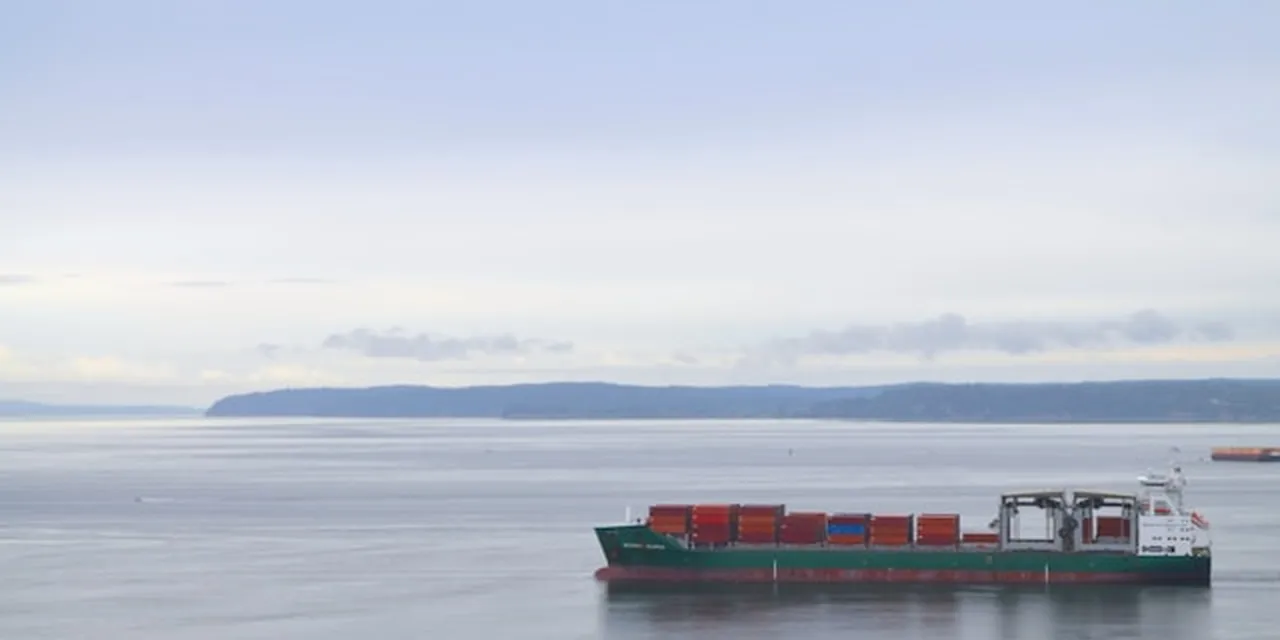
Taiwan's second-largest container gateway processed 1.56 million TEU in 2024, a 3.2% recovery from the prior year's low point but still 11% below pre-pandemic throughput. The numbers suggest a port in careful recovery. The talent data tells a different story entirely. Job postings for maritime logistics roles in Keelung rose 34% year over year in 2024, vacancy rates for licensed gantry crane operators reached 22%, and the typical time to fill an automated RTG crane operator position stretched from 45 days in 2019 to 140 days by last year.
The core tension is not simply that Keelung cannot find enough workers. It is that the port is investing in two directions at once. Taiwan International Ports Corporation has committed over NTD 6 billion to port automation: automated stacking cranes, AI-driven yard planning, OCR container recognition systems. These investments were designed to reduce dependence on manual labour. Instead, they have replaced one category of worker with another that barely exists in the local market. The technicians, automation-literate crane operators, and maritime cybersecurity specialists this infrastructure demands are not graduating from local programmes in sufficient numbers. Meanwhile, the conventional breakbulk and bulk cargo operations that automation cannot touch still face acute shortages of licensed operators and lashers.
What follows is a ground-level analysis of why Keelung's maritime logistics sector is caught between two workforce crises at once, what the compensation and competitive dynamics look like for hiring leaders in 2026, and what it takes to reach the candidates who can actually fill the roles this port needs most.
The Port Keelung Operates in 2026: Expansion Meets Constraint
The Port of Keelung sits in a peculiar position among Asian container gateways. It is large enough to anchor Northern Taiwan's import and export flows but too shallow to compete for the ultra-large container ships that now dominate transpacific routing. The main channel maintains a depth of negative 13.5 metres, forcing tidal window restrictions on post-Panamax vessels. Dredging to negative 15.5 metres, critical for handling 14,000-plus TEU ships, remains delayed pending Environmental Impact Assessment approval. Current estimates from the Environmental Protection Administration push deep-water access to Q4 2026 at the earliest, and that timeline itself carries risk given the complexity of protecting the nearby Keelung Islet coral ecosystems.
TIPC's 2021 to 2026 Keelung Port Expansion Plan enters its final phase this year with the commissioning of West Coast Container Wharf Phase 5. WCCW-5 adds 380 metres of quay wall and three super-post-Panamax gantry cranes, theoretically increasing annual capacity by 450,000 TEU. The word "theoretically" matters. Additional quay wall capacity means nothing without the operators, engineers, and logistics specialists to use it. And the dredging delay means even once WCCW-5 is operational, the port still cannot receive the largest vessels its competitors in Kaohsiung and Busan handle routinely.
Transshipment: A Strategy Waiting for Carriers to Cooperate
Transshipment volumes through Keelung declined 18% between 2022 and 2024, according to Taiwan's Maritime and Port Bureau. Carriers have redirected to Kaohsiung's deeper berths and regional hubs like Busan. Cross-strait tensions compounded this shift. Chinese carriers reduced transshipment cargo through Keelung by 23% since 2022, preferring domestic hubbing at Ningbo-Zhoushan.
Despite this decline, the Keelung Harbor Bureau is repositioning the port as a niche transshipment hub for intra-Asia routes and cold-chain logistics, targeting 400,000 TEU in transshipment volume by 2026, up from 290,000 TEU in 2024. That ambition depends on the completion of the Keelung Logistics Park cold storage facility, with Phase 1 delivering 15,000 pallet positions scheduled for Q2 2026, and on agreements with regional feeder operators who have options elsewhere. Whether carriers return to Keelung is not a question the port can answer through infrastructure alone. It is a question of economics, geopolitics, and, critically, whether the port can deliver the operational efficiency that carriers demand.
The Hinterland Problem That Compounds Every Other Constraint
Even if WCCW-5 commissions on schedule and transshipment volumes recover, the hinterland bottleneck limits what the port can absorb. The Keelung-Xizhi truck corridor processes 12,000 truck movements daily at 94% capacity utilisation. National Freeway 1, the primary highway connection, handles 78,000 vehicles daily with average truck speeds below 35 kilometres per hour during peak hours. Container drayage dwell times run four to six hours.
This is not a future risk. It is a present constraint that shapes every hiring decision in the port cluster. Terminal operations managers must plan around the bottleneck. Trucking and inland logistics firms competing for 6,800 workers in Keelung's logistics chain face a pool that has other options closer to Taipei. The hinterland problem is a talent problem in disguise.
Capital Moved Faster Than Human Capital Could Follow
This is the analytical claim at the centre of Keelung's hiring crisis, and it is not stated in any single dataset. It emerges from combining three facts. TIPC invested NTD 6-plus billion in automation. The port simultaneously faces a 22% vacancy rate for licensed crane operators. And automation is projected to displace 15 to 20% of tally clerk and documentation clerk roles by 2027, while creating demand for 180 to 220 new technician roles the local labour market cannot fill.
The investment in automation has not reduced the port's workforce requirements. It has replaced one kind of worker with another kind that does not yet exist in sufficient numbers locally. The training pipeline at National Taiwan Ocean University, which graduates 850 maritime and logistics specialists annually and sits within eight kilometres of the port, was built for a different era of port operations. NTOU produces graduates fluent in conventional logistics. The port now needs graduates fluent in PLC systems, remote-controlled yard crane operation, and maritime IT security. The gap between what the university produces and what the port needs is widening, not closing.
This mismatch creates a paradox visible across the port. Automation threatens to make some roles obsolete. But the roles it creates are harder to fill than the ones it eliminates. The net effect is not fewer vacancies. It is different vacancies, in categories where recruitment takes three times longer.
Where the Talent Gaps Are Most Acute
Automated Crane Operators: Nine Months and Counting
According to reporting in the Commercial Times in August 2024, TIPC maintained open postings for 12 automated RTG crane operator positions at the WCCW Terminal 22 since March 2024. Over nine months, these roles remained unfilled. The problem is not compensation. The problem is the required combination of crane licensing and automation system literacy. Few candidates hold both. The typical time to fill these positions has stretched from 45 days five years ago to 140 days in 2024, according to the Taiwan Institute of Economic Research's Recruitment Difficulty Index.
A conventional crane operator can be licensed through Taiwan's existing certification programmes. An automation-literate operator must also understand PLC systems, sensor integration, and remote operation protocols. The intersection of those skill sets is small. And the candidates who sit in it are, in approximately 85 to 90% of cases at the VP and Director level, not actively looking for new roles, according to a maritime sector search analysis conducted by Stanton Chase Taipei in 2024.
Maritime Cybersecurity: 167 Days on Market
The digitalization of port operations has created a hiring gap that barely existed five years ago. The Taiwan Port Community System, scheduled for full implementation at Keelung by March 2026, requires integration with 140 local freight forwarders and 23 customs brokers. Every integration point is a potential attack surface.
Aggregate data from Taiwan's 104 Job Bank shows that maritime IT security postings in the Keelung-Taipei corridor average 167 days on market, compared to 63 days for generic IT security roles. The premium for maritime domain knowledge is enormous. A cybersecurity specialist who understands port community systems, maritime single windows, and the specific regulatory requirements of Taiwan's customs infrastructure is a fundamentally different hire from a generic information security analyst. The market for the former is vanishingly thin.
Maritime Compliance and Customs Brokerage
Customs brokerage and maritime compliance roles show 18% vacancy rates across the Keelung cluster. The Northern Region Branch of Taiwan Customs Administration processes 1.2 million import declarations annually. The 320 customs officers and examiners handling that volume represent a significant institutional knowledge base, but the private sector pipeline feeding customs brokerages and shipping agencies is thinner. Entry-level customs brokers and documentation clerks turn over at 18% annually. Quality varies. And the mid-level compliance managers who should be stepping into senior roles are being pulled toward Taipei or, increasingly, toward entirely different industries.
The E-Commerce Drain: A Competitor You Cannot See on a Port Map
Keelung's maritime talent does not compete only against Kaohsiung or Singapore. It competes against Shopee.
According to reporting in the Liberty Times in June 2024, Singapore-based Shopee, the e-commerce arm of Sea Ltd., recruited three senior logistics operations managers from Yang Ming Terminal Services and Evergreen's logistics division in Q2 2024. The compensation packages offered were 35 to 40% above maritime industry standards. Stock options and flexible work arrangements, neither of which are typical in port operations, were part of the proposition.
This is not an isolated incident. It reflects a broader pattern in which mid-level maritime talent, typically professionals aged 30 to 45 with deep operational experience, discovers that the skills they built managing container yard logistics, fleet scheduling, and supply chain coordination translate directly to e-commerce fulfilment networks. The e-commerce sector can offer more money, equity participation, remote or hybrid flexibility, and career trajectories that are not capped by agency fee structures or throughput-linked bonus formulas.
The port sector cannot match these offers on compensation alone. NTD 1.45 million to NTD 2.1 million for a Terminal Operations Manager does not compete with what a logistics technology firm in Taipei will pay the same person. The gap is compounded by working conditions: Taiwan's Labour Standards Act mandates 40-hour weeks with strict overtime limits, but 24/7 port operations require contractor structures and shift patterns that make the work less appealing to professionals with options.
Hiring leaders in Keelung's maritime sector face a question that goes beyond salary negotiation. They must construct a proposition that competes with industries offering equity, flexibility, and digital-native career paths. That proposition exists. But it requires articulating what port leadership offers that e-commerce cannot: operational scale, infrastructure complexity, and direct impact on national trade flows. The firms that learn to sell this narrative will retain talent. The firms that compete on salary alone will continue to lose.
Compensation Benchmarks: What the Market Actually Pays in 2026
Understanding Keelung's compensation structure requires separating three tiers of the market, each operating under different economic logic.
Specialist and Manager Level
Terminal Operations Managers with 8 to 15 years of experience earn NTD 1.45 million to NTD 2.1 million annually, with a 15 to 20% premium for automation experience, according to salary data from the 104 Job Bank and Michael Page Taiwan. Maritime Compliance and Customs Brokerage Managers sit at NTD 1.2 million to NTD 1.8 million. Port Engineers with Professional Engineer certification command NTD 1.35 million to NTD 1.95 million, with PE-licensed professionals consistently in the top quartile.
Executive and VP Level
VP of Terminal Operations roles for container and bulk facilities pay NTD 3.8 million to NTD 5.5 million annually, with variable bonuses tied to throughput efficiency metrics adding 20 to 40% of base compensation, per Russell Reynolds Associates' 2024 Taiwan industrial sector compensation study. Country Logistics Directors at multinational freight forwarders earn NTD 4.2 million to NTD 6.8 million, with long-term incentive components available at firms like Kuehne+Nagel and DSV but rare at local stevedoring operations. Shipping Agency General Managers typically cap at NTD 3.5 million to NTD 4.8 million, constrained by agency fee structures that limit upside.
The Bilingual Premium and the International Drain
Executives with bilingual Mandarin-English capability and experience with Taiwan's Maritime and Port Bureau regulatory frameworks command 12 to 18% salary premiums over domestic-only peers. This premium reflects the scarcity of leaders who can operate across both the local regulatory environment and international carrier relationships.
At the C-suite level, the competition is international. Singapore offers tax advantages through its territorial tax system compared to Taiwan's progressive rates reaching 40%, and compensation packages run 2.5 to 3 times Taiwanese levels, according to the Maritime and Port Authority of Singapore's employment surveys. This differential creates what the Taiwan Shipowners' Association describes as a brain drain of senior Taiwanese maritime talent aged 45 and above. A Country Manager in Keelung earning NTD 5 million can earn the equivalent of NTD 12.5 million to NTD 15 million in Singapore. The cost of a failed search at this level is not merely the recruitment fee. It is the strategic cost of a port operation running without the leadership it needs during a critical infrastructure transition.
The Competitive Geography: Keelung's Three-Front Talent War
Keelung does not exist in isolation. It competes for talent against three distinct markets, each pulling different segments of its workforce.
Kaohsiung offers terminal operations managers and maritime engineers 8 to 12% compensation premiums over Keelung equivalents. Housing costs roughly 60% of Keelung levels, at NTD 280,000 per ping compared to NTD 450,000. Kaohsiung's newer, larger-scale automation projects, including the Seventh Container Terminal, give mid-career professionals the chance to work with 20,000-plus TEU vessels that cannot physically berth in Keelung. For professionals aged 35 to 45 seeking operational scale, Kaohsiung is the more compelling option.
Taipei lacks port facilities but concentrates shipping agency headquarters, logistics technology firms, and corporate planning roles paying 15 to 25% premiums over Keelung operational positions. Superior public transit, specifically the Taipei Metro versus Keelung's limited bus network, makes Taipei more liveable for dual-income households. Senior freight forwarders and agency executives frequently commute from Taipei or relocate to Xizhi and Zhonghe to bridge the cost gap.
Singapore and Hong Kong compete for the most senior tier. The 2.5 to 3 times compensation differential is difficult for any Taiwanese employer to overcome, and the dynamics of international executive mobility mean that once a senior maritime leader relocates to Singapore, the probability of return is low.
Keelung's retention advantages are real but narrow. Housing affordability relative to Taipei matters for junior and mid-level staff. Specialised niche expertise in conventional bulk cargo handling, a category that mega-ports have largely automated away, gives Keelung a functional monopoly on certain skills. But this advantage erodes as younger professionals prioritise digital skills transferable to technology hubs over deep domain expertise in breakbulk operations.
What Hiring Leaders in Keelung Must Do Differently
The conventional executive recruitment approach breaks down in this market for a specific reason. The candidates who can fill the most critical roles are not visible. At VP and Director level, 85 to 90% are passive. Among the 340 licensed Class A maritime surveyors in Taiwan, 95% will never appear on a job board. A hiring process built around job postings and inbound applications reaches, at most, 10 to 15% of viable candidates in this market.
The Port Community System implementation, the WCCW-5 commissioning, the cold-chain logistics build-out: each of these 2026 milestones demands specific leadership hires that cannot wait for a six-month posting cycle. When an automated RTG crane operator role already averages 140 days to fill through conventional channels, the math is clear. The method must change.
What works in this market is direct identification of passive candidates through structured mapping of the institutions where they currently sit: TIPC, Evergreen subsidiaries, Yang Ming operations, Kuehne+Nagel's Northern Taiwan hub, and the handful of international freight forwarders with Keelung-adjacent facilities. The total addressable talent pool for senior port leadership in Northern Taiwan is small enough to map exhaustively. The question is not whether the right candidates exist. It is whether you reach them before Shopee, Kaohsiung, or Singapore does.
KiTalent's talent mapping methodology is built for precisely this kind of constrained, specialist market. By combining AI-driven candidate identification with direct headhunting, KiTalent delivers interview-ready executive candidates within 7 to 10 days, reaching the passive talent that job boards structurally cannot access. With a 96% one-year retention rate across 1,450-plus executive placements, the model is designed for markets where a single senior vacancy creates operational risk measured in throughput losses and regulatory exposure.
For organisations competing for maritime leadership in Keelung's port cluster, where WCCW-5 commissioning demands operators who do not yet exist on any job board and every month of vacancy delays the infrastructure return, speak with our executive search team about how we approach this market.
Frequently Asked Questions
What is the average salary for a Terminal Operations Manager in Keelung?
Terminal Operations Managers with 8 to 15 years of experience in Keelung earn NTD 1.45 million to NTD 2.1 million annually, equivalent to approximately USD 46,000 to USD 67,000. Candidates with automation system experience command premiums of 15 to 20% above the base range. At VP level, compensation reaches NTD 3.8 million to NTD 5.5 million, with performance bonuses tied to throughput efficiency adding 20 to 40% of base. Bilingual Mandarin-English executives earn an additional 12 to 18% premium. For current salary benchmarking across maritime and industrial roles, specialist firms with access to real-time compensation data provide the most accurate picture.
Why is it so hard to hire crane operators in Keelung?
The difficulty centres on a skills intersection that few candidates occupy. Automated RTG crane operation at Keelung's modernised terminals requires both a valid crane operating licence and fluency in PLC automation systems. The typical time to fill these positions stretched from 45 days in 2019 to 140 days in 2024. Only a small number of professionals hold both qualifications, and approximately 85 to 90% of qualified candidates at senior levels are passive, meaning they are employed and not actively applying. Reaching them requires direct headhunting rather than job board postings.
How does Keelung Port compare to Kaohsiung for maritime careers?
Kaohsiung offers 8 to 12% higher compensation for comparable terminal operations and maritime engineering roles. Housing costs roughly 60% of Keelung levels. Kaohsiung's newer infrastructure, including the Seventh Container Terminal, accommodates vessels exceeding 20,000 TEU, offering mid-career professionals operational scale impossible at Keelung's shallower berths. Keelung's advantages include proximity to Taipei, specialised expertise in conventional bulk cargo, and lower relocation friction for Northern Taiwan residents. The choice depends on career stage and whether a professional prioritises scale or niche specialisation.
What is the Port Community System and why does it affect hiring?
The Taiwan Port Community System is a digital platform connecting all port stakeholders, including customs brokers, freight forwarders, terminal operators, and regulators, into a single data exchange network. Full implementation at Keelung is scheduled for March 2026, requiring integration with 140 freight forwarders and 23 customs brokers. The system creates demand for maritime IT security specialists, a role category that averages 167 days on market in the Keelung-Taipei corridor compared to 63 days for generic IT security positions. Hiring leaders planning for PCS readiness must begin executive search processes well ahead of the go-live date.
How can companies attract passive maritime talent in Taiwan?
With 85 to 90% of senior maritime professionals in Northern Taiwan classified as passive candidates, conventional job advertising reaches a fraction of the viable pool. The most effective approach combines structured talent mapping of the institutions where these professionals currently work with direct, confidential outreach presenting a specific opportunity proposition. Stock options, flexible arrangements, and career trajectory matter as much as base salary, given competition from e-commerce and technology sectors. KiTalent's AI-enhanced direct search methodology is designed to identify and engage precisely this passive talent segment, delivering interview-ready candidates within 7 to 10 days.
What are the biggest risks to Keelung Port's talent pipeline in 2026?
Three risks converge in 2026. First, automation investment displaces 15 to 20% of documentation and tally clerk roles while creating 180 to 220 new technician roles the local market cannot supply. Second, e-commerce firms continue to recruit mid-level logistics managers at 35 to 40% compensation premiums. Third, Singapore's 2.5 to 3 times pay differential drains C-suite talent. The port's training pipeline, anchored by NTOU's 850 annual graduates, has not yet adapted to the automation-era skill requirements. Organisations that rely on inbound applications alone will find their candidate pools shrinking in each successive hiring cycle.