Kilkenny's Brewing and Artisan Food Boom Is Running Out of Room: Why Production Talent Cannot Follow the Investment
Kilkenny's brewing and artisan food sector generated an estimated €18-22 million in collective turnover through its 45-plus artisan producers in 2024, while tourism visitor expenditure on food and drink experiences approached €12 million annually. Sullivan's Brewing Company is expanding production capacity by 40%. Ballykeefe Distillery is pushing into ten new US state markets. The Kilkenny Food Trail is growing from 40 to 55 participating producers. By every demand metric, this is a sector accelerating.
Yet the physical and human infrastructure beneath that acceleration is not keeping pace. Industrial vacancy in Kilkenny city stood at 2.1% in late 2024, less than a third of the national average. Production-grade facilities in the medieval core require 6-12 months longer to approve than equivalent builds in greenfield zones. And the technical talent required to run expanded operations, from head brewers to food safety managers to distillery operations specialists, sits in a market where 85% of qualified practitioners are not looking for a new role. The sector is growing into a wall that no amount of brand momentum can dismantle alone.
What follows is an analysis of the forces reshaping Kilkenny's brewing, distilling, and artisan food sector, the specific talent constraints that are stalling growth plans already funded and approved, and what hiring leaders in this market need to understand before their next critical search.
A Medieval City With a Modern Production Problem
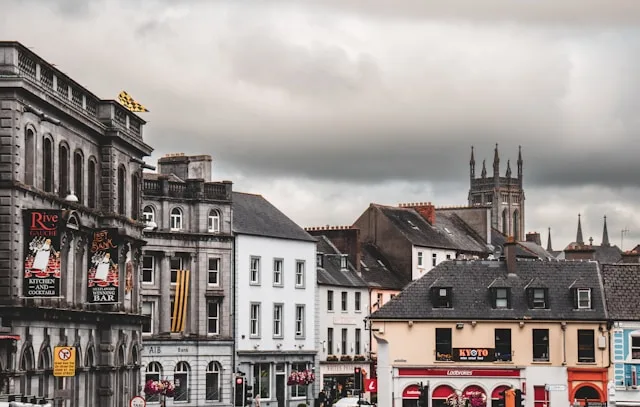
Kilkenny's identity as Ireland's medieval city is simultaneously its greatest commercial asset and its most frustrating operational constraint. The heritage streetscape, the Smithwick's Experience drawing tens of thousands of visitors annually, the established food trails linking producers to hospitality and retail channels: these are the ingredients of a premium brand story that most food and drink regions spend decades trying to build. Kilkenny has it already.
The problem is that brand stories need products behind them. And products need production space.
The county holds 0.8 million square feet of modern industrial stock. Neighbouring Waterford holds 4.2 million. Speculative development in Kilkenny is constrained by land zoning delays, heritage site preservation requirements, and planning restrictions that add €15,000-€50,000 to facility fit-out costs for city-centre producers compared to industrial zone equivalents. According to the South East Regional Enterprise Plan Food Sector Working Group, 60% of Kilkenny-based artisan food producers are projected to hit capacity constraints by Q3 2026 without new industrial zoned land release, specifically the proposed Ferrybank East development.
The 2.1% Vacancy Ceiling
A 2.1% industrial vacancy rate does not merely make expansion difficult. It makes it structurally improbable for any producer that has not already secured space. For context, the national average stood at 6.8% in the same period. The gap means that a Kilkenny producer looking to scale from micro-enterprise to mid-scale exporter faces a property market where suitable units effectively do not exist on the open market. Sullivan's Brewing Company's planned 40% capacity increase is currently contingent on securing additional warehousing at Kilkenny Business Park. That single negotiation will determine whether the city's largest indigenous brewing employer can execute its growth strategy.
Heritage Restrictions as a Competitive Disadvantage
The heritage planning framework imposes constraints on signage, building modifications, and noise emissions that are appropriate for preserving a medieval city. They are not appropriate for scaling a food production cluster. A craft brewery or cheesemaker operating from the city centre cannot simply add a packaging line or extend operating hours without a planning process that Cork or Waterford producers do not face. The result is a slow, invisible bleed of scaling enterprises toward locations with fewer restrictions, even when the brand value of a Kilkenny provenance would justify staying.
This is the first tension any hiring leader in this market must understand. You are not recruiting into a sector with a simple demand-supply imbalance. You are recruiting into a sector where the physical infrastructure constrains the roles that can exist in the first place.
The Talent Market Behind the Brand
Brewing and distilling vacancies in the South East region, encompassing Kilkenny, Carlow, Waterford, and Wexford, remain unfilled for an average of 87 days. General manufacturing roles in the same region fill in 42 days. The gap is not explained by compensation alone. It reflects a market where the qualified candidate pool is overwhelmingly passive and geographically dispersed.
Among qualified master brewers and head distillers, the employment rate sits at 94%. Active jobseekers represent roughly 15% of the available talent pool. In food technology and new product development, the passive-to-active candidate ratio runs 3:1, with unemployment in the segment at just 2.1%. For export sales directors in the drinks sector, the market is over 90% passive, characterised by locked-in bonus structures and non-compete clauses that suppress active application behaviour.
These are not conditions where a job advertisement, however well-written, reaches the candidates that matter. They are conditions where direct identification and cultivation of employed professionals is the only viable methodology.
The practical consequence for Kilkenny employers is severe. Sullivan's Brewing Company's 2024 expansion required 11 months to secure a Head Brewer with specific cask ale expertise. The role was ultimately filled from the UK market with relocation support. A typical Kilkenny-based artisan cheese producer reportedly delayed launch of aged cheese product lines by eight months because it could not secure a Quality Manager with HACCP Level 4 and BRC audit experience, eventually contracting remote supervision from a Dublin-based consultant at a 40% premium. These are not isolated incidents. They are the standard experience for producers operating at the intersection of small scale, specialist skills, and limited geographic pull.
Where the Candidates Are Going Instead
Kilkenny competes for brewing and food production talent against Dublin, Cork, Belfast, and increasingly London and Manchester. Each competitor market offers a different combination of advantages that Kilkenny must offset with a compelling counter-proposition.
Dublin's Structural Pull
Dublin commands compensation premiums of 18-25% above Kilkenny rates for equivalent Head Brewer and Operations Director roles. The capital concentrates Ireland's drinks multinationals, including Diageo, C&C, and Heineken, alongside a growing craft sector led by operations such as Rascals and Porterhouse. For a senior technical professional, Dublin offers deeper career trajectory options and, critically, superior spouse and partner employment opportunities in the technology sector. Housing costs run 65% higher than Kilkenny, which partially offsets the nominal salary advantage, but the perception of Dublin as the career-building market persists and shapes candidate decision-making.
Cork's Quiet Advantage
Cork offers Kilkenny's most direct competitive threat. Ireland's second brewing capital hosts Beamish, Heineken's Irish operations, Franciscan Well, and Eight Degrees Brewing. Salaries for production roles run 10-15% above Kilkenny equivalents. Cost of living is comparable. But Cork's decisive advantage is its talent supply pipeline. MTU Cork's brewing and distilling programme produces graduates in numbers that exceed local demand, creating a pool of early-career talent that Kilkenny employers struggle to attract without offering remote work flexibility or other location-independent incentives.
The UK Market
Senior brewers and distilling professionals with a decade or more of experience face a pull toward UK craft beer centres where salaries range £55,000-£75,000, equivalent to €65,000-€88,000, exceeding Irish rates by 20-30% post-tax. Immigration friction since Brexit has moderated this flow, but it has not stopped it. For the most experienced practitioners, the UK remains a viable and financially attractive alternative.
The implication for any Kilkenny employer building a senior team is clear. You are not operating in a local labour market. You are competing across borders, and the cost of a slow or poorly structured search is not merely delay. It is permanent loss of the candidate to a competitor geography.
The Diageo Paradox: How Consolidation Strengthened and Weakened the Sector Simultaneously
This is the original analytical claim this article makes, and it is not immediately obvious from the headline data.
When Diageo consolidated Smithwick's production to St. James's Gate in Dublin in 2013, the conventional reading was that Kilkenny had lost its brewing anchor. A 300-year production heritage, ended. But the decade since has produced a counter-intuitive outcome. Kilkenny's craft brewing ecosystem diversified more than comparable Irish regions that retained large-scale industrial brewing. Sullivan's reopened the historic site in 2016. Microbreweries entered the market. The Kilkenny Food Trail expanded. The absence of a dominant industrial employer created space for a cluster of smaller, more agile producers.
The paradox is that the same consolidation that enabled diversification also removed the infrastructure that a mature craft cluster eventually needs. Large breweries historically provide something invisible but essential: R&D capacity, technical training programmes, equipment maintenance expertise, and a deep bench of mid-career professionals who cycle between the anchor employer and the surrounding ecosystem. Without Diageo's production operations, Kilkenny's craft sector has no local source of these resources. Every head brewer, every food safety specialist, every operations director must be recruited from outside the cluster.
Cork and Dublin, which retained their large-scale brewing operations, can draw on a local talent reservoir that Kilkenny cannot. The craft breweries in those cities benefit from professionals who trained at Heineken or Diageo facilities and then moved into smaller operations. Kilkenny's craft producers are building a sector without a training pipeline beneath it. That is why a Head Brewer search takes 11 months. That is why quality assurance roles go unfilled for half a year. The constraint is not simply a shortage. It is the absence of the institutional infrastructure that produces the shortage's remedy.
This dynamic has direct implications for how executive search must be conducted in this sector. Traditional recruitment methods presuppose a local or regional candidate pool that can be activated through advertising. In Kilkenny's brewing and food production market, that pool does not exist at the specialist level. Every critical hire is, by definition, a relocation hire or a cross-border hire.
Compensation: Competitive Enough to Attract, Not Enough to Retain
The compensation data for Kilkenny's brewing and artisan food sector reveals a market that is broadly competitive at entry and mid-career levels but faces material challenges at senior and executive tiers.
A Master Brewer or Head Distiller with seven or more years of experience commands €58,000-€72,000 at the senior specialist level. At executive or technical director level, that range rises to €85,000-€110,000, with a 15-20% premium for export-facing roles or equity participation in independent distilleries. Operations Directors at site level earn €65,000-€85,000, rising to €95,000-€130,000 at regional or general management level with performance bonuses of 15-25%.
These figures are defensible in a Kilkenny cost-of-living context. Housing costs 65% below Dublin levels mean that a €90,000 package in Kilkenny delivers materially more purchasing power than a €110,000 package in the capital. But the challenge for Kilkenny employers is not the absolute compensation level. It is the negotiation dynamics with passive candidates who must be persuaded to relocate.
A passive Head Brewer currently employed in Cork or Dublin faces a specific calculation. The Kilkenny role offers lower nominal pay. It offers a less established craft ecosystem. It offers limited career progression beyond the hiring company. Against these factors, the employer must present a role proposition that is genuinely differentiated: ownership of a production programme, proximity to a heritage brand story, equity participation, quality of life. These are real advantages, but they require a sophisticated approach to candidate engagement that a job advertisement cannot deliver.
Export Sales Directors face the starkest compensation gap. At €60,000-€75,000 base plus commission for senior roles, and €80,000-€100,000 base at executive level, Kilkenny rates lag London equivalents by 20-30%. The non-compete clauses and locked-in bonus structures that characterise 90% of this candidate pool mean that extracting a senior commercial leader from a competitor requires not just a competitive offer but compensation for what the candidate forfeits by leaving mid-cycle.
The Margin Squeeze That Makes Every Hire Higher Stakes
Kilkenny's craft producers are operating under margin pressure that makes recruitment errors exceptionally costly. Ireland maintains the second-highest excise rate on beer in the EU at €22.55 per hectolitre per percent alcohol, according to Drinks Ireland's taxation reporting. Malting barley prices increased 23% year-on-year through 2024. Glass bottle costs rose 18%. The combined effect compresses craft brewery margins to 8-12% EBITDA, compared to 18-22% for scaled industrial producers.
At these margins, a failed hire is not merely an inconvenience. A Head Brewer recruited over 11 months who leaves after 18 months costs the employer not just the search and onboarding investment but a full production cycle of suboptimal output. A Quality Manager vacancy that forces reliance on a Dublin consultant at 40% premium erodes margins that are already thin. A delayed product launch, whether aged cheese or a new whiskey expression, carries an opportunity cost that a micro-enterprise operating at 8-12% EBITDA cannot absorb.
The excise burden creates an additional structural problem. Independent Kilkenny breweries report 30-40% higher route-to-market costs compared to multinational-backed brands due to tied house agreements and shelf-space fees. These distribution barriers mean that the commercial talent required to build export channels is not a luxury. It is the difference between a producer that survives on domestic margins and one that accesses the higher-margin international market.
Thirty-five percent of Kilkenny's craft drinks production targets UK and US markets, exposing producers to currency fluctuation and potential tariff changes under evolving EU-UK trade arrangements. The Export Sales Director who can manage these exposures is, accordingly, among the most valuable and hardest-to-recruit profiles in the sector, as confirmed by Enterprise Ireland's export diversity reporting.
What This Market Requires From a Search Partner
The characteristics of Kilkenny's brewing and artisan food talent market, a 94% employment rate among master brewers, an 85% passive candidate ratio, 87-day average vacancy durations, cross-border competition for every senior hire, create conditions where conventional recruitment fails systematically. A job posting on IrishJobs.ie reaches the 15% of the talent pool that is actively looking. It does not reach the 85% who are employed, satisfied, and not scanning job boards.
The producers driving Kilkenny's growth, from Sullivan's expansion to Ballykeefe's US market entry to the food trail's push toward 55 participating producers, need a search methodology built for passive candidate markets. That means AI-enhanced talent mapping to identify the specific professionals in Cork, Dublin, London, and Manchester who hold the right combination of technical expertise and sector experience. It means structured candidate cultivation that engages a Head Brewer or Distillery Operations Manager months before they would consider looking. It means market benchmarking that tells a Kilkenny employer exactly what compensation and role proposition will move a passive candidate from a larger market.
KiTalent delivers interview-ready executive candidates within 7-10 days through direct headhunting that reaches the candidates no job board can surface. With a pay-per-interview model that removes the upfront retainer risk that micro-enterprises and scaling producers cannot justify, and a 96% one-year retention rate for placed candidates, the methodology is built for exactly this market: specialist, passive, cross-border, and high-stakes.
For producers in Kilkenny's brewing and artisan food sector competing for the master brewers, quality directors, and export leaders that their growth plans depend on, start a conversation with our executive search team about how we approach this market.
Frequently Asked Questions
How long does it take to hire a Head Brewer in Kilkenny's craft brewing sector?
Brewing and distilling vacancies in Ireland's South East region remain unfilled for an average of 87 days, more than double the 42-day average for general manufacturing. Head Brewer and Master Brewer roles at regional craft breweries typically take 5-8 months to fill, with some searches extending beyond 11 months when specific cask ale or distilling chemistry expertise is required. The 94% employment rate among qualified practitioners means that active jobseekers represent only 15% of the available talent pool, making direct headhunting of passive candidates the primary viable methodology.
What salary does a Master Brewer earn in Ireland in 2026?
A Master Brewer or Head Distiller with seven or more years of experience earns €58,000-€72,000 at senior specialist level in Ireland. At executive or Technical Director level, the range rises to €85,000-€110,000, with premiums of 15-20% for export-facing roles or equity participation in independent distilleries. Dublin commands 18-25% premiums above regional rates, while Cork offers 10-15% above Kilkenny levels. UK equivalents range from €65,000-€88,000, exceeding Irish rates by 20-30% post-tax.
Why is industrial space a constraint for Kilkenny food producers?
Kilkenny city's industrial vacancy rate stood at 2.1% in late 2024, compared to a national average of 6.8%. The county holds just 0.8 million square feet of modern industrial stock versus 4.2 million in Waterford. Heritage planning restrictions in the medieval city core add 6-12 months to facility approval timelines and €15,000-€50,000 to fit-out costs. Without new industrial zoned land release from the proposed Ferrybank East development, 60% of Kilkenny artisan food producers face capacity constraints by late 2026.
What are the biggest hiring challenges for artisan food producers in Ireland?
Quality Manager and Food Safety roles requiring HACCP Level 4 and BRC audit experience typically take 4-6 months to fill for producers with €2-5 million turnover. The passive candidate ratio in food technology runs 3:1, with segment unemployment at just 2.1%. Export Sales Directors operate in a 90%-plus passive market locked in by bonus structures and non-compete clauses. KiTalent addresses these challenges through AI-powered talent identification that maps the specific professionals competitors cannot reach through conventional advertising.
How does Kilkenny compete with Dublin and Cork for brewing talent?
Kilkenny offsets lower nominal salaries through cost-of-living advantages, with housing costs 65% below Dublin. The city's heritage brand story and quality of life provide differentiation for candidates prioritising lifestyle. However, Dublin's deeper career trajectories, spouse employment options, and 18-25% compensation premiums remain powerful draws. Cork's MTU brewing programme creates a local talent pipeline that Kilkenny lacks. Successful Kilkenny employers build compelling role propositions combining equity participation, production ownership, and heritage brand association to compete with larger markets.
What export risks do Kilkenny craft drinks producers face?
Thirty-five percent of Kilkenny's craft drinks production targets UK and US markets. GBP/EUR volatility and evolving EU-UK trade arrangements create ongoing tariff and currency risks. Ireland's second-highest-in-the-EU excise rate on beer compresses domestic margins to 8-12% EBITDA for craft producers, making export diversification essential. Ballykeefe Distillery's push into ten new US state markets through 2026 exemplifies the growth opportunity, but the Export Sales Directors required to manage these channels sit in a market that is over 90% passive.