Kilkenny's Craft and Design Sector Has Invested in Digital Transformation. The Talent to Run It Does Not Exist Locally
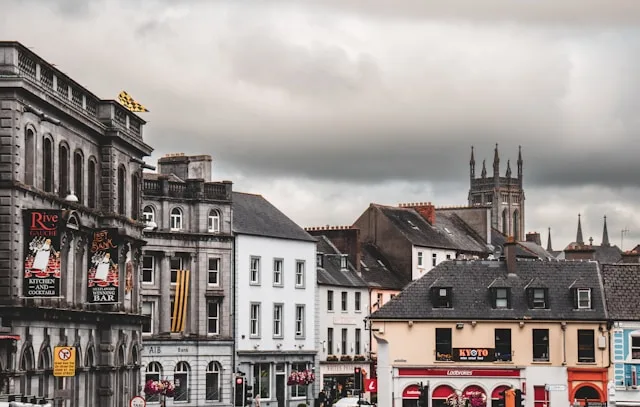
Kilkenny hosts the highest density of craft and design businesses per capita in Ireland. Approximately 18.2 enterprises per 10,000 residents, nearly double the national average of 9.4. The county is home to the Design & Crafts Council Ireland headquarters, the National Design & Craft Gallery, an Oscar-nominated animation studio, and more than 340 registered craft businesses generating €47.3 million in direct retail sales through tourism alone. By any measure of creative industry clustering, this is the most concentrated market of its kind in the country.
None of that concentration has solved the hiring problem. Specialist roles in Kilkenny's craft and design sector now take an average of 87 days to fill, more than double the 42-day average for general administrative positions. A ceramics consortium abandoned an eight-month search for a Master Ceramicist in 2024 and replaced the role with automated casting equipment. A pottery manufacturer held an Export Sales Manager vacancy open for eleven months before splitting the role into two part-time contracts. The digital transformation that the sector's development agencies have correctly identified as essential is creating demand for hybrid roles that combine craft knowledge with e-commerce, international logistics, and luxury brand marketing capabilities. Those roles sit at the intersection of two talent pools that barely overlap.
What follows is an analysis of the forces reshaping Kilkenny's creative economy, the specific talent categories where searches consistently fail, and what hiring leaders in this sector must understand about a market where the candidates they need are overwhelmingly passive, geographically dispersed, and invisible to conventional recruitment. The gap between Kilkenny's institutional prestige and its ability to produce the talent it needs is the central challenge facing every creative business leader in the county.
A €47 Million Sector Built on a Seasonal Foundation
Kilkenny's craft and design sector directly employs between 1,850 and 2,100 full-time equivalents, with an additional 800 to 900 seasonal positions that peak between April and October. Fáilte Ireland data shows that 42% of visitors to Kilkenny cite shopping for crafts and design as a primary motivation. That statistic makes the sector sound robust. The underlying revenue pattern tells a different story.
Businesses on the Medieval Mile reported a 28% revenue decline in Q1 2024 compared to Q4 2023. The cause was not a market failure. It was winter. The seasonal trough that arrives every November and does not lift until late March creates a revenue cycle that makes permanent hiring commitments difficult to justify and full-time senior roles harder to fund. According to the Kilkenny Chamber of Commerce, 71% of craft businesses identify tourism footfall fluctuations as their primary revenue risk. A 10% decline in international visitor numbers correlates with revenue drops of 14 to 18% for city-centre studios.
This seasonality shapes the talent market in ways that salary benchmarks alone cannot capture. A Studio Production Manager earning €42,000 to €58,000 in Kilkenny might appear competitively compensated for the South East region. But the candidate considering that role also sees that the business generating the salary depends on six strong tourism months to fund the other six. For a senior hire weighing stability against opportunity, that calculation matters.
The sector has recovered to 94% of pre-pandemic employment levels, but the composition has shifted. Studio-based production employment fell 12% between 2019 and 2024, a loss of roughly 220 jobs. Over the same period, e-commerce and digital design roles grew 34%, adding approximately 180 positions. The net effect is a sector that employs slightly fewer people doing fundamentally different work. The hiring strategies that filled craft studios five years ago are not the strategies that will fill digital marketing desks today.
The Digital Imperative That Risks Destroying What Makes Kilkenny Valuable
Here is the tension that every creative business leader in Kilkenny must reckon with: the sector urgently needs digital capability, and the evidence suggests that scaling through digital channels may erode the premium pricing that sustains the sector in the first place.
The Design & Crafts Council Ireland launched its "Digital Craft" initiative in late 2024, targeting 150 Kilkenny-based businesses for e-commerce capability upgrades by the end of 2026. Initial data shows 40% adoption of advanced digital inventory systems. Only 18% have implemented international payment logistics. The ambition is correct. Kilkenny's craft businesses cannot remain dependent on a six-month tourism window if they want to grow.
The Commoditisation Risk
But businesses that shifted more than 50% of sales online during 2020 to 2022 subsequently experienced 15 to 20% price erosion compared to gallery retail. The "handmade in Kilkenny" proposition depends partly on provenance verification that happens in person. A tourist who visits Nicholas Mosse Pottery in Thomastown, watches the hand-sponging process, and purchases a bowl at the factory shop pays a premium that reflects the experience as much as the product. That same bowl listed on Shopify, photographed against a white background, competes on aesthetics alone with ceramics from anywhere in the world.
What This Means for Talent
This creates a paradox for hiring leaders. The sector needs luxury e-commerce managers, digital marketing specialists, and international logistics coordinators. It needs them urgently. But the people filling those roles must understand something that a generalist digital marketer from Dublin or London will not instinctively grasp: that the digital channel cannot simply replicate the in-person sales model at scale. It must complement it. The role requires someone who can sell provenance digitally without stripping the provenance of its value.
This is the original synthesis that the data points toward but does not state explicitly. The digital transformation imperative and the authenticity premium are not parallel strategies that can be pursued independently. They are in direct tension. The businesses that will succeed are those that hire people capable of holding both truths simultaneously. That profile is extraordinarily rare. It combines luxury brand marketing expertise with genuine understanding of craft production, international payment logistics, and the discipline to protect margin rather than chase volume. Kilkenny does not produce this candidate locally. The candidate must be found, approached, and convinced.
Why Kilkenny's Institutional Prestige Has Not Built a Local Talent Pipeline
Kilkenny hosts the national headquarters of the Design & Crafts Council Ireland. It houses the National Design & Craft Gallery. It runs one of Ireland's most prominent arts festivals, which injects approximately €6.2 million into the local economy each August. The county's creative credentials are unmatched outside Dublin.
None of this has produced a functioning local skills pipeline.
The county has no third-level craft education institution. Aspiring craftspeople and designers must train in Dublin at NCAD or IADT, or in Cork at CIT. Only 23% of craft-course graduates from these institutions remain in the South East region after graduation. The rest are absorbed by Dublin's larger studios, higher salaries, and stronger career progression pathways. Dublin offers a 25 to 35% salary premium for equivalent digital and design roles. A mid-level position paying €45,000 to €58,000 in Kilkenny commands €55,000 to €75,000 in Dublin. Dublin's cost of living is 62% higher in housing costs, which partially offsets the premium. But "partially" is not "fully," and a 25-year-old graduate is more likely to optimise for salary than for net disposable income.
The consequence is a market where the institutions exist to develop talent but the talent develops elsewhere. The DCCI runs programmes, publishes research, and coordinates sectoral support from its Castle Yard headquarters. The graduates it aims to support are building careers 150 kilometres north. This disconnect between institutional presence and talent retention challenges a core assumption about creative industry clusters: that proximity to anchor institutions generates local talent supply. In Kilkenny's case, it generates local talent awareness. The supply materialises in Dublin.
The Passive Candidate Reality Across Three Critical Functions
Job postings in Kilkenny's arts, crafts, and design category increased 17% year-on-year in 2024, reaching 340 unique vacancies. The posting volume suggests an active market. The fill rates suggest something very different.
Master Craft Practitioners: Zero Unemployment, Seven-Year Tenure
Unemployment among master craft practitioners in Ireland is effectively 0.3%. Qualified glassblowers, master ceramicists, and textile conservators are universally employed. Average tenure exceeds seven years. These are not people browsing job boards. A consortium of three Kilkenny pottery studios spent eight months in 2024 searching for a Master Ceramicist to oversee a shared production facility. According to DCCI case study records, all three qualified candidates identified in Ireland were already employed and declined to relocate from Dublin or Belfast. The consortium invested in automated casting technology instead, reducing their projected headcount by 40%.
That outcome is not a hiring failure. It is a market signal. When the entire qualified population for a role is employed, tenured, and geographically settled, the search methodology must change. Posting a vacancy and waiting for applications is not a viable strategy. It is a formality that consumes months before the real work begins.
Senior Creative Directors: 85% Passive
Among Senior Creative Directors in traditional crafts, 85% of suitable candidates are employed and not actively seeking roles. The Design Business Association Ireland notes that active candidates in this specialism typically indicate career distress or business closure. For a hiring leader, this means that the visible applicant pool is negatively selected. The strongest candidates are the ones who will never apply.
Creative Director compensation in Kilkenny ranges from €75,000 to €95,000 with equity participation typical in larger studios. The package is competitive for the South East. It is not competitive with Dublin, Cork, or Bristol. Senior craft designers in the UK command a 40 to 60% premium and access established gallery networks. Post-Brexit visa complications have reduced outward migration, but 18% of NCAD graduates from Kilkenny-origin students still relocate to UK creative hubs within two years of graduation.
Export Sales Managers: A Skillset That Barely Exists
The passive candidate rate for Export Sales Managers in luxury craft goods is approximately 78%. The issue is not merely passivity. It is scarcity at the intersection of two disciplines. Active applicants typically possess either international sales experience or craft sector knowledge. They rarely possess both.
Nicholas Mosse Pottery's eleven-month search for an Export Sales Manager illustrates the pattern. The role required luxury goods sales experience and knowledge of ceramic production processes. According to DCCI sectoral consultation records from 2024, the company ultimately restructured the position into two part-time contractor roles, citing the unavailability of candidates with the required hybrid skillset. This restructuring is not a creative solution. It is a concession. The company needed one person who could do both things. It hired two people who can each do one.
This pattern of role fragmentation in response to talent scarcity is spreading across the sector. It creates operational complexity, dilutes accountability, and slows decision-making. A single Export Sales Manager makes a pricing call on the spot at a US trade show. Two part-time contractors consult each other across time zones.
Compensation Benchmarks and the Geographic Arithmetic
Salary data for Kilkenny's creative sector reveals a market that is internally coherent but externally vulnerable. The benchmarks make sense within the county. They struggle against every competing geography.
At the specialist and manager level, Studio Production Managers earn €42,000 to €58,000 base, with a 12 to 15% premium for candidates who combine craft knowledge with lean manufacturing certification. Digital Marketing Managers in the luxury and craft space command €48,000 to €65,000, with the upper quartile reserved for proven international e-commerce track records.
At executive level, Managing Directors of craft manufacturing businesses earn €85,000 to €120,000, with the top of the range tied to businesses exceeding €2 million in turnover and offering performance bonuses linked to export growth. Chief Operating Officers at animation and creative digital businesses earn €110,000 to €140,000. Cartoon Saloon and comparable operations compete directly with Dublin rates, offering €105,000 to €125,000 base with project completion bonuses.
The geography complicates every offer. Dublin pays 25 to 35% more for the same digital and design work. Galway and Cork pay 8 to 12% more with comparable living costs and larger studios offering clearer career progression. For senior ceramicists and designers, Bristol and London offer 40 to 60% premiums.
There is one counterweight. Kilkenny's housing costs sit 62% below Dublin's. For a candidate in their late thirties with children, the net disposable income calculation can favour Kilkenny even at a nominally lower salary. But this advantage only applies to candidates already open to relocation. It does nothing to attract candidates who are not yet thinking about moving. The compensation story in this market is not about base salary. It is about the total proposition: lifestyle, creative community, cost of living, and role quality. Communicating that proposition requires a different kind of conversation than a job specification can carry.
The Competitive Threat That Does Not Require Relocation
The most disruptive competitor for Kilkenny's creative talent is not Dublin or Cork. It is the remote work economy.
A 2024 Kilkenny County Council study found that 34% of Kilkenny-based digital designers work remotely for Dublin or international employers while living in the county. These professionals enjoy Kilkenny's quality of life and Dublin's salaries simultaneously. They are not on the local job market. They are not visible to local employers. They are employed, well-compensated, and invisible.
This creates a paradox for local studios. The people with exactly the right skills, living exactly where the studios need them, are already working for someone else without leaving their homes. A Kilkenny design studio posting a Digital Marketing Manager role at €55,000 competes not with the Dublin studio down the street but with the Dublin agency paying €72,000 for the same person to work from their kitchen in Thomastown.
The implication for search methodology is severe. Traditional talent mapping based on location assumes that candidates living in a geography are available to employers in that geography. In Kilkenny's creative sector, that assumption fails for a third of the digital talent pool. Identifying who is genuinely available requires direct research into current employment arrangements, not just current addresses.
Structural Barriers That Shape Every Search
Beyond talent scarcity itself, three structural barriers constrain hiring in this market.
Regulatory Cost Pressure
New EU REACH regulations on chemicals used in glazes and dyes have imposed compliance costs averaging €8,500 per ceramics studio. Commercial rates in Kilkenny City rose 4.5% in 2024, disproportionately affecting the retail gallery spaces on High Street and the Medieval Mile that drive the visitor economy. Public liability insurance premiums for studio visitor experiences increased 35% between 2022 and 2024, forcing 15% of studios to cease workshop offerings entirely. Each of these costs reduces the margin available to fund competitive compensation for senior hires.
Scaling Constraints
The "handmade" value proposition limits mechanisation by design. Only 12% of Kilkenny craft businesses have successfully raised venture capital or material bank debt for expansion since 2020, according to the DCCI's Access to Finance Report. Businesses that cannot raise growth capital cannot fund the senior roles that would drive growth. The circularity is difficult to escape.
Post-Brexit Export Friction
Export logistics to the UK have stabilised but at permanently elevated costs. Average shipping costs for ceramic and glass exporters rose 23% after Brexit. Customs documentation now adds 4.5 administrative hours per shipment. These are not insurmountable barriers. They are friction costs that accumulate in a sector where margins were already thin and where every hour spent on paperwork is an hour not spent on production or sales. For an Export Sales Manager, post-Brexit compliance knowledge has become a baseline requirement rather than a differentiator.
What This Market Requires from a Hiring Strategy
The data tells a consistent story. Kilkenny's craft and design sector is growing in the categories where talent is scarcest. Demand for hybrid craft-digital roles is projected to increase 25% by Q4 2026 according to SOLAS Skills Bulletin forecasts. Traditional craft production roles will contract 8% due to automation. The people who can run e-commerce for a luxury ceramics brand, manage export compliance for handmade goods, or lead a digital transformation that does not destroy the authenticity premium are not reading job advertisements in the South East.
Enterprise Ireland projects 3 to 4% employment growth in the South East creative industries through 2026, lagging the national creative sector forecast of 6.2%. That gap will widen if the sector cannot fill the roles that drive the higher-value growth.
The effective candidate pool for the roles that matter most is not local. It is not active. It is not visible through any conventional channel. An Export Sales Manager with luxury goods experience and craft sector knowledge might be working for a premium homewares brand in Copenhagen. A luxury e-commerce specialist who understands Shopify Plus, international payment logistics, and provenance-driven marketing might be running digital for a small fashion house in Milan. A Senior Creative Director with the credibility to lead a traditional craft studio through digital transformation might be in Bristol, well-compensated, and not considering Ireland until someone presents a specific proposition.
Finding these candidates requires direct, research-led identification across international markets. KiTalent's AI-enhanced talent mapping identifies candidates at the intersection of multiple skill requirements, including professionals who would never surface through conventional job advertising. In a market where 85% of Senior Creative Directors are passive and unemployment among master practitioners is effectively zero, the difference between a successful search and an eleven-month vacancy is method.
KiTalent delivers interview-ready candidates within 7 to 10 days, operating on a pay-per-interview model that eliminates upfront retainer risk. With a 96% one-year retention rate across 1,450 executive placements, the approach is built for markets exactly like this one: small, specialised, and invisible to traditional recruitment.
For organisations in Kilkenny's craft and design sector facing the specific challenge of filling hybrid roles that span craft expertise and digital capability, where the candidates you need are employed, passive, and distributed across international markets, start a conversation with our executive search team about how we identify and reach the talent this market cannot surface on its own.
Frequently Asked Questions
What is the average salary for a Creative Director in Kilkenny's design sector?
Creative Director compensation in Kilkenny's craft and design studios ranges from €75,000 to €95,000, with equity participation typical in larger operations. Managing Directors of craft manufacturing businesses with export turnover exceeding €2 million earn €85,000 to €120,000, often with performance bonuses tied to export growth. These figures are competitive within the South East region but sit 25 to 35% below Dublin equivalents for comparable digital and design roles. The compensation gap between Kilkenny and competing geographies is a material factor in every senior search.
Why is it so hard to hire specialist craft and design talent in Kilkenny?
Three factors converge. First, unemployment among master craft practitioners is effectively 0.3%, meaning nearly every qualified candidate is already employed with average tenure exceeding seven years. Second, Kilkenny has no third-level craft education institution, so graduates train in Dublin or Cork and only 23% return to the South East. Third, 34% of digital designers living in the county already work remotely for Dublin or international employers, removing them from the local talent pool despite their physical proximity.
How long does it take to fill a specialist creative role in Kilkenny?
Average time-to-fill for specialist roles in Kilkenny's craft and design sector reached 87 days in 2024, compared to 42 days for general administrative positions. Niche roles at the intersection of craft knowledge and digital or export expertise take considerably longer. A pottery manufacturer held an Export Sales Manager vacancy open for eleven months before restructuring the role entirely. Direct headhunting approaches consistently outperform job advertising in markets with these passive candidate ratios.
What digital skills are most in demand in Kilkenny's creative sector?
The highest demand is for professionals who combine technical digital capability with craft sector understanding. Luxury e-commerce management, including Shopify Plus expertise and international payment logistics, tops the list. Digital marketing managers who understand provenance-based brand positioning for handmade goods are acutely scarce. Demand for these hybrid craft-digital roles is projected to grow 25% by the end of 2026, while traditional production roles are expected to contract 8% due to automation in ceramics and textiles.
How does Kilkenny's craft sector compare to Dublin for creative employment?
Dublin offers 25 to 35% higher salaries for equivalent roles, particularly in UX design and creative technology. However, Dublin housing costs are 62% higher than Kilkenny's, partially offsetting the premium. Kilkenny's advantage lies in creative community density, lower living costs, and proximity to the sector's national institutions. The challenge is that these lifestyle advantages only attract candidates who are already aware of them. Reaching passive talent in Dublin, Cork, or international markets requires proactive identification and a compelling total proposition that extends well beyond base salary.
What role does KiTalent play in creative sector executive search?
KiTalent uses AI-enhanced talent mapping to identify candidates at the intersection of multiple skill requirements, which is precisely the profile Kilkenny's craft sector needs most. In markets where 78 to 85% of qualified candidates are passive and conventional advertising reaches only a fraction of the viable pool, KiTalent's direct search methodology identifies, approaches, and delivers interview-ready candidates within 7 to 10 days. The pay-per-interview model means organisations pay only when they meet qualified candidates, removing the retainer risk that smaller creative businesses cannot absorb.