Kragujevac Manufacturing in 2026: Two Sectors Expanding, One Workforce Splitting in Half
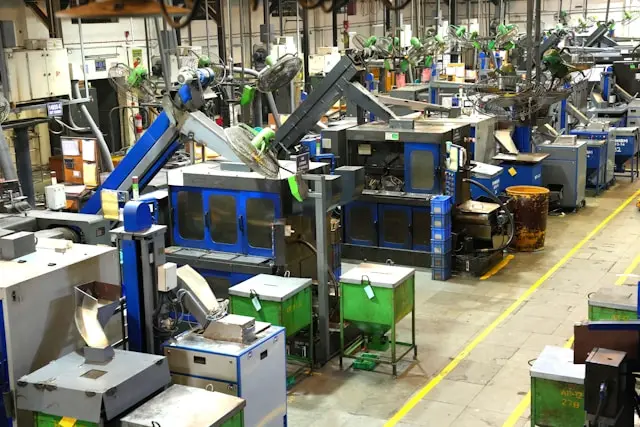
Serbia's second-largest industrial hub is running two expansion programmes simultaneously. Zastava Arms is adding CNC machining centres and cold hammer forging lines to meet NATO-standard licensing agreements in at least two EU member states. Stellantis Serbia is preparing to introduce its STLA Small electric vehicle platform at the Kragujevac assembly plant, a move projected to add 400 to 600 engineering and technical positions by late 2026. Both expansions require precision machinists, systems engineers, and plant-level leadership. Both are drawing from the same regional workforce of roughly 18,500 to 20,000 metalworking professionals.
The problem is not that Kragujevac lacks manufacturing activity. Manufacturing contributes 38.4% of local GDP, well above Serbia's 24.1% national average. The problem is that the two sectors pulling hardest on that workforce cannot share talent between them. Defense manufacturers require security clearances, export control expertise, and familiarity with NATO specification systems. Automotive EV producers need high-voltage battery safety certification, polymer welding capability, and software-integrated mechatronics skills. A displaced ICE machinist from the Stellantis supply chain cannot walk into a barrel-manufacturing role at Zastava Arms. The skills are adjacent but not interchangeable. The labour market is splitting, not pooling.
What follows is a sector intelligence brief on the forces reshaping Kragujevac's industrial base, the talent pressures those forces are creating, and what senior hiring leaders working in or sourcing from this market need to understand before committing to their next search.
A Manufacturing City Built on Two Pillars That No Longer Lean the Same Way
Kragujevac's industrial identity has been automotive-dominant for over a decade. Stellantis Serbia and its Tier-1 and Tier-2 suppliers account for approximately 65 to 70% of formal sector metalworking employment in the municipality. Defence and heavy machinery represent roughly 15 to 20%. That ratio has been stable since Fiat Chrysler's original investment in 2008, and it has shaped how the city trains workers, builds infrastructure, and allocates development funding.
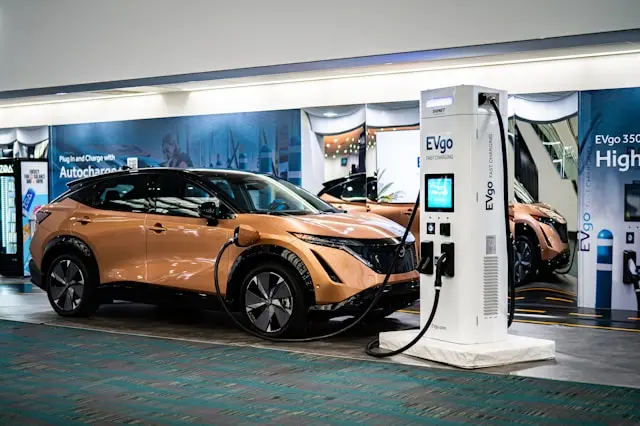
But the ratio masks a divergence that accelerated through 2024 and into 2025. Stellantis completed its €190 million EV platform conversion in 2022, and the transition has compressed demand for traditional ICE machinists by 12% year-over-year while increasing demand for battery systems technicians and automated welding specialists by 34%. The automotive side of Kragujevac is shedding one category of worker and searching urgently for another that barely exists locally.
Zastava Arms: Defence Export Growth at Full Capacity
Zastava Arms completed a €25 million modernisation programme in Q2 2024, co-invested with Jugoimport SDPR, Serbia's state defence export agency. The facility now produces NATO-standard 5.56mm small arms alongside legacy 7.62mm systems. Production volume reached 85,000 units in 2023 and was projected to exceed 100,000 in 2025. International sales comprise approximately 85% of revenue, up from 40% in 2016. Export markets span the Middle East, North Africa, and select Asian defence forces.
The licensing agreements secured for localised production in at least two NATO member states will require €15 to 20 million in additional capital investment across 2025 and 2026 for CNC machining centres and cold hammer forging capacity. Zastava TERVO, the military vehicle subsidiary employing around 650 workers, operates a parallel export programme for armoured personnel carriers and logistics vehicles.
Stellantis: EV Ambition Contingent on Local Supply Chain Depth
Stellantis Serbia employs approximately 2,100 workers directly, with an estimated 8,000 indirect jobs distributed across its supply chain. The planned STLA Small platform introduction is contingent on raising domestic sourcing from 42% to 65% by 2027 to qualify for EU Green Deal industrial incentives. That localisation target implies not just new supplier facilities in the Kragujevac Industrial Zone but new categories of technical worker to staff them.
Yura Corporation Serbia, the South Korean Tier-1 wiring harness manufacturer, already employs around 3,200 workers across Kragujevac and surrounding municipalities. Trayal Corporation adds another 1,100 in rubber and metal composites for both automotive and defence applications. These anchor employers form the visible core of the workforce. The 147 active manufacturing entities in the Kragujevac Industrial Zone, 38 of which specialise in metalworking fabrication, form the less visible but equally constrained periphery.
The two pillars of Kragujevac manufacturing are both growing. They are not growing in the same direction. The workforce caught between them faces a choice that most mid-career machinists were never trained to make.
The Workforce Split No One Planned For
The analytical synthesis that matters most in this market is not about shortage. Shortage is obvious. CNC programming vacancies in Kragujevac already average 127 days to fill, nearly double the 64-day average for general mechanical technicians. The deeper problem is that the two growth sectors cannot function as each other's relief valve.
Defence manufacturers need security-cleared professionals with export control fluency and weapons systems calibration expertise. Automotive EV producers need high-voltage certification, battery enclosure welding capability, and software-integrated production line management. A senior production engineer who has spent a decade inside the Zastava Arms clearance perimeter has deep expertise in armour-grade steel TIG welding and precision barrel grinding. That expertise does not transfer to polymer welding for automotive battery enclosures without retraining that takes 12 to 18 months at minimum.
This is the core tension. The defence boom cannot absorb workers displaced by the automotive EV transition. The EV expansion cannot recruit from the defence talent pool without stripping clearances and retraining skills. Two expanding sectors in the same small city, competing for different workers who happen to share the same postcode.
The practical consequence is that every senior hire in either sector reduces the available pool for the other without adding transferable capacity back. When a Tier-1 automotive supplier poached a Senior Production Engineer from Zastava Arms in Q2 2024, offering a 40% compensation premium, the defence side lost a cleared specialist it could not replace from the open market. According to the Serbian Association of Managers compensation survey and reporting in the "Machine Building" industry journal, this type of defence-to-automotive talent flow has become a documented pattern rather than an isolated incident.
Compensation in a Market Where Emigration Is the Real Competitor
Kragujevac's compensation benchmarks for manufacturing professionals sit well below what the same workers can earn in EU member states. A skilled CNC operator earning €15,000 to €20,000 annually in Kragujevac can earn €40,000 to €55,000 in a German automotive supplier plant. The German Federal Employment Agency's placement statistics confirm that formal Western Balkans labour mobility partnerships are accelerating this flow. Emigration is not a background risk. It is the primary competitor for every manufacturing employer in the region.
What Senior Roles Pay in Kragujevac
The domestic compensation picture is more nuanced at senior and executive level. A Senior Manufacturing Manager with 15-plus years of multi-site responsibility earns €42,000 to €58,000 annually, plus a performance bonus of 15 to 25%. A VP Operations or Plant Director managing a facility of 500-plus employees earns €75,000 to €120,000, with expatriate packages reaching €150,000-plus for international hires managing Stellantis or Tier-1 operations.
The defence sector commands a 10 to 15% premium above automotive equivalents at Head of Engineering and Technical Director level, reflecting security clearance requirements and export control complexity. These roles pay €65,000 to €95,000 annually. EHS Directors with EU Emissions Trading System experience earn €48,000 to €68,000, rising 20% above market average for candidates who can manage IPPC compliance programmes.
The [Belgrade](/belgrade-serbia-executive-search) Premium and the [Novi Sad](/novi-sad-serbia-executive-search) Pull
Belgrade offers 25 to 35% compensation premiums for equivalent manufacturing roles and hosts the headquarters of Siemens Mobility Serbia, Yura Europe's regional offices, and emerging Industry 4.0 hybrid positions that attract mid-career mechanical engineers. Novi Sad competes specifically for automotive mechatronics talent, with Robert Bosch and ZF Group offering €3,000 to €5,000 annual premiums for EV systems engineers. Novi Sad also provides superior international school infrastructure, a material factor for expatriate-returnee Serbian engineers with families.
Kragujevac offers 30% lower housing costs than Belgrade. But the net disposable income comparison after housing still favours Belgrade for workers under 35. The cost-of-living arbitrage that once anchored young engineers to Kragujevac has eroded. It has not disappeared entirely, but it no longer compensates for the career trajectory advantage of a Belgrade or Novi Sad posting.
Wages in Serbian manufacturing rose 8 to 12% annually through 2024. That increase has not closed the gap with EU competitors. It has compressed margins for the SMEs that form the supply chain backbone while failing to stem outward migration of the most qualified technicians.
Environmental Compliance: The €60 Million Question Compounding Every Other Pressure
EU accession alignment requires Serbia to implement the Industrial Emissions Directive by 2027 under the National Programme for Adoption of the EU Acquis. For Kragujevac's heavy metalworking facilities, full IPPC compliance carries an estimated collective cost of €40 to €60 million. Three major facilities in the industrial zone already face enforcement actions under Serbia's new Law on Environmental Protection, which took effect in January 2024. VOC emissions reduction deadlines expire in Q3 2025, requiring €8 to €12 million per facility for scrubber and filtration upgrades.
This is not a future problem. According to the European Commission's Serbia Progress Report, the compliance timeline is fixed and the penalties for non-compliance include loss of access to EU industrial procurement frameworks that several Stellantis suppliers depend on.
The environmental cost compounds the labour cost. Rising wages to retain workers against emigration pressure. Rising compliance costs to retain EU market access. These simultaneous increases challenge the assumption that Kragujevac competes as a low-cost manufacturing base. The region is being pushed toward a quality and speed premium model. But it does not yet possess the skilled workforce density to sustain that model. The workers who could operate high-precision, environmentally compliant production lines are exactly the workers who are hardest to find and easiest to lose.
A small number of employers have responded by hiring EHS Directors at above-market rates, but the pool of candidates with genuine EU ETS experience in Serbia is vanishingly thin. Most qualified candidates are currently employed in EU member states and would need a compelling reason to return.
The Passive Candidate Problem in a Market With Low Digital Visibility
Kragujevac's most critical talent segments operate as deeply passive markets. The 80% of senior professionals who are not actively looking for new roles is a widely cited figure in executive search. In Kragujevac's defence manufacturing sector, the passive rate is materially higher.
Senior Defence Systems Engineers with 10-plus years of experience and NATO standard familiarity show average tenures of three to five years, minimal LinkedIn visibility, and recruitment that occurs primarily through classified defence industry networks or Jugoimport SDPR internal referrals. Zastava Arms reports an 89% retention rate for senior technical staff across 2019 to 2024. These professionals are not on any job board. Many are not on any professional network that a conventional recruiter can access.
CNC programming specialists with 5-axis capability and defence clearances operate in a micro-segment with estimated unemployment below 2%. Recruitment occurs exclusively through direct headhunting or internal promotion. There is no active candidate market for these roles. A search that relies on advertising will reach none of the qualified candidates.
At Plant Director and VP level, the situation is equally constrained. All qualified candidates with automotive EV transition experience are employed. Search firms operating in Serbia report six to nine month search durations for these mandates. Public advertisement fill rates for such roles are, according to Pedersen & Partners' Industrial Practice Review, effectively zero.
Several defence subcontractors have adapted by shifting from standard employment to "associate expert" consulting contracts for retired military engineers aged 55 to 65. These arrangements offer project-based fees of €50 to €100 per hour for weapons systems calibration expertise. It is an informal retention programme for knowledge that is literally retiring out of the workforce. The Serbian Association of Metal Industry's Workforce Demographics Report confirms this is a growing pattern, not an isolated workaround.
The Demographic Clock Running Under Every Expansion Plan
Thirty-four percent of metalworking technicians in Kragujevac are over age 55. The University of Kragujevac's Faculty of Engineering produces approximately 280 mechanical engineering and 150 industrial engineering graduates annually. Only 35% remain in the Šumadija region after graduation. Forty-five percent relocate to Belgrade or emigrate.
The National Employment Service projects a deficit of 1,200 qualified metalworking technicians in the Kragujevac region by the end of 2026. The specific shortages sit in CNC programming for Fanuc and Siemens controllers, polymer welding for automotive battery enclosures, and precision grinding for defence barrel manufacturing.
The cost of getting a senior hire wrong in this market is amplified by the replacement timeline. In a city where the university produces fewer graduates than the retirement wave removes, and where the majority of those graduates leave, every failed search does not just delay a project. It removes a position from the feasible hiring pipeline for 12 to 18 months.
Local metalworking SMEs face a compounding capital constraint. Average interest rates of 8.5 to 11.2% for EUR-denominated investment loans, compared to 4 to 6% for comparable firms in EU member states like Hungary or Romania, according to the National Bank of Serbia's lending survey, mean that the SMEs most in need of modernisation are the least able to finance it. The firms that could attract young engineers with modern equipment and competitive wages cannot afford the equipment. The firms that have the equipment, primarily Stellantis and Zastava Arms, absorb the limited graduate supply and leave the supply chain fighting over the remainder.
Infrastructure bottlenecks add friction. The Kragujevac rail freight terminal operates at 140% of designed capacity, causing three to five day delays in heavy machinery shipments to the Port of Thessaloniki export route. For defence manufacturers operating on tight export delivery schedules, these delays represent contract risk. For hiring leaders trying to sell Kragujevac as a career destination, they represent one more argument a candidate can use to choose Belgrade instead.
What This Means for Organisations Hiring in Kragujevac's Industrial Sector
The market that emerges from this data is not simply short of workers. It is splitting into two non-communicating talent pools inside a single city, each growing, each unable to draw from the other, and both losing their most qualified members to Belgrade, Novi Sad, and the EU at a rate that neither expansion plan has accounted for.
For organisations running executive searches in industrial and manufacturing sectors, the implications are specific. First, any search that relies on active candidates or job advertising will fail for roles above technician level. The qualified population is employed, passive, and in the defence segment often invisible to standard sourcing tools. Second, compensation benchmarking against Kragujevac's historical norms will produce offers that lose to Belgrade, Novi Sad, or Germany. The benchmark that matters is not what a role paid in this city last year. It is what the same candidate can earn by leaving.
Third, the timeline pressure is real and tightening. With Zastava Arms adding forging and machining capacity through 2026 and Stellantis preparing a second EV platform introduction, the demand curve is steepening into a workforce that is aging and emigrating. Every quarter of delay in a critical hire narrows the field further.
KiTalent works with organisations facing exactly this type of bifurcated, passive-dominant, export-pressured talent market. Our AI-enhanced talent mapping methodology identifies candidates who are not visible on any job board or professional network, including defence-sector professionals whose digital footprint is deliberately minimal. We deliver interview-ready candidates within 7 to 10 days and operate on a pay-per-interview model with no upfront retainer, meaning clients pay only when they meet qualified professionals.
For organisations competing for CNC programming specialists, plant-level leadership, or environmental compliance directors in Kragujevac's industrial sector, where the candidates you need are employed, passive, and weighing offers from three countries simultaneously, start a conversation with our industrial practice team about how we approach this market.
Frequently Asked Questions
What are the hardest manufacturing roles to fill in Kragujevac in 2026?
The three most acute shortages are CNC programming specialists with 5-axis machining capability, defence systems integration engineers with NATO standard familiarity, and automotive mechatronics technicians certified in EV battery systems. CNC programming vacancies in Kragujevac average 127 days to fill, nearly double the duration for general mechanical technicians. The National Employment Service projects a regional deficit of 1,200 qualified metalworking technicians by end of 2026, concentrated in these three categories. At senior and executive level, Plant Directors with EV transition experience face search durations of six to nine months.
What do senior manufacturing executives earn in Kragujevac, Serbia?
A Senior Manufacturing Manager with 15-plus years of experience earns €42,000 to €58,000 annually plus a 15 to 25% performance bonus. VP Operations and Plant Director roles at facilities with more than 500 employees command €75,000 to €120,000, with expatriate packages exceeding €150,000 for international hires. Defence sector Technical Directors earn €65,000 to €95,000, carrying a 10 to 15% premium over automotive equivalents due to security clearance and export control requirements. EHS Directors with EU Emissions Trading System experience earn €48,000 to €68,000, rising 20% for candidates with genuine EU regulatory backgrounds.
Why is it difficult to hire CNC programmers in Serbia's manufacturing sector?
The difficulty stems from three compounding factors. First, unemployment in the 5-axis CNC programming segment is estimated below 2%, making it a passive candidate market where conventional job advertising reaches virtually no qualified professionals. Second, emigration to EU member states offers CNC operators two to three times their Kragujevac salary. Third, the university pipeline produces insufficient graduates, with only 35% of engineering graduates from the University of Kragujevac remaining in the region. Defence-cleared CNC specialists face an additional constraint: security clearance requirements mean they can only be recruited through direct headhunting or internal referral networks.
How does Kragujevac compete with Belgrade and Novi Sad for manufacturing talent?
Kragujevac offers approximately 30% lower housing costs than Belgrade, but the net disposable income comparison after housing still favours Belgrade for workers under 35. Belgrade provides 25 to 35% compensation premiums for equivalent manufacturing roles. Novi Sad competes for automotive mechatronics talent specifically, with companies like Robert Bosch and ZF Group offering €3,000 to €5,000 annual premiums for EV systems engineers. Kragujevac's competitive advantage rests on proximity to major employers and lower living costs, but this advantage is insufficient to retain senior professionals who receive offers from either competing city.
What environmental compliance pressures affect Kragujevac's manufacturers?
Serbia's EU accession process requires full implementation of the Industrial Emissions Directive by 2027. Kragujevac's heavy metalworking facilities collectively face €40 to €60 million in environmental retrofit costs for IPPC compliance. Three major industrial zone facilities already face enforcement actions under Serbia's 2024 environmental protection law, with VOC emissions reduction deadlines in late 2025 requiring €8 to €12 million per facility. These compliance costs compound rising wages, challenging Kragujevac's traditional position as a cost-competitive manufacturing base and increasing demand for environmental compliance leadership talent that is scarce across the entire Western Balkans.
How can executive search help in a passive manufacturing talent market like Kragujevac?
In markets where qualified candidates are employed and not actively searching, conventional recruitment methods consistently fail. KiTalent's approach combines AI-powered talent mapping with direct headhunting to identify and engage professionals who are invisible to job boards and standard sourcing tools. This is particularly critical in Kragujevac's defence manufacturing segment, where senior engineers maintain deliberately low digital profiles. With a 96% one-year retention rate across 1,450-plus executive placements and interview-ready shortlists delivered within 7 to 10 days, the method is built for exactly the kind of constrained, passive-dominant market that Kragujevac represents.