Kragujevac's Automotive Cluster Has Invested Hundreds of Millions in EV Production. The Workforce Has Not Caught Up.
The Šumadija District reports an unemployment rate of 14.2%. At the same time, 68% of automotive employers in the same district report critical difficulty filling technical roles. Both figures are accurate. Both describe the same labour market. The gap between them is not a paradox. It is the central problem facing every hiring leader in Kragujevac's automotive cluster in 2026.
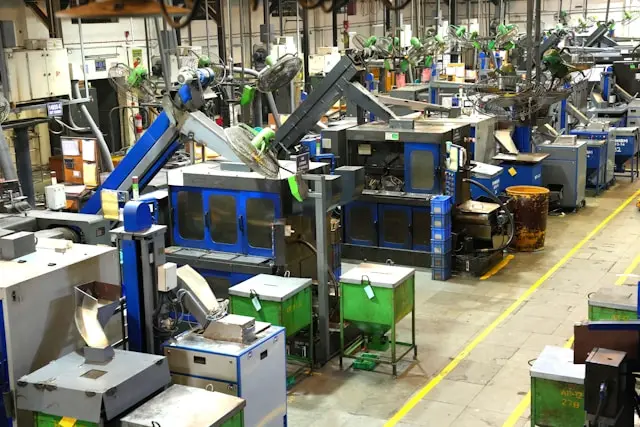
The source of the tension is specific. Kragujevac's automotive sector has moved from internal combustion engine assembly to hybrid-electric vehicle production on Stellantis's STLA Small platform. The €340 million in foreign direct investment that flowed into the cluster in 2024 funded welding automation, battery-pack assembly lines, and supplier localization for components that did not exist in this region three years ago. The capital arrived. The workforce qualified to operate, programme, and manage these new systems did not arrive with it. The mismatch between the money invested and the skills available to deploy it is now the single largest constraint on the cluster's growth trajectory.
What follows is an analysis of the forces reshaping Kragujevac's automotive sector, the employers driving that change, and what senior leaders need to understand before they make their next hiring or retention decision in this market. The article covers the production ramp-up underway, the specific roles where scarcity is most acute, the compensation dynamics pulling talent out of the district, and the structural barriers that make conventional hiring approaches inadequate for this market.
A Cluster in Transition: From ICE Assembly to Electrified Production
Kragujevac's automotive cluster is not a diversified industrial ecosystem. It is a single-OEM production complex with a dependent supplier network. Stellantis Serbia, operating from the Zastava Free Zone, accounts for 73% of export value from the Kragujevac customs district. The adjacent supplier park hosts 34 operational Tier 1 and Tier 2 facilities employing approximately 8,800 workers. The cluster generated 42% of total industrial employment in the district as of late 2024 and 38% of Serbia's total automotive exports by value.
The transition from ICE to hybrid-electric production began in earnest when Stellantis committed €190 million to retooling the Kragujevac facility in July 2022. Serial production of hybrid-electric vehicles on the STLA Small platform commenced in March 2024. As of early 2025, the plant was operating at roughly 60% of targeted capacity, producing an estimated 55,000 to 60,000 units annually against a designed capacity of 150,000.
The 2026 Ramp-Up and Its Workforce Implications
The trajectory established through 2025 points toward a material acceleration. Stellantis communicated plans to reach 120,000 units annually by mid-2026, which requires activation of a second production shift and the addition of 800 to 1,000 assembly line workers. ZF Group and Plastic Omnium have committed to localising battery enclosure and chassis component production within 50 kilometres of the assembly plant, representing €120 million in additional capital expenditure.
Every one of these expansion commitments is contingent on the same resource: qualified technical workers who do not currently exist in sufficient numbers in the Šumadija District. The investment timeline is running ahead of the talent pipeline. Capital has moved faster than human capital can follow.
The Stellantis Dependency Question
The cluster's strength is also its vulnerability. Stellantis's group-wide "Dare Forward 2030" cost-cutting programme has already idled capacity at Mirafiori in Italy and Rüsselsheim in Germany, according to the Financial Times. The question facing every supplier and workforce planner in Kragujevac is whether the plant's low-cost, newly retooled status protects it from European rationalization, or whether its non-EU location and smaller scale make it expendable once the current investment cycle concludes. That uncertainty shapes every hiring decision in the cluster. Employers building teams for a facility that may be rationalized in five years approach recruitment differently than employers building for twenty.
The Skills Gap Behind the Unemployment Numbers
The 14.2% regional unemployment rate in Šumadija is not evidence of available labour. It is evidence of a structural mismatch so severe that the aggregate statistic is misleading for any practical workforce planning purpose.
The Technical School Kragujevac and related vocational education institutions produce 320 mechanics annually. Only 15% of those graduates possess CNC or automation competencies required by modern Tier 1 suppliers. The vocational system is producing workers trained for an industry that no longer exists in Kragujevac. The factories that once needed those skills have been retooled. The schools have not.
This is the original analytical claim that sits beneath every other observation in this article: the €340 million investment in Kragujevac's EV transition has not reduced the workforce requirement. It has replaced one category of worker with another that the local education system does not yet produce. The investment created the problem it now cannot solve without external talent. The automation lines need programmers. The battery-pack assembly requires high-voltage safety certification. The quality systems demand IATF 16949 lead auditors. None of these profiles were part of the ICE-era workforce at scale, and the pipeline that would create them locally has a five-to-seven year lag time that no employer in this cluster can afford to wait out.
The result is visible in the numbers. Automotive job postings in the Šumadija District increased by 34% year-on-year in the final quarter of 2024. Average days-to-fill for skilled technical roles hit 87, compared to 34 days for administrative positions. The gap between those two figures is not a recruitment inefficiency. It is a market signal that the candidates these employers need are either employed elsewhere, located elsewhere, or do not yet exist.
Three Roles Where Scarcity Is Most Acute
CNC Machinists and Toolmakers
The cluster faces a deep deficit of certified CNC operators capable of programming Siemens NX and Fanuc controls for aluminium chassis components. Despite wages 40% above the regional average, these positions remain unfilled for six to eight months. Data from the National Employment Service shows that 38% of toolmaking vacancies in the district exceeded 180 days open in the 2023 to 2024 period.
The severity is illustrated by a pattern documented in regional labour market reports. A major seating components manufacturer in the Zastava zone maintained a CNC Tooling Department Manager vacancy for 11 months. The role was ultimately filled through internal promotion of a technician supplemented by external German consultancy support. The employer could not find a fully qualified replacement anywhere in the accessible labour market. This is not an isolated failure. It is the typical outcome when executive recruiting methods rely on active candidates alone in a market where 85% of toolmaking specialists are passive, retained through craft guild networks and informal referrals rather than job portals.
Automation Engineers
Demand for engineers with KUKA or ABB robot programming experience exceeds supply by a ratio of 4.3 to 1 in the Serbian market, according to the Serbia Tech Alliance. The unemployment rate for certified automation engineers in Serbia is 1.2%, with average tenure of 4.8 years at current employers. These are not candidates who will respond to a job posting. They are embedded in roles they are not looking to leave.
At the Head of Automation level, compensation ranges from €65,000 to €85,000 gross annually. At the senior specialist level, €32,000 to €42,000. These figures are competitive within the Kragujevac context but become less compelling the moment a candidate considers relocating to Timișoara, where EU membership provides broader mobility, or to Győr, where Audi's established EV production line offers 40% to 60% wage premiums and superior skill development opportunities.
Quality Directors and IATF 16949 Lead Auditors
Supplier certification to Stellantis standards requires Quality Directors with IATF 16949 system ownership experience. Compensation at director level runs €75,000 to €95,000 gross annually. The shortage is compounded by emigration: qualified auditors leave Kragujevac for Belgrade or Budapest, where career trajectories toward regional CEE roles are clearer and compensation is materially higher. This dynamic represents a particular challenge for executive hiring across industrial and manufacturing sectors in smaller production centres that compete with capital cities for the same limited pool.
Compensation Wars and the Talent Drain
The compensation data reveals a market where money alone cannot solve the hiring problem, but insufficient money guarantees failure.
At the Plant Director and VP of Operations level, packages range from €110,000 to €160,000 gross annually, with expatriate packages for international hires reaching €220,000. At the Senior Production Manager level, the range is €48,000 to €62,000. These numbers are competitive within Serbia. They are not competitive within the 250-kilometre radius that defines the actual talent market.
Belgrade offers a 25% to 35% premium for equivalent engineering roles. A Quality Manager earning €45,000 to €58,000 in Kragujevac can expect €55,000 to €70,000 in the capital, with the added pull of international headquarters functions and a cosmopolitan environment. Timișoara and Arad in Romania, only 180 kilometres away, offer €15,000 to €20,000 annual premiums for skilled trades along with the structural advantage of EU membership. Győr and Bratislava, at the outer edge of reasonable relocation distance, provide access to VW, Audi, and Kia plants with established EV production and wage premiums of 40% to 60% for toolmaking and automation specialists, as documented in Eurostat wage data.
The Poaching Cycle
The compensation pressure does not only pull talent out of the district. It creates destructive internal competition within the cluster itself. According to reporting in the Serbian newspaper Danas, ZF Serbia recruited three Senior Welding Engineers from Stellantis Serbia in mid-2024, offering packages of €68,000 to €72,000 annually against Stellantis internal bands of €48,000 to €52,000. That represents a 35% to 45% premium to move a person within the same industrial corridor.
When suppliers poach from the OEM that anchors the entire cluster, the short-term gain for the poaching employer creates a systemic problem. Stellantis cannot simply replace those engineers. The pool they were drawn from is the same constrained pool every employer in the district is competing for. The counteroffer dynamic in a market this tight tends to produce escalating packages without resolving the underlying supply constraint. Every engineer retained through a counteroffer is retained at a higher cost, and the competing employer simply moves to the next target.
The Šumadija District experienced a net outflow of 1,200 technical and vocational workers aged 25 to 40 to competing markets during 2023 and 2024. That figure represents a permanent loss of capacity in a district where the working-age population is already contracting by 1.8% annually. Compensation can slow the outflow. It cannot reverse a demographic contraction.
Structural Barriers That Conventional Hiring Cannot Overcome
The hiring challenge in Kragujevac is not a temporary market tightness that will ease when more graduates enter the pipeline. Three deep-rooted constraints make this a systemic problem.
First, the vocational education system produces volume without relevance. Three hundred and twenty mechanics per year sounds adequate until you learn that fewer than fifty of them can operate the equipment currently being installed in Tier 1 supplier facilities. The gap between what schools teach and what factories need is not closing. It requires a curriculum overhaul that operates on a five-to-seven year cycle, while employer demand operates on a twelve-month horizon.
Second, demographic decline is shrinking the absolute pool. The working-age population of Šumadija is contracting at nearly 2% per year. Every year the district has fewer people between 15 and 64 than the year before. Investment can make each worker more productive. It cannot create workers who do not exist.
Third, environmental permitting delays slow cluster growth independently of labour supply. New supplier facilities face 12 to 18 months of permitting delays due to cumulative environmental impact assessments in the Morava river basin. A Tier 2 supplier that secures financing and selects a site in January may not begin operations until mid-way through the following year. During that delay, the talent it needs is being absorbed by competitors who moved faster.
The EU Carbon Border Adjustment Mechanism entering its definitive phase in 2026 adds a regulatory cost layer. Serbian steel and aluminium suppliers face incremental costs of €45 to €60 per ton of CO2 equivalent unless local producers achieve ISO 14064 certification, as outlined in PwC Serbia's CBAM preparedness survey. This threatens cost competitiveness against Polish or Czech competitors whose energy mixes are already decarbonised. If the cluster loses cost advantage, the investment case weakens, and the talent question becomes moot.
What This Means for Hiring Leaders in Kragujevac's Cluster
The market intelligence leads to a set of concrete implications for anyone responsible for filling senior technical or leadership roles in this cluster.
The first implication is that 80% of placements at Plant Director and Operations VP level in 2024 involved executive search firms targeting employed managers. At the senior automation engineering level, 75% of the candidate market is passive. At the toolmaking specialist level, 85% are passive. These are not candidates who will see a job posting. They are not browsing career sites. They must be identified through systematic talent mapping and approached individually with a proposition that addresses not just compensation but career trajectory, technical complexity, and quality of life.
The second implication is that the relevant candidate market extends well beyond Serbia. A Plant Director search confined to the Šumadija District, or even to Serbia as a whole, misses the international candidate pool where qualified automotive operations leaders currently work. Expatriate packages reaching €220,000 exist in this market precisely because some roles can only be filled by candidates willing to relocate from Western Europe. Identifying those candidates requires a search methodology built for cross-border reach and the ability to evaluate whether a candidate's salary expectations align with what the market actually pays.
The third implication is speed. Average search time for a Plant Director in this market runs four to six months. CNC tooling manager searches run six to eight months. Quality director searches compete against the same emigration pressure that created the vacancy in the first place. A slow search in Kragujevac does not just delay a hire. It increases the probability that the target candidate pool shrinks further while the search is underway.
Plastic Omnium's September 2024 restructuring of its Kragujevac plant organisation illustrates what adaptation looks like, according to reporting on Poslovi.infostud.com. The company created a hybrid Digital Manufacturing Lead role combining IT and production engineering specifically to retain a candidate who had received competing offers from Belgrade-based IT firms. The role included remote-work flexibility unusual for shop-floor adjacent positions. That kind of structural creativity in role design, combined with the speed to make the offer before a competitor does, is what separates employers who fill these roles from employers who lose the same search repeatedly.
How KiTalent Approaches Markets Like Kragujevac
A market where the unemployment rate is 14.2% and the hiring difficulty rate is 68% is a market where the conventional search playbook reaches at most the 15% to 25% of candidates who happen to be active. The other 75% to 85% of the candidates who could fill these roles are invisible to job advertising. They are employed, not searching, and will only move for a proposition they have not yet seen.
KiTalent's AI-enhanced direct headhunting methodology is designed for exactly this type of constrained market. Through systematic talent mapping across automotive and industrial sectors, we identify and approach passive candidates who match the technical and leadership profile required, delivering interview-ready shortlists within 7 to 10 days. Our pay-per-interview model means clients invest nothing until they are sitting across from a qualified candidate. The 96% one-year retention rate across 1,450 executive placements reflects the rigour of the matching process: candidates placed through direct search in passive-dominant markets stay because the proposition was built correctly from the start.
For organisations competing for automation engineers, quality directors, and plant leadership in Kragujevac's automotive cluster, where every month a role sits open increases the risk that the next qualified candidate leaves the district entirely, start a conversation with our executive search team about how we reach the candidates this market's job boards cannot.
Frequently Asked Questions
What is the average time to fill a senior technical role in Kragujevac's automotive sector?
Skilled technical roles in Kragujevac's automotive cluster averaged 87 days to fill as of late 2024, compared to 34 days for administrative positions. For senior leadership roles such as Plant Director or Operations VP, search timelines extend to four to six months. CNC tooling management searches frequently exceed six to eight months. The extended timelines reflect the passive nature of the candidate market. Over 80% of candidates at senior technical and leadership levels are employed and not actively searching, requiring direct identification and approach rather than reliance on job postings.
Why is Kragujevac experiencing hiring shortages despite high regional unemployment?
The Šumadija District's 14.2% unemployment rate masks a deep structural mismatch. The unemployed workforce largely lacks the CNC programming, automation, high-voltage safety, and quality management certifications that EV-era manufacturing requires. Local vocational schools produce 320 mechanics annually, but only 15% graduate with competencies relevant to modern Tier 1 supplier operations. The available labour pool was trained for an internal combustion engine economy that Kragujevac's factories have moved beyond. Aggregate unemployment figures are not useful for workforce planning in sectors undergoing technological transformation.
What do senior automotive roles pay in Kragujevac compared to Belgrade?
Compensation varies considerably by level. Senior Production Managers in Kragujevac earn €48,000 to €62,000 gross annually. Plant Directors and Operations VPs earn €110,000 to €160,000, with expatriate packages reaching €220,000. Belgrade offers a 25% to 35% premium for equivalent engineering roles. Quality Managers earn €55,000 to €70,000 in Belgrade versus €45,000 to €58,000 in Kragujevac. The differential widens further when comparing against Timișoara or Győr, where EU membership and established OEM operations provide additional structural advantages.
What are the biggest risks to Kragujevac's automotive cluster in 2026?
Three risks dominate. First, single-OEM dependency: Stellantis accounts for 73% of export value from the customs district, and any group-wide restructuring could affect the plant despite its recent retooling. Second, the EU Carbon Border Adjustment Mechanism entering its definitive phase in 2026 imposes incremental costs on Serbian steel and aluminium suppliers unless they achieve ISO 14064 certification, threatening cost competitiveness against Polish and Czech rivals. Third, demographic contraction: the district's working-age population is shrinking at 1.8% annually, reducing the absolute talent pool regardless of investment levels.
How can companies hire passive automotive talent in Serbia?
With 85% of toolmaking specialists and 75% of senior automation engineers in passive employment, standard job advertising reaches a fraction of the qualified candidate pool. Effective hiring in this market requires direct identification through specialised headhunting approaches that map the installed talent base across the cluster's 34 supplier facilities and competing markets in Belgrade, Romania, and Hungary. KiTalent's AI-enhanced search methodology identifies and approaches these passive candidates directly, delivering interview-ready shortlists within 7 to 10 days and achieving a 96% one-year retention rate across placements.
Is Kragujevac's automotive investment sustainable long-term?
Sustainability depends on three factors: Stellantis's continued commitment to the STLA Small platform at Kragujevac, the cluster's ability to localise Tier 2 supplier capabilities in battery enclosures and chassis components, and whether the skills pipeline can close the gap between vocational education output and employer requirements. The €340 million in 2024 FDI and committed supplier investments from ZF Group and Plastic Omnium signal medium-term confidence. However, the cluster remains exposed to Stellantis's European capacity rationalisation programme, which has already affected plants in Italy and Germany.