Lisbon's Energy Sector Is Investing Billions and Running Out of Engineers: The Talent Equation That Does Not Add Up
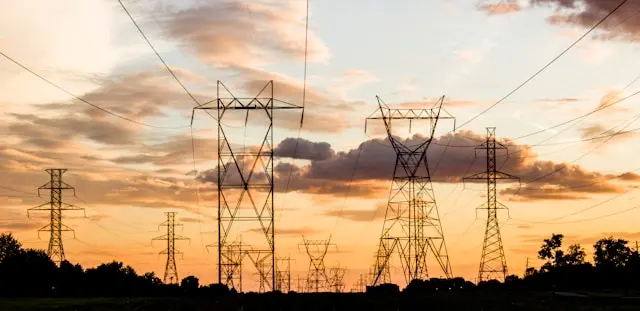
Lisbon's energy sector entered 2026 with more capital committed to transformation than at any point in its history. REN's €1.6 billion grid investment plan is now accelerating, with €340 million directed at Lisbon metropolitan digitisation and substation upgrades. Ocean Winds has staffed 85 personnel at its Avenida da Liberdade project management office for the 1.2 GW Monflotte floating wind project. EDP Renewables maintains a 120-person technical centre in Oeiras focused on floating technology. The investment thesis for Lisbon as a clean energy execution hub is no longer speculative. The money is moving.
The problem is that the people are not. Portugal's universities produce approximately 2,100 engineering graduates annually across all disciplines. Fewer than 15% specialise in power systems or marine engineering. The Portuguese Renewable Energy Association (APREN) estimates that the Lisbon metropolitan area alone needs 4,200 additional qualified technicians and engineers by end of 2026 to service offshore wind and hydrogen projects. The arithmetic is blunt: the local pipeline produces roughly half of what one metropolitan area requires, before accounting for the rest of the country, retirements at REN and EDP, or the steady outflow of experienced engineers to Madrid, Amsterdam, and London.
What follows is a ground-level analysis of why Lisbon's energy sector has become one of Europe's most difficult markets for specialised hiring, which roles sit at the centre of the shortage, what competing markets are offering to pull talent away, and what organisations operating in this sector must do differently to fill the positions that determine whether billions in committed capital translate into operational projects.
A City Becoming a Technical Execution Hub
Lisbon's role in Portugal's energy economy is changing in a way that complicates simple narratives about growth or decline. The city is simultaneously losing corporate headquarters functions and gaining technical execution capacity. Understanding this bifurcation matters for anyone making hiring decisions in this market.
Galp Energia completed the relocation of its fiscal headquarters to London in December 2023 to access deeper capital markets for its strategic pivot. The company maintains an operational headquarters in Lisbon with approximately 2,800 employees, concentrated in downstream operations and its new Low Carbon Solutions division. But the executive decision-making centre, the M&A function, and the capital allocation authority now sit in London. For senior professionals whose careers depend on proximity to strategic decisions, Lisbon's proposition weakened.
At the same time, Lisbon's energy sector is expanding in a different direction. EDP Group maintains its global headquarters on Avenida 24 de Julho with approximately 5,200 local employees. REN operates from Lisbon with 618 staff, 540 of whom hold technical and engineering roles. The floating offshore wind auction awarded 1,327 MW to consortia including Ocean Winds, BlueFloat Energy, and TotalEnergies, with project development offices concentrated in Parque das Nações and Santos. Taguspark in Oeiras hosts Siemens Energy's Portuguese headquarters with 450 employees and Vestas' Southern European service engineering centre with 180.
The net effect is a market that looks like it is contracting from one vantage point and expanding from another. Traditional utility operations are shedding headcount at 3 to 4% annually through automation and thermal generation decommissioning. Offshore wind project development, green hydrogen consulting, and energy trading are expanding at 12 to 15% annually. Lisbon is not shrinking as an energy city. It is becoming a different kind of energy city: less boardroom, more engineering floor.
This distinction matters because the talent it needs has changed accordingly. A headquarters economy requires corporate strategists, investor relations professionals, and M&A lawyers. A technical execution hub requires floating wind engineers, HVDC transmission specialists, and marine logistics coordinators. The supply chains for these two talent pools are entirely different, and Lisbon's educational infrastructure was built for neither at the scale now required.
The Four Skill Categories Where Supply Has Collapsed
Not all shortages are equal. Lisbon's energy sector faces hiring challenges across the board, but four specific skill categories have moved from difficult to functionally broken. Job postings for offshore wind and grid integration roles in Lisbon increased 34% year-on-year through Q3 2024, while applications per vacancy dropped from 12.4 to 7.1. The aggregate numbers mask even sharper disparities within individual specialisms.
Floating Offshore Wind Engineering
Dynamic cable design, mooring systems engineering, and marine logistics for floating platforms represent the most acute shortage. Portugal's first floating offshore wind auction created immediate demand for skills that barely existed in the country before 2023. The candidates who hold this experience gained it in the North Sea, primarily with firms in the Netherlands, Denmark, and the United Kingdom. They are not in Lisbon. Approximately 85% of qualified candidates at senior manager to director level are passive, meaning employed and not responding to job advertisements. Application-to-posting ratios for senior offshore wind roles sit at roughly 2:1, compared to a market average of 12:1.
Roles requiring dual competence in Portuguese regulatory frameworks and North Sea floating wind experience command a 15 to 20% premium above standard Lisbon market rates. The scarcity is not just numerical. It is compositional. Portugal needs professionals who understand both local permitting processes and the technical realities of floating foundation deployment. Almost no one holds both.
Grid Modernisation and HVDC Transmission
REN's grid investment programme requires specialists in high-voltage direct current (HVDC) transmission, battery energy storage system integration, and smart grid architecture. The Minho-Lisbon transmission corridor already operates at 85% capacity during peak renewable generation. Without grid reinforcement, new offshore wind capacity cannot connect. The specialists who design and commission these upgrades are almost exclusively employed by REN, EDP, or international transmission system operators. Approximately 75 to 80% are passive candidates. Job changes in this category occur through targeted headhunting rather than applications.
The pipeline replacement problem is particularly severe here. The Instituto Superior Técnico and the Faculdade de Engenharia da Universidade do Porto together graduate approximately 180 electrical engineers annually. Fewer than 30 specialise in power systems. That output is insufficient to replace retirements at existing employers, let alone supply new grid modernisation demand.
Green Hydrogen Project Development
Electrolyser technology selection, offtake contracting, and regulatory compliance under IPCEI (Important Projects of Common European Interest) frameworks represent emerging skill requirements with almost no established domestic supply. Green hydrogen is a sector where the job descriptions were written before the workforce existed. The professionals who hold relevant experience gained it in pilot programmes in Germany, the Netherlands, or Australia. Recruiting them to Lisbon requires competing on compensation, lifestyle, and career trajectory against employers who can offer larger project portfolios.
Energy Trading and Carbon Markets
PPA structuring and EU ETS carbon market expertise sit at the intersection of executive hiring challenges in energy and industrial sectors. Galp and EDP trading desks recruit primarily from competitor firms in Madrid, London, and Geneva through closed networks. Public job postings for trading roles serve compliance purposes rather than primary sourcing channels. An estimated 70% of qualified professionals are passive. The relocation of Galp's fiscal headquarters to London has pulled senior trading talent toward a market that pays 60 to 80% more at VP level.
What Competing Markets Offer and Why Lisbon Keeps Losing
Lisbon's talent drain is not random. It follows predictable patterns toward three specific markets, each pulling a different segment of the workforce. Understanding these flows is essential for any organisation trying to build a leadership pipeline in Lisbon's energy sector.
The Madrid Corridor
Madrid offers salaries 20 to 30% higher for equivalent roles. A Senior Project Manager earns €85,000 to €110,000 in Madrid, compared to €68,000 to €85,000 in Lisbon. The project pipeline is deeper, with Iberdrola, Acciona, and Red Eléctrica all headquartered in or near Madrid. Spanish language crossover eliminates the friction of relocation for Portuguese engineers. The typical pattern, confirmed by industry data, is migration after five to seven years of Lisbon experience, at exactly the point where professionals become most valuable to their current employers.
According to Jornal de Negócios, REN lost three senior grid integration engineers specialising in HVDC transmission to Red Eléctrica de España between March and August 2024. REN subsequently restructured its compensation bands, offering a 22 to 25% retention premium for HVDC specialists. Total compensation for these roles rose to €78,000 to €85,000 base, up from €64,000 previously. The adjustment was necessary. Whether it was sufficient to stop future departures remains an open question.
The Dutch Offshore Wind Ecosystem
Amsterdam and Rotterdam offer something Lisbon cannot yet match: a mature offshore wind ecosystem with established career paths. Van Oord, Boskalis, and TNO provide the kind of deep technical environment where floating foundation engineers and marine coordinators can build decade-long careers. Salaries run 40 to 50% above Lisbon, with specialists earning €95,000 to €120,000. English as the business language removes a barrier. Lisbon-based developers report losing talent to Dutch engineering firms specifically during the detailed engineering phase of floating wind projects, the moment when the most skilled professionals become visible to international recruiters.
London's Executive Pull
London competes for a different tier entirely: executive leadership, energy trading, and M&A specialists. With Galp's headquarters now in London and major investors concentrated in the City, the gravitational pull for senior Portuguese executives has intensified. VP-level compensation in London runs 60 to 80% above Lisbon. For an executive weighing career trajectory against cost of living, the calculation is increasingly straightforward.
Lisbon retains two meaningful counterweights. Housing costs sit 40% below Amsterdam and 60% below London. The former "regime dos residentes não habituais" (NHR) tax scheme offered benefits for returning emigrants, though modifications in 2024 reduced advantages for high-income earners. These factors slow the outflow. They do not reverse it.
The Permitting Paradox That Compounds the Talent Problem
Here is the original analytical claim this article rests on: Lisbon's permitting delays are not merely an investment problem. They are a talent retention problem. The two are connected, and the connection is making both worse.
Portugal ranks last among EU member states for renewable energy permitting speed, according to the European Commission's 2024 Energy Performance Reports. The Environmental Agency has an average processing time of 18 to 24 months for environmental impact assessments. Only 14 licensing officers are assigned to renewable energy projects nationally. In 2024, just 47% of planned grid reinforcement projects received environmental licensing within statutory timeframes.
For investment, the consequence is project delays and increased carrying costs. For talent, the consequence is subtler but equally damaging. A Senior Floating Wind Project Director sitting in Lisbon, waiting 18 months for a permit that would take six months in the Netherlands, is a professional whose career is stalling. The project milestones that define their trajectory are not being reached. The technical challenges they expected to solve are deferred. They are, in career terms, standing still while their counterparts in Copenhagen, Hamburg, and Rotterdam are executing.
This is why permitting delays and talent attrition are not parallel problems running on separate tracks. They compound each other. Slow permitting makes Lisbon a less attractive place to build a career in offshore wind. The departure of experienced professionals makes it harder to assemble the project teams that could push permits through faster. Capital committed to Lisbon's floating wind sector faces a bottleneck that is not financial but human. The investment has moved faster than the human capital infrastructure could follow.
The curtailment costs already visible in grid constraints illustrate the scale. According to ERSE's 2023 monitoring data, curtailment costs reached €47 million in 2023 due to transmission corridor limitations in Alto Douro and Beira Alta. Without the grid specialists to design and commission the reinforcements, those costs will grow. The engineers who could solve this problem are the same engineers being recruited to Madrid at a 25% premium.
Compensation Reality: What Roles Pay and Where the Gaps Sit
For hiring leaders making offers in Lisbon's energy market, the compensation picture requires precision rather than generalisation. The market has split into tiers with distinct dynamics.
At senior specialist and manager level, an offshore wind project manager commands €68,000 to €85,000 in base salary, with total compensation reaching €78,000 to €98,000 including bonus. Grid integration specialists with HVDC or substation expertise earn €62,000 to €78,000 base, totalling €72,000 to €90,000. Energy transition consultants at manager level in Big Four or specialist consultancies sit at €55,000 to €75,000 base. These figures, drawn from the 2024 salary surveys by Michael Page, Hays, and Mercer, represent the market benchmarks that were current through 2025. The trajectory into 2026 is upward, driven by the retention premium adjustments visible in REN's response to engineer departures.
At executive and VP level, the numbers shift materially. A VP of Offshore Wind Development earns €120,000 to €155,000 base, with total compensation of €150,000 to €210,000 including long-term incentive plans. A Director of Grid Operations at REN or EDP level commands €110,000 to €140,000 base, totalling €135,000 to €175,000. CTOs at venture-funded cleantech scale-ups earn €95,000 to €130,000 base, with equity participation of 0.5 to 2% reflecting the earlier-stage nature of these businesses.
The compensation gap that matters most is not between Lisbon and other Portuguese cities. It is between Lisbon and its three competitor markets at exactly the seniority level where shortages are most acute. A Senior Project Manager earns up to €85,000 in Lisbon and up to €110,000 in Madrid for equivalent work. At specialist level, the Netherlands pays 40 to 50% more. At executive level, London pays 60 to 80% more. These gaps are not closing. They are widening fastest in the floating wind and grid integration categories where Lisbon's demand is growing most rapidly.
For organisations attempting to attract talent from competing markets, the compensation offer alone will not be sufficient. The proposition that moves a passive candidate must address career trajectory, project exposure, and role scope alongside the number on the contract. When an engineer in Rotterdam is weighing a move to Lisbon, the question is not just whether they can maintain their living standard. It is whether the project they are joining will actually reach execution phase before the next opportunity in the North Sea materialises.
What This Means for Hiring Executives in 2026
The organisations that will fill their critical energy roles in Lisbon share three characteristics. None of them involve posting a job advertisement and waiting.
First, they have accepted that the candidate pool for specialised energy roles in Lisbon is functionally passive. At senior level, 75 to 85% of qualified professionals are employed, satisfied enough to stay, and invisible to job boards. The only search method that reaches them is direct, targeted identification of specific individuals with specific competencies, followed by a proposition designed for their particular situation. A compliance-driven job posting on a careers page reaches the wrong 15 to 25% of the market.
Second, they are building offers that address the career risk of relocating to a market with permitting uncertainty. The most effective offers for international candidates include project milestone guarantees, exit provisions if projects stall, and compensation structures that hedge against the timeline risk inherent in Portuguese regulatory processes. This is a level of offer design and negotiation that goes well beyond standard salary benchmarking.
Third, they are moving fast. According to reporting in Expresso's economic supplement, Ocean Winds maintained an open requisition for a Floating Wind Project Director overseeing the Monflotte project for eleven months as of January 2025. Two finalist candidates reportedly withdrew to accept positions with Ørsted in Copenhagen and RWE in Hamburg. An eleven-month search for a single critical hire is not an inconvenience. It is a project risk that compounds every month.
The cost of a slow or failed executive search in this sector is not measured in recruitment fees. It is measured in the hidden costs that accumulate while a project sits without its technical leader: delayed milestones, contractor idle time, and the signal it sends to other talented professionals about the organisation's ability to execute.
How Direct Search Changes the Outcome
Lisbon's energy market is a case study in why conventional recruitment methods fail in specialised, passive-heavy talent pools. When 85% of offshore wind directors and 75% of HVDC engineers are not on any job board, and the remaining active candidates are predominantly junior, the difference between a search that reaches passive leaders and one that relies on applications is the difference between filling the role and losing eleven months.
KiTalent's approach to executive search in energy, renewables, and industrial sectors is built for markets with exactly this profile. AI-powered talent mapping identifies the specific professionals across Lisbon, Madrid, Amsterdam, Rotterdam, and London who hold the combination of floating wind technical expertise and Portuguese regulatory knowledge that these roles demand. Interview-ready candidates are delivered within 7 to 10 days, with full pipeline transparency and weekly reporting. The pay-per-interview model means organisations only invest when they meet qualified candidates, eliminating the upfront retainer risk that makes traditional retained search particularly punishing when markets are this constrained.
With a 96% one-year retention rate across 1,450 completed executive placements, the methodology is designed not merely to fill roles but to ensure the candidates who arrive stay through the project lifecycle that defines success in this sector.
For organisations competing for floating wind, grid modernisation, or hydrogen leadership in Lisbon's energy market, where the candidates who determine whether billions in committed capital reach execution are not visible through any conventional channel, start a conversation with our energy sector search team about how to reach them.
Frequently Asked Questions
What are the hardest energy roles to fill in Lisbon in 2026?
Floating offshore wind project directors, HVDC grid integration engineers, green hydrogen project developers, and senior energy trading professionals represent the most constrained categories. Offshore wind director roles have seen vacancy durations exceeding eleven months. HVDC specialists are concentrated among a handful of employers, with 75 to 80% classified as passive candidates. The local university pipeline produces fewer than 30 power systems specialists annually, far below replacement demand at existing utilities, let alone the requirements of new offshore wind and hydrogen projects entering execution phase.
How do Lisbon energy sector salaries compare to Madrid and Amsterdam?
Madrid pays 20 to 30% more for equivalent renewable energy roles. A Senior Project Manager earns €85,000 to €110,000 in Madrid versus €68,000 to €85,000 in Lisbon. Amsterdam and Rotterdam pay 40 to 50% more for offshore wind specialists, with salaries of €95,000 to €120,000. London executive compensation runs 60 to 80% above Lisbon at VP level. Lisbon partially offsets these gaps through lower housing costs and quality of life, but the differential is widening in the technical categories where demand is strongest.
Why is executive search necessary for energy roles in Lisbon?
Between 75% and 85% of qualified energy professionals in Lisbon at senior and executive level are passive candidates. They are employed, not searching, and invisible to job advertisements. Public job postings in energy trading, for example, serve compliance purposes rather than sourcing. Reaching these professionals requires direct identification and targeted outreach through specialist search methodology, not broader advertising. Organisations relying on inbound applications are systematically excluded from the majority of the qualified talent pool.
What is driving the energy talent shortage in Lisbon?
Three forces converge. First, demand from offshore wind, grid modernisation, and hydrogen projects is expanding at 12 to 15% annually. Second, the local education pipeline produces roughly half the engineers the Lisbon metropolitan area needs. Third, competing markets in Spain, the Netherlands, and the UK offer materially higher compensation and more mature project ecosystems, creating a steady outflow of experienced professionals at exactly the seniority level where shortages are most acute.
How long does it take to fill a senior energy role in Lisbon?
Senior offshore wind and grid specialisation roles routinely take six to eleven months to fill through conventional methods. KiTalent's AI-enhanced executive search methodology delivers interview-ready candidates within 7 to 10 days by mapping passive talent across Lisbon and competing European markets simultaneously. The acceleration matters because project timelines in offshore wind and grid modernisation do not pause while a search runs. Every month without a technical leader compounds project risk and cost.
What regulatory factors affect energy hiring in Lisbon?
Portugal's renewable energy permitting process averages 18 to 24 months for environmental impact assessments, ranking last in the EU for speed. Only 47% of grid reinforcement projects received environmental licensing within statutory timeframes in 2024. These delays affect hiring by stalling the project milestones that attract and retain senior professionals. Candidates weighing a move to Lisbon assess not only compensation but whether the project they would join will reach execution phase on a timeline that advances their career.