Macerata's Footwear Cluster Has a 22% Youth Unemployment Rate and Cannot Fill Its Most Important Jobs
Macerata province produced 18.5 million pairs of shoes in its most recent full production year. It generated €1.8 billion in annual turnover across a network of more than 1,200 enterprises. Eighty-two percent of that output left Italy for export markets in Germany, France, and the United States. By any aggregate measure, this is one of the most productive artisanal manufacturing clusters in Europe.
And yet the cluster is losing a quiet war against its own demographics. The average production worker is 52.3 years old. A third of the workforce is over 55. The province registered 1,420 footwear vacancies through its employment centres in 2024, and filled just 34% of them. The roles going unfilled are not entry-level positions. They are the specialist and leadership functions on which the entire district's competitive position depends: master pattern makers, digital prototyping technicians, sustainability compliance managers, and export directors who can sell Italian craftsmanship into markets that now demand ESG certification alongside quality.
The paradox at the centre of this market is the one that matters most. Macerata province reports youth unemployment of 22.4%. There are young people without work, and there are employers who cannot hire. These two facts coexist because the gap between them is not cyclical. It is structural, absolute, and widening. What follows is an analysis of the forces reshaping Macerata's industrial and manufacturing talent market, the specific roles where scarcity is most acute, and what organisations operating in this cluster need to understand before their next critical hire.
The Meta-Factory That Runs on Eight-Person Firms
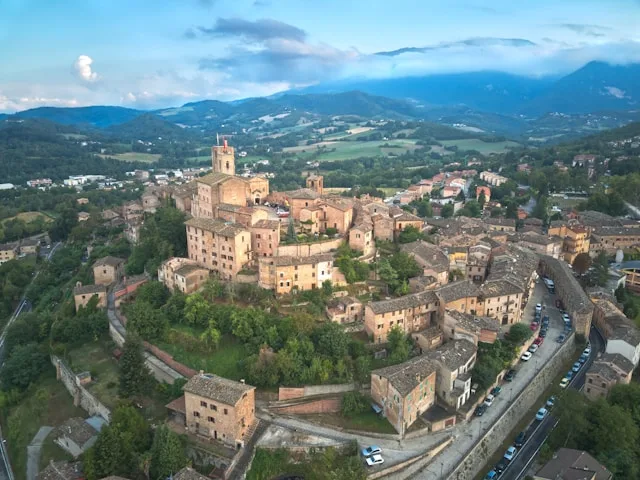
The Marche Footwear Industrial District spans Macerata and Fermo provinces. Its structure is unlike anything in northern European manufacturing. The average firm employs 8.3 workers. Ninety-four percent of the 1,200-plus active footwear enterprises in Macerata province have fewer than 20 employees. Individually, these are micro-businesses. Collectively, they function as a single distributed production system, with tanneries, heel manufacturers, component workshops, and logistics providers operating within a 30-kilometre radius.
This is what economists call a meta-factory. Conceria Nuvolari in Corridonia supplies processed leather. Specialist heel manufacturers feed components into assembly lines across Montecosaro. Calzaturificio Alma in Civitanova Marche handles luxury private-label finishing for French and American fashion houses. No single firm controls the full chain, but the chain itself is remarkably closed-loop.
The model has been extraordinarily productive. But it carries a vulnerability that aggregate output figures obscure. When a firm of eight people loses its only master pattern maker to retirement, it does not lose one-eighth of its capacity. It loses the single person who translates design intent into a manufacturable product. The role cannot be backfilled from a job board. It requires years of accumulated expertise that, in 2026, fewer than one in ten candidates in the relevant age bracket possesses.
The cluster's strength is also its constraint. Fragmented production networks cannot pool recruitment resources, cannot offer the career progression paths that attract younger workers, and cannot absorb the compliance overhead that EU regulation now demands. These are not problems that any individual eight-person workshop can solve alone.
Why 22% Youth Unemployment Does Not Help
Macerata province's youth unemployment rate stands at 22.4%, according to ISTAT provincial data from 2024. In most labour markets, that figure would signal available supply. In Macerata's footwear cluster, it signals nothing of the kind.
The Skills Mismatch Is Absolute, Not Partial
The unemployed population in Macerata province is overwhelmingly composed of service-sector workers, humanities graduates, and individuals whose training has no overlap with the technical demands of footwear production. A young person with a degree in communications cannot operate a Delcam Crispin CAD system. A former hospitality worker cannot assess hide quality by touch. The distance between available labour and required skills is not a gap that training alone can bridge in months. It takes years.
The ITS "Tecnico Superiore per la Moda e il Tessile" in Macerata graduates 45 students annually in footwear pattern-making and industrialisation. Forty-five. Against a cluster that employed 12,400 direct workers at last count and is losing roughly 400 per year to retirement based on the demographic curve. The training pipeline replaces approximately one-ninth of annual attrition.
Recruitment of Young Workers Is Declining, Not Stabilising
Only 890 new hires in the 18 to 29 age bracket entered Macerata's footwear sector across all of 2024. That figure represents a 12% decline year-over-year. The trend is moving in the wrong direction at precisely the moment when the demographic pressure is accelerating. Firms that assumed the post-pandemic stabilisation would eventually bring young workers back to manufacturing are running out of time to adjust that assumption.
This is the original analytical claim that the data compels: the aggregate unemployment figure in Macerata is not just unhelpful for understanding the footwear talent market. It is actively misleading. Policymakers, investors, and hiring leaders who look at 22% youth unemployment and conclude that labour supply is available are making decisions based on a number that describes a completely different population. The footwear cluster's specialist talent pool is operating at effectively zero unemployment in its critical functions. These are two separate labour markets sharing the same postcode.
The Roles That Cannot Be Filled
The 34% fill rate across 1,420 registered vacancies is an average. Like most averages in this market, it conceals more than it reveals. Entry-level stitching operators and logistics coordinators attract high application volumes. The scarcity concentrates in three categories that determine whether the cluster can sustain its competitive position through the next decade.
Master Pattern Makers
Unemployment among master pattern makers in Italy is effectively zero. Average tenure in the role exceeds 12 years. The ratio of active to passive candidates is approximately 1:9, according to Observa's national professions data from 2024. This means that for every pattern maker who might respond to a job posting, nine others are employed, settled, and not looking.
Veneto's Riviera del Brenta footwear district is not waiting for these professionals to come to them. Firms in the competing cluster are offering Macerata-based pattern makers relocation bonuses of €5,000 to €8,000, according to monitoring data from Assocalzaturifici. Veneto has advanced further in automated cutting and robotic stitching, which makes it an attractive destination for technicians who want exposure to Industry 4.0 methods. Macerata is losing experienced specialists to a competitor that offers both better technology and a clear career pathway.
Digital Prototyping Technicians
According to reporting in Il Resto del Carlino from January 2025, Grisport S.p.A., the province's largest integrated manufacturer with 380 workers in Montecosaro, maintained an open vacancy for a 3D digital prototyping technician with Rhino, Grasshopper, and Crispin software expertise for 11 months. The role was reposted three times with escalating salary offers. The position required a combination of digital modelling fluency and physical footwear construction knowledge that sits at the intersection of two different professional worlds.
Only 23% of Macerata footwear SMEs have implemented CAD/CAM systems for pattern-making. The comparable figure in Veneto is 41%. The limited adoption means that the local pool of professionals with hands-on experience in these systems is small. Firms seeking digital prototyping talent are not fishing in a pond. They are fishing in a puddle.
Sustainability and ESG Compliance Professionals
The third critical shortage is the newest. The EU's Ecodesign for Sustainable Products Regulation is entering full enforcement phases in 2026, mandating digital product passports for leather goods. The EU Deforestation Regulation, effective since December 2024, requires geolocation proof for all cattle hides. Compliance with these regulations demands professionals who combine chemical engineering knowledge with Life Cycle Assessment expertise, REACH regulation familiarity, and leather traceability protocol experience.
Seventy-eight percent of qualified sustainability managers with chemical engineering backgrounds in the Marche region are employed and not monitoring job boards, according to salary survey data. Public job postings for leather goods technical directors receive fewer than three qualified applications on average. The talent that firms need to survive the regulatory transition is almost entirely passive.
Digitisation Urgency Colliding with Artisanal Identity
Sixty-seven percent of surveyed Macerata manufacturers cite digital skills gaps as the primary barrier to growth. Yet the cluster's pricing power, its entire commercial proposition to the luxury houses of Paris and New York, rests on hand-finishing techniques that resist automation. These two facts create a tension that runs through every hiring decision in the district.
Firms are simultaneously investing in robotic cutting for efficiency and commanding premium prices for products marketed as fatto a mano. They need digital talent to preserve an analogue value proposition. The production manager of 2026 in this cluster does not choose between digital and artisanal. They must hold both, sequencing automated processes upstream where speed matters and protecting handcraft downstream where provenance justifies the margin.
This hybrid requirement eliminates most candidates from either pure background. A software-fluent engineer without footwear knowledge cannot assess whether a digital prototype will translate into a physically sound shoe. A master craftsman without digital literacy cannot operate the systems that now sit between design and production. The talent mapping required to identify professionals who bridge this gap is fundamentally different from conventional recruitment for either discipline.
The Transizione 5.0 tax credit, designed to accelerate Industry 4.0 adoption, saw uptake of only €4.2 million across Macerata province in 2024. Similarly, only 31% of eligible footwear SMEs completed the PNRR application process for digitalisation funding by the end of that year, citing excessive administrative burden relative to firm size. The investment capital exists, but the human capital required to deploy it does not. This is a pattern visible across Italian manufacturing: public funds move faster than the workforce that would need to absorb them.
The Regulatory Wave Arriving in 2026
The regulatory environment facing Macerata's leather and footwear producers has shifted from voluntary to mandatory within 18 months. Two EU regulations are now reshaping the compliance requirements for every firm in the cluster.
Digital Product Passports Under the ESPR
The Ecodesign for Sustainable Products Regulation requires leather goods to carry digital product passports containing full material traceability, environmental impact data, and recyclability information. For a micro-enterprise of eight workers whose quality control has historically relied on the owner's hands and eyes, this is not an incremental administrative task. It requires new software systems, new data collection workflows, and at least one professional who understands both the technology and the regulatory framework.
The Camera di Commercio di Macerata estimates that 15 to 20% of micro-artisans lacking traceability systems may exit the market or be absorbed by larger subcontractors as enforcement tightens through 2026. This is consolidation driven not by market competition but by regulatory compliance thresholds that small firms cannot clear without investment they cannot afford or talent they cannot find.
Deforestation Regulation and Hide Traceability
The EUDR's requirement for geolocation proof of cattle hide origin imposes compliance costs of €15,000 to €25,000 per firm for traceability software, according to UNIC (Concerie Italiane). For tanneries with annual turnover below €2 million, this figure represents a viability-threatening expense. Conceria Nuvolari, employing 85 workers in Corridonia, can absorb this cost. A tannery with 6 workers and €1.5 million in turnover faces a different calculation entirely.
The talent implication is direct. Every firm that must comply needs someone who understands the system. The cluster does not have enough of those people. PNRR circular economy funds are projected to inject €12 million into Macerata province's leather sector by late 2026, contingent on firms meeting ESG compliance benchmarks. But meeting the benchmarks requires the very professionals the market cannot supply. The funding creates a circular dependency: you need talent to access the money, but you need the money to attract the talent.
Compensation Realities and the Milan Gravity Problem
Macerata-based roles trade at a 15 to 20% discount compared to Milan equivalents. For a Production Manager, the local range sits at €58,000 to €72,000 base plus €8,000 to €12,000 in bonus. A COO commands €95,000 to €130,000 with performance incentives. Export Area Managers earn €48,000 to €62,000 plus commission, while the Commercial Director tier reaches €90,000 to €140,000 with equity participation in premium groups.
These figures are competitive by Marche regional standards. They are not competitive against Milan, which offers 35 to 50% higher base salaries for Product Managers and Export Directors, plus access to the headquarters of LVMH, Prada Group, and Moncler. The gravitational pull of Milan on commercial and design talent is the single largest external force draining Macerata's executive pipeline.
Housing costs partially offset the gap. Macerata province offers approximately 40% lower housing costs than Milan. For a mid-level technical professional with a family, the net quality-of-life equation can favour the province. But for ambitious executives under 40, the career mobility that Milan offers is not a financial calculation. It is a trajectory calculation. Macerata cannot match it.
The poaching dynamic within the Marche region itself is equally revealing. Corriere Adriatico reported in June 2024 that Conceria Nuvolari recruited a Leather Quality Control Manager from a competing tannery in Sant'Elpidio a Mare by offering a 25% salary premium and a company vehicle. This was not a market where passive candidates were available. It was a zero-sum transfer of talent from one firm to another, at a cost that smaller competitors cannot match.
The Chief Sustainability Officer role, now emerging as a critical function for firms seeking PNRR compliance and luxury brand contracts, commands €110,000 to €160,000 nationally. At this level, the search must reach beyond regional boundaries entirely. The candidates qualified for this role in a footwear manufacturing context are not in Macerata. They are in Milan, in northern Europe, or in other Italian manufacturing districts. Reaching them requires a method that goes well beyond posting a vacancy on a regional job board.
What Hiring Leaders in This Market Need to Understand
The Macerata footwear cluster's talent crisis is not a temporary condition that will resolve when the economy improves or when training programmes scale up. The ITS pipeline produces 45 graduates per year against annual attrition of roughly 400. The digital adoption rate is half that of the competing Veneto district. The regulatory burden is increasing, not stabilising. And the demographic curve means that within five years, more than a third of the current production workforce will have reached retirement age.
For organisations hiring into this market, three realities define the approach required.
First, the candidate pool for any specialist or leadership role is almost entirely passive. The 1:9 active-to-passive ratio among master pattern makers is not an anomaly. It is the norm across every critical function. Conventional job advertising reaches at most 10% of the viable talent. The other 90% must be identified through direct search, mapped within competitor organisations, and approached with a proposition that addresses the specific calculation a settled professional makes before considering a move.
Second, the hybrid skill requirement, digital fluency combined with artisanal manufacturing knowledge, narrows every shortlist. A search for a Production Manager in this cluster is not comparable to a Production Manager search in automotive or electronics. The candidate must understand both robotic cutting systems and hand-welting techniques. The cost of appointing the wrong person in a firm of 20 workers is proportionally far greater than in a firm of 2,000.
Third, the compensation conversation must account for the Milan differential honestly. A firm in Montecosaro offering €65,000 for a Product Manager is competing against Milan firms offering €95,000 for the same title. The offset, quality of life, housing costs, shorter commutes, creative autonomy, is real. But it must be articulated clearly and early in the process. Candidates who discover the salary gap late in a search do not return to the table.
KiTalent's approach to markets like Macerata's footwear cluster is built for exactly this profile of challenge. In a passive candidate market where the best professionals are not visible on any job board, AI-powered talent mapping identifies the specific individuals whose backgrounds combine the right technical, commercial, and regulatory competencies. Interview-ready candidates are delivered within 7 to 10 days, with a pay-per-interview model that removes the upfront retainer risk that SMEs in this cluster cannot justify against uncertain outcomes. With a 96% one-year retention rate across 1,450-plus completed placements, the method is designed to produce hires that stay.
For organisations in Macerata's footwear and leather goods cluster facing specialist vacancies they cannot fill through conventional channels, where every month of delay compounds the regulatory and competitive exposure this article has described, start a conversation with our executive search team about how we map and reach the talent this market requires.
Frequently Asked Questions
What is the Macerata footwear industrial district?
The Macerata footwear district is part of the broader Marche Footwear Industrial District spanning Macerata and Fermo provinces in central Italy. It comprises over 1,200 active footwear enterprises and 350 leather goods workshops, employing approximately 12,400 direct workers. Production is concentrated in Montecosaro, Corridonia, and Civitanova Marche rather than the city of Macerata itself, which serves primarily as an administrative and university hub. The cluster generates €1.8 billion in annual turnover and exports 82% of its output to Germany, France, and the United States.
Why is it so difficult to hire specialist footwear talent in Macerata?
The difficulty stems from a structural skills mismatch rather than a lack of available workers. While provincial youth unemployment exceeds 22%, the unemployed population lacks the technical training required for specialist footwear roles. Critical functions such as master pattern making have effectively zero unemployment, with a 1:9 ratio of active to passive candidates. The local training institute graduates only 45 specialists annually, far below the estimated 400 workers lost to retirement each year. KiTalent addresses this through AI-enhanced talent mapping that identifies passive candidates across competing districts and adjacent industries.
What salaries do senior footwear manufacturing roles command in Macerata?
Production Managers earn €58,000 to €72,000 base plus bonuses of €8,000 to €12,000. COO-level roles command €95,000 to €130,000 with performance incentives. Export Area Managers earn €48,000 to €62,000 plus commission, while Commercial Directors reach €90,000 to €140,000 with equity participation in premium groups. Sustainability officers at CSO level command €110,000 to €160,000. Macerata roles typically trade at a 15 to 20% discount to Milan, partially offset by 40% lower housing costs.
How will EU sustainability regulations affect Macerata's footwear cluster?
Two regulations are reshaping the cluster in 2026. The Ecodesign for Sustainable Products Regulation mandates digital product passports for leather goods, requiring full material traceability and environmental impact data. The EU Deforestation Regulation requires geolocation proof for cattle hides, imposing compliance costs of €15,000 to €25,000 per firm. An estimated 15 to 20% of micro-artisans lacking traceability systems may exit the market. These regulations are creating urgent demand for sustainability professionals with manufacturing expertise.
How does KiTalent approach executive search in niche manufacturing markets like Macerata?
KiTalent uses AI-powered direct headhunting to identify and approach passive candidates who are not visible through job boards or conventional recruitment channels. In specialist markets where critical roles attract fewer than three qualified applications through public postings, this method reaches the 90% of professionals who are employed and not actively searching. Candidates are delivered interview-ready within 7 to 10 days under a pay-per-interview model. The firm has completed over 1,450 executive placements with a 96% one-year retention rate.
Is Macerata's footwear cluster at risk from international competition?
Portuguese footwear clusters, particularly in Felgueiras, compete for the same end customers with production managers earning 30% less than Macerata counterparts. This creates downward pressure on Italian margins in mass-market segments. Domestically, the Veneto footwear district near Venice competes for specialist talent by offering better Industry 4.0 exposure and relocation bonuses. Macerata's defence lies in its luxury private-label proposition for major fashion houses, but sustaining this position requires the specialist and leadership talent the cluster currently struggles to recruit.