Mannheim Logistics Hiring: Why €18 Million in Automation Is Deepening the Talent Crisis It Was Meant to Solve
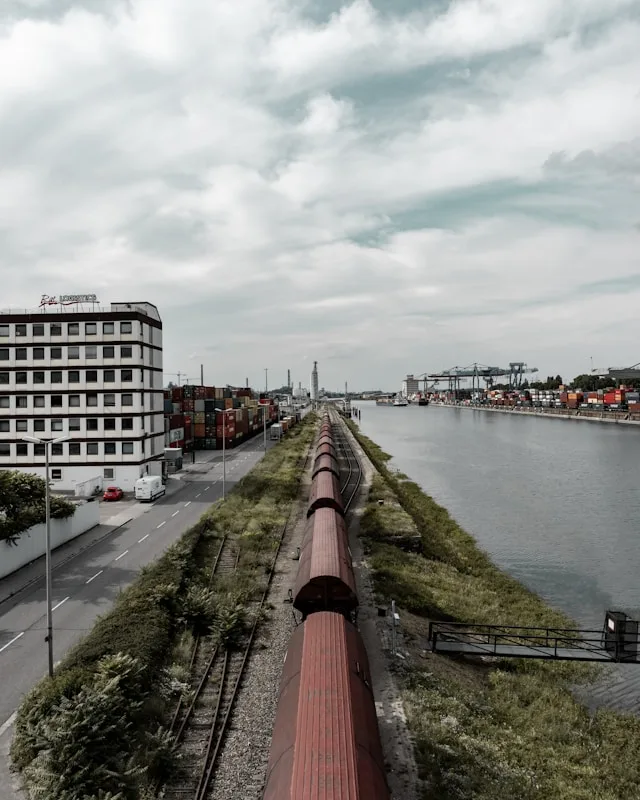
Mannheim's inland port processed roughly 138,000 TEU in 2024. That is a 4% increase over the prior year. It is also still below the 150,000 TEU trend line the port was tracking before the 2022 Rhine drought stripped the sector back to emergency operations. The recovery is real, but it is incomplete. And the constraint holding it back is no longer water levels or crane capacity. It is people.
Germany's second-largest inland port by land area sits at the centre of a trimodal logistics system linking Rhine barge traffic, DB Cargo's southern rail network, and road connections to the A6 and A61 autobahns. That system supports over 8,500 direct logistics jobs within city limits. It serves BASF Ludwigshafen directly across the Rhine, handles dangerous goods at scale, and connects automotive, pharmaceutical, and chemical supply chains across southern Germany. The infrastructure investment is accelerating: a new Liebherr LHM 600 mobile harbour crane became operational in early 2025, and €18 million in electrification and shore power works are scheduled through the end of 2026. Capacity is expanding. The workforce to operate that capacity is not.
What follows is an analysis of the forces reshaping Mannheim's logistics sector in 2026: why the investment in automation is creating demand for roles that barely existed three years ago, why the talent pipeline for those roles is thinner than the one it was meant to replace, and what senior hiring leaders in this market must understand before their next search.
Mannheim's Trimodal Hub in 2026: Bigger Infrastructure, Fewer Qualified Operators
The Port of Mannheim covers 120 hectares, operates 34 berths, and functions as one of only a handful of true trimodal inland freight hubs in Germany. Its 2023 cargo throughput of 7.2 million tonnes, recovered from a 6.8 million tonne low in 2022, positions it as the country's third-largest inland port by tonnage. The modal split for hinterland transport averages 48% inland waterway, 37% rail, and 15% road under normal Rhine conditions.
These numbers describe a system that works. They do not describe a system that is easy to staff.
The GVZ Mannheim freight village hosts over 150 logistics companies, including Rhenus Logistics, Dachser, Bertschi, and Contargo. Hafen Mannheim GmbH itself employs 312 staff. DB Cargo maintains roughly 1,200 personnel across operational and administrative roles in the greater Mannheim area, including 180 locomotive drivers and 90 dispatchers at the Mannheim Rangierbahnhof. The marshalling yard sorts approximately 3,200 wagons daily.
The infrastructure upgrade cycle now underway is designed to push container handling capacity to 165,000 TEU annually, a 20% increase. Baden-Württemberg's Klimaschutzvertrag für Häfen is funding the electrification of port handling equipment and barge shore power connections. Both programmes require capital. Both also require a category of worker that the traditional logistics training pipeline was never designed to produce.
The Chemical Logistics Anchor
Approximately 25% of Mannheim's port throughput comprises chemical inputs, intermediates, and finished goods. This flow is anchored by the port's direct Rhine connection to BASF Ludwigshafen and moves via specialised tank barges, rail tank cars, and ADR-certified road tankers. It is the highest-value, most regulation-intensive segment of the port's operations.
It is also the segment most exposed to BASF's own production decisions. According to BASF SE's Q3 2024 quarterly report, production curtailments at Ludwigshafen in 2023 and 2024 reduced chemical logistics volumes through Mannheim by an estimated 8 to 12 percent. The volumes have not fully recovered. The talent market for chemical logistics specialists, however, has not softened in parallel. The regulatory burden on remaining flows has increased, and firms handling dangerous goods require the same certification depth regardless of whether throughput is at 90% or 100%.
This asymmetry matters for hiring leaders. A volume dip does not produce a talent surplus. It produces a cost squeeze: the same regulatory and safety infrastructure must be maintained with fewer revenue tonnes to absorb it.
The Automation Paradox: Capital Replacing One Shortage With a Worse One
This is the analytical claim that the aggregate data supports but no single data point states directly: Mannheim's €18 million automation programme is not resolving the port's labour shortage. It is converting it from a shortage of traditional crane operators and dispatchers into a shortage of hybrid IT-operations professionals who are scarcer, costlier, and harder to find.
Industry compensation data shows that these hybrid roles, requiring crane operation skills alongside PLC programming capability, command 35% higher premiums than the traditional roles they are designed to replace. The pool of candidates who hold both qualifications is a fraction of the pool for either qualification alone. The investment cycle that was intended to reduce labour dependency has, in its first phase, increased the cost and difficulty of every hire it touches.
This pattern is not unique to Mannheim. But Mannheim's compressed geography, its proximity to BASF's chemical operations, and the regulatory overlay of dangerous goods handling mean the hybrid skill requirement is more acute here than at a general cargo terminal. A port automation technician in Mannheim must understand not only PLC systems but also Gefahrgutrecht across ADR, RID, and IMDG codes. That combination narrows the candidate pool to the point where traditional job advertising reaches almost no one who qualifies.
The data from the Bundesagentur für Arbeit confirms the downstream effect. Forty-seven unfilled positions for Fachkräfte für Hafenlogistik in the Mannheim region carried an average vacancy duration of 182 days as of November 2024. General logistics assistants, by contrast, filled in 94 days. The gap between those two numbers is not explained by compensation alone. It is explained by the qualification stack: combined crane certification, dangerous goods handling credentials, and increasingly, digital systems fluency.
Where the Shortages Concentrate: Four Roles, Four Bottlenecks
The Rhein-Neckar logistics sector reported a vacancy rate of 6.8% in Q4 2024, more than double the 3.2% regional average across all industries. That aggregate figure masks the concentration of pain in four specific categories.
Certified Crane Operators and Port Specialists
Terminal operators within the GVZ Mannheim cluster typically experience fill times of seven to nine months for Hafenfacharbeiter holding combined Spezialkranschein and dangerous goods handling qualifications. The pipeline for these certifications is thin. Germany's port worker training programmes produce graduates calibrated for Hamburg and Bremerhaven, not for inland chemical terminals. Mannheim's requirement for ADR Classes 3 through 9 proficiency on top of standard crane certification is a filter that eliminates the majority of coastal port graduates before they are even assessed.
Dangerous Goods Drivers
ADR-certified drivers represent a market at functional full employment. The Bundesagentur für Arbeit's Fachkräfteengpassanalyse reports 0.8 unemployed persons per vacancy for Gefahrgutbeauftragte. Ninety percent of job changes in this category occur through direct headhunting rather than application. Firms that wait for inbound candidates in this segment are not competing. They are hoping.
Rail Freight Dispatchers
DB Cargo and private rail operators such as TX Logistik and RheinCargo have experienced repeated search failures for Fahrdienstleiter and Disposition Manager positions in the Mannheim hub. According to Deutsche Bahn's 2023 Personnel and Social Report, 38 dispatcher positions across the Mannheim and Karlsruhe operations centres remained unfilled with search processes stalled beyond twelve months. National recruitment campaigns have not resolved this. The problem is not awareness. It is that the qualified population is already employed, already compensated at market rates, and not motivated to move without a proposition that addresses more than salary.
Supply Chain IT Specialists
SAP Transportation Management and SAP Logistics Execution specialists represent the newest and fastest-growing gap. As port community systems such as DAKOSY and dbh become operational requirements rather than efficiency tools, the demand for professionals who can implement, maintain, and integrate these platforms has outpaced the training cycle. The bilingual German-English requirement for international chemical supply chain coordination further narrows the pool. This is the category where automation investment directly creates demand: every new digital system installed at CTM or the GVZ requires someone to run it who did not need to exist in the previous operating model.
What the Compensation Data Reveals About Competitive Pressure
Senior logistics managers with eight to twelve years' experience and chemical industry credentials earn €85,000 to €105,000 in the Mannheim market. At the leadership level, a Head of Logistics or VP Supply Chain at a mid-sized logistics firm commands total compensation of €135,000 to €175,000. At major chemical logistics operators such as those operating at group level, this extends to €190,000 to €230,000 including long-term incentives.
Port Operations Managers earn €95,000 to €120,000 depending on terminal size, supplemented by shift allowances and IG Metall tariff benefits under the Tarifvertrag Häfen.
These are competitive numbers within Baden-Württemberg. They are not competitive against every market that draws from the same talent pool.
Duisburg, Germany's largest inland port, draws senior port operations managers and container logistics specialists with salaries 10 to 15% above Mannheim levels. Duisport and Contargo's headquarters offer career progression paths that a regional hub cannot match. Ludwigshafen competes aggressively for chemical logistics talent, leveraging BASF headquarters proximity and premiums of 12 to 18% for Gefahrgut specialists relative to Mannheim-based roles. Basel, at the other end of the Rhine, attracts German logistics professionals with net salary advantages of 25 to 30% after tax adjustments, though language requirements limit the flow.
For rail operations talent, Karlsruhe and Frankfurt offer alternative DB Cargo hubs with marginally higher compensation and materially better commuting infrastructure, drawing candidates away from Mannheim's industrial port zone.
The net effect is a market where Mannheim pays enough to retain mid-career professionals but struggles to attract senior specialists from competing hubs. The compensation gap is not dramatic in absolute terms. But at the exact seniority level where the most critical roles sit, a 12 to 18% differential is sufficient to redirect a passive candidate's attention toward Ludwigshafen or Duisburg before a Mannheim-based search even reaches them.
The Policy Paradox: Modal Shift Meets Climate Risk
Federal transport policy under the Nationaler Verkehrswegeplan 2030 mandates increasing rail's freight share to 45% by 2030. The policy rationale is clear: shift cargo from road to rail and water, reduce emissions, meet climate targets. Mannheim's trimodal infrastructure makes it a natural beneficiary of this policy direction.
The problem is that the same climate change driving decarbonisation policy is undermining the reliability of the two modes the policy favours.
The 2022 Rhine drought reduced barge load factors to 30 to 40% of capacity for 128 consecutive days, forcing emergency modal shift to road and rail at 40% higher cost per tonne-kilometre. The BMDV's Niedrigwasserprognose estimates a 30 to 35% probability of repeat extreme low-water conditions in any given year. During prolonged low-water periods, rail's share of Mannheim hinterland transport drops by 8 to 12 percentage points as overflow demand saturates an already congested network. The Rheintalstrecke between Mainz and Basel operates at 115% of design capacity under normal conditions.
This creates a paradox that shapes every hiring decision in the sector. Public investment prioritises rail and waterway infrastructure, with €2.3 billion allocated for Rhine infrastructure between 2024 and 2026. Private logistics firms, however, must simultaneously invest in road fleet capacity to ensure supply chain resilience during disruption events. The Mannheim logistics manager of 2026 is not choosing between modes. That manager is maintaining concurrent capability across all three, which requires a broader skill set and a larger team than any single-mode strategy would demand.
For senior leaders, this means the search for a Supply Chain Director in this market is not a search for someone who optimises one transport mode. It is a search for someone who can operate a trimodal system under chronic uncertainty, manage regulatory compliance across ADR, RID, and IMDG frameworks simultaneously, and maintain customer service levels when any one of the three modes can degrade without warning.
That profile is rare. It is also almost entirely passive.
The Passive Candidate Reality and What It Means for Search Strategy
LinkedIn Talent Insights data for the Rhein-Neckar region shows that 82% of supply chain managers with chemical industry experience are passive. They are not applying for roles. They are not reviewing job boards. Their average tenure at current employers is 4.8 years. They will consider a move, but only if approached directly with a proposition calibrated to their specific situation.
At the most constrained end of the market, the numbers are starker. Dangerous goods safety advisors operate in a segment with 0.8 unemployed persons per vacancy. That is functional full employment. Entry into this population requires direct identification, direct approach, and a conversation that goes well beyond a job description and a salary number.
Conversely, entry-level logistics coordinators and non-ADR truck drivers remain active candidate markets with 3.2 and 4.1 applicants per position respectively. The market is not universally tight. It is bifurcated. The roles that matter least to an organisation's strategic capability are the easiest to fill. The roles that carry regulatory exposure, operational risk, and P&L impact are the hardest.
For organisations running executive and specialist searches in this market, the implication is direct. A conventional recruitment process built around job advertising and inbound applications will reliably fill logistics coordinator positions. It will not reach the senior multimodal planners, port operations managers, or chemical logistics leaders whose absence creates genuine business risk.
The 82% passive rate is not an abstract statistic. It is a design parameter for search strategy. Any approach that does not begin with direct identification of passive candidates and proceed through structured headhunting is, by definition, addressing less than one-fifth of the available market.
What Mannheim's Logistics Sector Needs From Its Next Search Partner
The convergence of automation investment, climate-driven operational complexity, and demographic contraction is producing a hiring environment where the traditional logistics recruitment playbook fails at the senior level. Mannheim's projected 12% reduction in its working-age population by 2030, combined with restrictive port operating hours under the Tarifvertrag Häfen and competition from Duisburg, Ludwigshafen, and Basel, means the candidate pool for critical roles is shrinking while the qualification requirements for those roles are expanding.
KiTalent works with organisations facing exactly this kind of convergence: markets where the candidates who matter are not visible, where the qualification stack is too specific for generalist recruiters, and where the cost of a failed search is measured in operational exposure rather than simply in lost time. Using AI-enhanced talent mapping to identify passive candidates across the Rhein-Neckar chemical and logistics cluster, KiTalent delivers interview-ready leadership candidates within 7 to 10 days, operating on a pay-per-interview model with no upfront retainer.
For organisations in Mannheim's industrial and logistics sector competing for port operations managers, chemical supply chain directors, or rail dispatchers in a market where 82% of the talent you need is not looking and the remaining 18% is being approached by Duisburg, Ludwigshafen, and Basel simultaneously, start a conversation with our executive search team about how we source in this market.
Frequently Asked Questions
What is the average salary for a Supply Chain Director in Mannheim's logistics sector?
Total compensation for a Head of Logistics or VP Supply Chain at mid-sized logistics firms in the Mannheim and Rhein-Neckar region ranges from €135,000 to €175,000 including bonus. At major chemical logistics operators working at group level, total packages extend to €190,000 to €230,000 with long-term incentives. Port Operations Managers earn €95,000 to €120,000, supplemented by IG Metall tariff benefits. Chemical logistics specialists at senior individual contributor level command €85,000 to €105,000, above the general logistics median due to dangerous goods certification requirements and multimodal expertise.
Why is it so difficult to hire dangerous goods logistics specialists in Germany?
The Bundesagentur für Arbeit reports just 0.8 unemployed persons per vacancy for dangerous goods safety advisors (Gefahrgutbeauftragte), representing functional full employment. Ninety percent of job changes in this category occur through direct approach rather than application. The certification requirements, spanning ADR, RID, and IMDG codes, take years to accumulate. Mannheim's proximity to BASF Ludwigshafen intensifies demand further, as chemical logistics volumes require specialists who combine regulatory fluency with multimodal operations experience. This is a market where conventional job advertising reaches almost none of the qualified population.
How does Mannheim's inland port compare to Duisburg for logistics careers?
Duisburg, Germany's largest inland port, offers senior port operations managers 10 to 15% higher salaries than Mannheim and greater career progression through larger organisations such as Duisport. However, Mannheim's chemical logistics cluster, anchored by the BASF Ludwigshafen connection, creates specialised roles in dangerous goods handling and trimodal chemical supply chain management that Duisburg's container-focused operations do not replicate at the same depth. Professionals seeking chemical and multimodal expertise often find Mannheim's niche more technically demanding and career-defining.
What impact does Rhine low water have on logistics hiring in Mannheim?
The 2022 Rhine drought reduced barge load factors to 30 to 40% for 128 days, forcing modal shift to road and rail at 40% higher cost per tonne-kilometre. Climate projections indicate a 30 to 35% probability of repeat extreme conditions annually. This volatility shapes hiring directly: organisations need leaders capable of managing concurrent trimodal operations rather than optimising a single transport mode. It also increases demand for supply chain professionals with crisis management experience, compounding shortages in an already constrained market.
How can companies in Mannheim's logistics sector find passive senior candidates?
With 82% of qualified supply chain managers in the Rhein-Neckar region classified as passive, organisations must move beyond job boards entirely for senior roles. KiTalent's approach combines AI-powered talent mapping with direct headhunting to identify and engage candidates who are not actively searching. The pay-per-interview model means clients only invest when meeting pre-qualified candidates, and the typical delivery timeline of 7 to 10 days compresses the search cycle that traditionally runs seven to nine months for specialised port operations roles in this market.
What skills do logistics executives need in Mannheim's trimodal port environment?
The critical combination includes Gefahrgutrecht expertise spanning ADR, RID, and IMDG codes, proficiency in SAP Transportation Management and port community systems such as DAKOSY, and stakeholder management capability with major chemical producers. Bilingual German-English competency is increasingly required for international supply chain coordination. As automation investment accelerates, hybrid skills combining traditional operations knowledge with PLC programming and digital systems integration have become the single most valuable and scarce qualification profile in the market.