Massa's Tourism Numbers Are Rising. Its Ability to Staff Them Is Not.
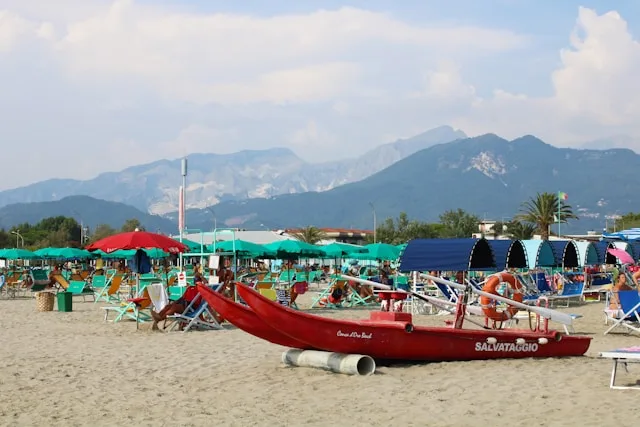
Tourist arrivals in Massa province surpassed pre-pandemic levels by 8% in 2024. Marina di Massa's renovated pier opened in April 2025 with 180 new berths. German and Dutch advance bookings for the 2025 season ran 12% ahead of the prior year. By every volume metric, the destination is succeeding.
Yet behind these figures sits a deepening contradiction. Only 73% of seasonal hospitality positions were filled by May 2025, marking the third consecutive year of pre-season staffing shortfalls. Properties operated with reduced menus. General manager searches stretched past six months. Certified marina professionals commanded 20% premiums just to stay local. The tourism economy is growing in a way that the labour market cannot support, and the result is not merely inconvenience. It is measurable degradation in the quality of the product Massa sells.
What follows is an analysis of the forces driving this mismatch in one of Tuscany's most concentrated seasonal economies: where the talent gaps are sharpest, what structural constraints prevent them from closing, and what hospitality operators and investors need to understand before committing capital or hiring budgets to this market in 2026.
A Seasonal Economy Running at Capacity Without the People to Sustain It
Marina di Massa generates approximately 62 to 68% of the municipality's service sector turnover during peak season, according to ISTAT Movimprese data from mid-2024. The concentration is extreme. Seventy-eight percent of annual accommodation occupancy occurs in a ten-week window between mid-June and the end of August. Average daily rates for three-star properties reached €185 to €220 in July 2024.
This compression creates a labour market that behaves unlike almost any other. Each direct tourism job supports roughly 1.4 indirect positions in construction, transport, and retail during peak months. But 40% of those indirect positions disappear between October and April. The employment multiplier works in both directions: it amplifies prosperity in summer and amplifies fragility in winter.
The 2025 season represented a stabilisation phase. Italian family bookings declined 9%, attributed to purchasing power constraints, while Northern European advance reservations grew. The overall effect was flat-to-marginal volume growth masking a compositional shift. That shift carries implications for the skills profile the market needs, because German and Dutch visitors require multilingual service that Italian domestic tourists do not.
For hiring leaders across Massa's coastal hospitality market, the practical meaning is straightforward: the demand profile is changing faster than the workforce profile. Filling a front-desk role with someone who speaks only Italian worked when Italian families dominated bookings. It does not work when 55% of summer occupancy comes via TUI and Vrij Uit.
Where the Gaps Are Sharpest: Four Roles That Define the Crisis
Hotel General Managers: A Search That Takes Longer Than the Season It Serves
The most consequential shortage in Massa's hospitality sector is not at the entry level. It is at the top. Across 35 properties requiring qualified general management, supply covers approximately 60% of demand. HVS Executive Search's 2024 Italian market report puts the passive candidate ratio for Versilia-area general managers at 85%. The vast majority of qualified candidates are employed, not searching, and not visible on any job board.
A typical search for a general manager at a family hotel in the 30 to 60 room range runs four to seven months, according to Federalberghi Versilia's 2024 talent survey. Multiple properties reportedly operated under interim management arrangements through July 2024. The timeline alone reveals the structural problem: a search that begins in January may not conclude until June, by which point the most revenue-intensive weeks of the year are already underway.
This is where the mismatch between ownership structure and talent acquisition method becomes most visible. Eighty-five percent of Massa's hospitality businesses are family-owned enterprises with fewer than 50 employees. They do not have HR departments. They do not have retained search relationships. They recruit the way they always have: personal networks, word of mouth, and job postings. That method reaches 15% of the qualified candidate pool in this market. The other 85% requires a fundamentally different approach, and the businesses that need it most are the least equipped to deploy it.
Culinary Leadership: Forte dei Marmi's Gravitational Pull
Twenty-five to thirty executive and sous chef positions remained unfilled during the 2024 to 2025 peak season. The culinary leadership gap is not simply about volume. It is about geography.
According to La Nazione's June 2024 reporting, Hotel Excelsior in Marina di Massa operated with a reduced menu and limited dinner service for eleven weeks after failing to secure a sous chef with fine-dining experience, despite offering a package above €45,000. The problem was not compensation alone. It was that Forte dei Marmi, 25 minutes south, pays 25 to 35% more for the same role, offers luxury brand portfolio exposure, and provides year-round employment stability that Massa's seasonal contracts cannot match.
The drain operates across multiple vectors. Fipe-Confcommercio's culinary labour analysis confirms that candidates also migrate to Switzerland and France for winter season continuity. The cost of failing to secure culinary leadership is not abstract. It is a reduced menu, a lower average cover, and a TripAdvisor review that persists long after the season ends.
Marina Technical Staff: Zero Unemployment, Maximum Difficulty
Marina di Massa S.p.A. manages 650 berths and scales from 32 year-round employees to 78 during summer. The renovation completed in April 2025 expanded capacity to vessels up to 25 metres, directly increasing demand for harbour masters with Yachtmaster Offshore or equivalent certifications and for qualified marine mechanics.
According to Il Tirreno's April 2025 reporting, Marina di Massa recruited a harbour master from Viareggio offering a 20% compensation premium over market rate. Certified maritime professionals in this region experience effectively zero unemployment. Ninety-five percent are passive candidates. They are not looking, will not respond to advertisements, and can only be reached through direct identification and targeted approach.
Front-Office and Guest Experience: The Language Bottleneck
More than 200 positions for German and English-speaking receptionists and concierge staff remain chronically unfilled. This is the most visible shortage to guests and the one most directly responsible for declining satisfaction scores. Hosco's 2024 Italy hospitality labour report puts typical vacancy periods for front-desk managers with revenue management competencies at three to four months.
The active-to-passive ratio here is more favourable than in senior management: roughly 70% active, 30% passive. Yet the specific skill combination required, multilingual fluency plus dynamic pricing platform proficiency, is rare enough that active candidates who possess both are absorbed almost immediately by Florence's corporate hospitality sector, which offers 15 to 20% higher base salaries and urban lifestyle advantages.
The Compensation Equation That Explains the Drain
Understanding why Massa loses talent requires examining the specific numbers, not the generalised complaint that "wages are too low." In several categories, wages are competitive by Italian hospitality standards. The problem is that Massa competes not against Italian averages but against three specific markets that draw from the same candidate pool.
A hotel general manager overseeing an 80 to 120 room, four-star equivalent property in Massa earns €72,000 to €95,000 at the executive level, with performance bonuses of 10 to 20%, per HVS's 2024 Tuscany salary survey. This is a credible package. But Florence's corporate hospitality market, 100 kilometres east, offers 15 to 20% more for revenue management and marketing roles while providing year-round employment and urban amenities. Forte dei Marmi's luxury segment pays 20 to 40% premiums for culinary and front-office talent. Even international seasonal markets in Spain's Costa Brava and the Greek Islands are drawing workers with higher net compensation through tip cultures and English-speaking environments, according to the European Trade Union Institute's 2024 seasonal worker mobility study.
Revenue managers, a specialist role in high demand with limited local supply, command €42,000 to €58,000. Marina harbour masters range from €52,000 to €68,000 at the technical level, rising to €75,000 to €95,000 for multi-marina portfolio oversight.
The compensation story in this market is not about absolute inadequacy. It is about relative positioning against adjacent competitors who offer either more money, more stability, or both. For a candidate weighing Massa against Forte dei Marmi, the salary negotiation comes down to a simple question: why accept a seasonal contract when a year-round position at a higher rate exists 25 minutes away?
The Structural Constraints No Hiring Strategy Can Override Alone
Three forces external to any individual employer's hiring decisions constrain the Massa hospitality labour market at a systemic level. No amount of improved recruitment methodology will resolve them entirely, though understanding them shapes what an effective strategy must include.
Housing Costs That Functionally Exclude Seasonal Workers
Shared apartment rents in Marina di Massa during summer reach €800 to €1,200 per month, according to Immobiliare.it's seasonal rental index. For a seasonal worker earning entry-level hospitality wages, this is prohibitive. The practical effect is a 45-minute commute from Massa city centre or Aulla, which shrinks the labour pool to candidates who own transport and are willing to spend 90 minutes daily in transit for a temporary contract.
The housing constraint is self-reinforcing. The same holiday rental boom that drives tourism revenue, with 4,200 active short-term rental units now exceeding the 2,850 traditional hotel beds, removes housing stock from the long-term rental market that workers need. Capital that flows into tourism infrastructure simultaneously undermines the workforce pipeline that infrastructure depends on.
Immigration Quotas That Ignore Sectoral Reality
Italy's Decreto Flussi allocated 151 seasonal tourism permits to all of Tuscany for 2024 to 2025. Federalberghi Toscana projects a deficit of 800 to 1,200 qualified hospitality workers across the Versilia zone alone by 2026 if quotas remain unchanged. The arithmetic is unambiguous. The quota covers less than 20% of the projected shortfall for one subregion of one province.
Regulatory Paralysis on Beach Concessions
The unresolved implementation of the EU Bolkestein Directive on maritime concessions has frozen approximately €8 million in private investment across Marina di Massa's 42 beach establishments. Current concessions expire December 31, 2027, with no clarity on renewal criteria. Operators who might invest in upgrading facilities, adding services, and creating roles worth filling are instead deferring capital expenditure. This regulatory limbo affects 600 direct jobs and €15 million in annual turnover, according to ANSFI, the national beach establishment association.
The combined effect of these constraints is a market where demand for senior and specialist talent is acute but the conditions required to attract it, affordable housing, year-round employment certainty, and investment confidence, are systematically absent. This is the core analytical insight of this market: the talent problem is not primarily a recruitment problem. It is an infrastructure problem expressing itself through recruitment failure.
The Premiumisation Trap: Why Repositioning Upmarket May Worsen the Talent Gap
Here is the synthesis that the data points toward but no single source states directly: Massa's destination marketing and real estate development community is pushing toward premiumisation, attempting to mirror Forte dei Marmi's luxury positioning. The existing infrastructure tells a different story. Camping sites represent 60% of accommodation capacity. Only 8% of regulated beds are classified as four-star or above. The restaurant and retail base serves a family-oriented, middle-market demographic.
Attempting to reposition upward without resolving the talent pipeline creates a specific and dangerous dynamic. Premium positioning requires premium service delivery. Premium service delivery requires the culinary leaders, multilingual concierges, and revenue managers that this market already cannot attract in sufficient numbers. Pursuing a higher-value guest while the workforce capable of serving that guest drains to Forte dei Marmi and Florence is not a growth strategy. It is an acceleration of the very mismatch that is already degrading the product.
The more productive path for most Massa operators, and the one the data supports, is to optimise yield within the existing market position. ADR is projected to rise 5 to 7% through 2026, reaching €195 to €235 for three-star properties, according to CBRE Hotels' Italian leisure forecast. Revenue growth through dynamic pricing and occupancy management requires fewer incremental hires than a full repositioning, but it requires specific hires: revenue managers with Duetto or Cloudbeds proficiency, and digital marketing specialists capable of reducing OTA dependency through direct booking optimisation in German and Dutch.
The operators who will extract the most value from this market in 2026 are not the ones chasing a different guest segment. They are the ones building the capability to serve their current segment better. That capability is a talent question, and it requires a talent mapping exercise that most family-owned operators have never conducted.
What a Realistic Hiring Strategy Looks Like in This Market
The mismatch between what Massa's hospitality employers need and how they currently recruit is the most actionable finding in this analysis. The talent exists. It is employed in Viareggio, Forte dei Marmi, Florence, and across the Versilia coast. But 85% of the general managers, 95% of the marine technical professionals, and 90% of the best revenue managers are not visible through conventional job advertising.
Family-owned enterprises with 30 to 60 rooms cannot individually fund retained executive searches. But they can act collectively. Confcommercio Massa-Carrara already represents 1,847 tourism and retail businesses. The infrastructure for coordinated talent acquisition exists. What is missing is the methodology.
A pay-per-interview model removes the upfront retainer barrier that prevents SME hospitality operators from accessing executive-grade search. Interview-ready candidates delivered within a defined timeline, typically seven to ten days, compress a process that currently stretches across half the pre-season window. For a sector where a vacant general manager role in March means an understaffed property in July, speed is not a luxury. It is the difference between a profitable season and a compromised one.
KiTalent's approach to executive hiring across Italy's hospitality and luxury sectors directly addresses this structural gap. With a 96% one-year retention rate across 1,450 executive placements and a client portfolio that includes Bulgari (LVMH), the methodology is built for markets where the candidates who matter most are the hardest to find through conventional channels.
The €12 million in EU Next Generation funds allocated to Versilia coastal municipalities through 2026 will mandate green infrastructure retrofitting and sustainability certification. Operators who cannot demonstrate LEED or GSTC compliance will face exclusion from public procurement cycles. Hiring a general manager or operations director who understands sustainability certification management is not a forward-looking aspiration. It is a near-term operational requirement.
For hospitality operators, marina management companies, and investors evaluating Massa's coastal tourism sector, the question is no longer whether the demand exists. The demand is documented, growing, and increasingly international. The question is whether the workforce capable of converting that demand into revenue and guest satisfaction can be assembled before the constraints tighten further. For organisations ready to address that question with the urgency it requires, start a conversation with our executive search team about how we identify and deliver the leadership talent this market needs.
Frequently Asked Questions
Why is it so difficult to hire hotel general managers in Massa and the Versilia coast?
Eighty-five percent of qualified general managers in the Versilia hospitality market are passively employed, meaning they are not actively searching or visible on job boards. The ownership structure compounds the difficulty: 85% of hospitality businesses in Massa are family-run SMEs without HR departments or executive search budgets. Typical search durations run four to seven months for a three-star property general manager, often extending past the start of peak season. Reaching this candidate pool requires direct headhunting methodology rather than conventional advertising.
What do hospitality executives earn in Massa and coastal Tuscany?
A hotel general manager overseeing an 80 to 120 room property earns €72,000 to €95,000 gross annually, with performance bonuses of 10 to 20%. Food and beverage directors at multi-outlet operations earn €55,000 to €75,000. Marina harbour masters command €52,000 to €68,000, rising to €95,000 for multi-site portfolio roles. Revenue managers, a specialist role in acute shortage, earn €42,000 to €58,000. These figures reflect HVS, Assomarinas, and Federalberghi benchmarking data for the Tuscany coastal zone.
How does the Bolkestein Directive affect hospitality hiring in Marina di Massa?
The unresolved implementation of EU rules on maritime concessions has frozen approximately €8 million in private investment across Marina di Massa's 42 beach establishments. Operators are deferring facility upgrades and expansion pending clarity on whether concessions expiring December 31, 2027, will be renewed or auctioned. This regulatory limbo directly suppresses job creation and discourages senior candidates from accepting roles at establishments whose operating future is uncertain.
What seasonal worker shortage does the Versilia coast face in 2026?
Industry associations project a deficit of 800 to 1,200 qualified hospitality workers across the Versilia zone by 2026. Italy's Decreto Flussi allocated only 151 seasonal tourism permits to all of Tuscany for 2024 to 2025, covering less than 20% of the projected shortfall. Housing costs compound the problem, with seasonal rents in Marina di Massa reaching €800 to €1,200 per month for shared accommodation, forcing workers into 45-minute commutes that further reduce the available labour pool.
How can small family-run hotels in Massa compete for senior hospitality talent?
Family-owned properties typically lack the HR infrastructure for executive search. KiTalent's pay-per-interview model removes the upfront retainer barrier, delivering interview-ready candidates within seven to ten days. This compresses a process that currently consumes half the pre-season window. Operators can also act collectively through existing bodies like Confcommercio Massa-Carrara to coordinate talent pipeline development and share market intelligence on compensation benchmarking and candidate availability.
What skills are most in demand for Massa's hospitality sector in 2026?
The four most sought-after capabilities are revenue management platform proficiency (Duetto, Cloudbeds), sustainability certification management (LEED, GSTC) required for EU funding compliance, nautical tourism operations including marina management software, and multilingual digital marketing in German and Dutch for direct booking optimisation. Candidates combining technical platform skills with language capabilities and Italian hospitality experience represent the scarcest and most valuable profile in this market.