Massa's Marble Processors Invested in Automation. The Technicians to Run It Do Not Exist in Sufficient Numbers.
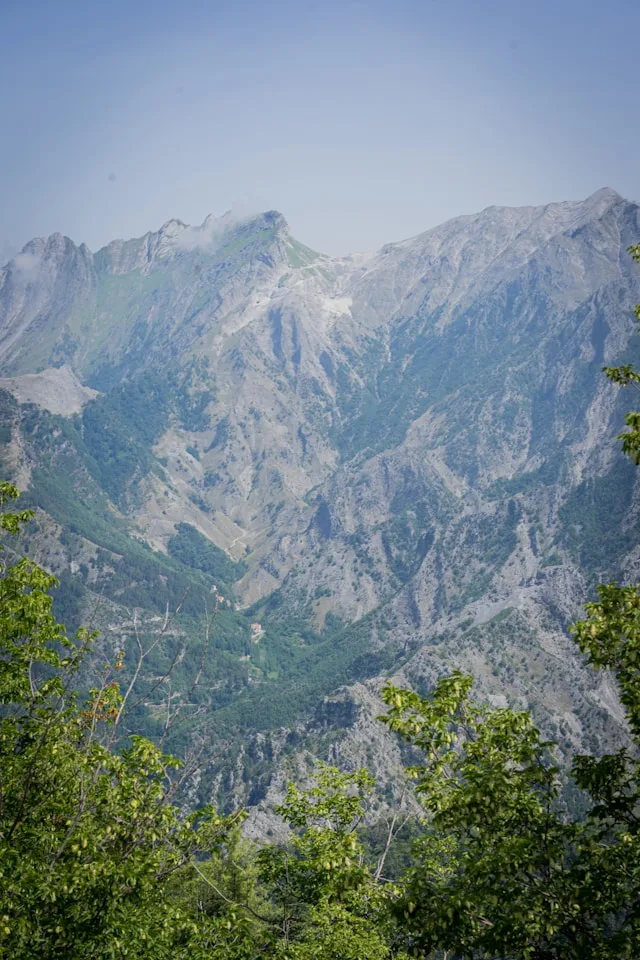
Massa's stone processing district spent 2024 and 2025 acquiring 5-axis CNC bridging saws, robotic finishing cells, and IoT-enabled cutting systems at a pace not seen in a generation. Italian Transition 4.0 tax credits covered 20 to 50 per cent of digitalisation investments. Robotic system adoption rose 14 per cent in 2024 alone. The capital moved. The human capital did not follow.
This is the central contradiction in Massa's dimension-stone sector as of 2026. The district that processes marble from the Apuan Alps and increasingly from imported blocks out of Turkey, Greece, and Portugal has successfully modernised its factory floors. Yet 68 per cent of stone processing firms in Massa-Carrara province reported "great difficulty" filling mechatronic production technician roles in 2024, with vacancies persisting an average of 7.4 months. That is more than double the provincial average for technical positions. The machines arrived. The people who can programme and maintain them did not.
What follows is a structured analysis of the forces reshaping Massa's stone processing sector: the automation wave, the raw material supply shift, the talent market that sits almost entirely beneath the surface, and what it all means for leaders trying to hire and retain the specialists this district cannot function without.
The District in 2026: Processing Hub, Not Just Quarry Hinterland
The Apuan Marble Productive District encompasses roughly 1,200 active enterprises spread across Carrara, Massa, and Seravezza. Carrara retains its dominance in raw extraction and artistic sculpture. Massa's role is different: it is the industrial engine. The Zona Industriale Apuania and the Corridoi Tecnologici concentrate the sawmills, resin-treatment plants, cut-to-size workshops, and export logistics facilities that turn rough blocks into finished and semi-finished products.
Massa hosts the densest concentration of medium-to-large processing SMEs in the district. Firms employing 10 to 50 workers cluster here because of flatter terrain and superior road and rail connectivity to the Port of Carrara. Processing volumes across the Massa-Carrara province reached approximately 1.4 million tonnes of finished and semi-finished stone in 2024, a 3.2 per cent year-on-year increase driven by North American luxury residential demand and Middle Eastern giga-project specification, according to ICE-Agenzia's Q3 2024 export report.
A Forced Pivot Toward Imported Material
The growth figure masks a deep shift in the district's supply chain. Quarry extraction permits in the Apuan Alps were reduced by 12 per cent under the 2024 revision of the Piano di Gestione della Rete Natura 2000. Current permitting delays average 18 to 24 months for new basin authorisations. Three key basin sites remain blocked by Piano Cave environmental appeals.
The consequence is measurable. Imported rough blocks now represent 35 per cent of input material for Massa processors, up from 22 per cent in 2019. Massa is becoming a processing hub for global stone, not merely a finishing station for local Carrara marble. This strategic pivot has implications for everything from logistics staffing to the district's origin-designation branding, a tension explored later in this article.
Moderate growth of 2 to 3 per cent in volume is projected for 2026, contingent on the resolution of those environmental appeals. Export demand is shifting toward high-margin bespoke architectural panels for hospitality and super-prime residential clients. This favours Massa's fabricators with advanced waterjet and UV-curing resin capabilities. Standard tile production, by contrast, faces pricing pressure from Turkish and Indian imports that will likely trigger consolidation among Massa's smallest workshops.
The Automation Paradox: Capital Moved Faster Than Human Capital
This is the analytical spine of this article, and it deserves stating plainly. The assumption that automation resolves labour constraints in traditional craft districts is wrong in Massa. Automation has replaced one kind of worker with another that does not yet exist in sufficient numbers. The bottleneck was never capital availability. It is the lag in technical training supply chains.
Transition 4.0 tax credits made the investment decision straightforward. A mid-sized Massa processor could acquire a 5-axis CNC machining centre with a 20 to 50 per cent tax credit. Many did. The 14 per cent increase in robotic system adoption in 2024 confirms the pace. But a 5-axis stone machining centre requires a CNC/CAD-CAM technician who can programme it for marble's specific material properties: vein direction, fracture planes, variable hardness across a single block. This is not general CNC programming. It is a specialisation that combines mechatronics with petrographic knowledge.
The Excelsior-Unioncamere information system for Massa-Carrara province recorded the result. Average vacancy persistence for mechatronic production technician roles hit 7.4 months in 2024. The provincial average for technical roles is 3.2 months. Firms are waiting more than twice as long, and many are not finding anyone at all.
Why the Training Pipeline Cannot Keep Up
The gap is not surprising once you examine the pipeline. Massa's stone processing sector is atomised. Seventy-eight per cent of enterprises employ fewer than 15 workers. These are not firms with structured apprenticeship programmes, dedicated training budgets, or university partnerships. They are family workshops that have historically trained the next generation internally. That model worked when the skills were manual. It does not work when the skills are digital.
The Marmotec technology centre, located in Carrara but serving Massa firms, coordinates some R&D. Confartigianato Imprese Massa Carrara represents approximately 420 stone-sector artisan enterprises, and Confindustria Massa Carrara represents 85 industrial-scale processors. But institutional coordination for talent pipeline development in CNC specialisation remains fragmented. The training output has not scaled to match the capital expenditure.
The firms that automated earliest are now the ones with the longest-standing technician vacancies. That is not a coincidence. It is the predictable outcome of investing in machines before investing in the people who operate them.
Three Roles the District Cannot Fill
The shortages in Massa's stone sector are not generic. They cluster in three specific categories, each with distinct market dynamics and distinct reasons for scarcity.
CNC/CAD-CAM Technicians
The data is unambiguous. A senior CNC programmer with five-axis stone machining experience commands €35,000 to €48,000 under the CCNL Industria Lapidea collective agreement, plus specialisation premiums. At the Technical Director level, compensation reaches €75,000 to €100,000, with a scarcity premium of 15 to 20 per cent above standard manufacturing for marble-specific CAD/CAM expertise.
The passive candidate ratio tells the story. Candidates with five or more years of experience in five-axis stone machining are already employed, often by machinery manufacturers like Breton or by rival processors. The ratio of active to passive candidates in this specialisation is estimated at 1:4, according to Randstad Italy's 2025 manufacturing talent trends data. One candidate in five is looking. The other four must be found through direct headhunting methods that reach professionals who are not responding to job postings.
Master Craftsmen and Restorers
This is a different kind of shortage. Confartigianato Massa Carrara reports that 54 per cent of associated sculpture studios have at least one maestro scalpellino position vacant for over 12 months. These roles typically require 15 or more years of experience in figurative carving. Unemployment in this sub-category is functionally zero, below one per cent. Qualified professionals hold average tenures exceeding 15 years in family workshops or heritage restoration consortia.
These individuals do not respond to public job postings. Recruitment occurs exclusively through guild networks or through poaching with 20 to 30 per cent salary premiums. The hidden market of passive candidates is not a metaphor in this context. It is a literal description. The master craftsmen are invisible to any conventional sourcing method.
Export Sales Managers
The third shortage is commercial rather than technical. Export Area Managers covering the Middle East and North America earn €48,000 to €65,000 plus commission. At the Chief Commercial Officer or Export Director level, total compensation reaches €95,000 to €140,000 with performance incentives. The top quartile reaches €160,000 for executives managing portfolios exceeding €50 million in turnover.
The specific requirement is a combination of Arabic or Mandarin fluency, stone-specification technical knowledge, and commercial sophistication. This triple requirement is rare in any market. In a district of small family-owned processors, it is exceptionally rare. The candidates who possess this combination are overwhelmingly already employed and must be identified through systematic talent mapping rather than advertisement.
Compensation in Context: What the Numbers Mean for Hiring Leaders
The compensation data for Massa's stone sector reveals a market that is bifurcated in two directions simultaneously. Production and operations roles at the Plant Manager level sit in a range of €55,000 to €72,000 base plus bonus. Operations Directors with multi-site automation integration experience reach €85,000 to €120,000 in total compensation. These figures are directional rather than precise because Massa's private SMEs do not publicly disclose executive pay. The ranges draw on national sector collective agreements and regional recruitment market premiums for the Tuscany industrial corridor.
The more revealing comparison is geographic. Verona, the hub of stone-machinery manufacturing and host of the Marmomac trade fair ecosystem, offers CNC technicians and automation engineers salaries 12 to 18 per cent higher than Tuscany averages. Verona also offers more structured corporate career paths. For a mid-level technical professional weighing an offer from a 30-person Massa workshop against a position at a Verona machinery manufacturer, the calculation is not close.
The Middle East compounds the problem. Italian marble expertise is heavily recruited for giga-projects such as NEOM and Red Sea Global. Project Managers and Senior Estimators with stone-cladding experience command tax-free salaries of €120,000 to €180,000. According to Il Sole 24 Ore's reporting on construction recruitment, this has created a brain drain of executives aged 35 to 50 from Massa firms. A processor in Massa is competing for the same talent pool as a Saudi Arabian megaproject offering two to three times the compensation, tax-free.
For any organisation attempting to benchmark executive compensation in this sector, the local collective agreement is the floor, not the ceiling. The ceiling is set by Verona and the Gulf. Any offer that does not account for these external reference points will lose to them.
The Identity Risk No One Is Pricing In
The second major tension in this market is quieter but potentially more consequential than the automation paradox. Despite increasingly stringent quarry closures and extraction permit denials in the Apuan Alps, local industrial associations report planned capacity expansions in resin-treatment and large-format panel finishing for 2025 and 2026. Massa's processors are expanding their capacity to handle more material at the same time that the local supply of that material is being deliberately restricted.
The strategic logic is coherent. Massa is pivoting from "Carrara marble finishing station" to "global dimension-stone processing hub." The flatter terrain, the port connectivity, the automation investment, and the established logistics infrastructure all support this pivot. But the district's branding, its political economy, and its cultural identity remain anchored to the Carrara marble origin designation. The words "Carrara marble" carry extraordinary premium in global markets. A block of Turkish Marmara marble processed in Massa does not carry that premium.
This creates a margin compression risk that is not fully reflected in the current employment optimism. If Massa's growth depends on processing imported blocks, then Massa's margins depend on what value the processing adds, not on the raw material's origin. That value comes from precision fabrication, bespoke architectural capabilities, and the skill of the workforce. It comes from the very technicians, craftsmen, and commercial leaders the district cannot hire fast enough.
The identity question and the talent question are the same question. Massa's future margin depends on its people, not its geology. Organisations that understand this distinction will invest in recruitment and retention accordingly. Those that do not will find themselves processing commodity stone at commodity margins with an increasingly expensive automated factory floor.
What Hiring Leaders in This Sector Must Understand
The Massa stone sector's talent dynamics present a challenge that conventional recruitment cannot solve. The market is small. The specialists are few. The passive candidate ratio in the two most critical categories is extreme. And the geographic competitors offering higher compensation are not distant abstractions. They are active recruiters pulling from the same pool.
A firm in this district that posts a CNC technician vacancy and waits for applications is reaching, at best, one in five viable candidates. The other four are employed, satisfied enough with their current roles, and invisible to any job board. A firm that posts a master craftsman vacancy is reaching even fewer. Functional zero unemployment means functional zero active candidates.
The search methodology required is fundamentally different from standard recruitment. It requires identifying and approaching passive candidates who are currently embedded in competitor firms, machinery manufacturers, or restoration consortia. It requires understanding the specific compensation thresholds that move professionals in this market: not just salary, but the proposition. A craftsman who has worked in the same atelier for 15 years does not move for money alone. A CNC technician weighing Massa against Verona is weighing lifestyle, career structure, and long-term trajectory.
For senior commercial and operations leadership, the challenge is equally acute. Export Directors commanding portfolios above €50 million are not found through conventional channels in a district of atomised SMEs. They are found through structured executive search across the industrial and manufacturing sector that maps the entire talent pool before making a single approach.
KiTalent works with organisations facing exactly this profile of challenge: a small, highly specialised talent market where the candidates who matter most are not visible and the cost of a failed or slow search is measured in lost contracts and stalled production lines. With interview-ready candidates delivered within 7 to 10 days and a pay-per-interview model that eliminates upfront retainer risk, the approach is designed for markets where speed and precision are not competing priorities. They are the same priority.
For stone processing firms in the Massa-Carrara district competing for CNC technicians, master craftsmen, or senior commercial leaders against Verona, the Middle East, and each other, start a conversation with our executive search team about how we approach this market.
Frequently Asked Questions
What is driving the talent shortage in Massa's marble processing sector?
Three factors converge. First, rapid automation investment through Transition 4.0 tax credits created demand for CNC/CAD-CAM technicians that the local training pipeline cannot match. Second, environmental restrictions on Apuan Alps quarry permits are forcing a strategic pivot toward imported block processing, requiring new commercial and logistics skills. Third, geographic competitors, particularly Verona and Middle Eastern giga-projects, offer 12 to 18 per cent higher salaries and, in the Gulf, tax-free packages two to three times Massa's rates. The result is a market where 68 per cent of firms report great difficulty filling technical roles.
What do CNC technicians earn in Massa's stone processing industry?
Senior CNC programmers with five-axis stone machining experience earn €35,000 to €48,000 under the national stone industry collective agreement, plus specialisation premiums. At the Technical Director level, compensation benchmarking shows total packages of €75,000 to €100,000, with a 15 to 20 per cent scarcity premium above standard manufacturing for marble-specific CAD/CAM expertise. Verona-based stone machinery manufacturers offer 12 to 18 per cent above these Tuscany averages, creating persistent competitive pressure on Massa employers.
Why are master stone craftsmen so difficult to recruit in Italy?
Master scalpellini represent a functionally zero unemployment category, with rates below one per cent. Qualified professionals typically have 15 or more years of experience and average tenures exceeding 15 years in the same workshop or consortium. They do not respond to public job postings. Fifty-four per cent of Massa-Carrara sculpture studios report maestro positions vacant for over 12 months. Recruitment in this category requires direct approaches through guild networks or through specialist headhunting with salary premiums of 20 to 30 per cent.
How does Massa compare to Verona for stone sector careers?
Verona offers CNC technicians and automation engineers salaries 12 to 18 per cent higher than Tuscany averages and provides more structured corporate career paths through large machinery manufacturers such as Breton and Denver. Massa offers proximity to the Apuan Alps quarries and a denser concentration of processing SMEs. However, Massa's predominantly small, family-owned workshop structure limits formal career progression compared to Verona's larger corporate employers. Mid-level technical professionals frequently move from Massa to Verona for precisely this combination of higher pay and clearer advancement.
What is the outlook for Massa's dimension-stone sector in 2026?
Moderate growth of 2 to 3 per cent in processing volume is projected, contingent on the resolution of Piano Cave environmental appeals blocking three key quarry basin sites. Export demand is shifting toward high-margin bespoke architectural panels for hospitality and super-prime residential markets. Standard tile production faces pricing pressure from Turkish and Indian imports, likely triggering consolidation among workshops with fewer than 10 employees. The strategic trajectory favours firms with advanced waterjet, UV-curing resin, and AI-enabled cutting optimisation capabilities.
How does KiTalent approach executive search in niche manufacturing sectors?
KiTalent uses AI-powered talent mapping to identify and approach passive candidates in highly specialised markets where conventional job advertising reaches a fraction of the viable pool. In sectors like dimension-stone processing, where the active-to-passive candidate ratio can be as low as 1:4, this methodology is the difference between a search that produces results and one that stalls. KiTalent delivers interview-ready candidates within 7 to 10 days, operates on a pay-per-interview model with no upfront retainer, and maintains a 96 per cent one-year retention rate across more than 1,450 executive placements.