Milano, Europe's New Luxury Capital: How the UHNWI Boom Is Creating an Executive Job Market Unlike Anything Italy Has Seen


Editorially reviewed by Anna Renna. Based on primary market sources and KiTalent's market-intelligence process.
This page combines KiTalent market intelligence, direct-search methodology, and primary market sources where available.
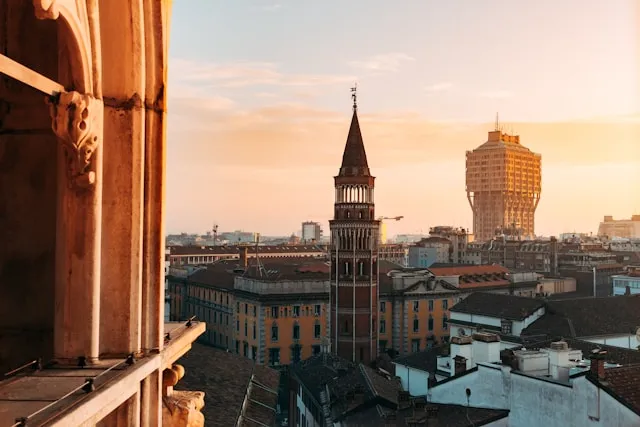
There is a particular kind of energy in Milano right now that has nothing to do with Fashion Week or the Salone del Mobile. Walk through the Quadrilatero della Moda on any given Tuesday, past the scaffolding of soon-to-open five-star hotels and the discreet brass plates of newly arrived Swiss private banks, and you can feel it: the city is being reshaped by money. Not just any money. Ultra-high-net-worth money.
In the 2026 edition of the Barnes City Index, Milano was named the second most desirable city in the world for ultra-high-net-worth individuals (UHNWIs), trailing only Madrid. According to data compiled by Henley & Partners and the Boston Consulting Group, the city now hosts approximately 115,000 millionaires and 17 billionaires, placing it 11th globally among the world's wealthiest cities and third in Europe behind London and Paris. Milano's millionaire population has grown by 24% over the past decade, and Italy as a whole is expected to attract an estimated 3,600 high-net-worth newcomers in 2025 alone, surpassing Switzerland for the first time as Europe's premier wealth destination.
For professionals in financial services, luxury hospitality, real estate, and high-end concierge services, this is not just a macroeconomic trend. It is a once-in-a-generation shift in the labour market.
The Flat Tax Engine: Why the Ultra-Wealthy Are Choosing Italy
The catalyst behind Milano's transformation has a very specific origin: Italy's flat-tax regime for new residents, introduced in 2017. Under this framework, individuals who transfer their tax residency to Italy can pay a fixed annual levy on all foreign-sourced income, replacing the country's standard progressive rates, which can exceed 40% on higher brackets. The scheme also exempts participants from Italian wealth tax on foreign assets and from inheritance tax on overseas holdings, for a duration of up to 15 years.
When it launched, the annual fee was set at EUR 100,000. It was doubled to EUR 200,000 in 2024, and under the 2026 Italian Budget Law, it will rise again to EUR 300,000 for new applicants. Family members can opt in at EUR 25,000 each, increasing to EUR 50,000 under the new rules. Even at the higher thresholds, the regime remains extraordinarily attractive for individuals whose global income runs into the tens of millions. As one Milan-based real estate broker told CNBC, for someone at that wealth level, EUR 200,000 or EUR 300,000 per year is the equivalent of the price of a coffee.
The timing has been serendipitous. The United Kingdom's abolition of its non-domiciled tax status in April 2025 triggered an exodus of London-based financiers, private equity partners, and family office principals. France has debated expanding its wealth tax. Switzerland is reconsidering inheritance levies. Against this backdrop, Italy's combination of fiscal predictability, Mediterranean lifestyle, and cultural prestige has proved irresistible. High-profile relocations, including the former CEO of Goldman Sachs International and prominent industrialists from Egypt, Belgium, and Norway, have further amplified Milano's reputation as a serious financial centre, not merely a glamorous fashion capital.
The Italian Court of Auditors (Corte dei Conti) reported that the regime generated approximately EUR 315 million between 2020 and 2023 from around 4,000 participants, including family members. But the real economic impact goes far beyond direct tax receipts. The influx of wealthy residents is expected to bring an estimated EUR 21 billion in total capital to Italy, with ripple effects across almost every sector of Milano's professional economy.
Financial Services: A New Golden Age for Private Banking and Wealth Management in Milano
The most immediate and measurable impact has been on Milano's financial services sector. International banks, private equity firms, and corporate law practices have been expanding their Milanese operations at a pace not seen since before the 2008 financial crisis.
This expansion is driven by a straightforward logic: where UHNWIs settle, their financial infrastructure follows. Family offices require local asset managers. Cross-border tax structures need specialist advisors. Philanthropy programmes demand compliance experts. Art collections and luxury property portfolios require dedicated custodians. The result is a rapidly deepening talent pool in roles that barely existed in Milano five years ago.
Private wealth management has emerged as a particularly acute hiring challenge. Global institutions such as Pictet, Mirabaud, and JP Morgan have strengthened their Milano offices. Italian firms such as Praesidium SGR, which manages over USD 2 billion in assets for approximately 90 ultra-high-net-worth families, represent the kind of specialised, relationship-intensive advisory practice that is now central to the city's financial identity. Meanwhile, multi-family offices and independent wealth platforms are proliferating, each requiring experienced relationship managers, portfolio analysts, fiduciary specialists, and compliance officers.
The demand extends beyond traditional banking. Private equity and venture capital activity in Milano has intensified, with firms like Azimut Group, CDP Equity, and DeA Capital Alternative Funds anchoring a sophisticated investment ecosystem. Family offices are increasingly building in-house investment teams for direct deals, a trend that Citi's 2025 Global Family Office Report confirms: 70% of single-family offices now engage in direct investing, and nearly two-thirds expect to make six or more direct investments in the coming year.
For professionals in banking and wealth management, private equity and venture capital, and investments and asset management, Milano offers a concentration of opportunity that now rivals traditional financial centres.
Key Roles in Demand
The financial services roles most actively sought in Milano's UHNWI ecosystem include private bankers and relationship managers, particularly those with experience serving clients with USD 30M+ in investable assets, family office directors and chief investment officers, cross-border tax planning specialists, ESG and impact investment advisors, fiduciary and trust administrators, and regulatory compliance experts familiar with Italian, EU, and international frameworks. Professionals with multilingual capabilities and experience in legal, tax, and consulting are especially valued in a market that serves clients from across Europe, the Middle East, and Asia.
Luxury Real Estate: Milano's Property Boom and the Talent It Demands
If financial services represent the infrastructure of wealth, real estate is its most visible expression. And Milano's luxury property market is in the midst of a historic surge.
According to real estate group Tecnocasa, property prices in Milano have risen 49% since the flat-tax regime was introduced in 2017, compared to just 10.9% across the rest of Italy's major cities. Knight Frank projects a further 3.5% growth in prime residential real estate for the city in the near term, and the broader Italian luxury segment saw its average transaction value soar to EUR 3.5 million in 2025, representing a 35% jump from the prior year. Demand from HNWIs and UHNWIs has been strongest in the EUR 5 million to EUR 30 million bracket, with approximately 9% of enquiries at leading agencies falling into the trophy-asset category above EUR 30 million.
The Savills Spotlight on Wealth Trends now ranks three Italian destinations among the world's top 30 most desirable locations for UHNWIs: Rome at 19th, Tuscany at 22nd, and Milano at 23rd. International buyers now account for 55% of total luxury real estate investment in Italy, a cohort that is younger, more globally mobile, and more demanding in terms of service quality than any previous generation.
This property boom is generating acute demand for talent across the real estate and construction value chain. Luxury estate agents with global networks, property investment analysts, project managers for high-end renovations, and specialists in sustainability-focused building design are all in short supply. Developers bringing new ultra-prime residential projects to market in areas like CityLife, Porta Nuova, and the Brera district need leadership teams that can operate at the intersection of architecture, finance, and brand management.
The Lake Como corridor, less than an hour from central Milano, is experiencing its own parallel boom, with prices at all-time highs and a forecast for steady 3% to 4% annual appreciation. For real estate professionals, this extended catchment area multiplies the opportunities significantly.
Luxury Hospitality: A Hotel Renaissance with Global Implications
Perhaps the most dramatic visible transformation in Milano is happening in luxury hospitality. The city is experiencing a hotel-building wave unlike anything in its modern history, driven by UHNWI demand, record-breaking tourism flows, and the anticipation surrounding the Milano Cortina 2026 Winter Olympics.
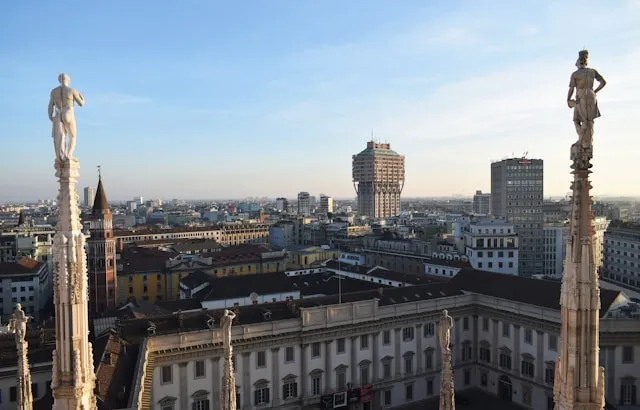
In November 2025, Rocco Forte Hotels debuted The Carlton Milan, a EUR 60-million renovation of a 19th-century palazzo in the heart of the fashion district, featuring 71 suites and rooms. It is the group's tenth Italian property and second in Milano. Six Senses Milan is set to open in early 2026 in the Brera district, offering 68 rooms including suites with private plunge pools, a rooftop sky pool, and a sustainability-focused Earth Lab. Rosewood Milano, housed in two historic 19th-century palazzi near Via Montenapoleone, will follow with 70 rooms designed by the Parisian firm Studio KO. Canopy by Hilton Milan Duomo will bring lifestyle-focused hospitality to Via Torino, steps from the Galleria Vittorio Emanuele II. The iconic Torre Velasca, Milano's Brutalist landmark near the Duomo, is being transformed into a luxury destination with suites on floors 19 through 26.
Nor is this limited to new openings. Exclusive members' clubs such as Casa Cipriani Milano and The Wilde have arrived to serve the city's growing community of wealthy residents, complementing established institutions and signalling a deepening social infrastructure for the ultra-affluent.
Italy's hospitality sector recorded EUR 2.1 billion in hotel investment volume in 2024, 30% above the decade-long average, with luxury properties accounting for 45% of all hotel investment volume. Milano's RevPAR jumped 30% between 2019 and 2023, one of the highest growth rates in Europe.
For professionals in travel and hospitality, the implications are profound. Each new five-star property requires not only a general manager and executive team, but heads of guest experience, revenue management directors, spa and wellness leaders, F&B executives, and digital marketing strategists. The emphasis on experiential, personalised luxury means employers are seeking leaders who combine operational discipline with creative vision, cultural sophistication, and multilingual capability.
KiTalent has explored the broader dynamics shaping this sector in our analysis of luxury travel career trends and the particular challenges of finding leaders for experiential travel.
Concierge, Lifestyle Management, and the Invisible Economy of Ultra-Wealth
Behind every UHNWI relocation stands an entire ecosystem of professionals most people never see. When a billionaire family establishes a new primary residence in Milano, their needs extend far beyond a property and a private banker. They require household staff managers, personal chefs, private security consultants, art advisors, educational consultants for international school placement, relocation specialists, personal shoppers, wellness coordinators, yacht management contacts for the Ligurian coast, and lifestyle managers capable of orchestrating every detail of daily life to an exacting standard.
This concierge and lifestyle management sector represents one of the fastest-growing, and least publicly discussed, segments of Milano's labour market. Firms specialising in UHNWI relocation support, bespoke lifestyle management, and VIP concierge services have expanded significantly since 2022. The demand is for professionals who combine impeccable discretion with operational excellence: individuals who can manage a household budget running into seven figures annually, coordinate across multiple jurisdictions, liaise with legal and tax advisors, and anticipate needs before they are articulated.
The Flywire Ultra-Luxury Travel Report found that more than 80% of ultra-luxury travellers planned to maintain or increase their travel spending in 2025, viewing it not as an occasional indulgence but as a core lifestyle component. This mindset extends to everyday living: the ultra-wealthy expect seamless, personalised service across every touchpoint of their lives, and they are willing to pay for the talent that delivers it.
For candidates with backgrounds in luxury hospitality management, private household administration, or high-end event coordination, Milano now offers a depth of opportunity that previously required relocating to London, Monaco, or Dubai.
Via Montenapoleone and the Luxury Retail Magnet
No discussion of Milano's UHNWI ecosystem is complete without Via Montenapoleone. In 2024, the 350-metre-long street officially surpassed New York's Upper Fifth Avenue to become the world's most expensive retail destination, according to Cushman & Wakefield's annual Main Streets Across the World report. It was the first time a European street had topped the global rankings in the report's 34-year history.
Rents on Via Montenapoleone reached EUR 20,000 per square metre annually, an 11% increase year on year, driven by fierce demand from luxury brands competing for extremely limited space. The MonteNapoleone District reported 11 million visitors in 2024, with the average shopper spending EUR 2,500 per purchase between August and November, the highest average receipt in the world according to Global Blue.
Kering's EUR 1.3 billion acquisition of a single building on the street underscored the stakes involved. Behind these headline transactions sits a complex professional infrastructure: retail strategy directors, visual merchandising leaders, clienteling specialists, CRM and data analytics professionals, and brand ambassadors who serve as the human interface between maison and client.
Milano's status as a global capital of luxury retail directly feeds into the professional opportunities served by KiTalent's luxury, retail, and fashion executive search practice. Brands operating at this level require leaders who can protect heritage while driving commercial innovation, a tension that sits at the heart of modern luxury management.
The 2026 Winter Olympics: An Accelerant for Talent Demand
The Milano Cortina 2026 Winter Olympics represent a significant additional catalyst for professional demand across hospitality, infrastructure, event management, real estate, and city branding. Major international sporting events invariably accelerate investment timelines and compress hiring windows, creating intense short-term demand that frequently translates into permanent structural shifts in the local economy.
The Games are already shaping investment decisions. Hotel operators, transport infrastructure developers, and experience-economy firms are aligning their Milano strategies around the 2026 timeline, creating a secondary wave of executive hiring that compounds the UHNWI-driven demand already reshaping the city.
What This Means for Executives and Companies
For professionals considering a career move, Milano's UHNWI boom represents a rare convergence of factors: a deepening talent market, rising compensation benchmarks, particularly in private wealth management and luxury hospitality, and an extraordinarily rich professional environment where finance, fashion, design, and lifestyle intersect daily.
For companies operating in or expanding into the Milano market, the challenge is equally clear. Competition for senior talent is intensifying across every sector touched by the ultra-wealth economy. The professionals best suited to this environment combine technical excellence with cultural fluency, discretion, and the ability to operate across borders and languages. Identifying, evaluating, and securing that talent before competitors do is now a strategic imperative.
As explored in our analyses of recruitment trends in Milano, the decision-maker's guide to finding the right head hunter in Milano, and our broader Executive Search in Milan page, the city's hiring landscape increasingly rewards speed, discretion, and deep network access. The 80% of high-performing professionals who are thriving in their current roles but not actively seeking new opportunities represent the essential talent pool, and reaching them requires a fundamentally different approach from traditional recruitment.
How KiTalent Supports the Milano Luxury Ecosystem
KiTalent's European headquarters in Turin, less than an hour from central Milano, positions us at the heart of Northern Italy's executive talent market. Our teams operate across multiple sectors critical to the UHNWI economy, including banking and wealth management, private equity and venture capital, insurance, real estate and construction, travel and hospitality, and luxury retail and fashion.
Through our proprietary parallel market mapping methodology, we engage passive senior talent across these sectors before they enter the open market, delivering qualified shortlists within 7 to 10 days. Our multilingual consultants operate across Italian, English, French, Spanish, and additional languages, reflecting the international nature of Milano's evolving professional community.
Whether you are a company seeking leadership talent to capitalise on Milano's transformation, or a senior professional exploring the executive opportunities created by this extraordinary moment, we invite you to review our Milan executive search page and start a confidential conversation with our team.
Frequently Asked Questions
Why is Milano attracting so many ultra-high-net-worth individuals?
Milano's appeal to UHNWIs stems from Italy's flat-tax regime for new residents, currently EUR 200,000 annually on foreign income and rising to EUR 300,000 for new applicants from 2026, combined with the city's global standing in fashion, design, and finance. The abolition of the UK's non-dom tax status and increasing tax pressures in France and Switzerland have accelerated wealth migration toward Milano. Quality of life, cultural richness, healthcare infrastructure, and proximity to Lake Como and the Italian Riviera add further draw.
What types of executive roles are growing fastest in Milano due to the UHNWI boom?
The fastest-growing roles include private wealth managers and family office executives, luxury real estate investment specialists, senior hospitality leaders, especially for new five-star hotel openings, luxury retail and brand-management directors, lifestyle and concierge service managers, and cross-border tax and compliance advisors. Multilingual professionals with international experience are particularly sought after.
How does Milano's luxury job market compare to London, Dubai, or Monaco?
Milano is increasingly competitive with these traditional wealth centres. Its combination of fiscal incentives, a deep luxury and fashion ecosystem, growing financial services infrastructure, and a wave of ultra-luxury hotel openings gives it advantages that are difficult to replicate. Unlike Monaco or Dubai, Milano also offers an established creative and cultural economy that attracts a broader range of professional talent.
What is the outlook for Milano's luxury property and hospitality markets?
Property prices in Milano have risen 49% since 2017, and Knight Frank projects further growth. Multiple ultra-luxury hotels are opening in 2025 and 2026, including The Carlton by Rocco Forte, Six Senses Milan, and Rosewood Milano. The Milano Cortina 2026 Winter Olympics will further amplify international investment and tourism flows. All indications point to sustained demand for senior professionals across these sectors.
How can KiTalent help companies and candidates in Milano's luxury ecosystem?
KiTalent specialises in executive search across the sectors most impacted by Milano's UHNWI growth: financial services, real estate, hospitality, and luxury retail. From our nearby European headquarters in Turin, our consultants leverage continuous market mapping to identify and engage top-tier passive talent. We serve both companies seeking leadership and senior professionals exploring new opportunities. Contact us for a confidential consultation.
Sources referenced in this article include the Barnes City Index 2026, Cushman & Wakefield Main Streets Across the World 2024, CNBC, Euronews, Knight Frank, Henley & Partners, BCG Global Wealth Report 2025, Tecnocasa, Italian Court of Auditors (Corte dei Conti), Citi 2025 Global Family Office Report, Christie & Co Italian Hotel Market Review, EY Italy Hotel Investment Report 2024, and Flywire Ultra-Luxury Travel Report.