Mitrovica's Logistics Sector in 2026: Why €35 Million in Infrastructure Has Not Solved the Hiring Problem
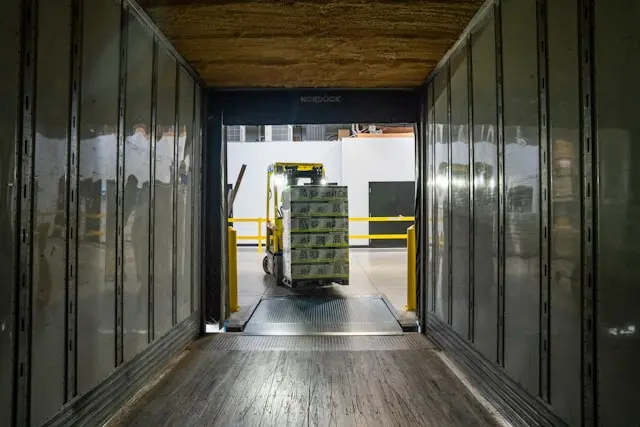
The European Union and Kosovo's municipal authorities have invested €35 million in border infrastructure and bridge access roads across Mitrovica and the Merdare crossing since 2023. Freight lanes have been widened. Refrigerated warehousing is under construction. The Main Bridge over the Ibar, closed to vehicles for a decade, reopened in August 2023. By every physical measure, the conditions for cross-border trade between Kosovo and Serbia should be improving.
They are not. Transport logistics firms in Mitrovica report that delivery time reliability has worsened, not improved, despite the capital expenditure. The vacancy rate for logistics managers in the city stands at 14.2%, nearly double the rate in Pristina. Customs brokerage roles that require dual regulatory knowledge sit open for over 120 days. And the vocational pipeline produces fewer than half the certified heavy transport drivers the sector needs each year. The infrastructure is being built. The people who know how to operate within it are not there.
What follows is an analysis of the forces reshaping Mitrovica's cross-border logistics and wholesale distribution sector, the employers driving activity on both sides of the Ibar, and what senior leaders need to understand before they attempt to build or expand a team in one of the Western Balkans' most politically sensitive commercial corridors.
The Infrastructure Paradox That Defines This Market
Mitrovica's logistics sector sits at the intersection of two forces pulling in opposite directions. On one side, capital investment is accelerating. The EU has committed €27.5 million to the Merdare Border Crossing Point modernisation alone, with Phase II completion expected by mid-2026. On the other, the operational reality for distributors has become harder to manage.
The reason is what the Riinvest Institute's analysis describes as a compliance bottleneck. Physical infrastructure gains at the border have been offset by increased customs inspection stringency under the sticker regime introduced as part of the Ohrid Agreement's normalisation annex. Serbian goods now enter Kosovo with temporary customs stickers rather than permanent stamps. This has reduced average border delays at Merdare from 8 to 12 hours in 2021 to 2 to 4 hours by late 2024, according to the CEFTA Secretariat's Q4 2024 implementation report. That sounds like progress. For large distributors with dedicated customs brokerage teams, it is.
For SMEs without that capacity, the new regime has created a different problem entirely. The compliance requirements are more complex than the old system, not less. Firms that previously moved goods through informal channels now face a documentation burden they are not staffed to handle. The infrastructure is faster. The regulatory throughput is slower for anyone who lacks the right people.
This is the central tension of Mitrovica's logistics market in 2026. Capital has moved faster than human capital could follow. The investment in border modernisation, bridge reopening, and industrial zone development has not reduced the workforce requirement. It has replaced one kind of worker with another that does not yet exist in sufficient numbers.
A City Split by a River, United by a Supply Chain
Mitrovica's commercial geography is unlike any other city in the Western Balkans. The Ibar River divides the city into two administrative zones with distinct employer bases, regulatory frameworks, and even currency preferences. Yet the wholesale distribution networks on each side are operationally interdependent in ways that make the division more complex than a simple north-south split.
South Mitrovica: The Formal Distribution Hub
South Mitrovica anchors the formal logistics economy. The Mitrovica Wholesale Market houses approximately 120 registered traders in FMCG and construction materials. The Shala Industrial Zone contains the regional distribution centres for the city's largest employers. Elkos Group operates a facility there employing around 45 staff in warehousing and fleet management for consumer electronics distribution across northern Kosovo's municipalities. M Pro Group runs a wholesale operation specialising in construction materials and HVAC equipment, reporting 2024 revenues of €12.3 million with a workforce of 68, including 22 in logistics coordination roles. Dardania Group provides freight forwarding and customs brokerage services, employing 12 certified customs brokers from its Mitrovica office.
These firms represent the formal, tax-compliant backbone of the sector. They are also the firms most affected by the compliance bottleneck, because they bear the full cost of the new regulatory requirements while competing against informal operators who do not.
North Mitrovica: The Parallel Economy
North of the Ibar, the employer base is dominated by Serbian-registered entities operating under dual registration structures. Severtrans DOO employs approximately 35 drivers and warehouse operatives running cross-border shuttle services to Raška and Kraljevo in Serbia. Mitrovička Pijaca DOO manages the North Mitrovica wholesale market infrastructure, with 80 to 90 independent wholesale operators trading from the site.
The World Bank's 2024 Kosovo Public Finance Review estimates that 30 to 40 percent of consumer goods moving through Mitrovica's wholesale markets circumvent full customs declaration, operating through unregistered transshipment points along the Ibar river valley. This informal trade undercuts formal operators by 15 to 20 percent on price. For hiring leaders at formal distributors, this creates a paradox: the talent pipeline they need to build must be staffed with professionals who can operate within a compliance framework that their most aggressive competitors ignore entirely.
The formalization drive is consolidating activity into larger, capital-intensive distributors while displacing the small-scale, labour-intensive trading operations that historically dominated the Ibar bridges economy. Registered wholesale enterprises in Mitrovica increased by 23 percent through 2024, according to the Kosovo Business Registration Agency. But aggregate employment in the informal wholesale markets of North Mitrovica has declined by an estimated 5 to 7 percent over the same period. The sector is not growing uniformly. It is bifurcating.
The Three Talent Gaps No Job Board Can Fill
The shortage in Mitrovica's logistics sector is not a general labour problem. It is a shortage of professionals who sit at the intersection of three highly specific disciplines. Each is hard to fill individually. Together, they represent a hiring challenge that conventional recruitment methods cannot address.
Certified Customs Brokers With Dual Regulatory Expertise
This is the most acute gap. Mitrovica's position as a distribution node for Kosovo-Serbia trade flows requires brokers fluent in both the Kosovo Customs Information System (KICS) and Serbia's SEED customs platform, as well as CEFTA rules of origin procedures. According to USAID's 2024 Workforce Development Needs Assessment for Kosovo's logistics sector, firms including Dardania Group and Elkos Group have maintained open requisitions for senior customs brokers with this dual competency for periods exceeding 120 days.
The average time-to-fill for roles requiring customs brokerage certification in Mitrovica is 94 days. In Pristina, the equivalent figure is materially shorter because the capital's international freight forwarding networks provide a larger pool. But Pristina-based brokers rarely possess the specific Kosovo-Serbia corridor expertise that Mitrovica's market demands. The skill is not customs brokerage in general. It is customs brokerage across a political boundary that most professionals prefer to avoid.
CE/ADR Heavy Transport Drivers
Only two vocational training centres in Mitrovica offer ADR hazardous materials certification programmes. Combined, they produce 24 certified drivers annually. Estimated sector demand runs at 60 to 70 per year. The arithmetic is not encouraging.
The gap has been widened further by the Germany Agreement, the labour mobility pact that has diverted an estimated 150 to 200 qualified logistics technicians from the Mitrovica region to German trucking firms since 2023, according to GIZ's Migration Monitoring Report. The pipeline is producing a fraction of what the market needs, and emigration is removing qualified professionals faster than training can replace them.
Supply Chain Managers With CEFTA and DCFTA Fluency
The third gap is at the management level. As Kosovo's trade frameworks align more closely with EU customs union standards through the Deep and Comprehensive Free Trade Area provisions, firms need supply chain leaders who understand not just current procedures but the trajectory of regulatory convergence. These professionals are rare in any Western Balkan market. In Mitrovica, they are functionally absent from the active candidate pool.
The passive candidate dynamic across all three categories is pronounced. Qualified customs brokers and cross-border operations managers exhibit average tenure of 4.8 years, compared to 2.3 years for general logistics staff. Between 70 and 75 percent of placements in these categories occur through direct headhunting rather than advertised vacancies. For the subset of heavy truck drivers with clean security clearances for sensitive cargo and experience with Kosovo-Serbia border protocols, 80 percent are passive. They move only for offers exceeding €300 per month above their current wage.
Compensation in a Market Competing Against Three Cities
Mitrovica does not set its own compensation terms. It competes against three cities that all offer higher salaries, better infrastructure, or both. Understanding this dynamic is essential for any organisation attempting to benchmark executive packages for this market.
A senior logistics manager or customs brokerage manager with seven or more years of experience earns €1,100 to €1,450 per month in base salary in Mitrovica, with performance bonuses tied to customs clearance efficiency bringing total compensation to €1,400 to €1,800 monthly. This is based on the GIZ/VDMA Private Sector Salary Survey for Kosovo in 2024 and KIESA FDI Wage Benchmarks.
Roles requiring dual Kosovo-Serbian regulatory knowledge command premiums of 18 to 22 percent above standard logistics manager salaries. That premium reflects scarcity, not seniority. A broker who can operate in both KICS and SEED is simply worth more than one who operates in only one system.
At the executive level, a VP of Operations or Regional Distribution Director overseeing a logistics network of 50 or more staff earns €2,800 to €4,200 per month. Executive packages typically include vehicle allowances and, for operations involving North Mitrovica transit, cross-border hazard pay. For Serbian nationals working in North Mitrovica, employers commonly provide dual-taxation consultation support.
Now compare Mitrovica to its competitors. Pristina offers senior logistics managers €1,600 to €2,200 monthly, a premium of 20 to 35 percent. More importantly, the capital provides exposure to international freight forwarding networks including DHL and Kuehne+Nagel operations, plus superior road connectivity via the R7 motorway. Skopje acts as the regional hub for Western Balkan logistics, offering executives €2,500 to €3,800 and career trajectories into pan-Balkan operations. Mitrovica-based firms reportedly lose 15 to 20 mid-level managers annually to Skopje-based operators who recruit specifically for Kosovo-Serbia corridor expertise. Niš, 90 kilometres north in Serbia, competes for Serbian-speaking logistics professionals with mid-level salaries equivalent to €1,200 to €1,600.
The compensation gap between Mitrovica and its nearest competitor is not closing. It is widening fastest at the seniority level where the most critical roles sit. A VP of Operations in Skopje earns enough to justify the broader career exposure. A VP of Operations in Mitrovica earns less and accepts materially higher operational risk. The value proposition must be constructed from something other than salary alone, and most firms in this market have not yet figured out what that something is.
The Political Variable That Overrides Every Other Factor
No analysis of Mitrovica's logistics sector is complete without addressing the political risk that sits beneath every commercial decision. The Ohrid Agreement's implementation has stabilised conditions since 2023. But stability in this market is conditional, not permanent.
The Riinvest Institute's 2024 Economic Vulnerability Assessment estimates that a return to licence plate disputes or customs stamp non-recognition would halt 40 to 50 percent of wholesale distribution activity dependent on Serbian-origin goods. Their modelling of the 2022-2023 crisis periods shows that barricade incidents at the Ibar bridges contracted wholesale turnover by 20 to 25 percent within a single quarter.
For hiring leaders, this creates a specific problem. Executive candidates evaluating opportunities in Mitrovica factor political stability into their decision alongside compensation and career trajectory. The candidates most qualified for cross-border operations roles are precisely the professionals most aware of how quickly conditions can deteriorate. Attracting them requires not just a competitive package but a credible argument that the organisation can sustain operations through the next political shock.
The Municipality of Mitrovica's 2024-2028 Economic Development Strategy projects a 15 percent increase in logistics sector employment, contingent on the formalisation of the Shala Industrial Zone and the potential reopening of the Zubin Potok industrial area for warehousing. That projection assumes sustained political adherence to the Ohrid Agreement. It is the right aspiration. It is not a guarantee, and every senior candidate in this market knows it.
The physical infrastructure constraint compounds the political risk. The Main Bridge's single-lane configuration in each direction creates chronic congestion. Average transit time from the Shala Industrial Zone to the North Mitrovica distribution centre is 45 minutes for a three-kilometre journey during peak hours. Off-peak, the same journey takes 12 minutes. A supply chain built around a single bottleneck is a supply chain vulnerable to any disruption, political or otherwise. The firms that thrive here will be the ones whose leaders can manage operations across that uncertainty rather than pretending it does not exist.
What Hiring Leaders in This Market Must Do Differently
Mitrovica's logistics talent market does not respond to conventional recruitment methods. The numbers make this clear: 70 to 75 percent of placements in customs brokerage and cross-border operations management happen through direct search or headhunting. Posting a role on a Kosovo job board reaches, at best, the 25 to 30 percent of candidates who are actively looking. The other 70 percent must be found differently.
The challenge is compounded by the trilingual requirement. Serbian, Albanian, and English fluency is not a preference for cross-border coordination roles. It is a functional necessity. This language combination narrows the candidate pool further than any single technical requirement. A talent mapping exercise for a senior customs brokerage manager in Mitrovica must look beyond Kosovo's borders entirely, drawing from the Balkan diaspora and the competitor markets in Skopje, Niš, and Pristina simultaneously.
Three principles apply for any organisation running a senior search in this market.
First, speed matters more here than in most markets. The 94-day average time-to-fill for certified customs brokers is not a reflection of careful process. It is a reflection of search methods that are not reaching the right candidates. Firms using active-candidate channels are simply waiting for someone to appear who meets a specification that most qualified professionals are not actively pursuing. A search that identifies and approaches passive candidates directly can compress this timeline materially.
Second, the compensation package must account for political risk. The 18 to 22 percent scarcity premium for dual-regulatory knowledge is a market-driven floor, not a ceiling. Candidates relocating to Mitrovica from Pristina or Skopje are accepting a lower base salary, a harder operating environment, and higher personal risk. The package must address all three. Vehicle allowances, dual-taxation support, and contractual protections against political disruption are not perks in this market. They are table stakes.
Third, the counteroffer risk is elevated. Severtrans has reportedly recruited logistics coordinators from competitor firms in Skopje, offering premiums of 25 to 30 percent above Mitrovica market rates. Any candidate approached for a Mitrovica-based role who is currently employed in a less volatile market will weigh not just the financial offer but the stability differential. The approach must address that calculation explicitly, not assume compensation alone will resolve it.
Why This Market Requires a Different Kind of Search
The standard executive search model assumes a market where qualified candidates exist in reasonable numbers and can be reached through a combination of advertising, database queries, and network referrals. Mitrovica's cross-border logistics sector violates every one of those assumptions.
The candidate pool for the most critical roles is small, passive, and distributed across multiple countries with different regulatory frameworks. The cost of a failed search in this market is not measured in recruiter fees. It is measured in customs clearance delays, inventory cycle disruption, and the revenue impact of operating without the compliance capacity the new regulatory regime demands. Every month a senior customs brokerage role sits unfilled, the firm absorbs the cost of slower processing, higher error rates, and increased exposure to the informal competitors who face no such constraint.
KiTalent's approach to executive search in industrial and logistics sectors addresses markets with exactly this profile. AI-powered talent mapping identifies passive candidates across the Western Balkans and the broader Balkan diaspora who hold the dual-regulatory certifications and trilingual capabilities that Mitrovica's employers require. The pay-per-interview model means organisations in this market, where margins are tight and political risk is real, do not carry upfront retainer costs for a search that might need to adapt as conditions change. Interview-ready candidates are delivered within 7 to 10 days, compressing the 94-day average that currently defines this market.
For organisations building or expanding logistics operations in Mitrovica, where the candidates who understand both KICS and SEED protocols are not visible on any job board and the cost of a slow search compounds weekly, start a conversation with our executive search team about how we source leadership talent in politically complex, cross-border markets.
Frequently Asked Questions
What is the average salary for a logistics manager in Mitrovica, Kosovo?
A senior logistics manager or customs brokerage manager with seven or more years of experience earns €1,100 to €1,450 per month in base salary in Mitrovica as of 2026, with performance bonuses bringing total compensation to €1,400 to €1,800 monthly. Roles requiring dual Kosovo-Serbian regulatory knowledge command premiums of 18 to 22 percent above standard rates. At the executive level, a VP of Operations or Regional Distribution Director overseeing 50 or more staff earns €2,800 to €4,200 per month, typically supplemented by vehicle allowances and cross-border hazard pay.
Why is it so hard to hire customs brokers in Mitrovica?
Mitrovica's position on the Kosovo-Serbia trade corridor requires customs brokers fluent in both the Kosovo Customs Information System and Serbia's SEED platform, as well as CEFTA origin procedures. This dual competency is rare. The average time-to-fill for certified customs brokerage roles in Mitrovica is 94 days, and 70 to 75 percent of placements happen through direct headhunting rather than job advertisements. The pool is small, passive, and distributed across multiple countries, making specialised executive search methodology essential for reaching qualified candidates.
How does Mitrovica's logistics sector compare to Pristina's?
Pristina offers senior logistics managers a 20 to 35 percent salary premium over Mitrovica, with base packages of €1,600 to €2,200 monthly. The capital also provides exposure to international freight networks and superior road infrastructure via the R7 motorway. However, Mitrovica offers unique access to the Kosovo-Serbia cross-border corridor and the northern Kosovo distribution network. Firms based in Pristina typically lack the dual-regulatory expertise concentrated in Mitrovica, creating a niche that Mitrovica-based employers can defend if they hire the right people.
What political risks affect logistics hiring in Mitrovica?
The sector operates under the Ohrid Agreement's normalisation provisions, which have stabilised conditions since 2023. However, any resurgence of licence plate disputes or barricade incidents at the Ibar bridges could contract wholesale turnover by 20 to 25 percent within a single quarter. Candidates evaluating Mitrovica-based roles factor this political volatility into their decisions alongside compensation. Employers must address stability concerns explicitly in their recruitment propositions to attract senior professionals from less volatile markets.
What is the impact of emigration on Mitrovica's logistics workforce?
The Germany Agreement labour mobility pact has diverted an estimated 150 to 200 qualified logistics technicians from the Mitrovica region to German trucking firms since 2023. Meanwhile, only two local vocational centres offer ADR hazardous materials certification, producing just 24 certified drivers annually against sector demand of 60 to 70. This supply-demand imbalance is worsening. Firms competing for qualified drivers increasingly need to look beyond Kosovo's borders and offer compensation premiums to attract talent from the regional market.
How can companies find passive logistics talent in Kosovo's cross-border market?
In Mitrovica's logistics sector, the most qualified customs brokers and operations managers are not actively job-seeking. They average 4.8 years of tenure and rarely appear on public job boards. Reaching them requires targeted identification across Kosovo, Serbia, and North Macedonia, combined with a compelling proposition that addresses compensation, political risk, and career trajectory simultaneously. KiTalent's AI-powered talent mapping approach identifies these passive professionals across the Western Balkans, delivering interview-ready candidates within 7 to 10 days.