Mitrovica Metal Fabrication in 2026: 21% Unemployment, 35% Technical Vacancy Rates, and the Skills Mismatch Driving Both
Mitrovica sits on one of the richest lead-zinc-silver deposits in Southeast Europe. The Trepca complex, the anchor institution that has defined this city's industrial identity for decades, employs roughly 1,200 people across mining and metallurgical processing. Around it, a cluster of 17 registered metalworking SMEs services the complex, fabricates structural steel for regional construction, and keeps ageing heavy equipment running. On paper, this looks like a functioning industrial ecosystem. In practice, it is an ecosystem operating at 60 to 70 percent of installed capacity, losing its most qualified workers to Germany every year, and facing a set of regulatory deadlines in 2026 that most of its firms cannot meet.
The core tension in this market is not unemployment. The Mitrovica region reports an unemployment rate above 21 percent. The tension is that this unemployment coexists with a 35 percent vacancy rate for skilled technical positions at the market's largest employer. The people without work do not have the certifications the employers need. The people with the certifications are leaving for salaries three to four times higher in German and Austrian manufacturing plants. This is not a labour surplus. It is a skills mismatch so severe that it looks like a surplus from one angle and an acute shortage from another.
What follows is an analysis of the forces pulling Mitrovica's industrial talent market apart: the emigration drain, the certification wall, the energy infrastructure that cannot support the investment the government is trying to attract, and what any organisation attempting to hire senior technical or leadership talent in this market needs to understand before they begin a search.
The Trepca Question: One Employer, One Point of Failure
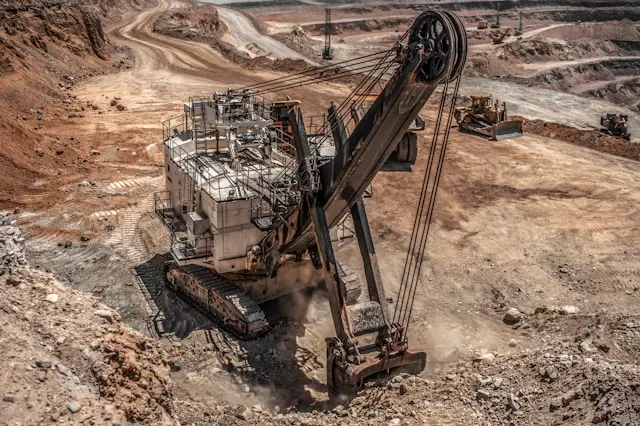
Every talent market has a centre of gravity. In Mitrovica, that centre is the Trepca mining-metallurgical complex. It is the only integrated mining-metallurgical operation in Kosovo. Its in-house mechanical workshops handle routine heavy equipment repair, while specialised fabrication, including pressure vessels and custom processing equipment, flows to local SMEs through public procurement tenders.
This dependency runs deep. If Trepca halts production, an estimated 60 to 70 percent of local demand for specialised metal fabrication disappears with it. The National Audit Office of Kosovo has documented periodic liquidity crises at Trepca, which operates under government subsidy. Its solvency is not guaranteed. For the 17 SME metalworking firms in Mitrovica municipality, this means their order books are tied to an anchor institution whose financial stability depends on continued state support.
The announced €20 million government-backed modernisation of the Stanterg flotation facility, approved in principle in October 2024, would increase local demand for precision machining and specialised welding services by 15 to 20 percent. That is the optimistic scenario. The status quo scenario, in which that investment stalls or is delayed, means continued emigration of skilled welders and machinists at a rate of 8 to 10 percent annually. Both scenarios lead to the same hiring problem, just at different scales. The modernisation path creates demand the local workforce cannot fill. The stagnation path shrinks the workforce further. Either way, the talent gap widens.
This single-anchor dependency is what makes Mitrovica's metal fabrication market fundamentally different from larger, more diversified industrial centres. A talent mapping exercise in this market is not mapping a broad competitive field. It is mapping the orbit of one institution.
The Emigration Drain: Where Mitrovica's Certified Talent Actually Goes
The compensation arithmetic is simple and devastating. A certified welder in Mitrovica earns between €600 and €800 monthly gross. The same professional, recruited through bilateral agreements into a German manufacturing facility, earns €2,800 to €3,500 monthly gross at entry level. That is not a premium. It is a different economic reality entirely.
Germany and Austria as the Primary Pull
Germany's Federal Employment Agency actively recruits certified welders and mechanical technicians from Kosovo. These are not speculative moves by individual workers hoping for opportunity abroad. They are structured bilateral recruitment pipelines, facilitated by organisations including GIZ Kosovo. The GIZ Migration of Skilled Workers Study from 2024 documents this flow as the dominant drain on experienced talent with five or more years in the field.
The effect on Mitrovica is asymmetric. The emigration does not remove workers evenly across skill levels. It removes the most certified, most experienced professionals first, because those are the ones the German system actively seeks. What remains is a workforce skewed toward less experienced, less certified workers. Senior mining maintenance engineers with 15 or more years of experience exhibit average tenure of 8 to 12 years at single employers. When one of these professionals leaves for Germany, the institutional knowledge loss is not replaceable through a job posting.
[Pristina](/pristina-kosovo-executive-search) as the Domestic Competitor
Before talent leaves Kosovo entirely, it often leaves Mitrovica for Pristina first. The capital offers 15 to 25 percent salary premiums for mechanical engineers and CNC operators, along with better professional development options and proximity to headquarters functions. Albania's Tirana-Durrës corridor has also emerged as a competitor for mid-level engineers, offering comparable pay with superior coastal infrastructure.
The Riinvest Institute's Inter-Regional Labour Mobility Report from 2024 documents this stepwise pattern: the most mobile workers leave Mitrovica for Pristina, and from Pristina, the most certified leave for the EU. Each step strips the local market of its strongest candidates. For any firm looking to hire a senior specialist in this region, the practical implication is that the candidate pool is not just small. It is actively shrinking at every tier above entry level.
The Certification Wall: Why 21% Unemployment Does Not Mean Available Talent
Here is the analytical claim that does not appear directly in any single data source but emerges clearly from their combination: Mitrovica's unemployment crisis and its skilled labour shortage are not parallel problems. They are the same problem, viewed from opposite sides of a certification barrier that neither the education system nor the employer base is equipped to dissolve.
Kosovo's overall unemployment in the Mitrovica region stands at 21.3 percent as of 2024, according to the Kosovo Agency of Statistics Labour Force Survey. Simultaneously, Trepca reports a 35 percent institutional vacancy rate for senior technical positions. These figures are not contradictory. They describe two populations separated by a wall of international certifications that takes months or years to breach.
The Certification Gap in Numbers
Only 3 of the estimated 17 metalworking SMEs in Mitrovica hold ISO 9001 certification. None hold ISO 3834 for welding quality. None hold ISO 14001 for environmental management. This is not a bureaucratic detail. It is a structural barrier to entering EU supply chains, and it means that most of Mitrovica's metalworking firms cannot train their workers to internationally recognised standards because the firms themselves do not operate to those standards.
The local Vocational Training Centre at the University of Mitrovica operates a curriculum last updated in 2019. It emphasises manual machining techniques. Market demand has moved to CNC operation, CAD/CAM programming, and automation maintenance. Retraining a manual machinist for CNC work takes 6 to 12 months. That is not a trivial gap when the candidate might emigrate to Germany before the retraining is complete.
What CE Marking Compliance Means for 2026
The EU integration trajectory adds regulatory urgency. CE marking compliance becomes mandatory for construction metalwork exports to the EU by late 2026. Certification investments run €5,000 to €15,000 per SME, as documented by the CEFTA Secretariat's Implementation Report. For a 10-employee welding shop operating at 60 percent capacity with intermittent power supply, that figure is prohibitive without external support.
This means the gap between certified and uncertified firms will widen through 2026 and into 2027. The few firms that achieve compliance will gain access to EU markets and the ability to attract better workers. The rest will fall further behind. For hiring leaders evaluating this market, the certification status of a potential employer is as important as the compensation offer. Candidates know which firms can offer a career path that includes international work, and they choose accordingly.
Energy Infrastructure: The Constraint Investment Cannot Outrun
Kosovo generates 95 percent of its electricity from lignite coal. This is not an energy strategy. It is a legacy dependency, and its effects on metal fabrication are direct and measurable.
Industrial electricity tariffs for medium-voltage consumers averaged €0.098 per kilowatt-hour in 2024, among the highest in the Western Balkans according to the Energy Regulatory Office of Kosovo. But the cost is less damaging than the unreliability. The Riinvest Institute's Business Environment Survey for the Mitrovica region found that 40 percent of local metalworking SMEs reported power outages of 4 to 6 hours weekly during Q3 2024. The Kosovo Energy Corporation's annual report documented plant maintenance outages in 2024 that caused 12 percent production losses for energy-intensive metal processors.
The Investment Paradox
The Ministry of Economy's 2024 strategic plan identifies metal processing as a priority sector for foreign direct investment attraction. The plan specifically targets Mitrovica, citing the Trepca resource base. But World Bank data places Kosovo's industrial electricity reliability in the bottom quartile of European economies. The transmission infrastructure in northern Kosovo requires an estimated €40 million in upgrades to support expanded industrial load.
This creates a contradiction that defines the market's near-term ceiling. The government is asking foreign manufacturers to invest in a region where the power goes out for hours every week. Capital-intensive metal processing requires reliable, continuous power. Neither the energy constraint nor the transmission investment gap appears resolvable within the 2026 timeframe given Kosovo's fiscal limitations.
For anyone evaluating a manufacturing leadership appointment in this market, this is the context that surrounds the role. A plant manager or operations director does not simply manage production here. They manage production around infrastructure gaps that would not exist in a competing location. That reality narrows the candidate profile considerably. You need leaders who have operated in constrained environments before, not leaders who have only run facilities with reliable utilities.
Compensation and What It Actually Buys
Compensation data for Mitrovica's metal sector is not systematically published, but national sectoral surveys and regional adjustments provide a clear picture. The numbers, adjusted for Mitrovica's cost-of-living differential, tell a story of a market priced far below its competitors.
A Production Manager at a metal fabrication SME earns €1,100 to €1,400 monthly gross. A Senior Welding Inspector or QA Manager earns €900 to €1,200. A CNC Programming Specialist earns €850 to €1,100. At the executive level, an Operations Director for a manufacturing firm commands €1,800 to €2,400, while a Plant Manager at Trepca or a large SME earns €2,200 to €3,000, based on public sector salary disclosures with an estimated 15 to 20 percent private sector premium.
The Three-Way Compression
These figures represent approximately 60 to 70 percent of equivalent positions in Pristina and 25 to 30 percent of equivalent positions in Germany or Austria. This three-way compression is what makes retention nearly impossible at the senior level without additional non-monetary factors.
A firm in Mitrovica is not competing with one alternative. It is competing with Pristina, which offers a modest premium and better amenities, and with Germany, which offers a transformational salary increase. The candidate deciding between these options weighs not just the salary gap but the career trajectory each location enables. Mitrovica offers no multinational manufacturing presence, limited international schooling options, and infrastructure that degrades the working experience.
For organisations looking to benchmark compensation for leadership roles in this market, the critical insight is that salary alone cannot close the gap. The offer must include elements that the competing locations do not provide: meaningful ownership or equity in a growing operation, a role with genuine decision-making authority, or a connection to a modernisation programme that offers professional prestige. Without these, the arithmetic favours departure every time.
The Passive Candidate Reality: Why Traditional Hiring Cannot Reach This Market
In most talent markets, the distinction between active and passive candidates is a matter of degree. In Mitrovica's metal fabrication sector, it is the defining feature of every senior search.
Certified Welding Inspectors holding CWI or CSWIP-equivalent qualifications have an estimated unemployment rate below 3 percent. These professionals typically hold multiple concurrent consulting contracts rather than seeking employment through public job postings. Active candidates in this category often lack the internationally recognised certifications that make them valuable.
Senior Mining Maintenance Engineers with 15 or more years of experience show a ratio of active to passive candidates of approximately 1 to 9. That means for every qualified professional who might respond to a job advertisement, nine others are employed, not looking, and reachable only through direct outreach.
CNC Programmers with CAM software expertise follow the same pattern. Active job seekers in this category typically have fewer than two years of experience. The senior programmers, those with five or more years, are almost exclusively passive.
What This Means for Search Strategy
A conventional recruitment approach in this market, posting a vacancy on the Kosovo Employment Agency portal and waiting for applications, reaches at most 10 percent of viable candidates for any senior technical or leadership role. The other 90 percent must be identified, approached, and engaged through direct headhunting methods that penetrate the passive market.
The 47 active metal fabrication and mechanical engineering vacancies recorded on the Kosovo Employment Agency portal as of December 2024 represent the visible surface of demand. The average time to fill a skilled technical role in Mitrovica is 67 days, nearly double the 34 days for administrative roles. For certified specialist positions, local welding shops report vacancy durations of 90 to 120 days, compared to 45 days for uncertified positions. The cost of leaving these roles unfilled compounds with every month of production running below capacity.
This is a market where the most critical searches cannot be run through conventional channels. The candidates who can fill a Senior Mechanical Maintenance Engineer role at Trepca, or a Production Manager position at a growing SME, are currently employed. They are not browsing job boards. They are not uploading CVs. Reaching them requires a method designed specifically for markets where the best candidates are invisible.
What Organisations Hiring in This Market Need to Understand
Mitrovica's metal fabrication talent market in 2026 is shaped by forces that will not resolve on their own. The emigration pipeline to Germany is institutional, not incidental. The certification wall between unemployed workers and unfilled vacancies requires investment at both the firm level and the vocational training level. The energy infrastructure constraint caps the sector's growth potential regardless of demand. And the Trepca dependency means the entire local ecosystem rises or falls with a single institution's financial health.
For organisations hiring into this market, whether for the Trepca modernisation, for an SME scaling to meet EU export standards, or for a foreign investor evaluating a manufacturing foothold, the implications are specific.
First, the candidate pool for any certified technical or leadership role is smaller than the unemployment figures suggest. The 21 percent regional unemployment rate is irrelevant to a search for an ISO 9606-certified welder or a CNC programmer with Siemens control experience. The relevant pool is measured in dozens, not thousands.
Second, speed matters disproportionately. In a market where emigration removes 8 to 10 percent of experienced talent annually, a search that takes six months is not just slow. It is operating against a shrinking denominator. The candidates available in January may not be available by June.
Third, the offer must be constructed for this specific competitive context. The comparison set is not other Mitrovica firms. It is Pristina at a 20 percent premium. It is Germany at a 300 percent premium. The proposition required to move a passive candidate in this market must address career trajectory, not just monthly compensation.
KiTalent's work in emerging industrial markets applies directly to this challenge. Delivering interview-ready candidates within 7 to 10 days through AI-powered talent mapping means reaching the 90 percent of qualified professionals who will never appear on a public job portal. The pay-per-interview model removes the upfront retainer risk that makes retained search prohibitive for SMEs operating at constrained margins. And a 96 percent one-year retention rate reflects the kind of candidate-role matching that survives the first counter-offer from a German recruiter.
For organisations building or sustaining technical leadership in Mitrovica's metal fabrication sector, where certified talent is scarce, emigration pressure is constant, and the window to hire before the next departure narrows every quarter, start a conversation with our industrial sector search team about how we identify and engage the candidates this market does not surface on its own.
Frequently Asked Questions
What is the average salary for a manufacturing operations director in Mitrovica, Kosovo?
An Operations Director in Mitrovica's metal fabrication sector earns approximately €1,800 to €2,400 monthly gross as of 2026, based on KIESA foreign direct investment salary survey data adjusted for the region. A Plant Manager at Trepca or a comparable large employer earns €2,200 to €3,000. These figures represent 60 to 70 percent of equivalent roles in Pristina and roughly 25 to 30 percent of comparable positions in Germany or Austria. Organisations competing for leadership talent must account for this differential when structuring offers, particularly given the constant emigration pull toward higher-paying EU markets.
Why is there a skilled labour shortage in Kosovo's metal fabrication sector despite high unemployment?
Kosovo's Mitrovica region reports 21 percent unemployment alongside a 35 percent vacancy rate for skilled technical positions. The cause is a severe skills mismatch, not a labour surplus. Unemployed workers typically lack the international certifications (ISO 9606, EN 287, CNC programming credentials) that employers require. The local vocational training curriculum was last updated in 2019 and emphasises manual techniques rather than CNC and automation skills. Retraining takes 6 to 12 months, during which candidates may emigrate. KiTalent's executive search methodology addresses this gap by identifying certified professionals who are already employed but reachable through direct outreach.
How does emigration affect the manufacturing talent pool in Mitrovica?
Emigration removes an estimated 8 to 10 percent of Mitrovica's skilled welders and machinists annually, primarily to Germany and Austria through bilateral recruitment agreements. German manufacturers offer €2,800 to €3,500 monthly gross for certified welders, compared to €600 to €800 locally. The emigration disproportionately removes the most certified and experienced workers, leaving the local market with a workforce skewed toward junior, uncertified professionals. This pattern accelerates year over year, meaning the effective candidate pool for senior roles shrinks continuously.
What certifications do metalworkers need to work in Mitrovica's fabrication sector?
The most in-demand certifications are ISO 9606 and EN 287 for welding qualification, which are required for pressure vessel and structural steel work. CNC operators need proficiency with Siemens or Fanuc control systems and CAD/CAM software (SolidWorks, AutoCAD). Non-destructive testing certification (ultrasonic and radiographic methods) is increasingly critical. By late 2026, CE marking compliance becomes mandatory for construction metalwork exports to the EU, adding another layer of certification requirements. Only 3 of 17 registered metalworking SMEs in Mitrovica currently hold any ISO certification.
How can companies hire certified welders and CNC machinists in Kosovo?
The passive candidate ratio for certified specialists in Mitrovica is approximately 9 to 1, meaning 90 percent of qualified professionals are employed and not responding to job advertisements. The Kosovo Employment Agency portal captures only a fraction of available talent. Companies hiring certified welders, CNC machinists, or mining maintenance engineers need direct headhunting approaches that reach passive candidates through targeted identification and engagement. KiTalent delivers interview-ready candidates within 7 to 10 days using AI-powered talent mapping, with a pay-per-interview model that eliminates upfront retainer costs.
What is the Trepca modernisation and how will it affect hiring in Mitrovica?
The Trepca mining-metallurgical complex, Mitrovica's dominant employer with approximately 1,200 workers, has a €20 million government-backed modernisation plan for its Stanterg flotation facility, approved in principle in October 2024. If the project proceeds, local demand for precision machining and specialised welding services is projected to increase 15 to 20 percent. This would intensify competition for already scarce certified technical talent in the region, making proactive talent pipeline development essential for any organisation planning to participate in or supply the modernisation programme.