Modena's Balsamic Vinegar Sector Is Breaking in Two: Record Exports, Vanishing Masters, and the Talent Crisis Splitting an Industry
Modena's balsamic vinegar industry generated approximately €1.2 billion in annual production value across its DOP and IGP categories as of late 2024. Export intensity reached 68% of total output. By every revenue measure, the sector has never been stronger.
Yet 12 traditional acetaias closed or transferred to external investors between 2020 and 2024, a 7% attrition rate in the protected DOP category. Sixty-eight per cent of certified Maestri Acetai are over 60. Only 47 active masters under 40 remain in the entire DOP system. The sector's global commercial success is accelerating at precisely the moment its artisanal knowledge base is contracting, and the two trends are not independent of each other. They are causally linked: the industrial IGP segment's growth is actively pulling masters, technologists, and export talent away from the traditional producers who created the product's reputation and pricing power in the first place.
What follows is a structured analysis of how Modena's dual-track balsamic economy creates hiring challenges unlike any other in Italian agri-food. It examines where the specific shortages sit, why conventional recruitment cannot reach the candidates who matter, and what organisations operating in this market need to understand before they attempt their next senior hire.
A Sector Running on Two Tracks at Different Speeds
Modena's balsamic sector is not one market. It is two, and the distance between them is widening.
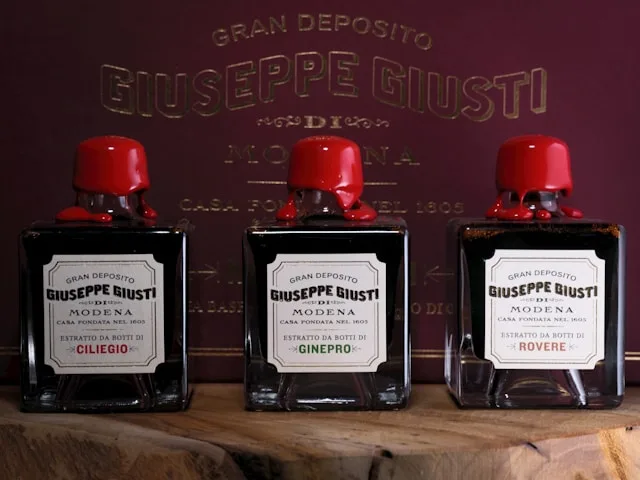
The elite track produces Aceto Balsamico Tradizionale di Modena DOP, aged a minimum of 12 years in batteries of progressively smaller barrels. Approximately 90 traditional producers operate under strict Consorzio regulations, and total DOP output in 2024 was roughly 120,000 bottles of 100ml. That figure actually fell 3% from 2023 due to adverse weather affecting Trebbiano and Lambrusco grape yields. This is a micro-production sector by any industrial standard.
The volume track produces Aceto Balsamico di Modena IGP. Some 155 certified producers, ranging from semi-artisanal to fully industrial, stabilised output at 95 million litres following post-pandemic demand normalisation. The IGP segment generates approximately 85% of total sector employment and export revenue, according to the Consorzio Tutela Aceto Balsamico di Modena's 2024 production data. Anchor employers include Mazzetti l'Originale, now part of the B&G Foods portfolio, operating a 45,000-square-metre facility in Vignola with roughly 280 employees. Monari Federzoni maintains 220 employees across its Modena operations. Acetaia Malpighi, Mengazzoli, and Acetaia Leonardi round out the primary employers.
The critical point for any hiring executive working in or recruiting for this sector is that the two tracks compete directly for the same specialist talent pool. A Maestro Acetaio trained in DOP barrel management possesses skills that are immediately valuable to an IGP industrial producer seeking to improve product quality or develop premium sub-lines. The flow of talent runs overwhelmingly in one direction: from the traditional track to the industrial one, where salaries are higher and career structures are clearer.
This is the dynamic reshaping every executive search engagement in Modena's food and beverage sector. The question is not whether talent exists. It is whether the traditional producers who need it most can compete for it against better-capitalised industrial employers offering materially different propositions.
The Maestro Acetaio Shortage Is Not a Hiring Problem. It Is a Knowledge Extinction Problem
The original synthesis of this article rests on a distinction that most hiring discussions in this sector miss entirely. The Maestro Acetaio shortage cannot be solved by better recruitment, faster search timelines, or higher salaries. It is not a hiring problem. It is a knowledge extinction problem.
A certified Maestro Acetaio requires 15 to 20 years of apprenticeship in barrel battery management, sensory evaluation, and microbiological stewardship. The knowledge is embodied, not codified. It lives in the sensory memory of a master who has tended the same battery of barrels through decades of seasonal variation, who understands through direct experience how acetic acid bacteria colonies respond to humidity shifts, how different wood types interact with must at different stages of concentration. No textbook, no university programme, and no AI-assisted quality system can substitute for this accumulated expertise.
The numbers confirm the severity. The Consorzio Tradizionale's 2024 workforce census showed a 1:4 vacancy-to-candidate ratio for the Maestro Acetaio role. Of the masters currently certified in the DOP system, 68% are over 60. Average tenure exceeds 22 years. Ninety-four per cent of incumbent masters show zero active job search behaviour. This is an exclusively passive candidate market operating inside an apprenticeship system that takes nearly two decades to produce a single qualified professional.
The Industrial Drain on Traditional Knowledge
Aggregate data from a joint survey by the Federazione Italiana Cuochi and the Consorzio Tradizionale indicates that 11 certified Maestri transferred from traditional DOP to industrial IGP facilities during 2023 and 2024. That represents a 12% annual turnover in the specialised master cohort. The transfers are driven by salary premiums of 40 to 60% and equity stakes offered by industrial producers.
For a traditional acetaia employing three or four people, losing its master is not a staffing inconvenience. It is an existential event. The barrels do not pause their ageing process while a replacement is found. Decisions about rincalzo (topping off), transfers between casks, and blending must be made continuously by someone with the sensory training to make them correctly. A wrong decision in a single season can compromise product that has been ageing for a decade.
This is why the 12 acetaia closures between 2020 and 2024 are not isolated business failures. They are symptoms of a knowledge base that is contracting faster than any training pipeline can replenish it. UNIMORE plans to launch a specialised Master in Acetaia Management and Food Heritage in September 2026, with an initial cohort of 30 students. That is a meaningful step. But those 30 graduates will not be production-ready Maestri for another 15 years at minimum. The gap between current attrition and future supply is measured in decades, not hiring cycles.
The organisations that will retain or recruit the remaining masters in this market will not find them through conventional job advertising, which systematically fails to reach passive senior talent. They will find them through direct, relationship-based approaches that understand the specific motivations of a professional who has spent 25 years building something they consider a personal legacy.
Export Growth Masks the Structural Fragility Underneath
The headline numbers look strong. Modena's balsamic exports reached €890 million in 2023, up 4.2% year over year. The DOP segment anticipates a 15% price increase for Extravecchio (25-year-plus) products in 2026, driven by scarcity and expanding luxury demand in Asian markets. Balsamic tourism from Modena to China and South Korea increased 22% year over year in 2024.
A hiring executive unfamiliar with this sector might read those figures and conclude that the market is healthy and well-resourced. That conclusion would be precisely wrong.
The Decoupling of Revenue from Heritage
The sector's global success is increasingly decoupled from its artisanal heritage base. Industrial IGP production captures the vast majority of export gains. The traditional DOP segment faces structural decline despite extraordinary pricing power. An Extravecchio bottle commands prices that reflect its scarcity, but scarcity driven by closure and succession failure is not the same as scarcity driven by controlled exclusivity. The former is a slow-motion collapse. The latter is a business strategy.
North America absorbs 38% of Modena's IGP exports, making it the single most important commercial market. Yet that market faces periodic pricing volatility from Section 301 tariffs on Italian agricultural goods, which have been renewed at 25% and create planning uncertainty for every export-dependent producer. Finding commercial leaders who understand both the regulatory complexity and the channel dynamics of US specialty food distribution is a different search entirely from finding someone who can sell commodity products into grocery chains.
The Export Manager Gap
Demand for international export managers with US and Asian specialty food channel experience increased 34% year over year through late 2024. Average time to fill for these roles reached 127 days, compared to 45 days for general sales positions. The gap is not merely large. It is nearly three times the benchmark.
According to a report in Food & Wine Italia, Acetaia Malpighi retained a Milan-based executive search firm for six months during 2024 to fill an Export Director position covering North America. The search ultimately resulted in a hire from a competing Parmigiano-Reggiano producer, after two earlier candidates accepted counter-offers from members of the Prosciutto di Parma consortium. The pattern is representative: Modena's balsamic producers are not competing only against each other for export talent. They are competing against the entire Emilia-Romagna food corridor, where Parma's cured meat and cheese producers and Bologna's packaging machinery sector all draw from the same pool of commercially oriented professionals.
This is exactly the environment where understanding why executive searches fail becomes operationally critical. A six-month search for an export director is not just slow. It represents six months of lost market development in the fastest-growing channels.
Compensation: Where Modena Loses Before the Conversation Starts
The compensation data in this sector reveals a market that is structurally disadvantaged relative to its regional competitors, with the disadvantage concentrated at exactly the seniority levels where the most critical hires sit.
At the production executive level, a Direttore di Produzione in Modena's balsamic sector earns €95,000 to €130,000 base, with total compensation reaching €160,000 at major industrial producers. These figures are competitive within the traditional agri-food bracket. But the comparison that matters is not within the bracket. It is against the alternatives available to the same candidate.
Parma's food cluster, just 40 kilometres west, offers 10 to 15% higher compensation for production and quality assurance roles. More importantly, Parma's larger corporate structures at employers like Barilla and the Parmigiano-Reggiano consortium provide clearer career progression. A production director at a Modena acetaia with 60 employees may be doing intellectually demanding work. But the next step in their career is lateral, not upward.
The Milan Premium and the Remote Work Drain
The most severe compensation gap is with Milan. For international brand management, digital marketing, and e-commerce roles, Milan-based food groups offer 35 to 50% compensation premiums. A Commercial VP in Modena's top quartile reaches €200,000 in total compensation. The equivalent role at Ferrero, Davide Campari-Milano, or illycaffè in Milan starts at or above that figure, with materially better variable compensation structures.
Milan also offers something Modena's production facilities cannot: hybrid working arrangements. The ability to work remotely two to three days per week creates a talent drain from Modena's commuting zone that compensation alone cannot counteract. A professional living in Modena can now work for a Milan employer without relocating. The reverse is not true. Modena's acetaias require physical presence for production oversight, sensory evaluation, and barrel management.
Export managers command a base of €48,000 to €65,000 at senior specialist level, with a 15 to 20% premium for Mandarin or Japanese language capabilities. At director level, base compensation ranges from €110,000 to €160,000, with 20 to 30% variable tied to North American and Asian revenue growth. Food technologists with DOP certification earn €42,000 to €58,000 at senior specialist level, rising to €85,000 to €120,000 at technical director level, where a 25% scarcity premium above standard Italian agri-food benchmarks reflects the shortage of professionals with specific DOP regulatory expertise.
For any organisation benchmarking executive compensation in this market, the essential insight is that Modena is not merely paying less than Milan or Parma. It is paying less while simultaneously offering fewer non-monetary benefits. The proposition to a senior candidate must therefore be built on something other than salary and flexibility. It must be built on the work itself: the rarity of the product, the heritage of the craft, and the intellectual challenge of operating at the intersection of tradition and global commerce.
Understanding how to structure an offer that moves a passive candidate is not optional in this market. It is the difference between filling a role and watching your preferred candidate accept a counter-offer from a competitor in Parma.
The Youth Paradox: Surplus Graduates, Zero Qualified Candidates
Emilia-Romagna reported 9.8% youth unemployment among 15-to-29-year-olds in Q3 2024. At the same time, the balsamic sector cannot fill entry-level technical positions in barrel maintenance and quality control. These two facts are not contradictory. They describe a skills formation failure.
Local education systems produce graduates with generic food science degrees. Only 23% of food science graduates from the University of Bologna possess specific traditional fermentation training, according to the university's own graduate tracking data from 2023. The apprenticeship pathways required for DOP craftsmanship barely exist in any formal institutional sense. The knowledge transmission model that sustained the sector for centuries was familial: a daughter learned from her mother, a son from his father, in an acetaia that had been in the family for generations.
That model is breaking down. Inheritance taxes and succession costs on historic urban acetaias, often valued at €2 to €5 million for the barrel inventory alone, force 30% of family operations to sell to industrial consolidators rather than transfer to the next generation, according to analysis from CNA Modena. When the family sells, the apprenticeship pipeline dies with the sale.
The sector is therefore caught in a reinforcing loop. Fewer family-operated acetaias means fewer apprenticeship positions. Fewer apprenticeship positions means fewer qualified young professionals entering the pipeline. Fewer qualified young professionals means more closures when the current generation of masters retires. UNIMORE's new programme addresses part of this problem by creating an institutional alternative to familial apprenticeship. But 30 students per year against a need measured in hundreds is a beginning, not a solution.
For hiring executives assessing talent pipeline strategies in this sector, the implication is clear. The qualified candidates who exist today are the candidates who will exist for the next decade. There is no large cohort moving through the pipeline behind them. Every hire in this market is a subtraction from someone else's workforce.
Regulatory and Climate Pressures Are Compressing the Timeline
The succession and talent crises described above are unfolding against a backdrop of regulatory and environmental pressure that is accelerating the urgency.
EU Sulphite Reduction and Process Retooling
Pending EU proposals under Regulation 2023/2109 would reduce maximum sulphite levels in IGP balsamic by 30%. For industrial producers, this requires costly process retooling to maintain shelf-life stability. The technical challenge is not trivial: sulphites play a specific role in preventing secondary fermentation in bottled product, and reformulating without them demands food technologists who understand both the chemistry and the DOP/IGP regulatory framework well enough to maintain certification through the transition.
This is exactly the profile that is already in shortage. Twenty-three per cent of local graduates have the relevant fermentation training. The technologists who can manage a sulphite reduction programme while maintaining DOP compliance are a subset of that 23%. The demand for professionals who combine technical and regulatory expertise in specialised food production mirrors patterns seen in life sciences, where regulatory knowledge and production skill must coexist in the same person.
Climate Vulnerability and Grape Supply
Seventy-eight per cent of Trebbiano grapes for traditional production come from vineyards within 20 kilometres of Modena. The 2023 hailstorms reduced must availability by 18%. This geographic concentration makes the entire DOP sector vulnerable to localised climate events in a way that no diversification strategy can fully mitigate, because the DOP disciplinare requires production within the designated geographic area. A producer cannot source Trebbiano from Tuscany and call the result Aceto Balsamico Tradizionale di Modena.
Energy costs compound the pressure. Acetification and must cooking require natural gas inputs representing 14% of production costs, exposed to ongoing European energy price volatility. Projected sector-wide automation spending of €40 million through 2026, documented by Confindustria Emilia, aims to address labour shortages in barrel maintenance and quality control. But automation in this sector does not eliminate the need for human expertise. It changes what that expertise looks like: from manual barrel handling to supervising AI-assisted quality monitoring systems and interpreting automated sensor data, a different skill set that the current workforce does not possess and that no local training programme yet teaches.
Every one of these pressures narrows the window for organisations that have not yet secured the technical and commercial leadership they need. A sulphite reformulation programme cannot wait for a six-month search. A vintage lost to climate disruption cannot be recovered by hiring a production director the following year. The cost of delay in this market is not measured in recruitment fees. It is measured in product that takes 12 to 25 years to replace.
What This Means for Organisations Hiring in Modena's Balsamic Sector
The conventional search playbook does not work in this market. It fails at every stage.
Job postings fail because 94% of Maestri Acetai and 70 to 80% of qualified export directors are passive candidates with zero active job search behaviour. A vacancy advertised on any platform, Italian or international, reaches at most the 20% of the talent pool that is least settled in their current role. The remaining 80%, the professionals with the deepest expertise and the longest tenure, will never see it.
Generalist search firms fail because they lack the network density required to identify and approach professionals embedded in a sector where relationships are multigenerational and trust is built over decades. The difference between a direct headhunting approach and a conventional application process is not marginal in this market. It is the difference between accessing the candidate pool and missing it entirely.
Speed matters because the talent pool is finite and shrinking. When 11 certified Maestri transfer from traditional to industrial facilities in a single year, every month of search delay reduces the available pool by a measurable fraction. An organisation that takes six months to fill an export director role, as Malpighi's search reportedly demonstrated, pays for that delay not only in recruitment costs but in lost market development across the US and Asian channels where growth is fastest.
KiTalent's approach to executive search in specialised manufacturing and production sectors is built for exactly this kind of market. AI-powered talent mapping identifies the passive professionals who are not visible on any job board. Direct headhunting engages them through personalised approaches calibrated to their specific motivations. Interview-ready candidates are delivered within 7 to 10 days, with a pay-per-interview model that eliminates the upfront retainer risk that makes traditional retained search prohibitive for the mid-sized producers that dominate Modena's sector.
With a 96% one-year retention rate across 1,450-plus executive placements and an average client relationship lasting over eight years, KiTalent's model addresses the two things that matter most in this market: reaching the candidates no one else can find, and ensuring they stay.
For organisations competing for Maestri Acetai, export directors, and DOP-certified food technologists in a market where every hire subtracts from a shrinking pool, start a conversation with our executive search team about how we approach talent mapping in Italy's most specialised food production markets.
Frequently Asked Questions
What is a Maestro Acetaio and why is the role so difficult to fill?
A Maestro Acetaio is a certified master vinegar maker in Modena's traditional balsamic DOP system. The role requires 15 to 20 years of apprenticeship in barrel battery management, sensory evaluation, and microbiological stewardship. Only 47 active Maestri under age 40 are certified in the DOP system, while 68% of current masters are over 60. Ninety-four per cent show no active job search behaviour. This makes it an exclusively passive candidate market where direct headhunting methodology is the only viable recruitment approach.
What do senior roles in Modena's balsamic sector pay?
Compensation varies by function. Production Directors earn €95,000 to €130,000 base, with total compensation reaching €160,000 at major producers. Export Directors command €110,000 to €160,000 base with 20 to 30% variable, and top-quartile total compensation reaches €200,000. Technical Directors earn €85,000 to €120,000 with a 25% scarcity premium above standard Italian agri-food benchmarks. Senior Maestri Acetai earn €55,000 to €72,000 base plus barrel-performance bonuses. Milan-based competitors offer 35 to 50% premiums for equivalent commercial roles.
Why is Modena losing balsamic talent to Parma and Milan?
Parma offers 10 to 15% higher compensation for production roles and clearer corporate career progression through larger employers like Barilla. Milan offers 35 to 50% compensation premiums for brand management and e-commerce roles, combined with hybrid working arrangements that Modena's production-dependent acetaias cannot match. Bologna's packaging machinery sector also attracts food technologists with larger R&D budgets. The result is a three-directional talent drain that Modena's employers must counter with non-monetary proposition strength.
What is the difference between DOP and IGP balsamic vinegar production?
DOP (Aceto Balsamico Tradizionale di Modena) is aged a minimum of 12 years in specific wood barrel batteries, produced by approximately 90 traditional acetaias under strict Consorzio regulations. Output is roughly 120,000 bottles annually. IGP (Aceto Balsamico di Modena) is produced at industrial and semi-artisanal scale by 155 certified producers, with output of 95 million litres. The IGP segment generates 85% of sector employment and export revenue. Both categories compete for the same specialist talent, but the compensation gap favours IGP employers.
How can executive search firms help hire in Modena's specialist food sector?
Modena's balsamic talent market is dominated by passive candidates. Ninety-four per cent of Maestri and 70 to 80% of export directors are not actively searching. Conventional job advertising reaches at most 20% of the viable pool. Specialist executive search firms with AI-enhanced talent mapping capabilities can identify and approach the professionals embedded in competing producers, DOP consortia, and adjacent food sectors across Emilia-Romagna. The critical factor is speed: with only 47 Maestri under 40 in the entire DOP system, every month of delay materially reduces the available candidate pool.
What regulatory changes are affecting hiring in Modena's balsamic sector?
Pending EU Regulation 2023/2109 proposals would reduce maximum sulphite levels in IGP balsamic by 30%, requiring process retooling that demands food technologists with both chemistry expertise and DOP/IGP regulatory knowledge. US Section 301 tariffs at 25% on Italian agricultural goods create pricing volatility in the North American market, which absorbs 38% of IGP exports. These pressures increase demand for commercial leaders with international trade law experience and technical directors capable of managing reformulation while maintaining certification.