Neuchâtel's Microtechnology Sector Is Growing. The Talent It Needs Is Not.
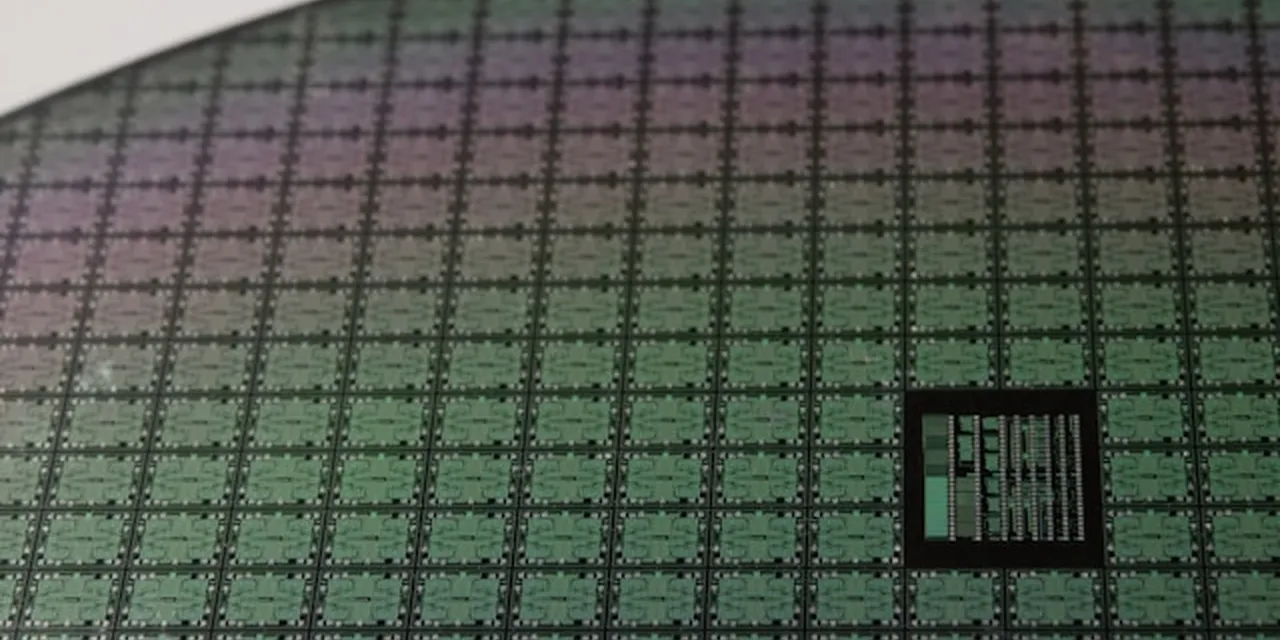
Neuchâtel's microtechnology cluster contributed CHF 1.2 billion to the cantonal economy through 2024, with roughly 80 companies employing 5,000 people directly across micro and nanotechnology, photonics, and precision engineering. By any measure, this is one of the most concentrated deep-tech ecosystems in Europe. It is also one of the hardest places on the continent to hire the people who keep it running.
The paradox at the centre of this market is easy to state and difficult to resolve. Global semiconductor layoffs, including restructuring at Intel and shifts within Meta's AR/VR division, created the impression through 2023 and 2024 that specialised engineering talent had loosened. It had not. The roles eliminated were in commodity functions and corporate overhead. The roles Neuchâtel needs filled sit at the intersection of MEMS design, photonics integration, and precision assembly. That intersection defines perhaps 120 qualified professionals across the entire Lake Geneva region. The layoffs did not produce a single additional candidate with this profile.
What follows is a ground-level analysis of Neuchâtel's microtech talent market as it stands in 2026: where the gaps are sharpest, why they exist, what they cost, and what organisations operating in or hiring for this ecosystem must understand before launching their next search.
The Ecosystem That Built a Talent Bottleneck
Neuchâtel's microtech cluster did not arrive by accident. It grew around two anchor institutions over several decades. CSEM Centre Suisse d'Electronique et de Microtechnique maintains its national headquarters in the city with more than 320 employees, running divisions in solar energy, photonics, and precision engineering. The University of Neuchâtel's Institute of Microtechnology houses 180 researchers working on MEMS, time-frequency systems, and sensor interfaces. Together, these two institutions produce the foundational research and the trained cohorts that the commercial ecosystem depends on.
The spin-off pipeline and its limits
The commercial layer built on top of these anchors includes firms like Valtronic SA with 450 employees specialising in miniaturised electronic assemblies, Astrocast SA with 65 employees developing satellite IoT hardware, and Asulab SA (Swatch Group) running a 200-person R&D centre for connected watch technologies. Spin-offs like Lemoptix, which pioneered MEMS micromirror technology before its acquisition by Intel in 2015, demonstrate what the ecosystem can produce at its best.
But the ecosystem's strength is also the source of its constraint. A cluster anchored by two institutions and a handful of mid-sized employers produces a narrow, deep talent pool. The professionals who emerge from CSEM or IMT are exceptionally qualified in precisely the hybrid skill sets the market demands. There are simply not enough of them. The cantonal economic development agency, Neode, and the inter-regional cluster body Micronarc coordinate investment and strategy effectively. What they cannot coordinate is the rate at which senior MEMS packaging engineers or silicon photonics specialists are produced.
The cleanroom ceiling
The infrastructure bottleneck compounds the talent bottleneck. Neuchâtel's Class 100/1000 cleanroom facilities total approximately 2,800 square metres. EPFL's CMi facility offers 12,000 square metres. ETH Zurich's FIRST lab provides 9,500 square metres. The IMT's 150mm processing line operated at 94% capacity through 2024, with priority access reserved for academic research and CSEM projects. Startups and commercial firms face six to nine month lead times for prototyping at local foundries.
This forces firms to outsource critical manufacturing steps to STMicroelectronics in Grenoble or X-FAB in Germany. According to reporting in ArcInfo, this outsourcing increases logistics costs by 15 to 20 percent and introduces IP leakage risks that most hardware startups cannot afford. The Canton's 2024 to 2027 economic strategy includes a planned 1,200 square metre expansion of the Neode Park cleanroom facilities by late 2026. That expansion helps. It does not close the gap.
The talent problem and the infrastructure problem are not independent. They reinforce each other. When your cleanroom is saturated, the engineers who want to work in it leave for facilities where they can actually run processes. That departure makes the talent problem worse, which slows production further. This feedback loop is what makes the Neuchâtel market materially different from a standard hiring shortage.
Why Semiconductor Layoffs Did Not Solve Anything
The analytical claim at the centre of this article is one that the headline data obscures. Through 2023 and 2024, global semiconductor companies announced major restructuring. Intel cut thousands of positions worldwide. Meta reorganised its AR/VR division, which had absorbed the Lemoptix IP originally developed at CSEM. Swatch Group restructured portions of its Asulab R&D operation. The public narrative suggested that engineering talent was becoming available.
Neuchâtel's vacancy data tells a different story. The sector posted 340 open positions in Q4 2024, a 22% increase year on year, while average time-to-fill extended to 98 days, up from 67 days in 2022, according to Adecco Switzerland's labour market analysis and the Micronarc Hiring Survey.
The restructuring headlines created a false impression that qualified talent had entered the market. The layoffs targeted administrative, commercial, and commodity semiconductor roles. The functions Neuchâtel needs, professionals who combine MEMS process integration with photonics packaging and precision assembly, were largely untouched by those cuts. In some cases, restructuring made the problem worse. When Intel reorganised the Lemoptix-derived AR division, the few professionals with micromirror expertise who were released were immediately absorbed by competitors in Zurich and Munich. None returned to Neuchâtel.
This is the pattern that hiring leaders in this market must understand. Aggregate semiconductor employment data suggests availability. Specialised hiring data shows the opposite. A CHRO reading macro headlines will expect a softened market. A hiring manager working with a recruiter who understands passive candidate dynamics will know that the 98-day fill time reflects a market where the people you need are not looking, not available, and not responding to job postings.
The Three Roles This Market Cannot Fill Fast Enough
The vacancy rate for MEMS engineers in Western Switzerland reached 14.3% by late 2024, according to SECO's professional needs survey, the highest specialisation gap in the canton. But the aggregate figure masks three distinct shortages, each with its own dynamics.
Senior MEMS design engineers
Unemployment among senior MEMS design engineers in Western Switzerland sits below 1.5%. Average tenure in this group is 7.2 years. For every one active candidate on a job board, nine must be sourced through direct search. This is not a market where advertising works. It is a market where the only viable approach is identifying and engaging professionals who are not looking for a new role.
According to reporting in L'Impartial, Valtronic maintained a Senior MEMS Packaging Engineer position open for 11 months through 2024 before filling it via internal promotion of a cross-border candidate originally from CEA-Leti in Grenoble. The role required expertise in wafer-level bonding and through-silicon via processing. To secure the candidate, Valtronic offered a CHF 25,000 signing bonus and relocation package above standard Swiss engineering norms.
Photonics integration specialists
The photonics subsector accelerated following the 2023 launch of the Swiss Photonics Integration Center at CSEM Neuchâtel, backed by CHF 15 million in federal innovation funding through Innosuisse. That investment created new capacity. It also created new demand for specialists who do not exist in sufficient numbers.
Only approximately 120 qualified photonics integration professionals work in the entire Lake Geneva region. In 2024, 85% of placements in this speciality involved candidates who were not actively seeking employment, sourced from CSEM, EPFL spin-offs, or the Lemoptix alumni network. When CSEM's own Photonics Division attempted to hire three senior packaging specialists in 2024, according to Le Temps, two positions remained unfilled after six months. CSEM restructured the team, relocating specialists from its Zurich site and creating a hybrid reporting line. Each relocation involved CHF 15,000 in housing allowances.
Analog IC design leads
The shortage in low-power analog and mixed-signal IC design is not unique to Neuchâtel. It is global. But Neuchâtel faces a specific version of it. Job postings for these roles generate high volumes of applications with less than 3% qualified yield, according to Swiss Engineering's competency survey. The active candidates lack the necessary skills. The qualified candidates are employed.
As reported by Bilan, Astrocast sought an RF IC Design Lead throughout the middle of 2024. Three finalist candidates accepted counter-offers from competitors in Zurich and Munich. Astrocast raised its salary band by 18%, from CHF 140,000 to 160,000 to CHF 165,000 to 185,000, before eventually securing a candidate from a Grenoble-based competitor through a specialised search firm.
Each of these three shortages is severe on its own. Combined, they define an ecosystem where the organisations best positioned to innovate cannot staff their core teams. The cost is not only financial. It is measured in delayed product cycles, relocated manufacturing, and IP that migrates when the people carrying it leave.
Where the Talent Goes: Neuchâtel's Three Competitor Markets
Neuchâtel does not lose talent to a single competitor. It loses different profiles to different geographies, each offering a distinct value proposition that the Canton cannot match.
Zurich draws MEMS designers, analog IC engineers, and AI hardware talent with 20 to 30% higher compensation and a larger ecosystem that includes Apple, Google, Intel, and a dense network of ETH Zurich spin-offs. Graduates from the University of Neuchâtel's own IMT regularly accept positions at Apple Zurich or ETH-connected firms rather than local CSEM offers, according to the university's career centre placement statistics. The dual-career advantage in Zurich, where a partner can find a comparable professional role, reinforces the pull.
Grenoble takes a different profile. Mid-level process engineers and cleanroom technicians move to CEA-Leti and STMicroelectronics Crolles despite lower net salaries. Housing costs in Grenoble run roughly 40% below Neuchâtel. Access to Horizon Europe research funding and the 12,000 square metres of Minatec cleanroom infrastructure create professional opportunities that Neuchâtel's constrained facilities cannot match.
Munich attracts German-speaking Swiss engineers into automotive sensor roles at Infineon, BMW, and the broader Silicon Saxony network. Career progression toward OEM leadership is clearer in Munich. Salaries are comparable. The industrial customer base is deeper.
Neuchâtel's retention advantages are real but narrow. Quality of life around the Jura lakes, lower population density, and the deep heritage of the watch industry create genuine attachment for professionals who value those factors. But attachment does not compensate for a CHF 15,000 starting salary premium in Zurich or a 40% reduction in housing costs in Grenoble. Retention requires more than lifestyle. It requires a compensation strategy that accounts for the specific alternatives each candidate faces.
The Scale-Up Capital Problem That Becomes a Talent Problem
The conventional framing of Neuchâtel's financing challenge is that Series B and growth capital is harder to find than in Zurich or Boston. This is true but incomplete. The deeper issue is that the capital constraint directly worsens the talent constraint.
Seed funding between CHF 500,000 and CHF 2 million is accessible locally through Innosuisse and the Neuchâtel Business Angels association. Innosuisse directed CHF 8.2 million toward Neuchâtel microtech projects in 2023, a 34% year-on-year increase. But between CHF 5 million and CHF 20 million, a valley of death opens. In 2023 and 2024, only two Neuchâtel microtech firms secured Series B funding, compared to 11 in the Greater Zurich Area, according to the Swiss Venture Capital Report 2024.
Firms that need growth capital must seek it from Zurich-based investors like Redalpine or VI Partners, or from international funds like HTGF in Germany or BPI France. According to Startupticker's Annual Startup Radar, this capital-seeking process frequently results in commercial headquarters relocating to Zurich or Munich, even when the R&D core stays in Neuchâtel.
When a company relocates its commercial headquarters, the senior commercial and operational leadership follows. Business development directors, managing directors, and operations leads move to where the board, the investors, and the customers sit. The R&D team stays behind, now managed remotely. Over time, the most ambitious R&D leaders also migrate toward the centre of gravity. The result is a slow hollowing out of Neuchâtel's leadership talent, driven not by a deficiency in the Canton's research base but by the absence of stage-specific capital that would let firms scale locally.
This dynamic explains why executive search in Neuchâtel's industrial and manufacturing sector requires an approach that goes well beyond the regional market. The candidates a Neuchâtel scale-up needs for its next phase of growth are often sitting in Zurich, Munich, or Grenoble, working for the very firms that Neuchâtel lost them to. Bringing them back requires a proposition that addresses every factor that originally drove them away.
Structural Constraints That Compound Every Search
Beyond the core talent shortage and capital dynamics, several systemic factors make every hire in this market more complex than the job description suggests.
Cross-border workforce volatility
Forty-two percent of Neuchâtel's microtech workforce consists of cross-border commuters from the Doubs region of France. This frontalier workforce is essential. It is also vulnerable. Swiss immigration quota tightening following the 2024 referendum and ongoing French tax disputes create regulatory uncertainty that affects HR planning for every employer in the region. A firm that depends on frontalier staff for 40% of its engineering team cannot forecast its workforce stability beyond the current regulatory cycle.
Export controls and procurement delays
US and EU restrictions on semiconductor manufacturing equipment increasingly affect Neuchâtel firms. CSEM's procurement of specific deposition equipment was delayed eight months in 2024 due to dual-use licensing reviews, according to SECO's report on dual-use goods control. For a firm running at 94% cleanroom capacity, an eight-month equipment delay does not merely slow a project. It freezes headcount decisions, because you cannot hire the engineer to run a machine that has not arrived.
Intellectual property thickets
Asulab's dominance in watch microtechnology creates defensive patent portfolios that, according to European Patent Office filing data, make it difficult for startups to patent in micro-actuator spaces. This matters for talent because the ability to attract senior researchers depends partly on the IP environment. A principal engineer choosing between two roles will consider which company can protect the work they produce. If Neuchâtel's IP environment is perceived as constrained by incumbent portfolios, that perception becomes a recruitment disadvantage.
Energy costs and industrial real estate
Cleanrooms consume between 50 and 200 kilowatt-hours per square metre per year. Swiss industrial electricity prices rose 18% between 2023 and 2024, according to the Swiss Federal Office of Energy. Industrial real estate vacancy in Neuchâtel sits at 2.1%. New entrants face both the operating cost of running a cleanroom and the near-impossibility of finding space to build one. These factors do not directly prevent a hire. They prevent the company growth that would justify the hire.
Each of these constraints is manageable in isolation. Stacked together, they create a hiring environment where the search for a single senior engineer intersects with immigration policy, equipment procurement timelines, IP strategy, and real estate availability. This is not a market where a job posting and a competitive salary will produce results. It is a market where the search method determines the outcome.
What This Means for Organisations Hiring in Neuchâtel's Microtech Sector
The data in this article points to a single conclusion. Neuchâtel's microtechnology ecosystem has built research and innovation capacity that exceeds its talent supply, its manufacturing infrastructure, and its capital access. This is not a temporary imbalance. It is a systemic condition that has deepened through every year of growth.
For hiring leaders, the practical implications are specific. The candidates you need for MEMS design, photonics integration, and analog IC leadership are overwhelmingly passive. Ninety percent of senior MEMS engineers must be sourced through direct search. Eighty-five percent of photonics placements involve candidates who were not looking. Job postings for analog IC roles generate less than 3% qualified yield. Traditional recruitment methods reach the wrong population.
The geographic spread of the candidate pool adds a further layer of complexity. Your next VP of Engineering may be at Apple in Zurich, your next photonics lead at CEA-Leti in Grenoble, your next sensor architect at Infineon in Munich. Reaching them requires not only identification but a proposition that addresses compensation differentials, infrastructure access, career trajectory, and in many cases the lifestyle recalculation of moving to a smaller city.
This is the environment where KiTalent's approach to direct headhunting and talent mapping produces results that conventional methods cannot. With AI-powered candidate identification, KiTalent accesses the passive 80 to 90 percent of this market that job boards never reach. Interview-ready candidates are delivered within 7 to 10 days. The pay-per-interview model means organisations invest only when they meet qualified candidates. With a 96% one-year retention rate across 1,450 executive placements, the firm specialises in precisely the kind of high-stakes, low-volume search that defines Neuchâtel's microtech sector.
For organisations competing for MEMS, photonics, and sensor leadership in one of Europe's most constrained talent markets, where the cost of a failed executive hire compounds with every month a role stays open, speak with KiTalent's executive search team about how to run a search that reaches the candidates this market hides.
Frequently Asked Questions
Why is it so difficult to hire MEMS engineers in Neuchâtel?
Senior MEMS engineers in Western Switzerland experience unemployment below 1.5%. Average tenure exceeds seven years. For every active candidate, nine are employed and not seeking new roles. The required skill set combines cleanroom process integration, wafer-level bonding, and through-silicon via processing. This combination is produced by a small number of institutions and held by a narrow population. The result is a market where 90% of viable candidates must be identified and engaged through proactive executive search methods rather than job advertising.
What salaries do photonics and MEMS specialists earn in Neuchâtel?
Senior individual contributors with 10 or more years of experience earn CHF 130,000 to 155,000 in base salary, with total compensation reaching CHF 145,000 to 175,000. MEMS packaging specialists command a 15 to 20% premium over general mechanical engineers. VP of Engineering and CTO roles at mid-size firms range from CHF 180,000 to 220,000 base, with total packages reaching CHF 250,000 to 350,000 including equity and long-term incentives. Operations directors in microfabrication earn CHF 150,000 to 190,000 base with 20 to 30% bonus potential.
How does Neuchâtel compete with Zurich and Grenoble for microtech talent?
Zurich offers 20 to 30% higher compensation and a larger technology ecosystem including Apple, Google, and Intel. Grenoble offers 40% lower housing costs and access to 12,000 square metres of Minatec cleanroom infrastructure. Neuchâtel competes through quality of life, the concentrated deep-tech community around CSEM and the university, and specific watch-industry heritage roles. For senior hires, organisations in Neuchâtel increasingly need to offer relocation packages, signing bonuses, and hybrid arrangements to offset the compensation and infrastructure advantages of competing cities.
What is the Swiss Photonics Integration Center and why does it matter for hiring?
The Swiss Photonics Integration Center launched in 2023 at CSEM Neuchâtel with CHF 15 million in federal Innosuisse funding. It provides silicon photonics coupling and packaging capabilities that previously required outsourcing to facilities in France or Germany. While this strengthens the local ecosystem, it has simultaneously created demand for photonics integration specialists that the region cannot supply. Only approximately 120 qualified professionals exist in the Lake Geneva region, and 85% of placements involve passive candidates who must be directly approached.
How long does it take to fill a senior microtechnology role in Neuchâtel?
The average time-to-fill across Neuchâtel's microtech sector reached 98 days in late 2024, up from 67 days in 2022. Individual roles take considerably longer. One major employer maintained a Senior MEMS Packaging Engineer position open for 11 months before filling it. KiTalent's AI-enhanced direct search methodology delivers interview-ready candidates within 7 to 10 days by identifying and engaging the passive professionals who represent the vast majority of this market's qualified talent.
What role does cross-border labour play in Neuchâtel's microtech sector?
Forty-two percent of Neuchâtel's microtech employees are cross-border commuters from the Doubs region of France. This frontalier workforce is critical to maintaining production capacity, particularly for cleanroom operations and precision assembly. However, Swiss immigration quota adjustments and ongoing French tax disputes create workforce planning uncertainty. Organisations relying heavily on cross-border staff face regulatory volatility that a talent pipeline strategy can help mitigate by maintaining a pre-qualified candidate pool across multiple geographies.