Niš Automotive Sector in 2026: How a Single-Employer Cluster Became Serbia's Most Fragile Talent Market
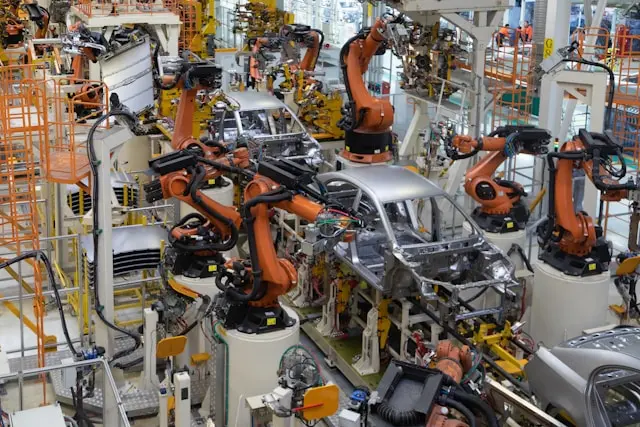
Niš sits at a crossroads in both the literal and strategic sense. The city's position on Corridor X, roughly three and a half hours from the Port of Thessaloniki, made it a logical home for automotive electrical manufacturing. A Free Zone offering VAT and customs exemptions sweetened the proposition. By 2024, the automotive electrical subsector employed between 4,200 and 4,800 workers across a dozen or so registered firms. On paper, this looks like a functioning industrial cluster. In practice, approximately 60% of that employment sits inside a single company.
That concentration is the defining feature of the Niš automotive talent market in 2026. The electrical equipment manufacturing subsector carries a 7.3% vacancy rate, more than double the national manufacturing average. The working-age population in the Nišava District is declining at over 2% per year. And 45% of graduates from the local Faculty of Electronic Engineering leave the city within two years of finishing their degrees. The demand for automation engineers, high-voltage technicians, and certified quality managers is rising at the same moment the pool of people capable of filling those roles is shrinking.
What follows is an analysis of the forces that have produced this situation, why they are unlikely to resolve on their own, and what organisations hiring leadership talent in this market need to understand before they commit to a search. The gap between Niš's investment ambitions and its talent reality is not closing. It is widening in ways that standard recruitment methods cannot address.
The Anchor Employer Problem: Why Cluster Concentration Creates Hiring Risk
Industrial clusters work best when multiple employers of comparable scale compete for talent, invest in training, and create a labour market large enough to sustain specialisation. Niš does not have this. Leoni Wiring Systems Southeast employs an estimated 2,800 people in the city, making it responsible for roughly 60% of all automotive electrical employment. The next largest operations, EI Mikroelectronik and Aptiv's Niš engineering office, employ approximately 180 and 120 people respectively. The scale difference is not marginal. It is an order of magnitude.
This matters for hiring in two specific ways. First, Leoni's workforce decisions set the local market rate. When one employer accounts for three in every five sector jobs, its pay bands become the de facto benchmark. Smaller firms cannot offer materially more without destroying their own margins. But Leoni itself operates within the cost constraints of the global wiring-harness business, where Serbia's entire value proposition rests on being cheaper than Romania, Bulgaria, and eventually cheaper than automation. Wages cannot rise fast enough to retain talent without undermining the reason the cluster exists.
Second, any disruption to Leoni's operations cascades across the entire local economy. Leoni AG's global financial restructuring in 2020 demonstrated this vulnerability in concrete terms. A future contract loss, a shift in BMW or Mercedes-Benz sourcing strategy, or another global automotive downturn would not just reduce one company's headcount. It would hollow out the sector. Any senior leader considering a role in Niš must weigh this dependency, and any organisation recruiting a plant director or quality director must be prepared to address it directly in the hiring conversation.
The Expansion That Has Not Filled Its Own Seats
Leoni announced a €25 million expansion of its Niš facility in late 2023, adding 1,200 new workstations by mid-2025. The investment was real. But as of early 2025, approximately 800 of those positions remained under active recruitment, according to data from the Serbian Development Agency's FDI Monitor. By 2026, while some progress has been made, the pattern established through 2025 tells the story clearly: capital arrived faster than the people required to use it.
This is not a failure of recruitment effort. It is a reflection of arithmetic. The Nišava District's working-age population is declining at 2.1% per year. The university produces around 250 electrical engineering graduates annually, fewer than 30% of whom are ready for automotive production work without extensive retraining. And 45% of those graduates leave Niš within two years anyway, drawn to Belgrade's higher salaries or to German and Austrian employers offering three to four times local pay. The expansion created workstations. The population trend did not create workers to fill them.
The Compensation Ceiling That Wage Increases Cannot Break
Executive and specialist compensation in Niš follows a pattern that hiring leaders must understand before they design an offer. The numbers are specific and the gaps are consistent across every role category tracked by market benchmarking surveys.
An Engineering Manager in automation commands €28,000 to €38,000 gross annual salary in Niš. The same role in Belgrade pays €38,000 to €52,000. A Quality Manager with IATF 16949 certification earns €24,000 to €32,000 in Niš against €32,000 to €45,000 in Belgrade. At the executive level, a Plant Director overseeing a facility of 1,000 or more employees earns between €65,000 and €95,000, with wide variation depending on whether the parent company pays on a multinational or local scale. Quality Directors sit at €55,000 to €75,000.
These figures trail Belgrade by 20 to 25%. They lag Sofia and Zagreb by 35 to 45%. They lag Timișoara, Romania's major automotive hub hosting Continental and Delphi operations, by 40 to 50%. And they trail German manufacturing wages by a factor of eight to ten.
Why the Gap Persists Despite Record Vacancies
The most revealing data point in this market is not the wage gap itself. It is the combination of a 7.3% vacancy rate in electrical equipment manufacturing with real wage growth of just 2.1% annually through 2024, below the 4.5% inflation rate. In a functioning labour market, persistent vacancies push wages up until the market clears. In Niš, the market is not clearing.
The reason is that Niš automotive employers operate within a narrow band. They must pay enough to retain staff against Belgrade and EU emigration pressure, but they cannot pay so much that Serbia loses its cost advantage over Romania and Bulgaria. Wire-harness manufacturing is a business built on labour cost arbitrage. Every dinar of wage increase narrows the margin between Niš and Timișoara, between Serbia and the EU alternatives where workers also gain freedom of movement, EU social protections, and dramatically higher long-term earning potential. Employers report paying 25 to 35% premiums above standard market rates for Quality Managers with IATF 16949 Lead Auditor certification. But even those premiums do not close the gap with what the same professionals can earn in Sofia, let alone Munich.
This is the structural trap at the heart of the Niš automotive talent market. The cost model that attracted investment in the first place is now the ceiling that prevents the market from retaining the people that investment requires.
The Skills Mismatch: 250 Graduates, Fewer Than 75 Ready for Industry
The University of Niš Faculty of Electronic Engineering sits less than five kilometres from the industrial zones where its graduates are most needed. Leoni representatives sit on curriculum advisory boards. The city has implemented dual education programmes through its Regional Chamber of Commerce. Every structural condition for a functioning talent pipeline is present. The pipeline is still not delivering.
Employer data collected through the Serbian Chamber of Commerce's skills gap analysis shows that fewer than 30% of entry-level hires from the university require minimal retraining for automotive production environments. The remaining 70% need substantial upskilling in proprietary systems: Siemens PLC programming, TIA Portal, specific crimping technologies, and the practical application of lean manufacturing in harness assembly. The curriculum remains theoretically oriented while industry demands immediate productivity.
The persistence of this gap after a decade of dual education initiatives challenges a common assumption among investors and policymakers. Proximity to a university does not guarantee a talent pipeline. Advisory board representation does not guarantee curriculum alignment. The university produces electrical engineers. Industry needs automotive electrical engineers with certification in high-voltage safety, proficiency in Catia V5/V6 for harness design, and often B1 to B2 German language skills for client communication. These are not the same thing. The gap between what the university teaches and what employers need from senior technical hires is not an abstraction. It translates directly into the 90 to 120 day vacancy duration that senior automation engineering roles experience in Niš, double the 45 to 60 days typical in Belgrade.
The EV Transition: Opportunity Wrapped in a Hiring Problem
The transition from internal combustion engine harnesses to high-voltage EV architectures is the single largest commercial opportunity available to Niš manufacturers. EV harnesses command higher margins. They lock suppliers into longer product cycles. And the premium automotive brands that Leoni serves, BMW and Mercedes-Benz, are accelerating their electrification programmes. The Serbian Chamber of Commerce projects moderate headcount growth of 3 to 5% through 2026, contingent on Niš producers securing next-generation EV contracts.
But EV harnesses require fundamentally different skills. High-voltage safety certification for systems up to 1,000 volts is mandatory. Assembly processes change. Quality standards tighten. The workforce that built ICE harnesses cannot simply be redirected to EV production without retraining and recertification. And the professionals who already hold these qualifications, high-voltage technicians with automotive production experience, represent one of the three most acute shortage categories in the Niš market.
Capital Retooling Has Outpaced Human Capital Development
This is the original analytical insight that sits at the centre of the Niš talent challenge: the investment in EV production capability has not reduced the workforce requirement. It has replaced one category of worker with another category that does not yet exist in sufficient numbers locally. Leoni's €25 million expansion added physical capacity for EV harness production. The €40 million in potential greenfield investments reported by the Serbian Development Agency would add more. But the high-voltage technicians, the automation engineers with EV-specific PLC programming experience, and the quality managers capable of running IATF 16949 compliance for high-voltage products are not being produced at the rate capital is being deployed. The factories are ahead of the people.
This creates a specific problem for organisations hiring at the leadership level. A Plant Director brought in to run an EV harness production line needs to build a workforce that partially does not exist yet. An Engineering Manager responsible for process automation must recruit and train teams in competencies the local university does not teach. The executive search challenge in Niš is not simply finding a leader. It is finding a leader capable of building a team from a talent base that is still forming, in a city where the population is declining.
The Emigration Drain: Competing Against a 10x Wage Multiplier
Every labour market in Southern Serbia competes against the pull of EU employment. In Niš, this competition is especially acute because the city's primary industry, automotive manufacturing, is one of the occupations most actively recruited by German employers through formal bilateral channels.
German manufacturing wages run eight to ten times higher than Niš equivalents, according to figures from the Bundesagentur für Arbeit. A skilled technician earning €6,000 to €8,000 annually in Niš can earn €30,000 to €48,000 in Stuttgart or Wolfsburg, with EU-standard social protections, healthcare, and a clear path to permanent residency. The university alumni data confirms the result: 45% of Faculty of Electronic Engineering graduates leave Niš within two years of graduation.
Belgrade absorbs a large share of this outflow domestically, offering salaries 25 to 30% higher than Niš alongside headquarters functions and clearer advancement trajectories to regional roles. Novi Sad has emerged as Serbia's secondary hub, offering Belgrade-comparable wages with lower living costs. Beyond Serbia's borders, Sofia and Plovdiv in Bulgaria offer EU membership advantages, 15 to 20% higher manufacturing wages, and stronger English-language working environments. Timișoara in Romania, home to Continental and Delphi operations, pulls senior technical talent from Serbia with wages 40 to 50% above Niš rates.
The net effect is that Niš is the last option in a hierarchy of alternatives, each of which offers the same worker more money, more mobility, or both. Retaining senior talent under these conditions requires something beyond compensation. It requires a role proposition specific enough that it cannot be replicated elsewhere. For a Quality Director, that might mean ownership of a greenfield certification programme for an entirely new EV product line. For a Plant Director, it might mean autonomy to build an operation from scratch rather than inheriting a mature one. The organisations that understand this distinction and can articulate it during the executive hiring process fill their roles. The organisations that lead with salary alone lose candidates to every neighbouring market.
What the 2026 Pipeline Looks Like and Why It Is Not Enough
The Serbian Development Agency reports two potential greenfield investments in automotive electronics under negotiation for the Free Zone Niš, collectively valued at €40 million. Neither had reached final investment decision as of late 2024. If realised, these investments would represent the most meaningful diversification away from single-employer dependency that the Niš cluster has seen.
But they would also intensify every hiring challenge described above. Two new operations requiring automation engineers, quality managers, and production supervisors would draw from the same local pool that already carries a 7.3% vacancy rate. The maths is unforgiving. The Nišava District's working-age population is falling by 2.1% per year. The university produces 250 graduates, most of whom need retraining, and nearly half of whom leave. Adding two more employers does not expand the talent pool. It subdivides it further.
The Free Zone Niš itself reports 78% occupancy in automotive-designated plots, up from 65% in 2022. Energy costs have risen 34% since 2022, with industrial electricity now at €95 to €105 per megawatt hour. Serbia's alignment with EU automotive regulations through its accession process is driving certification investments of €50,000 to €200,000 per production line for SMEs. These are not prohibitive costs. But they compound in a market where margins are already compressed by the wage ceiling described above.
The CBAM Exposure No One Is Pricing In
Serbia's dependence on lignite-fired electricity generation creates a specific vulnerability that is increasingly relevant for automotive exporters. The EU's Carbon Border Adjustment Mechanism is designed to impose carbon costs on imports from countries without equivalent carbon pricing. Serbian automotive components exported to German or Austrian assembly plants will face this exposure. The compliance burden falls disproportionately on smaller manufacturers who lack the resources to switch energy sources or purchase carbon credits. For any senior leader evaluating a move to Niš, and for any organisation hiring at the executive level, CBAM exposure should be part of the strategic conversation about the role's long-term viability.
How to Hire Leadership Talent in a Market This Constrained
The data on passive candidate prevalence in Niš is unambiguous. According to engineering market analysis from Hays Serbia, 80 to 85% of qualified senior automation engineers are employed and not actively seeking new roles. For Plant Directors and Operations Managers, the passive rate exceeds 90%. For IATF-certified Quality Managers, it sits at approximately 75%, with average tenure of 4.2 years in their current roles. This is a market where job boards and inbound applications reach, at best, 15 to 20% of the viable candidate population.
The hidden 80% of senior professionals who are not actively on the market cannot be reached through advertising. They must be identified, mapped, and approached directly. In a city of Niš's size, this means the search must also look beyond the city. A Plant Director search limited to candidates currently living in Niš is a search limited to a handful of people, several of whom work for the one employer you cannot poach from without destabilising your own supply chain relationships.
The effective search radius for leadership roles in Niš must extend to Belgrade, to Novi Sad, to the Serbian diaspora in Germany and Austria, and to professionals in neighbouring markets who might consider a return or a lateral move for the right opportunity. This requires direct headhunting methodology capable of identifying and engaging candidates across multiple geographies simultaneously.
KiTalent's approach to executive hiring in automotive and industrial manufacturing markets is built for exactly this type of constrained search. Using AI-powered talent mapping to identify candidates across Serbia, the wider Balkans, and the Central European diaspora, KiTalent delivers interview-ready candidates within 7 to 10 days. The pay-per-interview model means organisations invest only when they meet qualified professionals, eliminating the upfront retainer risk that makes speculative searches in small markets prohibitively expensive.
With a 96% one-year retention rate across 1,450 or more executive placements, the methodology is designed for markets where the cost of a wrong hire is amplified by the impossibility of quickly finding a replacement. In Niš, where every senior departure creates a vacancy that takes 90 to 120 days to fill, retention is not a secondary consideration. It is the primary one.
For organisations building or expanding automotive operations in Niš, where the talent pool is small, the competition is regional, and the candidates you need are almost certainly not looking, start a conversation with KiTalent's executive search team about how to structure a search that reaches beyond the visible market.
Frequently Asked Questions
What is the average salary for an automotive Plant Director in Niš, Serbia?
A Plant Director overseeing an automotive facility of 1,000 or more employees in Niš earns between €65,000 and €95,000 gross annually, according to the Mercer Serbia Total Remuneration Survey 2024. The wide range reflects whether the parent company applies multinational or local pay scales. This figure trails Belgrade equivalents by 20 to 25% and lags Timișoara, Romania, by 40 to 50%. Executive compensation in Niš is constrained by the cost arbitrage model that underpins the city's automotive sector. Organisations hiring at this level should expect to supplement base salary with role-specific propositions around autonomy and scope.
Why is it hard to hire automotive engineers in Niš?
Three factors converge. First, the Nišava District's working-age population is declining at 2.1% annually. Second, 45% of local engineering graduates leave the city within two years, drawn to Belgrade or EU markets offering three to ten times local wages. Third, 80 to 85% of qualified senior automation engineers are already employed and not actively seeking roles. Standard job postings reach fewer than one in five viable candidates. Filling senior technical roles requires direct executive search methodology capable of identifying and engaging passive professionals across multiple geographies.
What skills are most in demand in Niš automotive manufacturing?
The three most acute shortage categories are automation engineers with Siemens PLC and TIA Portal programming experience, Quality Managers holding IATF 16949 Lead Auditor certification, and high-voltage technicians certified for EV harness production up to 1,000 volts. Secondary demand exists for professionals with Catia V5/V6 CAD proficiency, Lean Manufacturing or Six Sigma Black Belt credentials, and German language skills at B1 to B2 level for technical documentation and client communication.
How does KiTalent approach executive search in small manufacturing markets like Niš?
KiTalent uses AI-enhanced talent mapping to identify candidates beyond the immediate local pool, extending searches to Belgrade, the wider Balkans, and the Central European diaspora. The firm delivers interview-ready candidates within 7 to 10 days and operates a pay-per-interview model that eliminates upfront retainer costs. This approach is specifically designed for constrained markets where passive candidate rates exceed 80% and where the local talent pool alone cannot sustain a senior search.
What are the main risks of investing in Niš's automotive sector?
The primary risks are concentration dependency on a single anchor employer, a declining working-age population, rising energy costs with CBAM exposure for EU exports, and persistent emigration of skilled professionals to higher-wage markets. The 2026 outlook includes potential diversification through two greenfield investments valued at €40 million, but neither has reached final investment decision. Any organisation expanding in Niš should build a proactive talent pipeline strategy that accounts for these constraints from the outset.
How does Niš compare to other Serbian cities for automotive recruitment?
Belgrade offers salaries 25 to 30% higher and stronger international connectivity, making it the default destination for senior professionals. Novi Sad is emerging as a secondary hub with Belgrade-comparable wages and lower living costs. Niš compensates with Free Zone incentives that reduce operational costs by 15 to 20% and direct Corridor X motorway access to Thessaloniki. For employers, the competitive position requires a hiring strategy that goes beyond local candidates and draws from the full national and regional talent pool through international executive search.