Norfolk's Waterfront Hospitality Is Growing. Its Talent Pool Is Not. The Hiring Gap Behind the Numbers
Norfolk's downtown hotel market recorded a 68.4% occupancy rate and an average daily rate of $154.20 through 2024. A 120-room Delta Hotels property opened adjacent to the cruise terminal, adding 9% to the downtown room inventory in a single year. The Virginia Port Authority completed $4.2 million in terminal upgrades. Visit Norfolk has set a target of 6.5 million visitor nights for 2026. On paper, the trajectory looks strong.
Beneath the investment, a different picture is forming. General Manager searches in the Hampton Roads MSA now run 127 days on average, 43% longer than the national benchmark. Cruise terminal operations managers are a 100% passive candidate market: every qualified individual in the region is already employed, and the only path to filling a vacancy is to take someone from a competing port. Executive Chef positions at properties with serious catering volumes sit open for five to six months. Norfolk's waterfront sector is adding rooms, programming, and infrastructure faster than it can staff them, and the mismatch is reaching a point where service standards and revenue projections are both at risk.
What follows is a ground-level analysis of the forces driving this gap: where the shortages are concentrated, why conventional recruiting methods consistently fail in this market, what competing geographies are doing to pull Norfolk's best talent away, and what organisations operating on this waterfront need to do differently to secure the leadership they require.
A Waterfront Economy Caught Between Investment and Staffing Reality
Norfolk's waterfront hospitality sector operates across four interconnected pillars: branded hotel properties anchored by The Main and the Norfolk Waterside Marriott, the Half Moone Cruise and Celebration Center serving Carnival Cruise Line's seasonal home-port operations, the Waterside Live! entertainment complex, and the cultural institutions led by the Chrysler Museum of Art and Nauticus. Together, these employers and their supporting ecosystem sustain roughly 1,100 full-time equivalent positions and several hundred seasonal roles.
The sector's transformation since the pandemic has been structural rather than cyclical. Waterside District's 2021 repositioning under Venture Realty Group shifted the employment mix decisively toward food and beverage entertainment and away from retail. Norfolk Festevents operates with 35 year-round staff but scales to approximately 435 during peak programming. The cruise terminal's workforce ebbs with sailing schedules that run primarily October through April, creating reverse seasonality against the hotel market's May through September peak.
This patchwork of seasonal cycles, entertainment-driven staffing, and convention-hotel operations means that Norfolk's hospitality labour market does not behave like a single market. It behaves like three overlapping markets with different peak periods, different skill requirements, and different compensation structures. A General Manager search for a convention-anchored property and a Cruise Terminal Operations Manager search require entirely different sourcing strategies, candidate profiles, and timelines. Yet both are drawing from a regional labour force that remains 3.8% below pre-pandemic levels.
The Virginia Employment Commission projects 8.3% growth in hospitality management occupations through 2026 for the Hampton Roads region. Labour force growth over the same period is projected at just 2.1%. The arithmetic is straightforward. Demand is outpacing supply by a factor of four at the management level, and every new property or expanded programme that comes online deepens the deficit rather than resolving it.
The Three Shortage Categories That Define This Market
Norfolk's waterfront hospitality shortages are not evenly distributed. They concentrate in three distinct categories, each with its own dynamics and each requiring a different response from hiring organisations.
Executive Operational Leadership
General Manager and Director of Operations roles for full-service branded properties show vacancy durations averaging 127 days in the Hampton Roads MSA. The national average for equivalent roles is 89 days, according to HVS's 2024 Hotel Management Salary Survey. That 43% premium in time-to-fill is not an inconvenience. It represents four additional months of interim management costs, deferred capital decisions, and revenue leakage from a property without permanent leadership.
Data from the Norfolk Downtown Hotel Association, representing 1,400 rooms, illustrates the shift. In 2024, 60% of General Manager searches required engagement of retained executive search firms due to internal candidate pool exhaustion. In 2019, that figure was 35%. The market has moved from one where active candidates could fill most senior roles to one where 85 to 90% of qualified General Managers are passive candidates. They are employed, they are not monitoring job boards, and they will not respond to a posted listing.
Average GM tenure in Norfolk runs 4.2 years. That figure sounds stable until you consider its implication: voluntary mobility is low, which means every GM vacancy requires either out-of-market recruitment or direct poaching from a competitor property. The internal pipeline produces too few candidates to fill the gap.
Maritime Hospitality Specialists
The most extreme shortage sits in cruise-specific operations. Passenger services managers, customs coordination specialists, and cruise operations managers show effectively zero unemployment in the MSA. The occupational category records 0.8% unemployment, with a 22% vacancy rate among posted positions.
The constraint is granular and technical. U.S. Customs and Border Protection cruise terminal certification is required for passenger processing supervisors, and only 12 individuals hold this certification in the entire Norfolk MSA. That is not a labour shortage in the conventional sense. It is a bottleneck created by a credential that takes years to acquire and that cannot be substituted with adjacent experience.
Every qualified cruise terminal operations manager in the region works for the Virginia Port Authority, Carnival Corporation, or the Baltimore Cruise Terminal. This is a 100% passive candidate market. Filling a single vacancy means convincing someone to leave a current employer, typically through compensation premiums of 15 to 20% above local hotel norms and sign-on bonuses that industry sources place at $10,000 to $15,000.
Culinary Management
Executive Chef and Food and Beverage Director positions at properties with catering volumes exceeding $3 million annually show vacancy durations of 145 to 180 days. Turnover in these roles reached 34% across the Norfolk-Virginia Beach MSA in 2024. A property that loses its Executive Chef in January can expect to operate without a permanent replacement until June or July.
The culinary shortage intersects with Norfolk's repositioning toward entertainment-driven hospitality. Waterside Live! and The Main Event have created demand for culinary leaders who understand high-volume event catering, not just hotel restaurant management. The skill profile has shifted, but the candidate pool has not shifted with it.
Why Norfolk's Compensation Structure Loses Candidates Before the Conversation Starts
The compensation data tells a story of a market that pays well enough to retain its existing workforce but not well enough to attract leadership from competing geographies. This distinction matters enormously for executive recruitment in the hospitality sector.
A first-time General Manager at a full-service Norfolk property earns $78,000 to $92,000 base with 20 to 30% bonus potential. A complex General Manager overseeing a flagship property or multiple assets earns $145,000 to $185,000 base with 35 to 45% bonus at the upper range. These figures are competitive within the Hampton Roads market, but they do not exist in isolation.
Virginia Beach's oceanfront hotels pay 8 to 12% base salary premiums over Norfolk downtown properties for equivalent GM roles. Richmond, 100 miles northwest, offers 15 to 18% premiums at the Director level and above, with a slightly lower cost-of-living index (94.5 versus Norfolk's 96.2). The Washington, D.C. metro area offers 35 to 45% compensation premiums, though the cost-of-living index of 152.1 erodes much of that advantage in real terms.
The real threat is not Richmond or D.C. as employers. It is Richmond and D.C. as career escalators. Mid-career hospitality professionals between 30 and 40, exactly the cohort from which Norfolk draws its next generation of GMs, are migrating toward Richmond's larger corporate demand base and stronger career trajectory. Census Bureau migration flow data for 2018 to 2022 confirms this pattern. Norfolk is not losing talent to better pay alone. It is losing talent to the perception of a higher ceiling.
Washington adds a second pressure. Norfolk-based Directors and VPs receive regular outreach from D.C.-based executive search firms for roles at Marriott International and Hilton Worldwide headquarters properties, as well as luxury brands like Four Seasons and St. Regis that have no presence in Norfolk. A passive candidate who is comfortable in Norfolk today may still take a call from a D.C. recruiter, simply because the brand opportunity does not exist locally.
This creates a specific challenge for any organisation attempting to fill a senior role through direct headhunting in hospitality leadership markets. The offer must compete not just on compensation but on career narrative. A candidate weighing Norfolk against Richmond or D.C. is weighing a market with a 1,400-room downtown inventory against markets with tens of thousands of rooms and multiple luxury tiers.
The Cruise Paradox: Capital Investment That May Not Secure Commitment
Here is the observation that does not appear in any single data point but emerges clearly when the data is combined: the Virginia Port Authority's $4.2 million terminal investment and Carnival Corporation's 2026 deployment signals are moving in opposite directions, and the gap between them has direct consequences for the talent market.
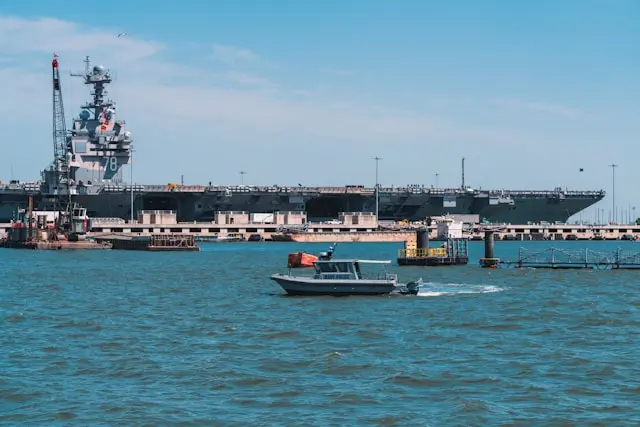
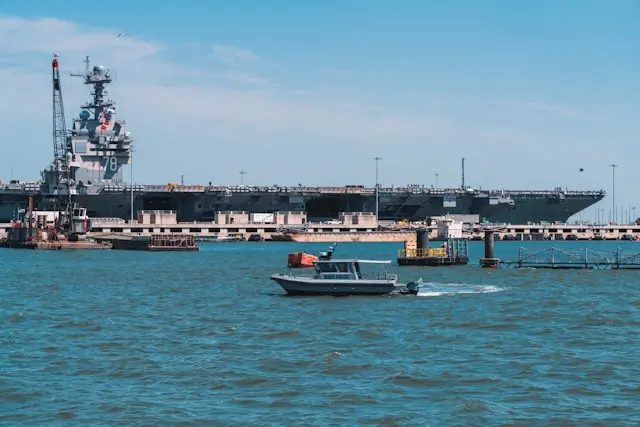
The Port Authority upgraded the Half Moone Terminal with shore power capabilities and passenger processing technology, completed in late 2024. These are real, material improvements designed to position Norfolk for next-generation cruise operations. But Carnival Corporation's 2026 itinerary announcements, as reported by Cruise Industry News, indicate potential repositioning of vessels to Charleston and Baltimore, both of which offer year-round home-porting capabilities that Norfolk's seasonal October-to-April window cannot match.
The terminal also faces a physical constraint that no amount of operational technology can resolve. The Half Moone berth cannot accommodate post-Panamax vessels exceeding 1,100 feet or 140,000 gross tons. This excludes Oasis-class and Icon-class ships, the vessels that generate the highest per-passenger spending ($285 average versus $195 for smaller vessels, according to CLIA's 2024 Economic Impact Study). No public funding is allocated for berth expansion through 2028.
The talent market implication is direct. Investing in cruise-specific hospitality skills, the CBP certifications, the terminal operations expertise, the customs coordination capability, carries elevated risk in a market where the anchor cruise line's commitment beyond the current season is uncertain. The 12 CBP-certified professionals in the Norfolk MSA represent an irreplaceable asset. If Carnival reduces sailings, those professionals face a choice: remain in a market with shrinking demand for their specific expertise, or relocate to Baltimore or Charleston where year-round operations provide greater stability.
This is the paradox that makes Norfolk's cruise talent market uniquely fragile. The skills are rare precisely because the market is small. But the market's smallness also makes it vulnerable to a single deployment decision by a single cruise line. Capital investment in terminal infrastructure does not address this vulnerability. Only investment in talent retention and cross-training, giving cruise specialists skills that transfer to convention and event hospitality during off-season months, can reduce the risk.
Regulatory and Climate Pressures That Reshape the Cost of Operating
Two regulatory forces are compressing margins for waterfront hospitality operators in ways that directly affect their ability to compete for talent.
The Minimum Wage Trajectory
Virginia's minimum wage increased to $12.00 per hour in 2025, with a path to $15.00 by 2026. Norfolk's Living Wage Ordinance adds a further layer: contractors operating within Waterside District under city lease agreements must pay $15.21 per hour, creating a 27% labour cost premium over equivalent positions in neighbouring Virginia Beach. For operators like Venture Realty Group's Waterside Live! tenants, this premium compresses the margin available for management compensation. When frontline labour costs rise by regulatory mandate, the budget for leadership hiring tightens unless revenue growth outpaces the increase.
Zoning Constraints on Supply Growth
The Waterfront District Overlay Zone restricts hotel development to 300 rooms per parcel and requires a 15% affordable housing contribution for mixed-use projects. Two proposed boutique hotel developments, including the Granby Street Adaptive Reuse and the Harbor Place mixed-use project, remain stalled pending variance applications. This means Norfolk's 2026 room supply growth will be modest at best, limiting the market's ability to generate the revenue base that supports premium compensation packages.
The constraint is circular. Limited room supply restricts revenue growth. Restricted revenue growth limits what operators can pay. Limited pay makes Norfolk less competitive against Richmond and D.C. for the executive talent that could drive revenue improvement. Breaking this cycle requires either regulatory flexibility on supply or a talent acquisition strategy that identifies leaders willing to invest in a market with growth potential rather than existing scale.
Climate and Insurance Costs
Norfolk's projected 6.5 feet of sea-level rise by 2050, as documented by the Virginia Institute of Marine Science, poses long-term asset risk to every waterfront property. Flood insurance premiums for waterfront hospitality properties increased 40% between 2022 and 2024 under the National Flood Insurance Program's Risk Rating 2.0 methodology. That increase directly compresses net operating income and may trigger capital migration to higher-ground inland sites.
For hiring leaders, the climate question is not abstract. A General Manager candidate evaluating a Norfolk waterfront property against an inland Richmond or D.C. property is evaluating long-term asset stability alongside compensation and career trajectory. The cost of a wrong executive hire is amplified when the asset itself carries environmental risk that the candidate can read about in public reports.
What a Successful Search Looks Like in This Market
The data makes the strategic requirement clear. Norfolk's waterfront hospitality market has moved from active to passive candidate dynamics at every leadership level. Sixty percent of GM searches now require retained executive search engagement, up from 35% five years ago. Revenue management directors represent a 95% passive market. Cruise terminal operations managers are 100% passive. A job posting on a hospitality job board reaches, at best, the 10 to 15% of this talent pool that happens to be actively looking.
Reaching the other 85 to 90% requires a fundamentally different method. It requires systematic talent mapping that identifies every qualified individual in the relevant geography, assesses their current situation, and engages them directly with a proposition specific enough to warrant a conversation. In a market where only 12 people hold CBP cruise terminal certification and all of them are employed, the search firm that knows who they are, where they work, and what would move them has a decisive advantage over one that posts and waits.
The seasonal complexity of Norfolk's waterfront adds another layer. A GM search initiated in January, when hotel demand is low but cruise operations are active, faces different competitive dynamics than one initiated in June, when hotels are at peak occupancy and cruise operations are dormant. Timing the approach to a passive candidate requires understanding not just their career situation but the operational calendar of their current employer.
For organisations competing for leadership talent in Norfolk's waterfront hospitality sector, where the most qualified candidates are not visible on any job board and where a 127-day vacancy at the GM level translates directly to revenue loss, the question is not whether to engage specialist executive search support but how quickly. KiTalent delivers interview-ready executive candidates within 7 to 10 days through AI-enhanced direct headhunting that reaches passive candidates in niche hospitality markets. With a pay-per-interview model that eliminates upfront retainer risk and a 96% one-year retention rate for placed candidates, the approach is designed for exactly the kind of market Norfolk represents: small, specialised, and dominated by candidates who are employed, not looking, and reachable only through direct engagement.
For hiring leaders facing a General Manager vacancy that conventional methods cannot fill within 90 days, or a cruise operations role where the candidate pool is measured in single digits, start a conversation with our executive search team about how we approach this specific market.
Frequently Asked Questions
How long does it typically take to fill a General Manager role in Norfolk's hospitality market?
General Manager searches in the Hampton Roads MSA average 127 days, compared to 89 days nationally. The extended timeline reflects the passive nature of the candidate pool: 85 to 90% of qualified GMs are employed and not actively seeking. Properties represented by the Norfolk Downtown Hotel Association reported that 60% of GM searches in 2024 required retained executive search engagement due to internal candidate pool exhaustion, up from 35% in 2019. Organisations that rely on job postings alone consistently experience longer vacancies and weaker shortlists in this market.
What salary does a hotel General Manager earn in Norfolk, Virginia?
Compensation varies by property complexity and seniority. A first-time General Manager at a full-service branded property earns $78,000 to $92,000 base salary with 20 to 30% annual bonus potential. A Complex General Manager overseeing a flagship convention property or multiple assets earns $145,000 to $185,000 base with 35 to 45% bonus. These figures are competitive within Hampton Roads but trail Richmond by 15 to 18% and Washington, D.C. by 35 to 45% at equivalent seniority levels, though D.C.'s cost-of-living index of 152.1 narrows the real-wage gap.
Why is it so difficult to hire cruise terminal operations managers in Norfolk?
Norfolk's cruise terminal operations manager role represents a 100% passive candidate market. Every qualified individual in the MSA is currently employed by the Virginia Port Authority, Carnival Corporation, or the Baltimore Cruise Terminal. The bottleneck is compounded by the CBP cruise terminal certification requirement, held by only 12 individuals in the Norfolk MSA. Filling these roles requires direct inter-port recruitment with compensation premiums of 15 to 20% above local hotel norms and sign-on bonuses that industry sources place at $10,000 to $15,000.
How does Norfolk's hospitality talent market compare to Virginia Beach?
Virginia Beach's oceanfront resort market pays 8 to 12% base salary premiums over Norfolk downtown for equivalent General Manager roles. Virginia Beach offers stronger summer seasonal demand but greater off-season instability, creating a talent movement pattern where professionals shift between the two markets based on seasonal opportunity. Norfolk's convention and cruise business provides more consistent year-round demand, but the compensation gap means that candidates with resort experience frequently prefer Virginia Beach during peak season.
What impact does Norfolk's minimum wage increase have on hospitality hiring?
Virginia's minimum wage path to $15.00 by 2026, combined with Norfolk's Living Wage Ordinance requiring $15.21 per hour for Waterside District contractors, creates a 27% labour cost premium over equivalent positions in neighbouring Virginia Beach. This compression affects management hiring budgets directly: as frontline labour costs rise, the margin available for competitive leadership compensation narrows unless revenue growth keeps pace. Properties that cannot offset the increase through higher rates or occupancy face difficult trade-offs between service staffing levels and management recruitment investment.
How can Norfolk hospitality employers attract passive executive candidates?
In a market where 85 to 95% of qualified leadership candidates are passive and employed, traditional job advertising reaches only a fraction of the available talent. Effective recruitment requires systematic identification of passive candidates through direct market mapping, followed by personalised outreach with a proposition that addresses career trajectory and lifestyle factors alongside compensation. KiTalent's AI-enhanced direct search methodology identifies and engages these candidates within days rather than months, delivering interview-ready shortlists for roles that conventional methods leave open for four to six months.