Norfolk's Port Is Moving Record Cargo. Its Workforce Cannot Keep Up. Here Is Why Automation Has Not Solved the Problem.

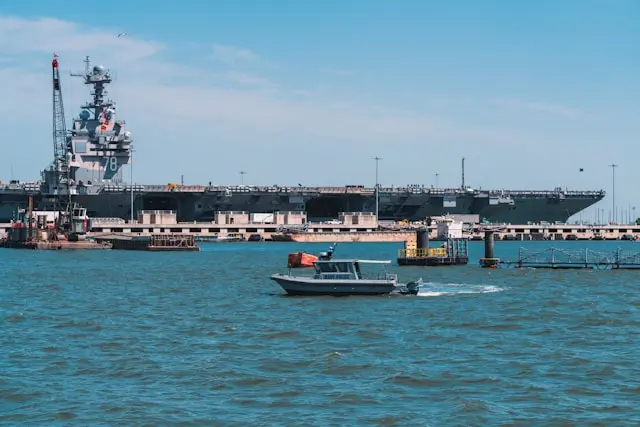
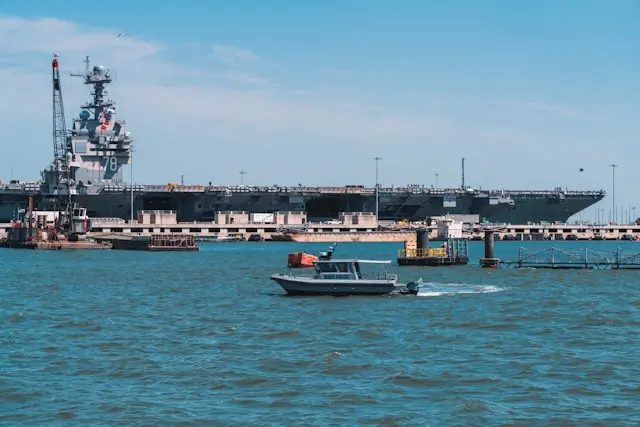
The Port of Virginia closed 2024 processing approximately 3.9 million TEUs, a 12% year-over-year surge fuelled partly by cargo diverted after Baltimore's Francis Scott Key Bridge collapse. Through Q1 2025, Norfolk's deepwater terminals commanded a 27% share of U.S. East Coast containerised volume, trailing only New York and New Jersey. The infrastructure is bigger, faster, and more automated than at any point in the port's history. And yet the hiring problem is getting worse, not better.
The paradox at the centre of Norfolk's maritime logistics market is this: capital investment has outpaced human capital formation. Semi-automated stacking cranes at Norfolk International Terminals target a 20% productivity gain per labour hour. Optical character recognition gate systems have reduced manual processing. The $1.4 billion NIT expansion completed in 2024 added physical capacity. None of these investments reduced the need for the specialists who maintain, operate, and secure these systems. They replaced one category of worker with another that does not yet exist in sufficient numbers.
What follows is an analysis of how this dynamic is reshaping every senior hire in Norfolk's port cluster, who is competing for the same talent, and what organisations operating in this market need to understand before they commit to their next search.
The Volume Surge That Rewrote Norfolk's Workforce Equation
Norfolk entered 2026 with a terminal system operating near its practical ceiling. Virginia International Gateway reached 85% yard utilisation in January 2025. NIT ran at 78% following its North Gate modernisation. Warehousing vacancy across Hampton Roads stood at 4.2% in Q4 2024, well below the national industrial average of 7.1%, with Class A distribution space in Suffolk and Chesapeake commanding $8.50 to $9.20 per square foot annually.
Employment in transportation and warehousing across the Virginia Beach-Norfolk-Newport News MSA reached 98,400 in December 2024. That figure represents a 4.3% year-over-year increase, according to the Bureau of Labor Statistics. But the aggregate number masks the strain underneath. Container dwell times rose 8% through 2024, driven by chassis shortages and an acute deficit in drayage drivers. The port moved more boxes than ever. Each box sat on the ground longer than it should have.
The trajectory established through 2025 has continued into 2026, with the Port of Virginia projecting TEU volume to exceed 4.2 million by year end. That projection is contingent on one event: the phased opening of the Craney Island Marine Terminal's initial 50-acre container yard, a $450 million investment that will add 600,000 TEUs of annual capacity. The port's own capital business plan estimates that this single phase requires 400 new direct maritime operations positions and 1,200 induced logistics jobs across the Hampton Roads region.
The jobs are not optional. The volume is arriving whether the workers are ready or not.
Why Capital Moved Faster Than Human Capital Could Follow
This is the analytical spine of Norfolk's 2026 hiring challenge, and the point most frequently misunderstood by leaders outside the sector.
The investment in automation at the Port of Virginia has not reduced the workforce. It has replaced one kind of worker with another. RTG operators running manual gantry cranes are being displaced by semi-automated systems targeting 35 moves per crane hour. The port's own technology roadmap estimates an 8% reduction in labour intensity per TEU. That sounds like a workforce reduction. It is not.
The workers displaced by automation are experienced equipment operators with decades of muscle memory and union seniority. The workers demanded by automation are cybersecurity specialists who can protect industrial control systems, maintenance technicians certified on automated stacking cranes, and systems engineers fluent in terminal operating software like Navis N4. These are fundamentally different human beings with fundamentally different training pipelines. The local market produces 120 maritime logistics graduates annually through Old Dominion University and 280 certified logistics technicians through Tidewater Community College. Neither pipeline was designed for the roles automation has created.
The result is a workforce caught between two eras. The port needs fewer manual operators and more technical specialists. The training infrastructure produces graduates for the roles that are shrinking. The roles that are growing have no dedicated regional pipeline at all. This gap does not close by posting job advertisements. It closes by finding the people who already have these skills and persuading them to relocate to Hampton Roads.
The Automation Displacement Risk No One Wants to Discuss
According to the International Longshoremen's Association Local 1248's contract negotiation briefs, the planned automation of NIT's container yard by 2027 threatens to displace 180 RTG operator positions. No guaranteed retraining pathway exists. The World Maritime University's impact study on the Port of Virginia case estimated that transition-period work slowdowns could reduce throughput efficiency by 12 to 15%.
This is not a theoretical risk. It is a near-term operational constraint. Every month the retraining pathway remains undefined is a month closer to a transition that the workforce has no reason to support. For hiring leaders, the implication is direct: the cost of a wrong executive hire in this environment is amplified by the political complexity of managing a workforce simultaneously being automated and expanded.
The Three Talent Verticals Where Searches Stall
Job postings for logistics roles in the Hampton Roads MSA increased 34% between Q1 2024 and Q1 2025, according to the Virginia Employment Commission. The average time-to-fill for specialised technical roles hit 68 days. The national average is 42 days.
But that 68-day average obscures the real distribution. Some roles fill in weeks. Others have been open for the better part of a year. The shortages concentrate in three verticals, and each operates by different rules.
Waterfront Equipment Operations and Maintenance
VIT employs 850 heavy equipment operators and 340 maintenance technicians across Hampton Roads. The talent pool for ship-to-shore crane maintenance technicians is so constrained that terminal operators routinely experience 120-day vacancy periods, with candidates typically fielding three concurrent offers, according to reporting in the Virginian-Pilot. Norfolk Southern has maintained active recruitment for approximately 80 conductor positions in its Hampton Roads division since Q3 2024. According to Railway Age, specific roles at the NIT intermodal yard have remained unfilled for 140 days or more. The company introduced a $15,000 signing bonus for certified conductors willing to relocate from other divisions.
This is not a compensation problem alone. It is a pipeline problem. The roles require NCCCO certification, years of operating experience, and willingness to work rotating shifts at a deepwater port. The pool of qualified Americans meeting all three criteria is finite and well-employed elsewhere.
Maritime Cybersecurity and OT/IT Convergence
The passive candidate ratio in maritime cybersecurity is staggering. According to Dragos Industrial Cybersecurity's 2024 workforce report, 85% of qualified GICSP-certified professionals in Hampton Roads are employed and not looking. Average tenure in current roles exceeds 4.2 years. Only 15% are visible on any job board at any given time.
The VIT "Senior Manager, Port Cybersecurity Operations" posting illustrates the market's reality. According to Virginia Business Magazine's February 2025 reporting, the role was listed in August 2024, restructured to a hybrid arrangement in January 2025 after failing to attract qualified candidates under full-time onsite requirements, and re-priced from a $125,000 to $145,000 band up to $155,000 to $180,000. The (ISC)² Cybersecurity Workforce Study reports that 78% of maritime critical infrastructure operators face 90-plus-day vacancies for security operations centre managers.
A market where 80% of the best candidates are not actively looking requires a fundamentally different search method than posting and waiting.
Intermodal Rail Operations
Norfolk Southern's Heartland Corridor and CSX's Virginia Avenue Corridor are projected to increase intermodal volume by 15% in 2026, according to the Association of American Railroads. The Virginia Inland Port in Front Royal is completing a $40 million yard expansion by mid-2026. All of this feeds coordination demand back into Norfolk. Rail intermodal yard managers require FRA certification and precision railroading expertise. The candidate pool overlaps with the same talent Savannah and Charleston are pursuing. The competition for these professionals is not hypothetical. It is happening now.
The Compensation Puzzle That Does Not Add Up
The standard assumption in talent markets is that shortages resolve to the highest bidder. In Norfolk's maritime cluster, the data contradicts this.
VIT and the Virginia Port Authority maintain strict salary bands for operations managers between $95,000 and $130,000. Private sector 3PLs and ocean carriers in the same market pay $120,000 to $160,000 for comparable roles. That is a 15 to 20% differential. Yet VIT reports annual turnover of just 8%, compared to 14% at private sector terminals regionally.
This inversion deserves attention. Public sector job security and pension benefits are retaining terminal operations talent at VIT even when the rational economic calculation favours moving to a private employer. The implication for hiring leaders is counterintuitive: when recruiting from VIT's workforce, the proposition required to move a passive candidate is not simply a salary uplift. It must offset the perceived value of pension security, public sector stability, and the career trajectory advantage that comes with managing one of the most automated terminal systems in the country.
For private sector employers, this means the effective cost of hiring from the port authority's talent pool is higher than the nominal salary gap suggests. A 15% premium over their current base may not move them. A compelling counteroffer from their current employer combined with pension forfeiture anxiety may keep them exactly where they are.
At the executive level, the bands diverge further. A Vice President of Terminal Operations in Norfolk earns $215,000 to $285,000 base with a 35 to 50% annual bonus. A Chief Logistics Officer at a major 3PL earns $195,000 to $260,000 plus equity. A CISO in maritime commands $240,000 to $320,000. These are not Norfolk-specific premiums. They are national scarcity premiums that Norfolk must match while competing against markets with lower costs of living and, in Georgia's case, more favourable retirement tax treatment.
Savannah, Charleston, and Baltimore Are Recruiting Norfolk's People
Norfolk does not operate in isolation. It competes for maritime logistics talent with three ports that are each pursuing aggressive growth strategies.
Savannah's Cost-of-Living Advantage
The Port of Savannah's Mason Mega Rail terminal and Georgia Ports Authority expansion have created direct competition for Norfolk's rail intermodal and terminal operations professionals. Savannah's terminal operations managers earn $102,000 to $125,000, a modest 3 to 5% discount to Norfolk. But housing costs run 18% below the Norfolk MSA, and Georgia imposes no state income tax on retirement income. For operations managers aged 45 to 55, the net financial position in Savannah is materially better. The talent flow is predictable.
Charleston's Salary Premium and Faster Promotion Tracks
Charleston's Hugh K. Leatherman Terminal has actively recruited from Norfolk's talent pool, according to reporting in the Journal of Commerce. Charleston employers typically offer 8 to 12% salary premiums over Norfolk equivalents, though they require five-day onsite presence versus the hybrid arrangements Norfolk increasingly permits. Charleston also offers faster pathways to executive leadership given its smaller market size and less hierarchical organisations. For an ambitious mid-career terminal manager, the calculation is not just about pay. It is about how quickly they reach the VP title. A comparative career path study by Old Dominion University and the College of Charleston documented this trajectory difference.
Baltimore's Recovery and Drayage Drain
As Baltimore's port operations normalised through 2025, competition for warehouse distribution managers and drayage drivers intensified. According to the Maryland Port Administration, Baltimore employers have offered $5,000 to $8,000 relocation bonuses specifically targeting Norfolk-based drivers. Given the existing chassis and drayage shortages that pushed Norfolk's container dwell times up 8% in 2024, every driver who relocates north compounds the constraint.
For Norfolk employers, the response to this three-front competition is not simply to raise salaries. It is to articulate a career proposition that Savannah, Charleston, and Baltimore cannot match: access to the most advanced terminal automation on the East Coast, and the skills premium that comes with it. Organisations that fail to make this case in their executive search and candidate engagement processes will lose the comparison.
Regulatory Constraints That Shrink an Already Small Pool
Two regulatory forces compress Norfolk's effective talent pool beyond what market dynamics alone would produce.
The Jones Act, the Merchant Marine Act of 1920, strictly limits waterfront and stevedoring supervision roles to qualified U.S. mariners. Norfolk cannot import specialised port operations talent from foreign markets during shortages, regardless of willingness to pay. In a sector where the unemployment rate for marine engineers and vessel traffic operators sits at 1.8%, this legal constraint transforms a tight market into a functionally closed one.
Environmental regulation adds a second constraint. The Port of Virginia's Shore Power Programme mandates cold-ironing capabilities for container vessels by 2026, requiring $200 million in infrastructure investment. The specialised electrical technicians needed to install and maintain shore power systems do not currently exist in the local labour market in sufficient numbers. This is not a training gap that resolves in months. Shore power installation requires high-voltage marine electrical certification, a credential with no established regional pipeline.
For organisations navigating non-compete clauses and geographic restrictions in their search for these specialists, the regulatory overlay means the candidate universe is not just small. It is legally bounded.
What This Means for Hiring Leaders in Norfolk's Port Cluster
The challenge facing Norfolk's maritime logistics employers in 2026 is not a simple shortage. It is a structural mismatch between the workforce the port inherited and the workforce its automation investments now require.
Posting roles on job boards reaches, at best, 15 to 22% of qualified candidates in this market. The rest are employed, satisfied, and not visible to any conventional sourcing method. A senior terminal operations director search typically runs four to six months when conducted through retained search, according to Korn Ferry's maritime sector analysis. In a market where three competing ports are simultaneously recruiting from the same pool, four months is long enough to lose every viable candidate.
The organisations that fill these roles successfully share a common approach. They treat talent mapping as a continuous intelligence function, not a reactive exercise triggered by a vacancy. They build relationships with passive candidates before the role opens. They understand that the proposition required to move a maritime cybersecurity specialist out of a stable role involves more than compensation. It involves career architecture, technical challenge, and a clear answer to the question: why Norfolk, and why now?
KiTalent works with organisations facing exactly this dynamic across industrial and manufacturing sectors and port-adjacent markets where the candidate pool is small, passive, and geographically contested. Using AI-enhanced direct headhunting methodology, KiTalent delivers interview-ready candidates within 7 to 10 days, reaching the professionals who never appear on a job board. With a 96% one-year retention rate across 1,450 executive placements, the model is built for markets where getting the wrong person is more expensive than waiting, but waiting too long costs even more.
For organisations competing for terminal operations leadership, maritime cybersecurity specialists, or rail intermodal executives in Hampton Roads, where the candidate pool is legally constrained by the Jones Act, geographically contested by three rival ports, and 78 to 85% invisible to conventional sourcing, speak with our executive search team about how we approach this market.
Frequently Asked Questions
What is the average salary for a terminal operations manager in Norfolk, Virginia?
Terminal operations managers in Norfolk's port cluster earn between $105,000 and $128,000 in base salary, with an additional 15% performance bonus typical at the senior manager level. This places Norfolk 3 to 5% above Savannah but below Charleston, where 8 to 12% premiums are common for equivalent roles. At the VP level, compensation ranges from $215,000 to $285,000 base with 35 to 50% annual bonus potential. These figures reflect 2024 survey data from the Association of Port Executives and are expected to have edged upward through 2026 given sustained volume growth.
Why is it so hard to hire maritime cybersecurity professionals in Norfolk?
Norfolk's maritime cybersecurity market is 85% passive, meaning only 15% of qualified professionals are actively seeking new roles at any given time. The required credential combination of GICSP certification plus operational technology experience in port environments is exceptionally rare. The (ISC)² Cybersecurity Workforce Study found that 78% of maritime critical infrastructure operators face vacancies exceeding 90 days for security operations centre managers. Reaching these candidates requires direct headhunting methods that identify and engage employed specialists rather than relying on job postings.
How does Norfolk compete with Savannah and Charleston for port talent?
Norfolk's primary competitive advantage is access to the most advanced automated terminal systems on the East Coast, which gives operations professionals exposure to technologies that enhance long-term career value. Savannah competes on cost of living, with housing 18% below Norfolk and favourable retirement tax treatment. Charleston competes on salary premiums of 8 to 12% and faster executive promotion timelines. Norfolk employers who articulate a clear technology-driven career trajectory tend to retain talent more effectively despite the compensation gap.
What impact will the Craney Island Marine Terminal have on Norfolk logistics jobs?
The $450 million first phase of Craney Island adds 600,000 TEUs of annual capacity and is projected to create 400 direct maritime operations positions plus 1,200 induced logistics jobs across Hampton Roads. However, many of these roles require specialised certifications and experience that the current regional training pipeline does not produce in sufficient volume. Organisations planning to staff Craney Island operations should begin building a talent pipeline well ahead of the terminal's operational launch to avoid competing for the same constrained pool at peak demand.
How does the Jones Act affect maritime hiring in Norfolk?
The Merchant Marine Act of 1920 restricts waterfront and stevedoring supervision roles to qualified U.S. mariners, legally preventing Norfolk employers from sourcing foreign maritime operations talent during shortages. With unemployment among marine engineers and vessel traffic operators at 1.8%, the Act transforms an already tight market into a functionally closed one. Employers must recruit domestically from a finite and highly sought-after pool, making proactive candidate identification through executive search methods essential rather than optional.
What are the biggest risks to Norfolk's port employment growth through 2026?
Three risks dominate. First, tariff policy volatility could reduce import TEUs by 10% under high-tariff scenarios, directly affecting warehousing employment in Suffolk and Chesapeake. Second, automation adoption at NIT may moderate headcount growth even as volumes rise, with productivity targets reducing labour intensity by 8%. Third, federal funding uncertainty for Craney Island access channel dredging, estimated at $350 million, could delay long-term capacity targets and constrain job growth into the late 2020s. Each risk affects different roles differently, making market benchmarking and intelligence critical for workforce planning.