Nuremberg's Automation Investment Is Accelerating. Its Workforce Is Not.
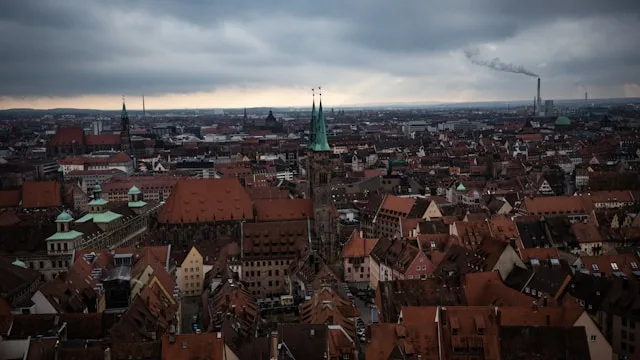
Nuremberg's advanced manufacturing cluster produced a paradox through 2025 that has only sharpened in 2026. Investment in AI-driven production systems across the region grew 18%, according to a Prognos study on Industry 4.0 regions, while the working-age population in Middle Franconia continued a decline that has now removed 2.1% of available workers since 2020. The money is moving. The people are not.
This is not a generic skills gap story. The Nuremberg metropolitan region hosts over 800 electrical engineering firms, a 220-member automation cluster, two major research universities, and anchor employers including Siemens, Schaeffler, and Diehl. The ecosystem is deep. The problem is that the ecosystem's workforce was built for a previous generation of technology, and the professionals needed to run the next generation do not exist in sufficient numbers anywhere in Germany. The Federal Employment Agency projected 4,200 unfilled engineering positions in Middle Franconia by late 2026. That projection is now the reality.
What follows is an analysis of the forces reshaping Nuremberg's industrial automation sector, the specific talent categories where the gaps are most acute, and what organisations competing in this market need to understand about compensation, candidate behaviour, and search strategy before they commit to their next critical hire.
The Two Markets Inside Nuremberg's Automation Cluster
The conventional view of Nuremberg's manufacturing economy treats it as a single sector with a single set of challenges. The reality in 2026 is a market splitting along a fault line that runs through almost every employer in the region.
On one side: traditional automation hardware. Order intake for industrial automation across Southern Germany declined 12% year-over-year in Q3 2024, according to VDMA data. Demand for conventional programmable logic controllers, standard drive systems, and legacy wiring harnesses has softened as global capital expenditure cycles cool. Leoni AG's restructuring through 2024 reduced its Nuremberg-area headcount from 8,500 to approximately 6,000, a contraction that illustrates the pressure on employers whose products sit in the traditional segment.
On the other side: software-defined, AI-enabled production systems. This is where capital is flowing. The Prognos study on Germany's Industry 4.0 regions identified an 18% increase in regional investment targeting predictive maintenance, edge-deployed machine learning, and industrial IoT connectivity. Nearshoring orders compound the demand. According to a BDI survey on reshoring trends, 34% of regional Mittelstand firms reported new orders from North American clients seeking alternatives to Asian supply chains.
The implication is that Nuremberg's automation sector is not shrinking. It is replacing one kind of work with another. The traditional roles are contracting. The advanced roles are expanding. And the workers who filled the old roles cannot simply be retrained into the new ones on any timeline that matches the pace of investment.
Where the Bifurcation Hits Hardest
The split is most visible at the Mittelstand level. A family-owned automation component supplier with 120 employees and stable revenue from conventional products now faces a choice: invest in AI-enabled product lines to capture nearshoring demand, or accept gradual margin compression. The IW Köln Mittelstands-Monitor found that 41% of manufacturing SMEs in the Nuremberg region had not implemented basic Industry 4.0 connectivity as of 2024. These firms are not technologically indifferent. They lack the people to run the transition.
The SPS Smart Production Solutions trade fair in Nuremberg drew over 50,000 visitors in November 2024. The technology is available. The buyers are present. The gap sits between the exhibition floor and the factory floor, where the engineers who can integrate these systems into live production environments are the scarcest resource in the region.
The Three Talent Categories That Define the Shortage
Not every manufacturing role in Nuremberg is hard to fill. The shortage is concentrated in three categories, each with distinct characteristics and each requiring a different approach.
Industrial AI and Machine Learning Engineers
The convergence of operational technology and information technology has produced a role that barely existed five years ago: the manufacturing AI specialist who understands both production physics and data science. The Chamber of Industry and Commerce for Middle Franconia documented a pattern where mid-sized automation suppliers maintained open positions for industrial data scientists or ML engineers for predictive maintenance for eight to 14 months without finding suitable local candidates. Their survey found 68% of regional automation firms had unfilled positions in software-defined automation roles exceeding six months.
The problem is not that AI talent does not exist in Germany. It is that AI talent in Germany overwhelmingly gravitates toward Berlin's startup ecosystem or Munich's tech giants, where compensation is higher, remote flexibility is standard, and the work does not require understanding the thermal dynamics of a ball bearing assembly. The skills required to deploy AI on industrial edge devices combine TensorFlow Lite proficiency with deep manufacturing domain knowledge. This intersection produces a very small candidate pool.
Senior Embedded Systems Architects
For professionals with 15 or more years of experience in real-time operating systems and functional safety certification, the market is almost entirely passive. The Federal Employment Agency's analysis of IT-related occupations in Bavaria estimates that 85 to 90% of qualified embedded systems architects are employed and not actively looking. Unemployment in this segment sits below 1.5%. The ratio of active to passive candidates is approximately one to eight.
What this means in practice: a typical recruitment pattern observed by regional search firms involves lateral moves between Siemens Digital Industries and Schaeffler's industrial automation divisions, with compensation premiums of 18 to 25% above standard pay scales required to induce a switch. The talent pool is not growing. It is circulating among the same set of employers, with each move raising the price for the next employer who needs to attract the same profile.
Mechatronics Technicians with Advanced PLC Expertise
At the technician level, the numbers are starkest. The Federal Employment Agency reported a vacancy-to-unemployed ratio of 3.2 to 1 for mechatronics technicians in Middle Franconia in Q2 2024. Average time-to-fill for positions requiring Siemens TIA Portal expertise and industrial network configuration reached 147 days. Regional SMEs began offering €5,000 to €8,000 signing bonuses for technicians willing to relocate to the Nuremberg area, according to a Handelsblatt report on Mittelstand workforce initiatives.
This technician shortage is the constraint that binds the other two. An AI engineer can design a predictive maintenance model, but it runs on hardware that a mechatronics technician must install, configure, and maintain. Without the technicians, the AI investment stalls at the proof-of-concept stage. The capital spent on smart factory transformation delivers no return until the shop floor has the hands to support it.
Compensation: What the Market Actually Pays
Compensation in Nuremberg's industrial automation sector follows a pattern that surprises hiring leaders accustomed to pure technology markets. Base salaries are competitive within the German industrial context but sit materially below what the same professionals could earn in Munich, Stuttgart, or across the Swiss border.
A senior automation engineer or Industry 4.0 architect with eight to 12 years of experience commands a base of €85,000 to €110,000 annually in Nuremberg, with total compensation including bonuses reaching approximately €125,000. An embedded software manager leading a team commands €95,000 to €120,000 base. Industrial cybersecurity specialists fall in the €90,000 to €115,000 range, according to Bitkom's cybersecurity salary study.
At the executive level, the picture shifts. A VP of operations or manufacturing leading a division in a Mittelstand firm with €50 to €500 million in revenue earns a base of €160,000 to €210,000, with total compensation reaching €250,000 to €280,000 inclusive of variable components, according to Kienbaum's industrial leadership analysis. A CTO or Head of Digital Transformation in industrial automation earns €180,000 to €240,000 base, with notable variance depending on company size and whether equity participation is offered.
The premium that matters most is the one attached to AI skills. Proficiency in industrial AI frameworks commands a 12 to 15% salary premium over traditional automation programming, according to Bitkom's study on AI workforce trends. This premium is growing precisely because it is the competency in shortest supply.
The Munich and Swiss Differentials
The competitive problem is not that Nuremberg pays poorly. It is that the region's nearest competitors pay substantially more for the same people. Munich offers 15 to 20% higher compensation for equivalent automation roles, according to StepStone's city comparison salary report. Stuttgart adds 8 to 12% for automotive-specific automation engineers. Switzerland's premium is the most severe: Zurich and Basel draw senior embedded architects with 30 to 40% compensation advantages and favourable tax regimes for cross-border commuters.
For a Nuremberg Mittelstand firm offering €110,000 total compensation to a senior embedded engineer, the same candidate can earn €130,000 in Munich, €122,000 in Stuttgart, or €155,000 in Zurich. The cost-of-living difference between Nuremberg and Munich partially offsets the gap. IW Köln data shows Munich's living costs run 25 to 30% higher. But the Swiss differential cannot be rationalised away by housing costs alone. It represents a genuine pull that the Nuremberg market must counter with something other than money.
This is where the argument for Nuremberg's quality of life, the depth of its industrial ecosystem, and the autonomy that Mittelstand employers offer becomes essential. A candidate choosing Nuremberg over Zurich is choosing a different kind of career, one with more direct influence, shorter reporting lines, and the chance to shape a company's technological direction rather than executing within a corporate structure. That proposition must be articulated clearly in every search. It cannot be assumed.
The Demographic Clock Behind Every Search
The numbers behind Nuremberg's talent challenge are not cyclical. They are demographic, and they are accelerating.
Twenty-eight percent of manufacturing workers in Middle Franconia are now over 55 years of age, according to the Bavarian State Office for Statistics. The working-age population in the region declined 2.1% between 2020 and 2024. Projections from the same source anticipate an 8.3% decline by 2030. These are not figures that a better job advertisement or a larger signing bonus can reverse.
The pipeline from regional institutions is real but insufficient. Friedrich-Alexander-Universität Erlangen-Nürnberg produces approximately 1,200 engineering graduates annually. OTH Nürnberg contributes another 800, with particular strength in mechatronics and automation technology. The Fraunhofer Institute for Integrated Circuits, based in Erlangen, employs 1,100 researchers specialising in industrial IoT, embedded systems, and AI hardware. This institutional base gives Nuremberg advantages that most mid-sized German cities cannot match.
But the maths does not work. Two thousand engineering graduates per year entering a market with 4,200 projected unfilled positions, an ageing incumbent workforce losing several hundred experienced practitioners annually to retirement, and competing pull from Munich, Stuttgart, Berlin, and Switzerland. The supply side can sustain current operations. It cannot fund the sector's expansion into AI-enabled production. The graduates who remain in Nuremberg fill the roles that already exist. They do not create the surplus needed for transformation.
This is the original analytical insight that the aggregate data obscures: Nuremberg's investment in industrial AI is not reducing the workforce. It is replacing one type of worker with another type that does not yet exist in sufficient numbers. Capital has moved faster than human capital can follow. The factories have the funding and the technology. They lack the people trained to connect the two. Every month this gap persists, the return on that technology investment is deferred and the competitive advantage that early adoption was supposed to deliver erodes.
Why Conventional Recruitment Fails in This Market
The standard hiring playbook reaches a small fraction of the candidates that matter in Nuremberg's automation sector. Understanding why requires looking at the candidate behaviour data.
For senior embedded systems architects, the active-to-passive ratio is one to eight. For automation engineers with functional safety certification, qualified professionals typically hold tenure of seven or more years with their current employer. The passive-to-active ratio in this segment is approximately four to one. For industrial cybersecurity specialists, qualified professionals receive three to five unsolicited recruitment approaches monthly and rarely apply to posted vacancies.
For VP-level manufacturing executives, the market is 100% passive. Executive search is the sole viable recruitment channel, with average search duration of four to six months for qualified candidates willing to relocate to Nuremberg.
A job posting on StepStone or LinkedIn reaches the 10 to 15% of the market that happens to be looking. In a talent pool this constrained, that fraction is almost by definition the weaker segment. The strongest embedded systems architects are not browsing job boards. They are deep inside multi-year development programmes at Siemens, Schaeffler, or Baumüller, solving problems they find intellectually engaging and earning enough not to feel urgent pressure to move. Moving them requires a fundamentally different approach: direct identification, confidential engagement, and a proposition built around the specific career gap that their current employer cannot fill.
The Mittelstand firms that struggle most with this reality are the ones whose HR functions are built for volume hiring of production operators, not for identifying and engaging passive senior specialists. A company with 150 employees rarely has an internal recruiter with the network or methodology to find an embedded systems architect who has been at Siemens for 12 years and would consider leaving only for the right combination of technical autonomy, equity participation, and a defined path to CTO. That search requires a different capability entirely.
The cost of getting this wrong is concrete. The financial impact of a failed executive hire in industrial manufacturing is not limited to recruitment fees and onboarding costs. In a market where every qualified candidate who accepts a competing offer removes a scarce resource from your available pool for years, a botched search does not just delay your hire. It strengthens your competitor.
What Nuremberg's Automation Employers Must Do Differently
The firms winning the talent competition in this market share three characteristics that their struggling competitors lack.
First, they have accepted that compensation alone will not close the gap with Munich or Switzerland. Instead, they compete on proposition. The Mittelstand advantage is real: flatter hierarchies, broader scope of responsibility, faster decision-making, and the chance to lead a technology transition rather than execute one piece of it inside a corporate matrix. But this advantage only works when it is communicated directly to candidates during the search process. It cannot be buried in an employer branding microsite that passive candidates will never visit.
Second, they engage with talent mapping and pipeline development before a vacancy opens. In a market where a senior embedded systems search takes four to six months, the organisations that begin building relationships with potential candidates 12 months before the need becomes urgent are the ones that fill roles when they open. The organisations that start searching when the incumbent gives notice are already four to six months behind.
Third, they use search partners who understand the specific dynamics of the Nuremberg industrial automation market. A generalist recruiter in Munich lacks the network density to identify the 15 embedded systems architects in the region who might consider a move. A specialist approach to executive search in manufacturing that combines AI-powered talent mapping with deep sector knowledge can identify and engage those candidates before they appear on any competitor's radar.
The Counter-Offer Problem
One dynamic that Nuremberg hiring leaders consistently underestimate is the counter-offer. When you approach a passive candidate who has been at Schaeffler for nine years and offer a compelling role at a Mittelstand firm, Schaeffler's response is predictable. A retention counter-offer, typically 10 to 15% above current compensation plus a promotion in title, arrives within days. According to research on why accepting a counter-offer rarely serves the candidate's long-term interest, the majority of professionals who accept a counter-offer leave within 18 months anyway. But in the moment, the counter-offer kills the search.
The defence against this is not a higher initial offer. It is a proposition so clearly differentiated that the candidate's current employer cannot replicate it. Technical leadership of a new AI-enabled product line. Equity participation in a growing Mittelstand firm. A seat at the executive table that a large corporate would not offer for another decade. These are the levers that move passive candidates past the counter-offer stage. And they must be identified and presented during the search and negotiation process itself, not left for the candidate to discover after accepting.
The Search Strategy That Reaches the Other 85%
For organisations hiring senior technical and executive talent in Nuremberg's automation sector, the question is not whether to use direct search. It is how to execute direct search in a market with these specific characteristics.
KiTalent's approach to this market combines AI-powered talent identification with sector-specific knowledge of industrial automation hiring. In a region where 85 to 90% of senior embedded systems talent is passive and VP-level searches are 100% executive-search dependent, the method matters as much as the intent. The ability to deliver interview-ready executive candidates within seven to ten days, combined with a pay-per-interview model that eliminates upfront retainer risk, addresses both the speed problem and the cost uncertainty that Mittelstand firms face when engaging traditional retained search providers.
With a 96% one-year retention rate across 1,450 or more executive placements globally, the emphasis is on candidates who will stay, not just candidates who will accept. In a market where every placement removes a scarce resource from the available pool and the cost of replacing a failed hire compounds the original shortage, retention is not a secondary metric. It is the primary one.
For organisations competing for senior industrial and manufacturing leadership talent in Nuremberg's automation sector, where the candidates you need are solving problems at your competitors and will not respond to a job posting, start a conversation with our executive search team about how we approach this market.
Frequently Asked Questions
What is the average salary for an automation engineer in Nuremberg in 2026?
A senior automation engineer or Industry 4.0 architect with eight to 12 years of experience earns a base salary of €85,000 to €110,000 annually in the Nuremberg region, with total compensation including bonuses reaching approximately €125,000. At the executive level, a VP of operations or manufacturing commands €160,000 to €210,000 base, with total compensation of €250,000 to €280,000. Proficiency in industrial AI frameworks adds a 12 to 15% premium over traditional automation programming. Munich offers 15 to 20% more for comparable roles, though cost of living is 25 to 30% higher.
Why is it so hard to hire embedded systems engineers in Nuremberg?
The embedded systems talent pool in Nuremberg is overwhelmingly passive. An estimated 85 to 90% of qualified professionals with 15 or more years of experience are employed and not actively seeking new roles. Unemployment in this segment is below 1.5%. The small pool circulates among a handful of major employers including Siemens, Schaeffler, and Baumüller, with lateral moves requiring 18 to 25% compensation premiums. Direct headhunting methods are essential because job postings reach only a fraction of the available market.
How does Nuremberg compare to Munich for manufacturing careers?
Munich offers 15 to 20% higher compensation for equivalent industrial automation roles and provides stronger ecosystems for software-defined automation startups. However, Munich's cost of living runs 25 to 30% higher than Nuremberg's. Nuremberg offers advantages that Munich cannot match for certain career profiles: deeper Mittelstand density, greater technical autonomy at mid-career levels, and the presence of the SPS trade fair ecosystem. The choice depends on whether a candidate prioritises absolute compensation or scope of responsibility.
What are the biggest risks to Nuremberg's manufacturing sector in 2026?
Three risks dominate. First, demographic decline: the working-age population in Middle Franconia is projected to fall 8.3% by 2030, with 28% of current manufacturing workers over 55. Second, energy costs: industrial electricity prices in Germany remain 2.3 times higher than US averages, pressuring margins. Third, talent competition from Munich, Stuttgart, and Switzerland, which offer higher compensation and, in Berlin's case, greater remote work flexibility. The convergence of these three factors constrains the sector's ability to capitalise on rising nearshoring demand.
How long does it take to fill a senior manufacturing role in Nuremberg?
Timelines vary sharply by role category. Mechatronics technicians with advanced PLC skills average 147 days to fill. Industrial data scientists and ML engineers for manufacturing applications remain open for eight to 14 months at mid-sized firms. VP-level manufacturing executives require four to six months through executive search, which is the only viable channel for this seniority level. KiTalent's methodology delivers interview-ready candidates within seven to ten days, compressing the early stages of the search cycle where most time is lost.
What skills are most in demand in Nuremberg's automation sector?
The highest-demand technical skills combine traditional automation expertise with digital capabilities. PLC programming with IT and OT convergence knowledge, embedded systems development in C and C++ for industrial controllers, industrial communication protocols such as OPC UA and Profinet, functional safety engineering with TÜV certification, and AI and ML deployment on edge devices using frameworks like TensorFlow Lite. The candidates who command the greatest premiums are those who bridge the gap between factory-floor operational technology and modern software engineering practices.