Pécs Heritage Tourism: Why Rising Visitor Numbers Have Not Solved the Hiring Crisis Behind Them
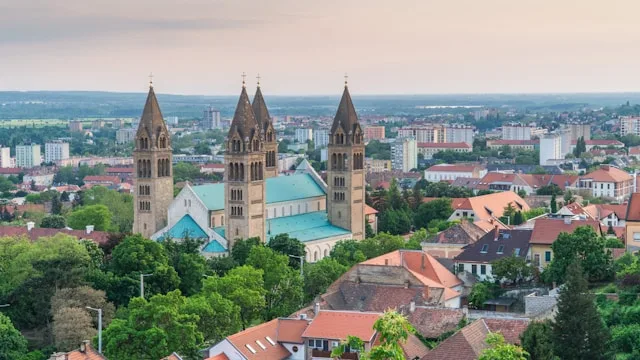
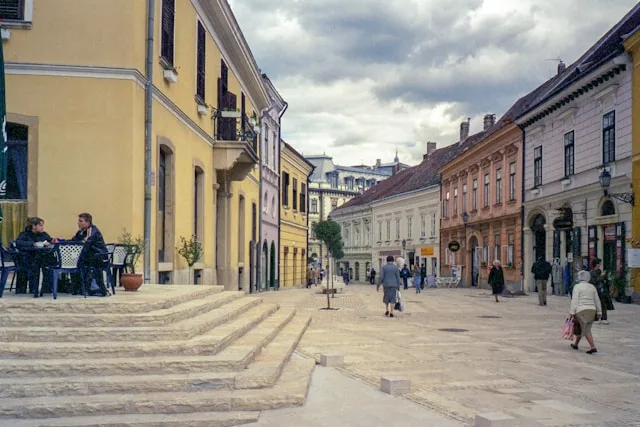
Pécs welcomed 18% more paid visitors to its UNESCO Early Christian Necropolis in 2024 than the year before. The Zsolnay Cultural Quarter anchors 147 creative enterprises. Baranya County recorded over a million guest nights for the first time since the pandemic. By every volume metric, the cultural and heritage tourism sector in Hungary's fifth-largest city is recovering. Yet an 11-month vacancy for a Revenue and Distribution Manager at one of the city's anchor hotels tells a different story. So does the Senior Archaeological Programme Coordinator who left for Budapest at a 35% premium, a role that required three rounds of re-advertisement before it was filled.
The core tension in Pécs is not a lack of demand. It is the widening distance between the visitors arriving and the specialised professionals needed to convert that footfall into sustainable hospitality revenue. The city produces 140 tourism graduates a year into a market advertising 340 entry-level positions, and still employers report that more than half of applicants lack the language skills or technical capability the roles require. This is a market where quantity masks a deep qualitative mismatch.
What follows is a ground-level analysis of the forces shaping Pécs's hospitality and cultural tourism sector, the specific roles that remain hardest to fill, and what organisations operating in this market need to understand before they make their next senior hire.
A Cultural Economy Built on Volume, Not Value
Baranya County recorded 1.02 million guest nights in 2024. That figure represents a 14% increase over 2023 but remains 8% below pre-pandemic levels. Pécs itself accounted for roughly 580,000 of those nights, with domestic tourists making up 71% of the total. The numbers are moving in the right direction. The economics underneath them are not.
Average spend per visitor fell 4.3% year-on-year in 2024, even as visitor volume rose. Average length of stay held static at 1.8 nights. The Zsolnay Cultural Quarter and the Necropolis are successfully generating footfall, but the conversion from cultural engagement to extended hospitality consumption is weak. Heritage tourism is filling museums without filling hotels for a second or third night.
This pattern matters because it shapes the economics of every hospitality SME in the city. A hotel operating at 78% occupancy in July and 34% in January cannot sustain the compensation packages or career structures required to retain senior talent. The coefficient of variation in monthly hospitality revenue reaches 0.45 in Pécs, compared to 0.28 in Budapest, according to the Hungarian Banking Association's Regional SME Credit Monitor. Seasonal credit lines averaging HUF 8 million keep businesses alive through winter. Three hospitality SMEs entered liquidation in Q1 2024 after the post-Advent slump.
The implication for hiring leaders is direct: the roles most critical to solving this value-capture problem are exactly the roles the market cannot fill.
The Villány Corridor: Day Trips, Not Bed Nights
The Pécs-Villány wine corridor is frequently cited as the anchor of a multi-night tourism proposition. Fourteen dedicated shuttle services now connect the two destinations, and three boutique wine hotels operate in Villány proper. The integration is real. The revenue capture for Pécs, however, is limited.
Why 68% of Wine Tourists Never Sleep in Pécs
Data from the Villány-Siklós Wine Route Association's 2024 visitor survey shows that 68% of wine route visitors return to Budapest or Pécs accommodation on the same day. The wine corridor generates day-trip value. Visitors use Pécs restaurants and cultural venues, but accommodation revenue leaks to Villány's own boutique properties or to Budapest, where tourists are already based.
This means the economic model that links Pécs's cultural assets to Villány's wine reputation has not matured into a multi-night stay proposition. For any hospitality operator in Pécs, the strategic challenge is building packages and experiences that extend visits from 1.8 nights to three. That requires revenue management expertise, digital marketing capability, and bilingual route coordination. All three sit among the city's hardest-to-fill roles.
The Accommodation Quality Bottleneck
Of Pécs's 23 classified hotels and their 2,100 rooms, only 34% meet four-star standards. Roughly 40% of the city's private hospitality inventory dates from the 1990s or earlier, requiring energy efficiency and bathroom renovation to maintain classification. Renovation costs average HUF 4.5 million per room. For family-owned properties, that capital intensity is often prohibitive.
Two projects now in progress will alter the upscale segment materially. The HUF 4.2 billion renovation of the historic Hotel Nádor is scheduled to reopen as a four-star superior property in early 2026. A conversion of the Zsolnay factory's former kiln hall into a 65-room design hotel is also underway. Together, these additions will increase upscale inventory by 28% and could shift the average daily rate for four-star properties from HUF 42,000 to HUF 51,000, according to CBRE Hungary's Regional Hotel Market Outlook. But new rooms require new talent to operate them, and the pipeline is not ready.
The Paradox at the Centre of Pécs's Labour Market
The University of Pécs produces approximately 140 tourism and hospitality graduates annually. The regional sector advertises over 340 entry-level positions each year. On paper, supply should be comfortable. In practice, 55% of graduate applicants lack functional German or English language proficiency, and 40% exit the sector within 18 months for retail or administrative roles.
This is the analytical core of the Pécs hiring challenge. The city does not have a pipeline problem. It has a calibration problem. The graduates it produces are not equipped with the specific skill configurations the market demands, and the graduates who are capable leave for Budapest within two years. The University of Pécs's own Graduate Career Tracking Survey confirms that Budapest draws 65% of Pécs hospitality graduates within 24 months of qualification.
The result is a market where front-line roles (reception, food and beverage service, housekeeping) show active candidate ratios of 60-70%, with continuous turnover creating a constant applicant pool. But the senior and specialised roles that determine whether a property or institution captures real value from Pécs's cultural assets sit in a 70-80% passive candidate market. Hotel general managers average 4.2 years in their current role. Museum curators and heritage conservation specialists number an estimated 45 to 50 qualified professionals in the entire region, 85% of whom are in public-sector positions with job security preferences that make them resistant to approaches.
The market looks like it has enough people. It does not have enough of the right people. And the right people are not looking.
Where Searches Stall: Named Shortages and Their Cost
The specific cases documented in Pécs during 2024 illustrate what aggregate vacancy data cannot.
The Revenue Manager Gap
According to reporting in the Délmagyarország business section in November 2024, Hotel Laterum publicly maintained an advertisement for a Revenue and Distribution Manager from February 2024, with the role remaining unfilled for 11 months. The property subsequently outsourced the function to a Budapest-based consultancy at a cost of HUF 1.8 million per month. That is HUF 21.6 million annualised for a capability that a single hire at HUF 520,000 to 680,000 monthly gross would have covered in-house. The outsourcing premium is not simply a financial cost. It represents a loss of operational control at precisely the moment the property needs dynamic pricing capability to manage the new upscale inventory entering the market.
Heritage Interpretation Talent Moving to Budapest
As reported by Magyar Narancs in December 2024, the Janus Pannonius Museum lost its Senior Archaeological Programme Coordinator to the Museum of Applied Arts in Budapest in September 2024. The candidate accepted a reported 35% salary premium, moving from HUF 680,000 to HUF 918,000 monthly gross, plus a housing allowance. The Pécs position required three re-advertisements before a candidate from the University of Szeged accepted the role. The gap between departure and replacement was approximately three months, during which the museum's public programme delivery was constrained.
This case crystallises a systemic problem. Public-sector cultural institutions in Pécs are capped at salary bands that cannot compete with Budapest equivalents. The Zsolnay Quarter Cultural Director role, for example, sits in a band of HUF 850,000 to HUF 1,100,000 gross monthly, constrained by public nonprofit salary structures. The same role in Budapest offers both higher compensation and greater career progression into national-level cultural leadership.
The Executive Chef Pattern
The Baranya County Hoteliers' Association reported that 60% of member properties with restaurant facilities failed to fill head chef positions within three months during the 2024 peak recruitment season. A pattern observed among four-star independents in Pécs involves Executive Chef roles remaining vacant for four to seven months. This is not a single employer's problem. It is a market-wide condition.
For organisations competing in this environment, conventional recruitment methods reach only a fraction of viable candidates. The professionals who could fill these roles are employed, satisfied, and not monitoring job boards.
Compensation: The 22% Gap That Compounds Every Other Problem
The wage differential between Pécs and Budapest is the gravitational force pulling talent out of the city. At senior specialist level, hospitality roles in Pécs pay HUF 520,000 to 680,000 gross monthly. Equivalent roles in Budapest pay 22% more. At executive level, a Hotel General Manager overseeing an 80-room property in Pécs earns HUF 1,200,000 to 1,500,000, with bonus potential of 0-15%. Budapest equivalents receive 20-40% bonuses, plus access to international hotel chain career tracks that Pécs's independent properties cannot offer.
The Austrian Border Effect
For senior cultural heritage professionals and hospitality executives willing to cross the border, the Austrian cities of Vienna and Graz sit 90 to 120 minutes away by car. Net salary advantages in Austria reach 2.5 to 3 times Pécs levels after adjusting for living costs. Language barriers limit this migration to approximately 15 to 20 professionals annually from the Pécs cultural sector, according to AMS Austria's Cross-Border Labour Market Analysis. But at senior levels, where English or German fluency is already a requirement for the Pécs role, the barrier is lower. The professionals most qualified for Pécs's hardest-to-fill positions are also the most mobile.
Why the Cost-of-Living Offset Falls Short
Pécs offers 25-30% lower living costs than Budapest, particularly in housing. For a junior professional, this offset has real value. For a mid-career professional with a family, the calculation is different. The 22% hospitality wage gap and the 35% cultural management wage gap outweigh the cost advantage. More critically, spousal employment opportunities in non-tourism sectors are materially narrower in Pécs, making relocation a household-level decision that pure salary arithmetic does not capture.
Remote work cannot bridge this gap in hospitality. Unlike sectors where flexible arrangements expand the candidate pool, hotel management, museum curation, and event production require physical presence. The flexibility lever available to technology or professional services firms is largely absent here. The implication is that Pécs employers must compete on role quality, progression pathways, and quality of life rather than trying to match Budapest on pure compensation.
What 2026 Changes and What It Does Not
Two developments have the potential to shift the structural constraints that have limited Pécs's tourism economy. Neither is guaranteed to succeed.
Airport Modernisation
The delayed Pécs-Pogány Airport modernisation is now scheduled for completion in Q2 2026. Extended runway capacity for 180-seat narrow-body aircraft could enable Ryanair or Wizz Air routes to London, Munich, or Milan. Comparable regional airport openings in Debrecen and Győr suggest this could increase international bed nights by 12-15% by year-end 2026, according to a Hungarian Tourism Agency connectivity impact study.
Currently, the airport handles only 12,400 international passengers annually with no year-round scheduled service to major Western European hubs. It lacks Instrument Landing System Category II equipment and operates limited hours, preventing scheduled winter flights. If the modernisation delivers as planned, Pécs gains a connectivity advantage it has never had. If it delays again or fails to attract carriers, the city remains dependent on the Budapest gateway, a three-hour drive or rail journey that limits international visitor conversion.
The Hotel Pipeline
The Hotel Nádor reopening and the Zsolnay design hotel conversion together add meaningful upscale capacity. But new four-star rooms require revenue managers, general managers, food and beverage directors, and event coordinators who do not currently exist in the local talent pool in sufficient numbers. The investment in physical infrastructure is running ahead of the investment in human capital.
This is the original synthesis this data demands: Pécs's capital investment cycle and its talent development cycle are moving at different speeds. New rooms and new runway capacity will create demand for professionals the city has not yet found a way to attract or retain. The properties opening in 2026 will enter a market where the nearest qualified revenue manager was outsourced from Budapest at a premium, the nearest heritage programme coordinator was recruited from Szeged after a three-month gap, and 60% of comparable properties cannot fill an executive chef role within three months. Physical infrastructure without human infrastructure produces a building that underperforms.
The organisations that recognise this timing gap and begin building talent pipelines before the new inventory opens will have a material advantage over those that wait until opening day to start searching.
How to Hire in a Market Where the Best Candidates Are Not Looking
The passive candidate dynamics in Pécs are stark. At hotel general manager and deputy general manager level, 70-80% of qualified professionals are employed and not actively seeking. Museum curators and heritage conservation specialists are overwhelmingly in public-sector roles, prioritising job security. Wine tourism route coordinators are retained by established Villány cellars or work as consultants.
Job advertising reaches the active 20-30%. In a market this size, that means a posted vacancy for a senior role might reach five or six genuinely qualified individuals. In Budapest, the same post might reach 30. The mathematics of passive candidate markets mean that conventional recruitment is structurally inadequate for specialised and senior roles in Pécs.
What works instead is direct identification and approach. Talent mapping across the Pécs-Budapest-Vienna corridor identifies which professionals hold the specific skill combinations these roles require. An executive search process that operates across borders, languages, and career motivations is the only method that reaches the full candidate pool.
KiTalent's approach to executive search in hospitality and cultural heritage sectors is built for exactly this kind of market: small qualified populations, high passive ratios, and cross-border candidate pools that require AI-enhanced identification rather than advertising. The pay-per-interview model means organisations in Pécs do not commit upfront retainer fees. They pay only when they meet qualified, interview-ready candidates. In a market where the cost of a failed hire compounds through outsourcing premiums and operational gaps, the alternative is not cheaper. It is invisible cost accumulating month by month.
For hospitality operators, cultural institutions, and creative enterprises competing for senior talent in Pécs's heritage tourism economy, where the candidates who matter most are employed, satisfied, and reachable only through direct approach, start a conversation with KiTalent's executive search team about how we identify and deliver the leaders this market needs.
Frequently Asked Questions
What is the current state of Pécs's heritage tourism labour market in 2026?
Pécs's hospitality and cultural tourism sector sustains approximately 8,400 direct jobs, with a vacancy rate of 8.2% in accommodation and food service compared to 5.1% nationally. Senior specialist roles including revenue managers, heritage programme coordinators, and executive chefs experience vacancy durations of four to eleven months. The market produces 140 tourism graduates annually against 340 advertised entry-level positions, but language skill gaps and rapid attrition to Budapest mean the effective supply is far smaller than the headline figure suggests.
Why is it so difficult to recruit senior hospitality managers in Pécs?
Three forces converge. First, a 22% wage gap versus Budapest and a 2.5 to 3 times net salary gap versus Vienna mean the most qualified candidates face strong financial incentives to leave. Second, the small size of the qualified local pool means 70-80% of viable candidates for general manager and deputy roles are passive and not visible on job boards. Third, remote work is not an option in hospitality operations, eliminating the flexibility lever that other sectors use to retain talent. KiTalent's direct headhunting methodology is specifically designed to identify and approach these passive professionals across borders.
What salary does a Hotel General Manager earn in Pécs?
A Hotel General Manager overseeing an 80-room or larger property in Pécs earns HUF 1,200,000 to 1,500,000 gross monthly, equivalent to approximately €3,120 to €3,900. Bonus potential ranges from 0% to 15% of base salary, notably lower than Budapest (20-40%) or the Prague and Vienna markets. The limited bonus structure and absence of international chain career progression are key factors in the difficulty of attracting senior hospitality leaders to the city.
How does Pécs's airport development affect tourism hiring?
The Pécs-Pogány Airport modernisation, scheduled for Q2 2026 completion, would enable 180-seat narrow-body aircraft and potential low-cost carrier routes to London, Munich, or Milan. If realised, international bed nights could increase 12-15% by year-end, based on comparable regional openings. However, this creates immediate additional demand for bilingual front-of-house staff, revenue management professionals, and MICE coordinators. The talent pipeline challenge is that new physical capacity will arrive before the human capital required to operate it is in place.
What role does the Villány wine corridor play in Pécs's tourism economy?
The Pécs-Villány wine corridor supports 14 shuttle services and three boutique wine hotels, but 68% of wine route visitors return to Budapest or Pécs accommodation the same day. The corridor generates day-trip spending in Pécs restaurants and cultural venues without proportionate accommodation revenue. Converting this into multi-night stays requires specialised wine tourism coordinators, revenue management capability, and package design expertise, all roles in acute shortage locally.
How can organisations in Pécs attract senior talent from Budapest or internationally?
Compensation alone will not close the gap. Pécs offers 25-30% lower living costs than Budapest, but this advantage diminishes for mid-career professionals whose partners also need employment. Successful attraction strategies emphasise role quality, autonomy, and quality of life alongside competitive packages. For roles where the qualified candidate pool numbers fewer than 50 professionals regionally, direct executive search that maps candidates across Budapest, Vienna, and broader Central European markets is the only method that reliably produces qualified shortlists.