Phuket's Yachting Boom Has a Crewing Problem No Job Board Can Solve
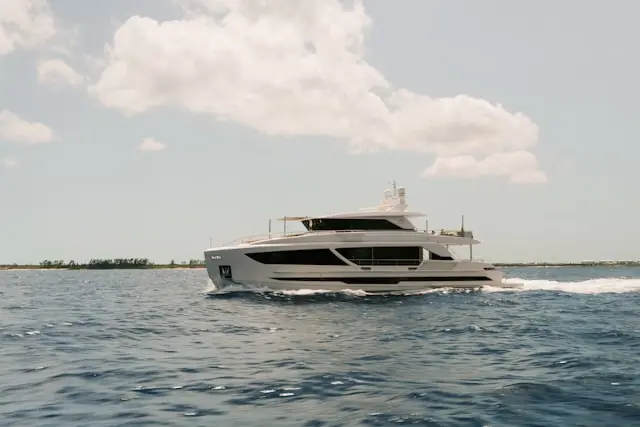
Phuket hosts 73% of Thailand's foreign-flagged charter yacht fleet and 89% of the country's superyacht berthing capacity. Marine leisure visitors spend THB 18,500 per day, more than four times the average tourist. The sector generates an estimated THB 12.4 billion in direct annual revenue across three anchor marinas, dozens of boatyards, and a web of charter and management firms packed into a 12-kilometre corridor along the island's east coast. By every infrastructure and revenue measure, this is the most concentrated yachting cluster in Southeast Asia outside Singapore.
Yet 34% of firms in the cluster reported a critical inability to fill technical positions in late 2024, even after raising salaries 25 to 40% above pre-pandemic levels. Marine engineer searches run nine months without a placement. Captain poaching commands 60% premiums above market rates. An environmental compliance role advertised across three marinas simultaneously drew zero qualified applicants from within Thailand. The investment story is strong. The talent story is breaking down.
What follows is a ground-level analysis of why Phuket's marine leisure talent market has fractured into two distinct economies: one where candidates are abundant and another where they are virtually impossible to reach. The article maps where the gaps are most severe, what is driving them, and what organisations competing in this market need to understand before they commit to their next hire.
The Two Labour Markets Inside One Marine Cluster
Phuket's marine sector employs approximately 8,500 direct full-time equivalents, supplemented by 3,200 seasonal workers during the November-to-April high season. At a headline level, the sector appears well-staffed. Deckhands, stewardesses, entry-level dive instructors, and general hospitality crew show active candidate ratios of three to one, with high turnover and strong responsiveness to job board postings.
The problems begin one tier above.
The moment a role requires international certification, hybrid technical and regulatory knowledge, or experience with vessels above 30 metres, the candidate pool contracts sharply. MCA and RYA certified yacht captains, Class 3 and above marine engineers, superyacht brokers, and the newly created environmental compliance roles all operate as passive candidate markets. In these categories, 70 to 85% of qualified professionals are employed, not looking, and unlikely to respond to an advertisement.
This is not a general labour shortage. It is a bifurcation. Phuket's marine sector has an oversupply of hospitality-adjacent labour and a deepening deficit in the technical and leadership talent that determines whether a vessel, a boatyard, or a marina can actually operate at the level the market now demands. The firms that understand this distinction are targeting passive candidates through direct headhunting. The firms that do not are advertising the same roles for nine months and wondering why nothing changes.
Where the Shortages Are Most Acute
Marine Engineers: A 3:1 Demand Gap With No Domestic Pipeline
The shortage of Class 4 or higher marine diesel and mechanical engineers is the most quantifiable bottleneck in the cluster. Demand exceeds supply by approximately three to one. Thailand's maritime academies produce only 180 graduates annually, and most are recruited by commercial shipping lines such as Maersk and Thoresen, which offer international rotation schedules and perceived career stability that the leisure marine sector cannot match.
The active-to-passive candidate ratio in this discipline is estimated at one to four. The majority of qualified Thai marine engineers are employed in commercial shipping and reluctant to transition to leisure marine. For those willing to consider it, the proposition must overcome a specific perception: that yachting is seasonal, career-limited, and less prestigious than merchant fleet service. This is not a compensation problem alone. It is a positioning problem.
Rolly Tasker Sails, which employs 120 staff in its Phuket sail loft and service division, advertised a Senior Marine Engineer (Diesel Specialist) position from March through December 2024 without a successful placement, according to industry sources and LinkedIn posting archives. The role offered THB 90,000 to 120,000 monthly, 35% above the market median. The firm eventually restructured the function entirely, outsourcing to a freelance contractor network. Average time-to-fill for marine electricians specialising in 12V-24V systems now sits at 4.5 months, according to the Phuket Chamber of Commerce.
Yacht Captains: Poaching at 60% Premiums
Phuket-based charter operators require captains holding MCA Yacht Master Ocean or equivalent certification with STCW compliance. Roughly 120 such captains are available in the local market against demand for 180 positions. The unemployment rate for certified captains across Southeast Asia sits below 3%, with average tenure of 4.5 years. Candidates typically move only for compensation increases of 25% or more, or for rotation to larger vessels.
According to industry recruitment sources, Asia Marine poached a Master (Unlimited) certified captain from a Singapore-based management firm in October 2024, offering a package of THB 280,000 monthly including retention bonus. That represented a 45% premium over the captain's previous role and 60% above the standard Phuket rate for comparable certification. This is not an isolated incident. It is the pricing signal of a market where supply cannot meet demand and the cost of a failed or protracted search compounds with every month a vessel sits without a qualified master.
Environmental Compliance: A Role That Didn't Exist Two Years Ago
The most striking shortage is in environmental compliance, a discipline the sector barely recognised before 2024. New Safety Management System requirements, the Andaman Sea Wastewater Management Directive taking effect in early 2025, and increasing anchoring restrictions in reef areas have collectively created sudden demand for professionals who combine maritime operations knowledge with environmental science credentials. This hybrid skill set is functionally absent in the local labour market.
A search conducted by the Phuket Marine Industry Group on behalf of three member marinas for an Environmental Compliance Manager failed to produce a single qualified applicant within Thailand over four months. The role required ISO 14001 Lead Auditor certification and maritime experience. Firms ultimately recruited from Singapore and Australia at salary premiums exceeding 100% of local rates, according to PMIG meeting minutes from October 2024. The implication is clear: when an entirely new compliance category emerges faster than any domestic training pipeline can respond, the only source of talent is international headhunting, and the cost of that talent reflects its scarcity precisely.
The Regulation Paradox: Compliance Rules Arriving Faster Than Compliance Infrastructure
Here is the analytical claim at the centre of Phuket's marine talent challenge, one not stated directly in any single data source but visible when the pieces are combined: the Thai government's simultaneous push to professionalise the yachting sector through regulation and to attract international investment through the Thailand Yachting Hub initiative are, in practice, working against each other. Regulation is creating demand for skills that do not exist domestically. Labour law is restricting the importation of those skills from abroad. And the infrastructure required to comply with the new rules has not been built.
Consider the specific sequence. The Department of Marine and Coastal Resources imposed 23 temporary anchoring bans in sensitive reef areas during 2024, up from 14 in 2022. The Andaman Sea Wastewater Management Directive requires tertiary treatment systems for commercial vessels over 24 metres. New SMS requirements, implemented in January 2025, affect 340 vessels based in Phuket, with compliance costs estimated at THB 450,000 to 800,000 per vessel. These are sound environmental and safety measures.
But Phuket currently has only three pump-out stations for wastewater, with combined capacity insufficient for the projected fleet. Haul-out capacity allows only 8% of the registered fleet to receive major annual works, against an industry benchmark of 15 to 20% for mature hubs. Pre-season demand already exceeds boatyard capacity by 35%, creating queuing delays of three to six weeks for major refit work.
The regulation has arrived. The infrastructure to satisfy it has not. And the people qualified to manage the gap between policy and reality, the environmental compliance officers, the SMS-certified safety managers, the regulatory liaison professionals, are the very roles the sector cannot fill.
This creates a strategic hiring challenge that goes beyond filling vacancies. Firms are being asked to comply with standards for which neither the physical plant nor the human capital yet exists in sufficient quantity. The organisations that secure compliance talent first will operate. The rest face either penalties or operational paralysis.
Compensation: What Marine Leadership Roles Actually Pay in Phuket
Compensation data across the marine cluster reveals the premium the market is paying to attract and retain scarce talent, and the widening gap between roles that can be filled locally and those that require international recruitment.
Marina and Fleet Leadership
Marina General Manager roles carry P&L responsibility for facility operations, tenant relations, regulatory compliance, and capital projects. Operations Managers reporting to the GM earn THB 80,000 to 120,000 monthly, plus performance bonuses of 20 to 30%. At the executive level, a General Manager or Director of Marina Operations commands THB 250,000 to 450,000 monthly, with housing allowances and bonuses on top. Multinational marina groups may offer USD 15,000 to 20,000 monthly for expatriate GMs with international superyacht marina experience, according to Michael Page Thailand's Maritime and Logistics Salary Survey and Spencer Stuart's Southeast Asia Hospitality Compensation Report.
Yacht Charter Fleet Managers overseeing 20 to 50 vessel operations earn THB 60,000 to 95,000 at the coordinator level. Commercial Directors and General Managers of charter divisions reach THB 180,000 to 320,000 monthly, plus commission on charter revenue, typically 1 to 2% of gross.
Technical and Compliance Directors
Marine Technical Directors, responsible for refit project oversight, safety compliance, and contractor management, command THB 200,000 to 350,000 monthly. International candidates with Mediterranean or Caribbean superyacht yard experience command premiums of 40 to 60% above Thai nationals. Environmental and Regulatory Compliance Directors, a role that barely existed before 2024, now sit at THB 150,000 to 280,000 monthly, with significant variance depending on whether the candidate holds international certifications such as NEBOSH or ISO Lead Auditor credentials.
These numbers carry a message for hiring leaders evaluating their market benchmarking position. The premium for international certification and cross-domain expertise is not a negotiating tactic. It reflects the structural reality that these candidates have options in Singapore, Dubai, and the Mediterranean that Phuket must compete against directly.
The Four Competitors Pulling Talent Away From Phuket
Phuket does not compete for senior marine talent in isolation. It competes against Singapore, Langkawi, Dubai, and an emerging Indonesian market, each of which offers a distinct proposition to the exact professionals Phuket needs most.
Singapore offers 30 to 50% salary premiums for marine engineers and compliance officers, tax incentives under the Maritime Sector Incentive, an English-language legal environment, and superior international schooling for expatriate families. Several Phuket-based firms have already relocated headquarters to Singapore while maintaining Thai operations, according to the Economic Development Board of Singapore. For senior technical talent weighing career moves, Singapore represents the default alternative.
Langkawi competes directly for the 24 to 40 metre charter fleet segment. It offers zero income tax under Malaysian Yachting Association incentives and a cost of living 30 to 40% below Phuket. Several Phuket-based vessels have relocated registration to Langkawi to reduce operational costs. For captains and crew, the financial arithmetic is straightforward.
Dubai offers tax-free income, year-round operation with no monsoon disruption, superior air connectivity, and 40 to 60% higher compensation for equivalent captain roles, according to GulfTalent's Marine Sector Salary Survey. For the ultra-high-net-worth clientele and the senior crew who serve them, Dubai's proposition is difficult to match.
Indonesia's emerging Bali and Ambon clusters present a longer-term threat. Lower labour costs, unspoiled dive sites, and improving regulatory frameworks attract young talent seeking frontier experience. The infrastructure limitations that currently constrain Indonesia will not last indefinitely.
Each competitor draws a different segment of talent. Together, they create a multi-front competition that means any search for senior marine professionals in this region must account for offers the candidate is likely receiving simultaneously from at least two other geographies.
What the Thailand Yachting Hub Initiative Changes, and What It Does Not
The Thai Cabinet's approval-in-principle of the Thailand Yachting Hub initiative in December 2024 proposes tax incentives for yacht management companies and streamlined visa categories for marine professionals, including the proposed Non-Immigrant Visa Category M for marine workers. On paper, this addresses two of Phuket's most binding constraints: the difficulty of attracting international yacht management companies and the 60 to 90 day processing times for foreign marine specialist work permits.
The initiative signals that the government recognises the sector's strategic value. Charter demand is projected to grow 8 to 12% in 2026, driven by European market recovery and new direct flight connections from Frankfurt and Paris. Asset World Corp's Royal Phuket Marina contributed THB 890 million to AWC's 2024 revenue, up 14% year-on-year. Boat Lagoon Yachting has announced THB 180 million in new investment to capture superyacht maintenance demand currently flowing to Singapore and Penang.
But the implementation regulations remain pending. And the policy contains an internal contradiction the data makes visible. While the Yachting Hub initiative explicitly aims to attract international marine professionals, concurrent enforcement actions by the Department of Employment have tightened work permit scrutiny for foreign captains and engineers. Rejection rates increased 15% year-on-year. Thai labour law still requires 4:1 Thai-to-foreign worker ratios for most marine businesses.
Investment promotion is saying "come." Labour enforcement is saying "prove you cannot find a Thai national first." For employers attempting to plan 2026 staffing, this incoherence creates a specific risk: the inability to secure international executive talent quickly enough to match the regulatory compliance timelines the same government has imposed. Available berth capacity is projected to reach 95% utilisation by late 2026. The firms that cannot staff their compliance, technical, and management functions in time will not only miss the growth window. They may be forced to relocate vessels to Langkawi or Singapore.
Why Traditional Recruitment Methods Fail in This Market
The structural characteristics of Phuket's senior marine talent market make conventional hiring methods particularly ineffective, for reasons that go beyond the usual difficulties of a tight labour market.
First, the candidate pool is global but scattered. A qualified superyacht captain may hold a British MCA ticket, live in Antibes, spend six months annually in the Caribbean, and winter in Southeast Asia. A marine engineer with Class 3 certification may work for a Danish shipping line on rotation schedules that take them through three continents. These professionals do not appear on Thai job boards. Many do not appear on any job board. The average Phuket-based superyacht broker has been in their current role for 6.8 years. These are not people who browse LinkedIn for their next opportunity.
Second, the seasonal revenue model discourages the kind of sustained, proactive talent pipeline building that these shortages require. When charter fleet utilisation drops from 92% in January to 31% in June, and revenue volatility swings 40% annually, many operators default to reactive hiring: wait until October, scramble for crew, accept whoever is available, repeat next year. This approach guarantees that the best candidates, the ones who are employed, passive, and selective, are never reached.
Third, the regulatory complexity around foreign worker permits means that even when a suitable international candidate is identified, the 60 to 90 day processing timeline can lose the hire entirely. A candidate weighing a Phuket offer against a Singapore or Dubai opportunity that can onboard in two weeks will choose speed. The firms that understand this build talent pipelines ahead of need rather than reacting to vacancies as they appear.
For marine leisure operators, charter fleet managers, and marina leadership teams competing in Phuket's increasingly constrained talent environment, where the candidates who matter most are passive, internationally dispersed, and being courted by four competing geographies simultaneously, the method that works is direct, confidential, AI-enhanced headhunting that maps the global candidate pool before a vacancy becomes urgent. KiTalent delivers interview-ready executive candidates within 7 to 10 days through precisely this approach, with a 96% one-year retention rate and a pay-per-interview model that eliminates upfront retainer risk.
For organisations that need to secure marine leadership, technical directors, or compliance executives in this market before the 2026 growth window closes, start a conversation with our executive search team about how we approach these searches differently.
Frequently Asked Questions
What marine sector roles are hardest to fill in Phuket in 2026?
The most acute shortages are in marine engineers holding Class 4 or higher certification, MCA/RYA certified yacht captains for vessels over 30 metres, environmental compliance officers with ISO 14001 and maritime experience, and marine electricians specialising in 12V-24V yacht systems. These roles operate as passive candidate markets where 70 to 85% of qualified professionals are employed and not actively seeking new positions. Average time-to-fill for technical marine roles exceeds four months, with some searches running nine months or longer without a placement.
What does a Marina General Manager earn in Phuket?
A Marina General Manager or Director of Marina Operations in Phuket earns THB 250,000 to 450,000 monthly, plus housing allowance and performance bonus. Expatriate GMs with international superyacht marina experience at multinational operators can command USD 15,000 to 20,000 monthly. Operations Managers at the tier below earn THB 80,000 to 120,000 monthly. Compensation data from Michael Page Thailand and Spencer Stuart confirm that salary benchmarking for these roles must account for competing offers from Singapore, Dubai, and Mediterranean marinas.
How does Phuket compete with Singapore and Dubai for marine talent?
Singapore offers 30 to 50% salary premiums, tax incentives, and a more stable regulatory environment. Dubai offers tax-free income and 40 to 60% higher captain compensation with year-round operations. Phuket competes on lifestyle, lower cost of living relative to both cities, and the concentration of its charter fleet. However, the proposed Thailand Yachting Hub initiative, including tax incentives and a streamlined Marine visa category, is designed to narrow this gap if implementation proceeds as planned.
What new regulations affect Phuket's marine sector in 2025 and 2026?
Three regulatory changes are reshaping the sector. The Marine Department's Safety Management System requirements for commercial vessels over 24 metres took effect in January 2025, affecting 340 Phuket-based vessels. The Andaman Sea Wastewater Management Directive requires tertiary treatment systems for commercial vessels over 24 metres. And the Department of National Parks has reduced daily dive boat permits to the Similan and Surin Islands by 15%. Compliance costs for SMS certification alone run THB 450,000 to 800,000 per vessel.
Why do traditional recruitment methods fail for senior marine roles in Phuket?
Three factors make conventional hiring ineffective. The candidate pool is globally dispersed, with qualified captains and engineers working across multiple geographies on rotation schedules. The seasonal revenue model discourages proactive talent pipeline building, pushing firms into reactive hiring cycles. And work permit processing times of 60 to 90 days for foreign specialists mean candidates accept faster offers from Singapore or Dubai. KiTalent's direct headhunting methodology addresses all three barriers through AI-powered global talent mapping and candidate delivery within 7 to 10 days.
How many people work in Phuket's marine leisure sector?
Phuket's marine leisure sector employs approximately 8,500 direct full-time equivalents, with an additional 3,200 seasonal contract workers during the November-to-April high season. Of the permanent workforce, roughly 6,800 are Thai nationals working in hospitality, basic maintenance, and administration. Approximately 1,700 are expatriate work permit holders in specialised roles including captaincies, marine engineering, yacht management, and dive instruction. Work permit approvals for marine sector roles grew 18% year-on-year through 2024 despite stricter verification protocols.