Prijedor's Wood Sector in 2026: 18% Unemployment and No One to Hire
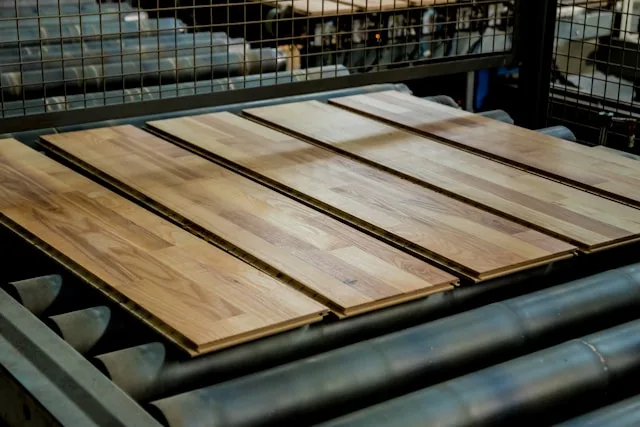
Prijedor sits in the middle of 83,000 hectares of forest. Timber covers 62% of the municipality's territory. The Kozara complex alone provides one of Bosnia and Herzegovina's most concentrated reserves of both coniferous and deciduous wood. On paper, this is a town that should be building a thriving wood processing industry on a near-inexhaustible resource base.
The reality tells a different story. Prijedor's registered unemployment rate stood at 18.4% as of Q3 2024. Yet the same quarter recorded 87 open vacancies in wood processing, with technical roles averaging 78 days to fill. CNC operator positions routinely stayed open for 90 to 120 days. FSC-certified forestry engineers required six to nine months to recruit. A municipality with nearly one in five working-age adults without a job cannot staff a sector that forms 8.3% of its industrial employment. The mismatch is not subtle. It is the defining constraint of Prijedor's industrial future.
What follows is an analysis of why this paradox exists, what it means for the 47 wood processing entities operating in the municipality, and what the structural shifts arriving in 2026 demand from the leaders running these businesses. The EU Deforestation Regulation, accelerating consolidation, and a compensation gap that pulls every skilled worker toward Banja Luka or Croatia are converging on a sector that has not yet modernised enough to survive what comes next.
A Sector Built on Abundance, Trapped by Structure
Prijedor's wood processing sector generated KM 48.2 million (€24.6 million) in turnover in 2023. Through Q1 to Q3 2024, that figure tracked 4% year-on-year growth. The numbers suggest a modest but functional industry. Look beneath the aggregate, however, and the picture fractures.
Of the 47 active entities registered under NACE Section 16 in the municipality, 76% employ fewer than 10 workers. The sector is dominated by small sawmills producing construction timber, pallet blanks, and firewood. Only five entities are registered as furniture manufacturers. Of those five, only Stolarija Prijedor (52 employees) and Wood Style Kozara (28 employees) maintain continuous export activity, shipping to Croatia, Austria, and Slovenia. The rest of the sector produces low-margin primary products for domestic consumption or regional logistics markets.
This composition matters because it determines what kind of talent the sector needs and what kind it can attract. A micro-sawmill with eight employees does not hire a Quality Control Manager with EUDR compliance expertise. It does not invest in CNC machining centres. It does not recruit an Export Sales Manager who speaks German. The firms that need those capabilities are the five to seven largest entities in the municipality. They are competing for a talent pool that barely exists locally, while surrounded by hundreds of workers whose skills do not match the roles that matter.
The Value-Added Gap
The analytical heart of Prijedor's problem is not that it lacks a wood sector. It is that its wood sector creates less value per worker than it should, given the raw material at its doorstep.
Value-added per employee in Prijedor's wood processing stood at KM 38,600 annually as of the most recent measurement. The Republika Srpska manufacturing average is KM 44,200. Comparable wood processing regions in Slovenia produce roughly double Prijedor's per-worker output. The gap exists because the machinery is old, the products are basic, and the workforce lacks the digital and certification skills that separate a sawmill from a precision component manufacturer.
The average age of wood processing machinery in the Prijedor region is 22 years. Comparable Croatian firms in the Slavonia region operate equipment averaging 8 years old. That 14-year gap translates directly into a 15 to 20% productivity disadvantage, according to the RS Development Bank's productivity analysis. Only 8% of surveyed firms in Prijedor invested in new machinery during 2023 to 2024. No greenfield foreign direct investment in wood processing was recorded in the municipality during 2024.
Resource proximity has not generated downstream competitiveness. It has generated a sector that processes abundant raw material into low-value output using aging equipment, operated by workers who lack the skills to do anything more complex. The resource is not the constraint. The human and physical capital surrounding it is.
The Unemployment Paradox and What It Actually Means
Prijedor's 18.4% unemployment rate would normally suggest an employer's market. When nearly a fifth of the working population is registered as unemployed, filling vacancies should be straightforward. In Prijedor's wood sector, it is anything but.
The 87 vacancies recorded in Q3 2024 split into two entirely different hiring problems. Unskilled roles filled in an average of 34 days. Technical roles averaged 78 days. CNC machine operators took 90 to 120 days. The hidden majority of qualified candidates in specialist roles are not actively seeking new positions, and in a market like Prijedor, even active candidates often lack the specific skills employers need.
The gap between aggregate unemployment and specific vacancy duration is not a recruitment failure. It is a structural mismatch. The unemployed population includes workers from shuttered manufacturing plants, service sector employees, and agricultural labourers. It does not include CNC programmers fluent in WoodWOP or AlphaCAM software. It does not include forestry engineers holding FSC chain-of-custody certification. It does not include export managers who can negotiate in German with Austrian procurement teams.
Where the Skills Simply Do Not Exist in Sufficient Numbers
Only 12% of Prijedor's existing wood processing workforce holds vocational certifications recognised under the German DHZ system, which is the threshold for accessing premium EU supply chains. The High Technical School Prijedor graduates 15 to 20 woodworking technicians annually. Against projected demand of 120 to 150 new technical positions in 2026, the pipeline produces roughly one-eighth of what the market requires.
Fewer than 15 FSC-certified forestry engineers operate in the entire Prijedor to Banja Luka corridor. This is not a hiring problem that better job advertising can solve. It is a knowledge problem. You cannot recruit experience that does not yet exist in sufficient quantity, and the training infrastructure to create it produces graduates at a pace that will not close the gap within this decade.
The 60% of firms that reported failed CNC recruitment campaigns in 2024 were not offering inadequate compensation. Many offered KM 1,800 to 2,200 monthly net, which is 40% above the municipal average wage. They failed because the candidates they needed were either employed in Banja Luka, working in Croatia, or had never been trained in the first place. The problem sits upstream of the job posting. It sits in the education system, in the migration pattern, and in the sector's inability to compete with geographies that offer two to three times the salary for the same skill.
The EUDR Arrives and the Sector Splits in Two
The EU Deforestation Regulation represents the single most consequential external force acting on Prijedor's wood sector in 2026. Large companies faced compliance deadlines from December 30, 2024. SMEs face theirs from June 2025. The regulation requires geolocation traceability for all timber entering the EU market, with due diligence systems that verify the wood was not harvested from deforested land.
The compliance cost estimate for Prijedor's wood processors ranges from €15,000 to €50,000 per entity for GPS mapping and due diligence systems, according to FIPA BiH's impact assessment. For a micro-sawmill employing six people and processing pallet blanks on 30-year-old equipment, this cost is prohibitive.
The RS Chamber of Commerce anticipates the closure of 10 to 15 micro-sawmills that cannot finance EUDR compliance. The firms that survive will be those with the capital to invest in traceability systems and the personnel to manage them. This creates a new executive hiring requirement that did not exist two years ago: Quality Control Managers with EUDR and FSC compliance expertise, commanding KM 2,800 to 3,600 per month gross. These professionals are among the scarcest profiles in the Prijedor to Banja Luka corridor.
Consolidation Creates Opportunity for the Few
The EUDR-driven consolidation is not uniformly negative. For the five to seven largest entities capable of absorbing compliance costs, it removes lower-cost competitors from export markets. It creates acquisition opportunities as micro-sawmills close or seek buyers. And it concentrates the municipality's already limited skilled workforce into fewer, more capable firms.
The RS Chamber of Commerce projects 3 to 5% nominal growth for Prijedor's wood sector in 2026, driven primarily by biomass energy demand and pallet manufacturing for Central European logistics markets. The growth will not be evenly distributed. It will accrue to firms that have invested in CNC machining centres, secured EUDR compliance, and hired the technical and commercial talent to serve Austrian and German component markets. Value-added furniture production, by contrast, is expected to stagnate precisely because the compliance burden falls heaviest on the finished-goods exporters who were already the sector's most sophisticated operators.
This is the dynamic that makes Prijedor's hiring challenge unusual. The firms best positioned to grow are the same firms that need talent the market cannot supply. The traditional recruitment approach of posting a vacancy and waiting for applications reaches the 30% of qualified workers who are actively looking. The other 70% of CNC programmers and the 85% of senior forestry engineers are employed elsewhere and require direct identification and outreach.
The Compensation Ceiling and the Geography of Talent Drain
Prijedor's wood sector employers face a compensation structure that works against them at every level of seniority.
A Production Manager in Prijedor's wood processing earns KM 2,400 to 3,200 per month gross. A Plant Director or General Manager at a mid-size firm with 50-plus employees earns KM 4,500 to 6,500 gross, with top performers reaching KM 8,000 with profit sharing. A Commercial Director focused on export furniture can earn KM 5,000 to 7,000 base plus 10 to 15% commission on new EU accounts.
These figures are competitive within Prijedor's local economy. They are not competitive against the three geographies pulling talent away from the municipality.
Banja Luka, 50 kilometres south, offers 15 to 25% higher compensation for equivalent CNC and managerial roles. It also provides superior infrastructure, better schools, and a deeper professional community. For a CNC operator earning KM 2,000 in Prijedor, a move to Banja Luka for KM 2,400 is straightforward, particularly when the family benefits of a regional capital are factored in.
Croatia's wood processing regions present a more severe drain. Slavonski Brod and Osijek, 120 to 150 kilometres north, attract senior forestry engineers and furniture designers with net salaries 2.5 to 3 times higher than Prijedor equivalents. A forestry engineer earning €800 to €1,000 monthly in Prijedor can earn €1,800 to €2,500 in Croatia, with EU mobility and social benefits attached.
Slovenia represents the ceiling. Ljubljana and Maribor offer €3,000 to €4,500 monthly for senior roles in CNC programming and export management. These positions come with EU working rights, streamlined mobility, and a quality of life that Prijedor cannot match regardless of salary adjustments.
What Prijedor Can and Cannot Compete On
Prijedor offers one genuine advantage: housing costs run 30% below Banja Luka's. For a senior professional with family ties to the region, this matters. But the municipality lacks international schooling, specialised healthcare, and the urban amenities that retain executives with families. The gap is not purely financial. It is structural.
The implication for hiring leaders is stark. A search for a senior CNC programmer or an Export Sales Manager with German language skills in Prijedor is not a local search. It is a regional search that must reach employed candidates in Banja Luka, Croatia, and potentially Slovenia, and persuade them that Prijedor offers something their current position does not. When organisations hiring for niche roles face thin local candidate pools, compensation alone rarely closes the gap. The role, the autonomy, and the growth trajectory must form part of the proposition. In Prijedor, where the largest wood processing employer has 52 people, the growth proposition requires careful construction.
Raw Material Constraints Compound the Talent Problem
Even if Prijedor's wood processors could staff every role tomorrow, a hard ceiling limits their output. The 2024 Annual Allowable Cut for the Prijedor Forest Management Unit was set at 143,000 cubic metres combined (98,000 coniferous, 45,000 deciduous). This represents a 12% reduction from 2023 levels, driven by sustainable yield calculations under the Ministry of Agriculture's 2022 to 2031 Forest Management Plan.
The quota was fully allocated to licensed harvesters by Q2 2024. Capacity utilisation across Prijedor's 22 sawmills averages only 65%, not because demand is insufficient but because raw material supply is rationed. The state enterprise Šumsko gazdinstvo "Kozara," with 340 employees, controls forest management and harvesting operations. It is Prijedor's largest wood-related employer by headcount, yet it is not a manufacturer. It is the gatekeeper.
This creates a double constraint for hiring. A firm investing in CNC technology and EUDR compliance to serve higher-value markets cannot guarantee the raw material throughput to justify the investment. A Production Manager hired to increase output hits the quota wall. An Export Sales Manager who secures new Austrian accounts faces the question of whether the sawmill can fulfil the orders.
The interaction between talent scarcity and raw material scarcity is the force multiplier that makes Prijedor's sector uniquely difficult to scale. Capital investment without talent fails. Talent investment without raw material fails. Both require long-term planning in a sector dominated by micro-enterprises that plan quarter to quarter.
What This Market Requires From Hiring Leaders
The standard approach to recruitment in Prijedor's wood sector follows a familiar pattern. A firm posts a vacancy on Posao.ba or MojPosao.ba, waits for applications, interviews whoever applies, and either hires a compromise candidate or leaves the role open. For unskilled positions, this works adequately. For the roles that determine whether a firm can export, comply with EUDR, or operate CNC equipment, it does not.
The data makes the failure visible. Wood Style Kozara publicly advertised an Export Sales Manager role with German language skills from March to September 2024. The search ran 180 days before the firm filled it by recruiting from a competitor in Banja Luka at a 25% salary premium above standard market rates. Six months of an unfilled commercial role in a firm with 28 employees represents a material portion of the year's potential revenue growth, lost.
This is not an isolated case. It is the pattern. In a market where 70% of qualified CNC programmers are employed and not seeking new roles, and 85% of FSC-certified forestry engineers are passive, the methodology that reaches the candidate you need is direct identification and outreach, not advertising.
The Informal Sector Complicates Everything
An estimated 30% of wood processing in Prijedor occurs in unregistered workshops. These operations compete on price by avoiding tax obligations, safety standards, and certification costs. They also employ skilled workers informally, removing them from the visible talent pool entirely.
For a registered firm conducting a legitimate search for a CNC operator, the informal sector creates a double disadvantage. It compresses margins (making it harder to offer competitive salaries) and absorbs talent into a parallel market that formal recruitment channels cannot access. Understanding where candidates actually are, rather than where job boards suggest they should be, becomes essential in a market where the formal and informal sectors overlap this extensively.
The firms that will emerge from Prijedor's consolidation as viable, export-capable operations need leaders who can manage EUDR compliance, operate modern equipment, and develop EU customer relationships. These leaders exist in the broader Balkans region. They are employed in Banja Luka, in Croatian wood processing firms, or in Slovenian furniture manufacturers. Reaching them requires a different kind of search.
The Synthesis: Capital Moved, Human Capital Did Not Follow
The original analytical claim that emerges from Prijedor's data is this: the small amount of capital that has entered the sector, whether in CNC equipment, pellet production, or EUDR compliance systems, has not reduced the workforce requirement. It has replaced one kind of worker with another that does not yet exist locally in sufficient numbers.
A sawmill that buys a HOMAG machining centre does not need fewer employees. It needs different employees. It needs a CNC programmer instead of a manual operator. A firm that achieves EUDR compliance does not eliminate positions. It creates a Quality Control Manager role that pays twice the municipal average and requires certification that 88% of the local workforce does not hold. A pellet producer processing sawmill residues employs technicians whose skills overlap more with energy plant operation than traditional woodworking.
Investment has arrived faster than the human capital pipeline can supply the people to operate it. The High Technical School produces 15 to 20 graduates per year. The sector projects 120 to 150 new technical positions in 2026. The arithmetic does not work, and no amount of job advertising changes it.
For the organisations navigating executive hiring in industrial and manufacturing sectors, Prijedor represents an extreme case of a common pattern. The investment thesis is sound. The resource base is strong. The market opportunity, particularly in biomass and precision components for Central European supply chains, is real. But the talent to execute on that opportunity is the binding constraint. Finding passive candidates who are not on any job board but hold the exact skills required is the difference between a growth plan that executes and one that stalls.
KiTalent's approach to markets like Prijedor centres on AI-enhanced talent mapping that identifies the specific professionals who hold scarce certifications and operate in adjacent geographies. In a municipality where the entire qualified talent pool for senior roles numbers in the low dozens, the search must extend to Banja Luka, Zagreb, Ljubljana, and beyond. The model delivers interview-ready candidates within 7 to 10 days, with a 96% one-year retention rate and a pay-per-interview structure that removes the retainer risk from firms operating on SME margins.
For hiring leaders in Prijedor's wood processing sector, or investors evaluating the consolidation opportunity, the question is not whether the talent exists. It does, employed 50 to 500 kilometres away. The question is whether your search method can reach them before a Croatian or Slovenian competitor does. If your current approach has produced a 90-day vacancy for a CNC operator or a six-month search for an export manager, start a conversation with our industrial sector search team about what a different approach looks like.
Frequently Asked Questions
What is the average salary for wood processing managers in Prijedor?
Production Managers in Prijedor's wood processing sector earn KM 2,400 to 3,200 per month gross (€1,225 to €1,635), representing a 20 to 30% premium over general manufacturing managers in the municipality. Plant Directors at mid-size firms with 50-plus employees earn KM 4,500 to 6,500 gross, with top performers reaching KM 8,000 through profit sharing. Quality Control Managers specialising in EUDR and FSC compliance command KM 2,800 to 3,600 gross due to acute scarcity. These figures remain 15 to 25% below equivalent roles in Banja Luka and 60 to 70% below Croatian comparators, which drives ongoing talent drain toward higher-paying regional markets.
Why is it so difficult to hire CNC operators in Prijedor?
CNC operator vacancies in Prijedor's wood sector remain open 90 to 120 days on average, despite salaries 40% above the municipal average wage. The difficulty stems from three factors: an annual training pipeline of only 15 to 20 woodworking technicians from the High Technical School Prijedor, competition from Banja Luka firms offering 15 to 25% higher pay for identical skills, and the fact that 70% of qualified CNC programmers in the broader region are employed and not actively seeking roles. Standard job advertising reaches only the 30% who are looking, leaving the majority invisible to conventional recruitment.
How will the EU Deforestation Regulation affect Prijedor's wood sector?
The EUDR requires geolocation traceability for all timber entering the EU, with SME compliance deadlines from June 2025. Compliance costs range from €15,000 to €50,000 per entity for GPS mapping and due diligence systems. For Prijedor's dominant micro-sawmills employing fewer than 10 workers, this cost is often prohibitive. The RS Chamber of Commerce anticipates 10 to 15 micro-sawmill closures. Surviving firms will need EUDR-specialist personnel, a profile so scarce that fewer than 15 qualified professionals operate in the entire Prijedor to Banja Luka corridor.
What role does Šumsko gazdinstvo "Kozara" play in Prijedor's wood sector?
Šumsko gazdinstvo "Kozara" is the state forest management enterprise controlling raw material allocation through harvesting operations across Prijedor's 83,000 hectares of forest. With 340 employees, it is the municipality's largest wood-related employer by headcount. However, it is not a manufacturer. It manages the 2024 Annual Allowable Cut of 143,000 cubic metres, which was fully allocated by Q2 2024. Its role as gatekeeper to raw material supply makes it an indirect but decisive influence on every manufacturing firm's output capacity and hiring plans.
How can executive search help wood processing firms in Prijedor hire scarce specialists?
In a market where 85% of FSC-certified forestry engineers and 70% of CNC programmers are passive candidates employed in adjacent regions, direct headhunting outperforms conventional job advertising for every technical and senior role. KiTalent's AI-enhanced talent mapping identifies specific professionals holding scarce certifications across the Banja Luka, Zagreb, and Ljubljana corridors. The pay-per-interview model means firms only invest when they meet qualified candidates, removing retainer risk for SMEs operating on constrained margins. With interview-ready candidates delivered within 7 to 10 days, this approach compresses the 90 to 180 day vacancy periods that Prijedor's wood processors currently experience.
What is the biggest risk facing Prijedor's wood processing sector in 2026?
The convergence of three pressures defines the risk: EUDR compliance costs that will force micro-enterprise closures, a training pipeline producing one-eighth of the technical workers the sector projects it needs, and a compensation gap against Croatian and Slovenian competitors that widens at exactly the seniority levels where the most critical roles sit. The sector is not short of wood or demand. It is short of the people and capital required to convert a resource advantage into a sustainable talent pipeline capable of serving higher-value EU markets.