Randers Food Processing in 2026: DKK 400 Million in Green Investment, 50 Graduates Short of Running It
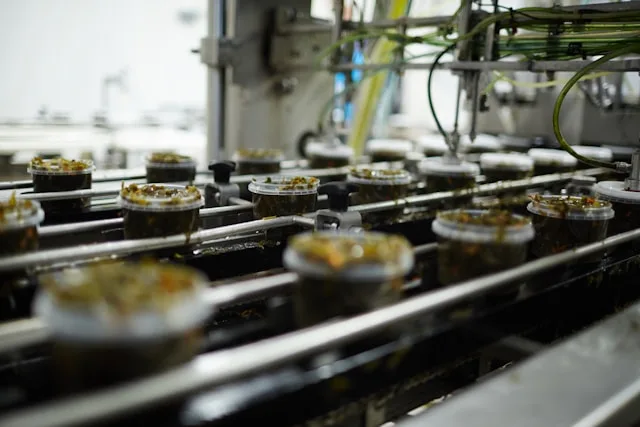
Denmark's meat processing sector did not contract between 2023 and 2025. It concentrated. While national media ran headlines about Danish Crown closing facilities in Vejen and Ringsted, the company's Randers operations absorbed capacity, retained headquarters functions, and added automation infrastructure. The result is a city that now anchors one of Northern Europe's densest food processing clusters, with roughly 1,400 Danish Crown employees, an Arla Foods packaging operation, and a constellation of cold-chain logistics providers feeding export corridors to the UK and Asia.
The problem is not physical infrastructure. Randers has the slaughterhouse, the cold stores, the biogas plants, and the E45 motorway access. The problem is that the people required to operate this infrastructure at full capacity do not exist in sufficient numbers. The Randers Slaughterhouse runs at 92% of licensed capacity not because demand is soft but because certified slaughtermen cannot be found. The two biogas upgrading plants that came online in late 2024 support carbon-neutral claims for exported meat, yet the sustainability directors who manage those claims are being recruited away at 40% salary premiums. Automation lines from Marel sit in facilities where the technicians qualified to maintain them are being courted by automotive employers in Sønderborg.
What follows is an analysis of the forces reshaping Randers' food and agribusiness sector, the specific hiring constraints that physical investment cannot solve, and what senior leaders need to understand before committing to growth plans that assume the workforce will simply appear.
A Monopoly-Anchored Cluster With a Single Point of Failure
The language around Randers typically describes a "cluster" of food processors, cold-chain operators, and agricultural suppliers working in productive interdependence. The reality in 2026 is more concentrated than that framing suggests. Danish Crown's global headquarters, its primary beef processing facility, and its R&D centre collectively employ roughly 1,400 people in the municipality. Arla Foods adds another 180 to 220 seasonal personnel. Beyond these two anchors, the food processing employment base in Randers is thinner than it appears.
The 3PL Dependency
The cold-chain SMEs that might once have constituted an independent logistics cluster now function primarily as subcontracted arms of larger national operators. Danske Fragtmænd runs a cold-chain distribution centre with approximately 60 drivers and warehouse staff. DHL Supply Chain Denmark maintains a presence. But these operations serve the processors rather than operating as autonomous businesses with independent talent requirements. When Danish Crown adjusts throughput or shifts logistics routing, the subcontractors adjust with it.
Feed Supply Has Migrated South
Similarly, the feed compounding activity that once supported a broader agricultural supply chain in Randers has centralised toward larger hubs in Aarhus and Skanderborg. DLG maintains blending operations in the region, but Randers now functions more as a distribution node for compound feed than as a manufacturing centre. The practical effect is that the cluster's economic resilience depends heavily on two employers and one transport corridor.
This is not necessarily a weakness in normal conditions. But it creates a specific vulnerability: any failure to recruit or retain senior leadership at Danish Crown or Arla has outsized consequences for the entire local economy. A Plant Director vacancy at the Randers Slaughterhouse is not just a hiring problem for one company. It is a capacity constraint for the cluster.
The Green Transition Paradox: Infrastructure Built, Operators Missing
Business Region Aarhus reports investment levels exceeding DKK 400 million in biogas and precision fermentation infrastructure serving Randers-area processors. Two biogas upgrading plants became operational in late 2024, processing food waste and agricultural residue from the processing facilities. These investments support the carbon-neutral export certifications that command premiums in the UK and Asian markets where Randers beef competes.
The investment thesis assumed the workforce would follow the capital. It has not.
The educational pipeline for food technology in Central Denmark produces 85 to 90 graduates annually. Sector demand across the region runs at 140 or more specialised technicians per year. That deficit of roughly 50 graduates does not sound catastrophic until you recognise that it compounds annually. Each year's shortfall is not resolved the following year. It accumulates into a deeper and deeper structural gap between physical processing capacity and human capital capacity to operate it.
This is the original analytical claim that the investment data alone does not reveal: capital moved faster than human capital could follow. The biogas plants exist. The precision fermentation startups at Agro Food Park in Aarhus, 35 kilometres south, are scaling. Danish Crown's automation lines are installed. But the technicians, the food scientists, the sustainability specialists, and the licensed slaughtermen required to run this expanded infrastructure at full utilisation are not being produced by the educational system or attracted by the compensation packages currently on offer. The constraint on Randers' food sector in 2026 is not machinery, regulatory approval, or demand. It is people.
Where the Hiring Gaps Are Most Acute
Not all roles in Randers food processing are equally difficult to fill. General production operatives and logistics warehouse staff remain active candidate markets with manageable turnover. The acute pressure sits in three specific categories, each with distinct causes and distinct implications for executive search strategy.
Licensed Slaughterhouse Operators: A Regulatory Bottleneck
The Danish Veterinary and Food Administration requires specific licensing for cattle slaughter. This is not a training-course requirement that can be met in weeks. Certification involves supervised practice, regulatory examination, and veterinary co-signing. The average time-to-fill for a certified slaughterhouse operator role in Central Jutland is 127 days, according to DI Fødevarer's 2024 labour market report. Compare that to 45 days for a general production operative. The 82-day gap represents lost throughput, agency staffing premiums, and inspection risk.
Danish Crown has publicly acknowledged that temporary staffing from Polish and Romanian agencies comprised up to 15% of the Randers production floor during Q4 2024, according to union negotiation disclosures cited in LandbrugsAvisen. Agency workers fill shifts. They do not fill the supervisory and quality-assurance functions that licensed operators perform. The sector's unemployment rate for licensed slaughterhouse supervisors sits below 2%, with an average tenure of nine years. Candidates must be recruited directly from competitors, and in a market this small, every competitor knows every candidate by name.
Sustainability Directors: The 40% Premium Problem
The competitive recruitment dynamic for VP-level sustainability positions illustrates a different kind of shortage. Arla Foods and Danish Crown have both pursued candidates with experience in Scope 3 emissions accounting and regenerative agriculture certification. Compensation premiums of 25 to 35% above 2020 baselines are now required to secure these candidates, according to Meridian Executive Search's Nordic Food & Agribusiness Salary Survey 2024. One documented case involved a Danish Crown Randers-based sustainability director relocating to a Copenhagen-based ingredient company for a reported 40% salary increase, based on LinkedIn movement analysis and industry survey inference.
The difficulty is not simply compensation. Copenhagen offers 20 to 30% pay premiums at VP level and materially better international connectivity for executives with global remits. A sustainability director reporting carbon-neutral claims to Asian buyers needs proximity to international logistics, regulatory bodies, and audit firms. Randers offers proximity to the slaughterhouse. The role requires both. Few candidates are willing to commute 150 kilometres for the elements Randers cannot provide.
Automation Technicians: Competing With Automotive
Danish Crown restructured its technical hierarchy at the Randers facility to create a Chief Automation Officer role reporting directly to the Plant Director. This position did not previously exist in the organisational chart. According to archived job postings and reporting in Industriens Årbog 2024, the role was created specifically to attract a candidate from the automotive industry in the Sønderborg area who required a C-suite title to justify relocation to Randers.
This single hiring decision reveals the depth of the problem. When a food processor must invent a job title to compete for talent against a different industry in a different city, the conventional talent acquisition approach has already failed. Food processing equipment maintenance specialists capable of servicing Marel and Danish Crown's proprietary lines are a finite population. The automotive sector, the pharmaceutical sector, and the wind energy sector all recruit from the same mechanical and automation engineering pool. And all of them can typically offer locations that candidates find more attractive.
Compensation in the Aarhus-Randers Corridor: What Roles Actually Pay
Compensation data specific to Randers is aggregated with the broader Aarhus-Randers corridor in available surveys. Randers commands a 5 to 10% discount to Copenhagen but sits at approximate parity with Aarhus for equivalent roles. The following ranges reflect 2024 survey data from the Nordic Executive Institute, IDA, and Dansk Industri.
A Plant Director or Vice President of Operations with multi-site responsibility earns a base salary of 1.4 to 2.2 million DKK annually (€188,000 to €295,000). Total compensation including bonus and pension reaches 1.8 to 3.0 million DKK. Danish Crown and Arla both operate flat pay structures with lower variance than international peers. Top executives are subject to collective bargaining frameworks and explicit pay moderation policies, which compress the upper end of the range relative to what a comparable role would pay at a multinational food company headquartered in London or Amsterdam.
A Senior Food Technologist or R&D Manager with ten or more years of experience earns 650,000 to 850,000 DKK base (€87,000 to €114,000), per IDA's 2024 salary statistics for the food technology specialism.
A Supply Chain Director focused on cold-chain and export logistics earns 900,000 DKK to 1.3 million DKK base.
The compression at the top matters for executive recruitment. A VP of Operations in Randers earning 2.2 million DKK base can move to Copenhagen and earn 2.6 to 2.9 million DKK for a similar scope, with better urban amenities, international schooling for children, and dual-career opportunities for a spouse. The compensation gap is not closing. It is widening fastest at exactly the seniority level where the most consequential decisions about automation investment, regulatory compliance, and green transition strategy are made.
The Three-City Talent Drain
Randers does not compete for executive talent in isolation. It competes against three distinct geographic alternatives, each pulling different segments of the leadership population.
Aarhus, 35 kilometres south, draws food technologists and sustainability specialists toward Agro Food Park and Arla's innovation centre. Compensation runs 5 to 8% higher for equivalent roles. Critically, 12% of Randers food sector employees already reside in Aarhus, according to Statistics Denmark commuter data. This creates a specific vulnerability: an Aarhus-based employer offering hybrid arrangements can poach a Randers worker without requiring relocation. The worker simply stops commuting north. Randers production facilities cannot match hybrid offers for floor operations, creating an asymmetric competitive disadvantage that no amount of salary benchmarking can fully offset.
Copenhagen, 150 kilometres east, pulls at the C-suite. The 18-month average tenure pattern for CFOs and CHROs recruited from Copenhagen to Randers, documented by Russell Reynolds Associates in their 2024 Nordic Board and Executive Trends report, reveals a systemic retention failure. Senior executives accept the move, spend 18 months, then return to the capital region. The cost of replacing these roles repeatedly is not just the search fee. It is the strategic discontinuity.
Northern Germany presents a less obvious but growing competitor. German meat processors in the Flensburg and Hamburg corridor offer 10 to 15% base salary premiums. Higher German tax burdens partially negate the advantage, but affordable housing in rural Schleswig-Holstein attracts Danish workers priced out of Randers' own market. Cross-border recruitment for automation engineers and meat processing specialists is a documented pattern per the Bundesagentur für Arbeit's 2023 border commuter statistics.
The combined effect is a talent market where Randers must persuade candidates to choose a mid-sized Jutland city over three alternatives that each offer something Randers currently does not: urban amenities, compensation premiums, or housing affordability. The strongest counteroffer to all three is career scope. Danish Crown's global headquarters offers genuine international remit. For the right candidate, running operations for Denmark's largest meat processor from the site where strategy is set is a proposition no Copenhagen ingredient company can match. But this argument only works when the executive search process reaches candidates sophisticated enough to weigh career scope against location.
Regulatory Pressure Tightening the Supply Base
The EU Green Deal's Farm-to-Fork Strategy adds a regulatory dimension to the talent challenge that most hiring conversations underestimate. Danish Crown estimates an 8 to 12% reduction in Danish cattle supply by 2027 due to environmental regulations capping livestock density and antimicrobial use, per the company's 2023/24 Annual Report risk factors section.
This matters for talent in two ways. First, reduced cattle supply pressures Randers facility utilisation rates. The slaughterhouse currently operates at 92% of licensed capacity due to labour shortages. If the cattle supply also contracts, the economic argument for expanding licensed capacity weakens, potentially reducing the incentive to invest in the recruitment pipeline for licensed slaughtermen.
Second, the regulatory environment creates demand for a new category of executive. The professionals who manage Farm-to-Fork compliance, who certify regenerative agriculture claims, and who maintain export certifications for non-EU markets did not exist as a distinct hiring category five years ago. The cohort of candidates with genuine experience in Scope 3 emissions accounting for agricultural supply chains is extremely small. Denmark does not produce enough of them. Neither does anyone else.
Loss of BRD-free status or changes to UK border controls post-Brexit could block 23% of Randers beef exports, according to the Danish Agriculture & Food Council's 2024 export analysis. The executives responsible for managing these risks require a combination of veterinary science, trade policy expertise, and food safety certification that crosses traditional disciplinary boundaries. This is not a shortage that job advertising can address. It is a shortage of professionals whose qualification profile barely existed a decade ago.
For hiring leaders at Randers processors, the practical implication is that the talent mapping exercise must extend well beyond food processing. The sustainability directors, the automation officers, and the regulatory specialists this market needs are currently employed in pharmaceutical manufacturing, energy, automotive engineering, and environmental consultancy. They are not reading food industry job boards. In most cases, they have not considered food processing as a career destination. Eighty-five to 90% of placements at VP and Director level in this sector involve approaching passive candidates who are not actively looking, according to Korn Ferry's 2024 Nordic Industrial Sector Briefing. Active application pools for these roles contain fewer than 5% of qualified candidates.
What This Means for Organisations Hiring in Randers
The convergence of green transition investment, regulatory tightening, educational pipeline shortfalls, and geographic competition creates a hiring environment where conventional methods reach a vanishingly small fraction of the talent pool. A job posting for a Supply Chain Director with cold-chain export experience, placed on a Danish job board, will reach the active 10 to 15% of the market. The remaining 85% or more are employed, performing, and not looking.
The 18-month CFO tenure pattern suggests something specific about how search has historically been conducted for Randers-based roles. If executives recruited from Copenhagen consistently leave after 18 months, the problem is not the search firm's shortlist. It is the candidate selection criteria. The search is finding people willing to move. It is not finding people willing to stay. Those are different populations, requiring different assessment methodologies and different qualification beyond technical competence.
Danish Crown's creation of a Chief Automation Officer title to attract a single candidate from a different industry demonstrates what effective executive hiring in this market actually requires: not posting and waiting, but understanding exactly which individual can fill the role, what it would take to move them, and whether the proposition is credible enough to withstand a counteroffer from their current employer. That is not recruitment. That is direct headhunting. And in a market where the total addressable talent pool for any given senior role may number in the low dozens across all of Scandinavia, it is the only method that consistently produces results.
KiTalent's approach to markets like Randers' food processing sector uses AI-powered talent mapping to identify the full universe of qualified candidates across adjacent industries and geographies, not just the visible fraction who happen to be looking. With interview-ready candidates delivered within 7 to 10 days and a pay-per-interview model that eliminates upfront retainer risk, the method is designed for precisely the conditions Randers presents: a small, passive, cross-industry candidate pool where speed and precision determine whether you secure the hire or lose them to Copenhagen, Aarhus, or Hamburg.
For organisations competing for technical and executive leadership in Denmark's food processing corridor, where every senior vacancy carries outsized consequences for throughput, compliance, and strategic continuity, start a conversation with our executive search team about how we approach this market.
Frequently Asked Questions
What are the biggest hiring challenges in Randers' food processing sector in 2026?
The three most acute challenges are filling licensed slaughterhouse operator roles (127-day average time-to-fill versus 45 days for general production workers), retaining VP-level sustainability directors who are being recruited to Copenhagen at 40% salary premiums, and attracting automation technicians from competing industries such as automotive and wind energy. These shortages are compounded by a demographic decline projected to reduce Central Jutland's working-age population by 4% by 2030. Physical processing infrastructure exists, but the workforce to operate it at full capacity does not. KiTalent's direct headhunting methodology is built for exactly these passive, cross-industry candidate markets.
What do senior food processing roles pay in Randers, Denmark?
A Plant Director or VP of Operations with multi-site responsibility earns 1.4 to 2.2 million DKK base annually (€188,000 to €295,000), with total compensation reaching 1.8 to 3.0 million DKK including bonus and pension. A Senior Food Technologist or R&D Manager with ten or more years of experience earns 650,000 to 850,000 DKK base. A Supply Chain Director focused on cold-chain exports earns 900,000 DKK to 1.3 million DKK base. Randers typically commands a 5 to 10% discount to Copenhagen for equivalent roles, while sitting at approximate parity with Aarhus.
Why is it so hard to hire licensed slaughterhouse operators in Denmark?
The Danish Veterinary and Food Administration requires specific licensing for cattle slaughter involving supervised practice, regulatory examination, and veterinary co-signing. This creates a regulatory bottleneck that cannot be shortened by offering higher wages. Unemployment among licensed slaughterhouse supervisors in Central Jutland sits below 2%, with average tenure of nine years. Fewer than 5% of qualified candidates are actively seeking new roles. Filling these positions requires approaching passive candidates directly rather than relying on job postings.
How does Randers compete with Copenhagen and Aarhus for food sector executives?
Randers' primary competitive advantage is career scope. Danish Crown's global headquarters offers genuine international remit from the site where strategy is set. However, Copenhagen offers 20 to 30% VP-level compensation premiums and superior international connectivity, while Aarhus offers urban amenities and hybrid working arrangements that Randers production roles cannot match. Data shows CFOs and CHROs recruited from Copenhagen to Randers average 18 months before returning to the capital region, indicating a systemic retention challenge that requires more careful candidate assessment focused on long-term fit rather than willingness to relocate.
What impact will EU Farm-to-Fork regulations have on Randers food processing?
Danish Crown estimates an 8 to 12% reduction in Danish cattle supply by 2027 due to environmental regulations on livestock density and antimicrobial use. Additionally, changes to UK border controls could block 23% of Randers beef exports. These regulations are creating demand for a new category of executive with experience in Scope 3 emissions accounting, regenerative agriculture certification, and cross-border trade compliance. The talent pool for these combined qualifications is extremely small across all of Scandinavia, making proactive talent pipeline development essential for any processor planning beyond the current year.
What is the outlook for food processing jobs in Randers through 2026 and beyond?
Business Region Aarhus projects moderate volume growth of 2 to 3% for the Randers food processing corridor, contingent on automation investments offsetting labour shortages. The outlook is split: commodity meat processing faces margin compression from EU agricultural policy reforms, while high-value segments such as protein isolates, collagen extraction, and precision fermentation present growth vectors. Export logistics capacity is expected to tighten in the second half of 2026 due to scheduled maintenance at the Port of Randers' cold-store terminal. Growth in every segment depends on resolving the annual deficit of roughly 50 food technology graduates against sector demand.