Bologna's Motorcycle Sector Is Hiring for Two Futures at Once: Why the Talent Market Cannot Keep Up
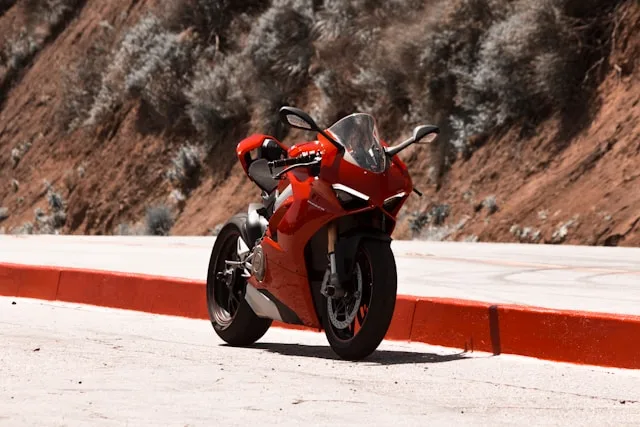
Bologna's motorcycle manufacturing corridor generated €1.8 billion in production value in 2024, a 4.2% increase on the previous year. Ducati Motor Holding reported record revenues of €1.06 billion and operating margins of 10.5% in 2023. The order books are full. The factories are running at capacity. And yet the constraint that defines this market in 2026 is not demand, not capital, and not regulation. It is people.
The core tension is not a simple shortage. It is a bifurcation. Bologna's motorcycle sector must simultaneously deepen its investment in traditional internal combustion expertise and build an entirely new electric powertrain capability from near-zero. These are not sequential priorities. They are concurrent demands on a talent pool that was already insufficient for either one alone. The region's universities produce 120 to 150 relevant masters-level graduates per year. The sector needs more than 300 technical hires annually. The arithmetic does not work, and no amount of corporate profitability changes the equation.
What follows is a structured analysis of the forces reshaping Bologna's motorcycle and performance engineering sector, the employers driving that change, and what senior leaders need to understand before making their next hiring or retention decision in this market.
The Motor Valley Ecosystem: What Makes Bologna's Motorcycle Sector Different
Bologna's position in Italian high-performance engineering is defined by concentration. Approximately 450 active enterprises operate in the province of Bologna, including 12 companies with more than 250 employees and 380 micro-enterprises specialising in precision machining, carbon fibre component fabrication, and racing electronics integration. Ducati alone employs more than 4,200 people in Bologna province, with 3,800 based at the Borgo Panigale headquarters.
The broader Emilia-Romagna region, marketed as Motor Valley, generates €12.4 billion in annual turnover across automotive and motorcycle sectors, employing approximately 16,400 direct workers in high-performance vehicle manufacturing. The Motor Valley Association coordinates 180 companies across the region, with 45 headquartered in Bologna province. Those Bologna-based members account for 35% of the cluster's total R&D expenditure, a disproportionate share that reflects the city's role as the intellectual centre of the ecosystem.
The Supply Chain Radius
Ducati sources approximately 90% of its components from suppliers within a 100-kilometre radius of Bologna. 78% of those suppliers sit within Emilia-Romagna specifically. This geographic density creates efficiency. A problem at a tier-two supplier can be diagnosed in person before lunch. But it also creates fragility.
The 2023 bankruptcy of a small precision titanium supplier in Milan, according to Reuters, caused a three-week production delay for Ducati's Panigale V4 S model. The incident exposed a single-point-of-failure vulnerability inherent in the cluster's tight geographic logic. When the supplier base is concentrated within an hour's drive, the loss of one specialist firm ripples through production schedules in ways that a geographically dispersed supply chain would absorb.
This fragility extends to human capital. The same geographic concentration that makes collaboration efficient also means that when Öhlins Racing needs a vehicle dynamics engineer, and Ducati Corse needs a vehicle dynamics engineer, and Brembo's R&D centre needs a vehicle dynamics engineer, they are all drawing from the same local pool of perhaps 40 qualified professionals. The cluster's greatest operational strength is also its greatest hiring constraint.
The Electrification Pivot and Its Workforce Consequences
Ducati committed €150 million across 2024 to 2026 to electrification and carbon neutrality. €50 million of that total is allocated specifically to the Borgo Panigale facility for battery prototyping and advanced materials research. By the end of 2024, Ducati launched a dedicated electric vehicle prototyping division staffed with 120 engineers, focused on the V21L racing platform and road-going electric derivatives.
The target for Q4 2026 is 200 or more engineers in that division. Scaling from 120 to 200 in under two years would be aggressive in any market. In Bologna, where the pool of candidates with the right combination of high-voltage EV experience and motorcycle-specific packaging knowledge is vanishingly small, it is a search challenge that conventional methods cannot solve.
Why Compensation Alone Has Not Worked
According to the Financial Times, Ducati's recruitment for Senior Battery Thermal Management Engineers at the Borgo Panigale EV division remained active for 11 months as of January 2025, with three requisitions unfilled despite international search efforts. The company reportedly resorted to recruiting from Formula E teams in the UK and Germany, offering relocation packages exceeding €40,000.
This is not a firm that cannot afford to pay. This is a firm with record margins that still cannot fill the roles that define its strategic future. The insight here is important and often missed: Bologna's talent constraints in electric powertrain engineering are not price-sensitive. They represent a shortage of a competency that does not yet exist in sufficient numbers globally, let alone within commuting distance of Borgo Panigale. You cannot recruit experience that the industry has not yet had time to create.
The estimated passive candidate rate for electric motorcycle powertrain architects is 80%. The few professionals who combine high-voltage EV experience with motorcycle-specific design constraints are employed, productive, and not looking. Reaching them requires direct identification and approach methods that go far beyond job postings or recruiter databases.
The Combustion Engine Premium: A Parallel Shortage
Here is where the standard narrative about industrial electrification breaks down. The assumption in most sectors is that legacy skills are declining in value as new technologies take over. In Bologna's motorcycle market, the opposite is happening simultaneously.
Salaries for senior internal combustion engine specialists, particularly those with desmodromic valve train and high-revving V4 architecture experience, rose 12% year-over-year through 2024, according to Randstad Italia. The 2025 and 2026 production cycles for Ducati's combustion-powered lineup require deep ICE expertise at exactly the moment when the company is also hiring aggressively for electric powertrain roles.
This creates a bimodal talent market. The sector does not need combustion engineers today and electric engineers tomorrow. It needs both, now, in quantities that exceed what the local and national pipeline can supply. Training resources are stretched across two fundamentally different engineering disciplines, neither of which can be deprioritised without commercial consequence.
The original analytical claim this data supports is this: Bologna's electrification investment has not reduced the demand for traditional engineering talent. It has created a second, parallel demand curve on top of the first. Capital can fund both technology tracks simultaneously. The human capital required to execute them cannot be doubled overnight. The investment moved faster than the workforce could follow, and the gap between capital allocation and talent availability is the defining constraint of this market in 2026.
Where the Searches Stall: Three Shortage Categories
Bologna's motorcycle sector faces acute shortages in three distinct categories, each with its own market dynamics.
Electric Powertrain Engineers
Job postings for powertrain engineering roles in Bologna increased 34% between Q1 2023 and Q1 2024. The average time-to-fill reached 127 days, compared to 64 days for general mechanical engineering roles. The pipeline from MUNER, the Motorvehicle University of Emilia-Romagna, graduated 147 Advanced Automotive Engineers in 2024, with 68% entering employment within the Bologna-Modena corridor. But these are graduates entering the workforce, not the senior battery thermal management or BMS architects that Ducati's EV division needs.
An estimated 80% of qualified electric powertrain professionals are passive candidates. Employers competing for them must recruit from adjacent sectors, primarily automotive EV programmes at Volkswagen, BMW, and Porsche, and then retrain for motorcycle-specific constraints. The retraining period itself creates a delay: a senior automotive EV engineer arriving in Bologna will need six to twelve months before they are productive in motorcycle powertrain design, where weight, packaging, and thermal management parameters differ fundamentally from passenger vehicles.
Composite Materials Specialists
Unemployment among composite materials specialists in Emilia-Romagna sits at 3.2%, compared to 7.8% for general engineering roles. This near-full-employment condition means that 75% of qualified composites professionals are passive. Carbon fibre monocoque design, autoclave process engineering, and crash structure simulation are skills developed over years of hands-on work. They cannot be taught in a classroom.
Senior composites engineering managers command €70,000 to €90,000 in this market, competitive locally but vulnerable to poaching from the automotive supercar corridor 40 to 60 kilometres away, where equivalent roles pay a 10 to 15% premium.
Racing Data Acquisition Technicians
This is the most extreme passive candidate market in the ecosystem. An estimated 85% of senior racing electronics engineers at MotoGP or World Superbike level are passive, with average tenure exceeding 4.5 years. Calibration engineers with premier-class racing experience are typically placed within 14 days of entering the market, with 82% sourced through headhunters rather than public applications, according to Hays Italy and Michael Page's motorsport market reports.
Searches for racing electronics roles regularly stall after 90 days. Employers are routinely forced to downgrade requirements to four-wheel racing backgrounds, accepting a competency gap that requires on-the-job training in motorcycle-specific telemetry and ECU calibration.
The Geographic Competition for Bologna's Talent
Bologna does not compete for motorcycle engineering talent in isolation. Three geographic markets actively draw professionals away from the Emilia-Romagna cluster.
Modena and Maranello, home to Ferrari, Lamborghini, Maserati, and Dallara, sit 40 to 60 kilometres away. According to Prometeia's labour mobility analysis, this corridor offers 10 to 15% higher base salaries for equivalent engineering roles and more extensive international mobility programmes. Mid-career Bologna engineers seeking a transition to four-wheel motorsport or higher-margin automotive OEMs are the most vulnerable to this pull.
Stuttgart and Munich present a more serious compensation gap. German premium automotive groups, including Porsche, BMW, and Mercedes-AMG, actively recruit Italian motorcycle engineers for their e-mobility divisions, offering packages 40 to 60% above Bologna market rates, according to VDMA's Mechanical Engineering Labour Market Report. While higher German living costs offset part of this premium, the absolute compensation difference is large enough to move senior professionals, particularly electric powertrain specialists.
The UK's Motorsport Valley in Oxfordshire and Northamptonshire offers tax-efficient compensation structures and English-language working environments. However, post-Brexit visa friction has reduced talent outflow by approximately 30% since 2021, according to the Motorsport Industry Association. This regulatory barrier has, counterintuitively, helped Bologna retain talent that would otherwise have migrated.
The Housing Complication
Bologna's cost-of-living advantage over Munich is real. Living costs are approximately 20% lower. But this advantage is eroding. Housing costs in the Borgo Panigale district have increased 18% since 2022, driven by limited supply and incoming technical workers. For a senior engineer relocating to Bologna from another Italian city, the housing premium in the specific district where they would work is a material consideration in the offer negotiation. Employers who present a compelling base salary without addressing the housing reality often lose candidates to offers from firms in lower-cost parts of the region.
Compensation Architecture in Bologna's Motorcycle Sector
Understanding what roles pay in this market requires distinguishing between four tiers, each with its own dynamics.
At the senior specialist and manager level, a lead powertrain engineer with 8 to 12 years of experience earns €75,000 to €95,000 in base salary. Racing division roles carry a 15 to 20% premium. Senior race engineers at team level, outside management, command €85,000 to €110,000 plus non-salary benefits that include performance win bonuses of €5,000 to €15,000 per race win in premier-class teams.
At the executive and VP level, a VP of Powertrain Development or Director of Racing Technology earns €180,000 to €280,000 in annual compensation, with performance bonuses tied to championship standings or product launch milestones. Executive Directors of Racing Operations command €200,000 to €350,000, a 40% premium over equivalent roles in general automotive, reflecting the global scarcity of motorcycle-specific racing management experience, according to Korn Ferry's industrial market assessment for Italy.
Supply chain leadership carries its own premium structure. A VP of Supply Chain for precision mechanics earns €150,000 to €220,000, with high variable compensation tied to margin protection in inflationary raw material markets.
The compensation data reveals a pattern that hiring leaders in this market must understand. The premium for motorcycle-specific experience over general automotive experience is substantial at every level. A powertrain engineer who has worked on passenger vehicle EV systems is not interchangeable with one who has solved the thermal management challenges specific to motorcycle battery packaging. The role-specific premium reflects genuine scarcity, not market inflation. Firms that benchmark against general automotive salaries will consistently undershoot the market and lose candidates to competitors who understand this distinction.
The Regulatory Pressure Compounding Talent Demand
Two regulatory forces are accelerating the already intense demand for specialised talent.
Euro 7+ emissions standards, with implementation deadlines for 2027, require an estimated €400 million or more in compliance R&D across the Bologna supply chain, according to ANFIA's impact assessment. For smaller precision mechanics firms with revenues below €10 million, homologation testing costs alone may force market exit. Confindustria Emilia-Romagna projects 8 to 10% consolidation among Bologna-area subcontractors through 2026 as margin compression from raw material costs combines with regulatory compliance burdens.
This consolidation has a paradoxical effect on the talent market. As smaller suppliers exit, their specialised employees become available. But many of these professionals have deep expertise in combustion-era precision manufacturing, not in the electric or hybrid systems where demand is growing fastest. The consolidation releases talent, but not necessarily the right talent.
Bologna's urban proximity to the Borgo Panigale district creates a second, more localised regulatory constraint. The city council has imposed decibel restrictions on test track operations after 20:00, limiting flexibility in racing development schedules. For a racing division that operates on the global MotoGP calendar, this restriction compresses the available testing hours and increases pressure on the engineering team to extract maximum data from fewer sessions.
Ducati has responded to physical expansion limits by securing zoning variances for a 12,000-square-metre logistics hub at the nearby Interporto di Bologna. This geographic decentralisation of non-core operations signals that the Borgo Panigale site itself is approaching maximum density. For talent strategy, this means future hires in logistics, warehousing, and non-engineering functions may be based outside the historic campus, while the core engineering and R&D workforce remains concentrated at headquarters.
What This Means for Hiring Leaders in This Market
The implications for any organisation hiring in Bologna's motorcycle and performance engineering sector are concrete.
First, the passive candidate ratio in the three critical shortage categories ranges from 75% to 85%. Job postings, career pages, and inbound applications will surface at most 15 to 25% of the viable candidate pool. The remaining professionals must be identified through direct research, mapped across the Motor Valley ecosystem and its German and British competitor clusters, and approached individually with a proposition that addresses their specific career and compensation requirements. A search strategy that relies on active candidates will fail in this market. Not sometimes. Consistently.
Second, the bimodal demand for combustion and electric expertise means that every senior engineering hire carries an opportunity cost. An electric powertrain specialist recruited from BMW's e-mobility division solves one problem but creates a six-to-twelve-month retraining lag for motorcycle-specific applications. A senior ICE engineer retained through a counteroffer preserves institutional knowledge but consumes budget that could have funded an EV hire. Hiring leaders must make these trade-offs explicitly, with full market intelligence about what each candidate type costs and how long each search will take.
Third, the competition from Modena, Stuttgart, and Munich is not theoretical. It is ongoing and measurable. According to Il Resto del Carlino, Öhlins Racing reportedly secured a Senior Vehicle Dynamics Engineer from Ducati Corse's World Superbike team in Q2 2024 by offering a 35% salary premium and a three-year guaranteed contract. This kind of intra-cluster poaching accelerates when firms rely on reactive hiring rather than proactive talent pipeline development.
For organisations competing for electric powertrain, composites, and racing electronics leadership in Bologna's motorcycle sector, where 80% of the candidates needed are not visible to conventional search methods and critical roles remain open for six to eleven months, KiTalent delivers interview-ready executive candidates within 7 to 10 days through AI-enhanced direct identification of passive talent. With a 96% one-year retention rate and a pay-per-interview model that eliminates upfront retainer risk, the approach is built for markets where the margin for error in senior hiring is measured in lost production cycles and championship seasons. To discuss how this applies to your specific search, speak with our executive search team about your next critical hire in this market.
Frequently Asked Questions
What are the hardest motorcycle engineering roles to fill in Bologna in 2026?
The three most acute shortages are in electric powertrain engineers (specifically battery thermal management and BMS specialists), composite materials specialists with autoclave process experience, and racing data acquisition technicians with MotoGP or World Superbike calibration backgrounds. Electric powertrain roles average 127 days to fill, roughly double the time required for general mechanical engineering positions. The constraint is not compensation but the global scarcity of professionals who combine high-voltage EV expertise with motorcycle-specific design knowledge.
What does a senior powertrain engineer earn in Bologna's motorcycle sector?
A lead powertrain engineer with 8 to 12 years of experience earns €75,000 to €95,000 in base salary, with a 15 to 20% premium for racing division roles. At the VP and director level, annual compensation reaches €180,000 to €280,000 with performance bonuses tied to championship results or product milestones. Executive Directors of Racing Operations command €200,000 to €350,000, approximately 40% above equivalent automotive roles, reflecting the scarcity of motorcycle-specific racing management experience. Detailed salary benchmarking is essential for competitive offer construction.
Why are Bologna motorcycle engineering searches so difficult compared to general automotive hiring?
Three factors converge. First, 75 to 85% of qualified professionals in the critical shortage categories are passive and not actively seeking new roles. Second, the geographic concentration of employers within the Motor Valley cluster means that competing firms draw from an overlapping candidate pool of sometimes fewer than 50 qualified individuals. Third, motorcycle-specific engineering constraints differ materially from automotive applications, meaning that candidates from car manufacturers require significant retraining, which adds cost and delays productivity.
How does KiTalent approach executive search in Bologna's motorcycle manufacturing sector?
KiTalent uses AI-enhanced direct headhunting methodology to identify and approach the passive candidates that job postings and recruiter databases do not reach. In a market where 82% of racing electronics placements occur through headhunters and senior EV roles remain unfilled for up to 11 months through conventional channels, direct identification of employed professionals across Bologna, the Modena corridor, and international competitor markets is the only method that reaches the full candidate pool. The pay-per-interview model means clients invest only when they meet qualified candidates.
What is the Motor Valley cluster and why does it matter for hiring?
Motor Valley is the branded designation for Emilia-Romagna's high-performance vehicle manufacturing ecosystem, generating €12.4 billion in annual turnover and employing approximately 16,400 direct workers. Bologna functions as the design and assembly anchor, with precision manufacturing distributed across Modena, Reggio Emilia, and surrounding provinces. The cluster's density creates both efficiency and hiring competition, as employers including Ducati, Ferrari, Lamborghini, Öhlins, and Brembo recruit from overlapping talent pools.
What regulatory changes are affecting Bologna's motorcycle sector talent needs?
Euro 7+ emissions standards with 2027 implementation deadlines require an estimated €400 million or more in compliance R&D across the supply chain, driving urgent demand for engineers capable of meeting new homologation requirements. Smaller precision mechanics firms face potential market exit due to compliance costs, with 8 to 10% supplier consolidation projected through 2026. This regulatory pressure compounds the existing talent shortage by simultaneously increasing demand for specialised compliance engineering and restructuring the supplier base that has traditionally employed many of the region's skilled professionals.