Ravenna's Offshore Energy Transition: €2.3 Billion in Capital, Fewer Than 200 Renewable Hires
Ravenna sits at the centre of Italy's offshore energy identity. The port hosts the Mediterranean's largest concentration of offshore oil and gas service companies. Approximately 12,000 people work directly in the broader Ravenna offshore cluster. The city's industrial infrastructure, its fabrication yards, its pipeline engineering firms, and its logistics capabilities were built for hydrocarbons. Now they are being asked to pivot toward floating wind, hydrogen import terminals, and subsea cable systems that require a fundamentally different set of skills.
The scale of ambition is not in question. Between the Ravenna Energy Hub initiative, the Med Wind floating wind project, and the SoutH2 Corridor hydrogen pipeline, over €2.3 billion in investment has been announced for the 2024 to 2026 period. What is in question is whether the workforce exists to turn that capital into operational capacity. As of early 2025, actual direct hiring in renewable-specific roles remained below 200 positions. The investment pipeline and the talent pipeline are moving at different speeds, and the gap between them is widening rather than closing.
What follows is a ground-level analysis of Ravenna's offshore energy market as it stands in 2026: where the hiring pressure is most acute, why the local labour market cannot satisfy it, what roles command the highest premiums, and what organisations operating in this corridor need to understand before they commit to a search strategy that will not reach the candidates they need.
The Bifurcated Market: Hydrocarbons Sustain, Renewables Spike
The most important feature of Ravenna's energy labour market in 2026 is that it is not one market. It is two, operating under the same geographic umbrella but following different logics entirely.
The first market is traditional hydrocarbon operations. Eni maintains approximately 2,800 employees in the Ravenna industrial area. Saipem's fabrication yard employs between 800 and 1,200 workers depending on project cycles. Bonatti, headquartered in Ravenna, contributes approximately 3,000 group-wide with a material local presence. These employers sustain the city's current employment base through Adriatic gas field maintenance, pipeline work, and decommissioning activities. Hiring in this market is cyclical but understood. The roles are defined. The candidate pools, while not abundant, are mapped.
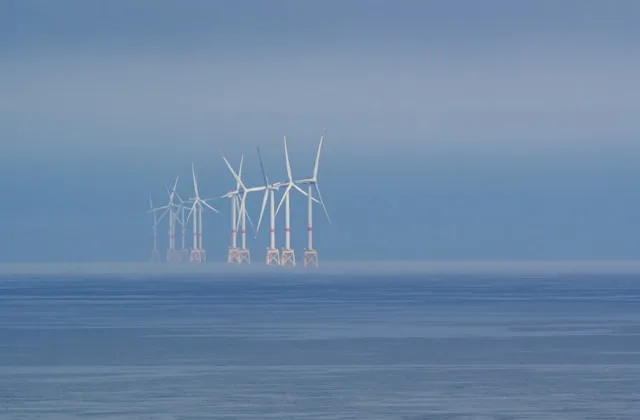
The second market is renewable project development. This is where the acute pressure sits. The Med Wind floating wind project, a 1.1 GW joint venture between Eni and EDF, has moved from environmental impact assessment into procurement phase through 2026. The Ravenna offshore wind marshalling yard, operational since Q3 2025, requires approximately 200 specialised technicians and logistics coordinators by mid-2026. These are not roles that can be filled by transferring existing O&G workers without retraining periods that the project timeline does not accommodate.
Where the Two Markets Collide
The tension is not between old and new energy. It is between the assumption that existing O&G skills transfer seamlessly and the reality that they do not. A senior pipeline engineer with twenty years of Adriatic subsea experience possesses deep knowledge of marine conditions, regulatory frameworks, and offshore logistics. That knowledge is valuable. But floating wind mooring systems, dynamic cable management, and electrolyser integration require 18 to 24 months of retraining, according to Forma.Temp's Regional Training Needs Analysis. The transition creates what the same analysis describes as a "valley of death" in employability: workers whose existing skills are being superseded but whose new skills are not yet developed.
This means the renewable project demand spikes cannot draw on the hydrocarbon workforce as a buffer. They create net new demand that the local market cannot absorb. The result is a search environment where the most critical roles go unfilled for six to nine months while projects wait.
The Three Scarcity Patterns Defining Ravenna's 2026 Hiring Challenge
Job postings for offshore-related engineering roles in Ravenna increased 34% year-over-year in 2024, according to the Unioncamere-Anpal Excelsior Information System. That figure is nearly triple the 12% increase in general engineering demand. But the aggregate numbers obscure three distinct scarcity patterns, each with different causes and different implications for search strategy.
Subsea Engineering: The Adriatic-Specific Knowledge Premium
Senior subsea pipeline engineers with Adriatic-specific experience typically take six to nine months to hire, compared to three to four months for equivalent upstream O&G roles. The additional duration reflects a mismatch that no compensation adjustment alone can resolve. Ravenna needs engineers who understand both legacy pipeline infrastructure and the floating wind and subsea cable systems being installed alongside it. The number of professionals who hold both knowledge sets is extremely small. The active-to-passive ratio for senior subsea engineers with ten or more years of experience sits at approximately 1:8. For every qualified candidate actively looking, eight are employed and require direct outreach through specialist headhunting methods to reach.
Offshore Wind Permitting: The Role No Job Board Can Fill
Environmental and regulatory specialists capable of managing Italy's Strategic Environmental Assessment process for offshore wind represent the most constrained talent category in the entire Ravenna market. Vacancy durations routinely exceed eight months. Employers frequently resort to Milan-based consultancies rather than local hires, which solves the immediate project need but does not build local capability.
The permitting constraint is compounded by Italy's authorisation timeline. The Italian Wind Energy Association ANEV reports that Italy's offshore wind authorisation process averages five to seven years from application to construction start. The "Decreto Semplificazioni" promised acceleration but implementation remains regionally inconsistent. This volatility deters long-term local hiring commitments and keeps the most qualified permitting specialists in consulting roles rather than permanent operator positions.
Offshore Installation Supervision: The 40% Supply Deficit
Unioncamere Emilia-Romagna projects a 40% supply deficit in offshore installation supervision roles through 2026, alongside a 35% deficit in subsea cable engineering and a 50% deficit in environmental compliance for offshore construction. The installation supervision gap is particularly acute because Offshore Installation Managers are filled almost exclusively through executive search rather than advertising. The active-to-passive ratio is approximately 1:12. These professionals are not on job boards. They are not on LinkedIn with "open to work" badges. They are running projects for competing EPC contractors and must be identified, assessed, and approached individually.
Compensation: Why Ravenna's Wages Are Not Clearing the Market
One of the most revealing features of Ravenna's talent market is the disconnect between vacancy duration and wage inflation. Despite six to nine month search durations for critical roles, base salary inflation in the offshore sector has remained at 3 to 4% annually, according to the Bank of Italy's Regional Wage Dynamics report. In equivalent UK or German markets, the same shortages produce 8 to 12% annual wage growth.
This is the analytical tension that matters most for hiring leaders. Ravenna's shortages are real. The compensation response is muted. Two mechanisms explain why.
First, Italian labour market structures create wage rigidity that prevents price-clearing for scarce skills. National collective bargaining agreements set floors and ceilings that limit individual employer flexibility, particularly for the Italian energy majors. Eni and Saipem typically offer base salaries of €140,000 to €170,000 for VP Operations or Country Manager roles, supplemented by pension and long-term incentive components. International EPC contractors operating in the same market offer €180,000 to €220,000 base with performance bonuses. The structural gap between domestic and international employer packages creates a two-tier market within the same city.
Second, employers substitute through international contractor staffing rather than paying market-clearing wages for permanent local hires. Project-phase talent is imported for construction windows and then released. This solves the immediate delivery problem but prevents the accumulation of local expertise that would reduce future scarcity.
What Roles Actually Pay in Ravenna's Offshore Market
For hiring leaders benchmarking offers, the current ranges tell a specific story about where premiums sit:
Subsea Engineering Managers command €75,000 to €95,000 base plus project bonuses of 10 to 15%, carrying a 20 to 25% premium above general mechanical engineering roles in the region. Offshore Wind Project Directors earn €120,000 to €180,000 base plus project completion incentives, with an approximate 15% premium over traditional O&G project managers due to the scarcity of Italian offshore wind track records. HSE Managers for offshore construction range from €65,000 to €85,000 at senior level and €90,000 to €120,000 at executive or Head of HSE level, constrained further by specific certification requirements including NEBOSH and IOSH Offshore credentials.
The implication for any organisation running a search in this market is that compensation benchmarking alone does not predict whether an offer will land. The candidates who command these premiums are weighing Ravenna against Aberdeen, Stavanger, and Dubai. The comparison is not local. It is international.
The Geography of Talent Loss: Who Ravenna Competes Against and Why It Loses
Ravenna's hiring challenge cannot be understood without mapping where its candidates go when they leave. The city competes for the same professionals against four markets, each offering a different combination of advantages that Ravenna cannot match on compensation alone.
Milan draws junior and mid-level engineers after three to five years of Ravenna operations experience. The attraction is a 20 to 30% compensation premium, proximity to headquarters functions, and broader career mobility. According to Nomisma Energia's analysis of technical talent mobility in the Italian energy sector, this pipeline from Ravenna operations to Milan corporate strategy is well-established and self-reinforcing. Each departure trains the next cohort to expect the same trajectory.
Aberdeen offers 40 to 60% compensation premiums for subsea engineers, established floating wind project experience, and an English-language working environment. Senior Italian offshore engineers with international experience emigrate to UK North Sea operations during Ravenna's project troughs, and many do not return when activity recovers.
Stavanger and Oslo present the most damaging competitive dynamic. Norwegian compensation sits 50 to 80% above Italian levels for equivalent roles. The advanced offshore wind and hydrogen project portfolios provide career development opportunities that Ravenna cannot yet offer. State-sponsored transition training programmes further reduce the friction of relocation. According to Rystad Energy's analysis of Mediterranean versus North Sea labour competition, the loss of senior project managers with floating foundation experience to Equinor and Aker Solutions projects represents a systemic drain on the Mediterranean talent pool.
Dubai and Abu Dhabi attract through tax-free compensation and large-scale project volumes. Ravenna-based EPC contractors including Saipem and Bonatti frequently transfer high-potential Italian talent to Middle East operations, creating a retention challenge driven by the employers themselves.
The pattern across all four competitors is consistent. Ravenna develops talent through its operational base, then loses that talent to markets that offer higher compensation, better project portfolios, or both. The city functions as a training ground for the international offshore energy workforce rather than as a destination that retains its own graduates.
The Investment Paradox: Capital-Intensive, Labour-Light
This is the original synthesis that the data demands but that no single data point states directly. Ravenna's energy transition is capital-intensive but labour-light in its initial phases, and the regional development narratives that promise immediate employment transitions for displaced O&G workers are misleading the very workforce they claim to serve.
The numbers make this plain. The Ravenna Energy Hub and associated projects have generated €2.3 billion in announced investment commitments. As of early 2025, actual direct hiring in renewable-specific roles remained below 200 positions. The ratio of capital deployed to jobs created in the renewable segment is dramatically different from the ratio the O&G cluster sustains.
This does not mean the jobs will never come. It means they come later and in different shapes than the investment announcements imply. The marshalling yard requires 200 specialised roles by mid-2026. The Med Wind construction phase from 2026 to 2028 will generate meaningful employment. But the gap between announcement and employment is measured in years, and during that gap, the O&G workforce whose jobs are being described as "transitioning" faces a retraining requirement of 18 to 24 months with no guarantee that the project timelines will align with their readiness.
The implication for hiring leaders is strategic. Do not plan your workforce around investment announcements. Plan it around construction timelines. The demand spike for specialised offshore wind talent in Ravenna will be sharp and concentrated, not gradual and distributed. Organisations that begin their talent pipeline development six months before construction starts will find the candidates they need already committed elsewhere.
Structural Constraints That Will Not Resolve on Their Own
Three systemic constraints shape the operating environment for any employer hiring in Ravenna's offshore energy corridor, and none of them are within an individual employer's power to change.
Grid Limitations and Project Deferral Risk
Terna's National Grid Development Plan identifies limited transmission capacity in the Romagna region as a threat to hydrogen export and offshore wind integration plans. If grid connection capacity is not expanded on schedule, the 2026 to 2027 employment peak could be deferred, creating further volatility in a market where professionals already face uncertain project timelines. For a senior engineer weighing Ravenna against Stavanger, the question of whether a project will actually proceed on schedule is not academic. It is the deciding factor.
Eni Dependency and Strategic Pivot
Approximately 40% of Ravenna's offshore energy employment remains tied to Eni's upstream gas operations in the Adriatic. Eni's strategic pivot toward Africa and carbon capture, documented in its 2024 to 2027 strategy update, creates long-term uncertainty for local O&G maintenance employment. The dependency is not merely economic. It is cultural. Eni's presence shapes how the local workforce thinks about career progression, employer prestige, and risk tolerance. A reduction in Eni's local footprint would not only remove jobs. It would remove the institutional anchor around which three decades of workforce development have been organised.
Supply Chain Localisation Limits
Italian content requirements for offshore wind projects face a structural barrier: Ravenna lacks domestic manufacturing capability for turbines and major electrical components. Job creation is limited to installation and operations and maintenance phases. The European Commission's State Aid assessment confirmed this limitation. It means the employment multiplier from offshore wind investment in Ravenna will be materially lower than in markets like the UK or Denmark where turbine manufacturing is locally established.
What This Means for Executive Search in Ravenna's Offshore Market
The combination of acute shortages, international competition, wage rigidity, and project timeline uncertainty creates a search environment that conventional methods cannot address. Posting a role for an Offshore Installation Manager in Ravenna on a job board reaches the active 8% of the candidate pool. The remaining 92% must be identified through specialist talent mapping and direct approach.
The challenge is compounded by the fact that the candidates with the most relevant experience are not simply passive. They are embedded in competing projects with completion incentives that penalise early departure. A subsea cable engineer working on a North Sea floating wind project is not going to apply for a Ravenna role. That engineer must be found, assessed against the specific requirements of a Mediterranean operating environment, and presented with a proposition that addresses compensation, project certainty, and career trajectory simultaneously.
This is precisely where KiTalent's approach to executive hiring in the energy and renewables sector delivers measurable advantage. Using AI-enhanced talent mapping to identify professionals across the European and Middle Eastern offshore markets, KiTalent delivers interview-ready candidates within 7 to 10 days, even in markets where the active-to-passive ratio is 1:12. The pay-per-interview model means organisations commit resources only when they are meeting qualified candidates, not when a search begins.
For organisations entering Ravenna's offshore energy market during the critical 2026 to 2028 construction window, the cost of a delayed hire is not measured in recruiter fees. It is measured in project slippage, contractor substitution premiums, and the reputational cost of being the employer that could not staff its own project. KiTalent's 96% one-year retention rate reflects a methodology built for exactly this kind of constrained, high-stakes market, where the right candidate must be found, not waited for.
For hiring leaders competing for subsea engineers, installation managers, and offshore wind project directors in a market where fewer than one in ten qualified candidates is actively looking, start a conversation with our energy sector search team about how we approach Ravenna and the broader Mediterranean offshore corridor.
Frequently Asked Questions
What are the hardest offshore energy roles to fill in Ravenna in 2026?
The three most constrained categories are offshore installation managers, with an active-to-passive candidate ratio of approximately 1:12 and a projected 40% supply deficit; environmental permitting specialists for offshore wind, where vacancy durations routinely exceed eight months; and subsea cable engineers, facing a projected 35% supply deficit. These roles combine deep technical expertise with Adriatic-specific regulatory knowledge that cannot be acquired quickly. The shortages are driven by the simultaneous demands of legacy O&G maintenance and new renewable construction entering procurement phase through 2026.
How do Ravenna offshore energy salaries compare to other European markets?
Ravenna's offshore energy salaries sit materially below Northern European competitors. Senior subsea engineers in Ravenna earn €75,000 to €95,000 base, compared to 40 to 60% premiums in Aberdeen and 50 to 80% premiums in Stavanger for equivalent roles. VP Operations roles range from €140,000 to €220,000 depending on whether the employer is an Italian energy major or an international EPC contractor. Italian collective bargaining structures limit individual employer flexibility on base pay, creating a gap that project bonuses and long-term incentives only partially close.
Why is Ravenna's energy transition not creating more jobs immediately?
The transition is capital-intensive but labour-light in its early phases. Over €2.3 billion in investment has been announced, but actual renewable-specific hiring remained below 200 positions through early 2025. Construction-phase employment will grow materially through 2026 to 2028 as the Med Wind project enters procurement, but the gap between capital deployment and job creation is measured in years. Additionally, Italian content requirements face structural barriers since Ravenna lacks domestic turbine manufacturing capability, limiting job creation to installation and maintenance phases.
How does KiTalent find passive offshore energy candidates in Ravenna?
KiTalent uses AI-enhanced talent mapping to identify qualified professionals across the European and Middle Eastern offshore energy markets, reaching the 90% or more of senior candidates who are not actively looking for new roles. In markets like Ravenna where the active-to-passive ratio for critical roles reaches 1:12, conventional job advertising reaches a negligible fraction of the viable candidate pool. KiTalent's methodology delivers interview-ready executive candidates within 7 to 10 days, with a pay-per-interview model that eliminates upfront retainer risk.
What regulatory risks affect offshore energy hiring in Ravenna?
Two primary regulatory risks shape the hiring environment. First, Italy's offshore wind authorisation process averages five to seven years from application to construction start, creating employment volatility that deters long-term hiring commitments from both employers and candidates. Second, limited grid transmission capacity in the Romagna region could defer the projected 2026 to 2027 employment peak if infrastructure upgrades are delayed. Both risks increase uncertainty for senior professionals weighing Ravenna against more stable project environments in Norway or the UK.
What is the Ravenna Energy Hub and how does it affect recruitment?
The Ravenna Energy Hub is a public-private partnership comprising the Port Authority, Eni, Snam, and regional development agencies, backed by €450 million in combined investment for offshore wind marshalling capabilities and hydrogen import terminal infrastructure. It coordinates infrastructure development but does not directly employ large technical teams. Its primary recruitment impact is indirect: it creates the project pipeline that drives demand for specialised executive and engineering talent across participating organisations. The marshalling yard alone requires approximately 200 specialised technicians and logistics coordinators by mid-2026.