Ravenna's Port Is Growing 40% Faster Than Its Workforce: The Hiring Crisis Behind Italy's Adriatic Expansion
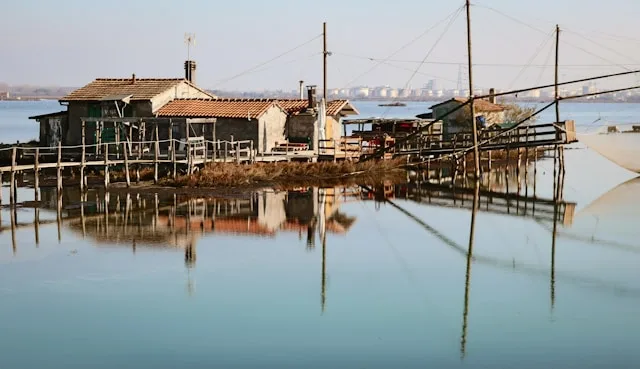
Ravenna's €450 million Darsena di Ponente expansion opened its first 600 metres of new quay in March 2024. Dredging operations have deepened the Candiano Canal to 14.5 metres, granting access to Post-Panamax vessels for the first time. By 2026, the port authority forecasts throughput reaching 28.5 million tonnes and container capacity doubling to 400,000 TEU. The physical infrastructure to become a genuine Adriatic industrial logistics hub is arriving on schedule.
The workforce to operate it is not. Local vocational institutes and regional universities combined produce fewer than 110 graduates annually in maritime and logistics disciplines. The port's own expansion plan estimates 600 to 800 new skilled operational roles will be required by 2027. Meanwhile, a third of the existing dockside and crane workforce is over 55, retiring at nearly triple the rate apprenticeships can replace them. Ravenna is building a 21st-century port and attempting to staff it from a talent pipeline sized for the 1990s.
What follows is an analysis of the forces reshaping Ravenna's industrial and maritime sector, the specific roles and skills that are proving impossible to fill locally, and what organisations hiring in this market need to understand before they commit to a search strategy that was designed for a different era.
[Italy](/italy-executive-search)'s Chemical and Energy Logistics Capital Faces a Workforce Inflection Point
Ravenna's position in the Adriatic port system is often misunderstood. It is not the region's largest container gateway. Trieste handled 40.1 million tonnes of cargo in 2023, comfortably ahead of Ravenna's 26.8 million tonnes. In container volume alone, Trieste processes 850,000 TEU annually against Ravenna's 245,000. But Ravenna is something Trieste is not: Italy's largest liquid bulk chemicals port, handling 13.2 million tonnes in 2023, and the primary Adriatic hub for hydrocarbon refining and LNG distribution.
This distinction matters enormously for hiring. The talent profile required to run a chemical logistics hub is fundamentally different from that of a container transshipment port. Dangerous goods certification (ADR/RID), cryogenic handling expertise, and chemical supply chain coordination are non-negotiable requirements at Ravenna's port cluster, and they are requirements that cannot be met by redeploying generalist logistics professionals from other sectors.
The port directly employs approximately 12,400 people, with a further 28,000 induced jobs across the Ravenna logistics cluster, according to Confindustria Ravenna's 2024 economic survey. The anchor industrial employer, SAR (Società Anonima Raffinerie), alone accounts for 850 direct employees and 2,500 contractors in refining and chemical logistics. Terminal Container Ravenna employs 450 staff in container operations. Ravenna Terminal Gas runs a specialist LNG terminal with 120 technical staff. These are not firms that can fill vacancies with transferable talent from adjacent industries. They need people with specific, regulated certifications operating in a market where those people are already employed elsewhere.
The question confronting every hiring leader in this market is not whether the talent exists. It does. The question is whether any realistic recruitment strategy can extract it from the competitors who hold it.
The Infrastructure Surge That Created the Demand
Darsena di Ponente and the Capacity Doubling
The Darsena di Ponente project is the largest port infrastructure investment in the northern Adriatic in a generation. The €450 million programme, now entering its final phase, will accommodate vessels up to 8,000 TEU, a class of ship Ravenna could not previously handle. The port authority (AdSP MACO) forecasts this will push total throughput to 28.5 million tonnes by 2026, contingent on full activation and recovery in LNG imports.
Container capacity is set to increase from 245,000 to 400,000 TEU annually. Whether that capacity is utilised depends on Adriatic shipping line allocations, where Ravenna competes directly with Trieste and the Slovenian port of Koper, according to Drewry Maritime Research's Adriatic container market outlook. But even if utilisation lags behind theoretical capacity, the operational complexity of the expanded port is already creating hiring pressure. Larger vessels require more pilots, more crane operators qualified on Post-Panamax equipment, and more vessel planners managing berth scheduling across a deeper and wider canal.
Offshore Wind and the Hydrogen Economy
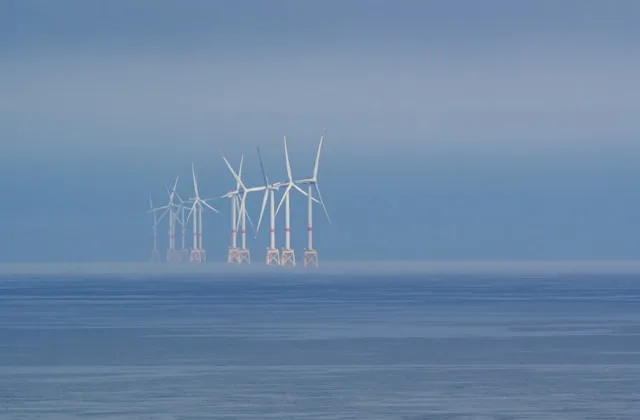
Ravenna has simultaneously positioned itself as Italy's leading offshore wind logistics hub. The Ravenna Offshore Wind Pre-Assembly Base, funded with €89 million from the PNRR (National Recovery and Resilience Plan), became operational in late 2024 to support the 1.1 GW Med Wind floating wind project. This is not a theoretical future investment. Components are arriving, marshalling yards are active, and the heavy-lift project management required to coordinate turbine assembly at a working commercial port represents an entirely new talent category for this market.
By the second quarter of 2026, Ravenna is also scheduled to complete Italy's first hydrogen import terminal at the SAR refinery jetty, featuring a 1 GW electrolyser and ammonia cracking facilities. This creates demand for specialised chemical handling and cryogenic logistics capabilities that, according to the Snam and SAR joint venture filings, do not currently exist in the local workforce in sufficient numbers.
The compounding effect of these three simultaneous programmes is what makes the hiring challenge systemic rather than cyclical. It is not one project creating one cluster of vacancies. It is three overlapping expansions, each requiring different specialisms, all drawing from the same constrained regional labour pool.
The Original Synthesis: Automation Has Not Reduced the Problem. It Has Translated It.
The most consequential dynamic in Ravenna's port labour market is one that the investment headlines obscure entirely. Terminal Container Ravenna and SAR have invested over €50 million since 2022 in automated gate systems, crane remote operation, and IoT-enabled port community platforms. The stated objective is to reduce labour intensity per TEU handled. On the surface, this looks like a strategy that should ease hiring pressure. Fewer manual dockers needed per unit of cargo moved.
The reality is the opposite. The investment in automation and AI-driven systems has not reduced the total number of people Ravenna's port needs. It has replaced one category of worker with another that barely exists in this market. Unioncamere's Excelsior system reports a 94% difficulty rate in filling IT/OT cybersecurity and automation technician roles in the Ravenna port cluster. That figure is not a marginal increase over the regional average of 43%. It is more than double.
Capital moved faster than human capital could follow. The cranes are automated. The gates are digitised. The port community system requires professionals who understand both industrial operational technology and cybersecurity protocols mandated by the EU NIS2 Directive. And those professionals are not in Ravenna. They are in Bologna or Milan, earning 15 to 20% more, working for firms with broader career trajectories. Every euro spent on port digitalisation has deepened, not reduced, the dependency on the exact technical profiles this market cannot supply locally.
This is the analytical thread that runs through every hiring challenge in this article. The physical port is expanding. The digital port is automating. Both create demand for workers who do not yet exist in this geography in sufficient numbers. The assumption that smart port investment alleviates talent pipeline constraints is not supported by the data. The data suggests automation transposes the shortage from manual to technical domains without reducing net recruitment risk.
Where the Shortages Are Most Acute
Maritime Pilots: A 100% Passive, Regulated Market
The Ravenna pilot cooperative operates with 16 active pilots against a statutory requirement for 20. This shortfall forces extended rotation periods and delays vessel manoeuvres during peak traffic, according to a September 2024 report in Shipping Italy. Maritime piloting in Italy is a regulated profession with fixed licence quotas. New pilots enter only through competitive examinations held every three to five years, governed by DPR 250/2000. This is not a market where an aggressive compensation offer or a faster search process can accelerate hiring. The candidates literally do not exist until the regulatory system creates them.
Senior pilots in Ravenna earn between €110,000 and €140,000, with compensation tied to traffic volume. Junior pilots start between €70,000 and €85,000 on a fee-based structure. These figures are competitive, but competitiveness is irrelevant in a market with zero available candidates. The pilot shortage is a structural constraint that no employer can solve unilaterally. It can only be managed through succession planning and early identification of candidates who will sit future examinations.
Chemical Logistics Coordinators: Local Training Cannot Meet Demand
Confindustria Ravenna's competency observatory reports that the sector requires 80 to 100 new entrants annually in dangerous goods handling and chemical logistics coordination. Local vocational institutes produce fewer than 30 qualified graduates per year. This gap has persisted for at least three years, and recruitment firms report that the standard practice is to source chemical logistics coordinators from competing ports in Trieste and Venice, offering salary premiums of 20 to 25% to compensate for relocation.
The ADR certification required for ammonia and methanol handling will become even more critical as the hydrogen import terminal comes online. These are not generic logistics qualifications. They are specific, regulated credentials that require supervised operational experience to obtain. A graduate cannot walk into this role. The training pipeline is approximately two years from initial qualification to independent operational capacity, which means the candidates Ravenna needs for 2027 should have entered training in 2025.
Port Cybersecurity: A 94% Difficulty Rate
The EU NIS2 Directive mandates enhanced cybersecurity standards for port critical infrastructure by October 2025. Compliance requires infrastructure upgrades estimated at €12 million and, more critically, professionals who can integrate IT and OT security systems across port community platforms. Unioncamere forecasts a 94% difficulty rate in filling these roles in the Ravenna catchment. To put this in context, the hidden 80% of candidates who are not actively looking for new roles is a familiar challenge in executive search. In port cybersecurity, the pool is not merely passive. It is functionally non-existent locally.
The candidates with the right profile are typically employed in Bologna or Milan, where digital infrastructure is more mature and salaries are materially higher. Attracting them to Ravenna requires not just a competitive package but a compelling argument about scope, autonomy, and the rarity of the operational environment. This is a market where the cost of a failed or delayed hire is measured not in lost revenue but in regulatory non-compliance and potential operational shutdown.
The Demographic Clock Running Underneath
Workforce demographics compound every shortage discussed above. At Terminal Container Ravenna and Ravenna Terminal Gas, 34% of operational staff are aged 55 or older. These are dockers, crane operators, and terminal technicians whose skills were developed over decades of on-the-job experience. Apprenticeship intake across both firms averages 12 new entrants per year. Retirement rates run between 25 and 30 annually, according to TCR's 2023 annual report and FIT-CISL Ravenna's sector analysis.
The mathematics are straightforward. The port is losing experienced operators at more than double the rate it is replacing them. This is not a future risk. It is a present condition that worsens every year. The Istituto Tecnico Nautico "G. Marconi" and the CNOS-FAP Professional Training Centre collectively graduate fewer than 80 students annually in relevant maritime and logistics tracks. The University of Bologna's Forlì campus produces 25 to 30 supply chain graduates per year who choose port logistics careers.
Even under optimistic assumptions about retention and training throughput, the local education ecosystem cannot populate an expanding port. Ravenna will rely on inter-regional recruitment and immigration to fill both replacement and growth roles. This reliance sits uncomfortably alongside a labour market where senior and specialised roles are 90 to 95% passive, average tenure exceeds eight years, and unemployment among port operations managers is effectively zero according to ISTAT data.
What Ravenna's Competitive Position Means for Compensation
Ravenna's salary structure reflects its position as a secondary city competing against better-resourced markets on three sides. Bologna, 50 kilometres inland, draws supply chain planners, IT logistics specialists, and procurement directors with salaries 15 to 20% higher and superior digital infrastructure. The presence of Amazon, Coop Italia, and major third-party logistics headquarters in Bologna creates a gravity effect. Mid-level logistics managers seeking career progression leave Ravenna for roles that offer both higher pay and a clearer path to senior leadership.
Trieste offers 10 to 15% salary premiums for maritime operations talent, supplemented by the advantages of its Free Port tax regime and the career diversity that comes with a container operation more than three times Ravenna's size. For vessel traffic service operators, harbour masters, and international shipping agents, Trieste is a more attractive long-term proposition unless Ravenna can offer something Trieste cannot: exposure to the offshore wind and hydrogen supply chains that no other Adriatic port currently hosts.
This is where the compensation conversation must shift. For Port Operations Directors and Terminal Managers earning between €95,000 and €125,000, the package alone will rarely be enough to overcome the pull of larger markets. According to Hays Italy's executive search data, Supply Chain Director and Port Operations Manager roles in the Ravenna catchment take an average of 118 days to fill, compared to 74 days in Milan and 82 days in Turin. That 44-day gap against Milan is not explained by compensation alone. It reflects the structural difficulty of convincing a passive candidate with multiple options to choose a market with limited upward mobility.
Confindustria Ravenna has identified a "ceiling effect" where senior executives must relocate to Milan or Genoa for VP-level advancement, since most major shipping lines and industrial firms locate their strategic headquarters functions in those cities. The implication for how organisations negotiate with senior candidates in this market is clear. The offer must address not just current compensation but the career trajectory concern that sits behind every senior candidate's hesitation.
What This Means for Organisations Hiring in Ravenna's Port Sector
The conventional approach to hiring in this market does not work. Posting roles on job boards reaches the active candidate pool, which in Ravenna's port sector is limited to entry-level operations, administrative coordination, and non-specialised warehousing. At the senior specialist and executive level, the candidate pool is between 90 and 95% passive. These professionals are employed, well-compensated, and retained through long-term incentive plans. They are not browsing job advertisements.
The search process itself must be fundamentally different. A direct headhunting approach that identifies, maps, and engages passive candidates across competing ports, adjacent industrial sectors, and cross-border markets is the only method that reaches the full candidate population. In a market where the Ravenna pilot cooperative is four members below statutory requirement and port cybersecurity roles show a 94% difficulty rate, the 10% of candidates who might respond to an advertisement are not representative of the talent that exists.
Speed compounds the problem. Every additional week a Port Operations Director role remains unfilled during the Darsena di Ponente ramp-up is a week of sub-optimal vessel scheduling, delayed berth allocations, and missed throughput targets. Every month an HSE Director vacancy persists as the hydrogen terminal approaches commissioning is a month of unmanaged compliance risk. The reasons executive searches fail in specialised industrial markets like this are rarely about the quality of the shortlist. They are about the method never reaching the right candidates in the first place.
KiTalent's approach to executive search in industrial and manufacturing sectors is built for exactly this situation. AI-powered talent mapping identifies the full population of qualified professionals across competing ports and adjacent industries before a single approach is made. Interview-ready candidates are presented within 7 to 10 days. The pay-per-interview model means organisations invest only when they meet candidates who match the specification. With a 96% one-year retention rate across 1,450 executive placements, the method is designed for markets where the margin for error in a senior hire is negligible.
For organisations competing for port operations, chemical logistics, or energy transition leadership in Ravenna's expanding maritime cluster, where the candidates you need are not visible on any job board and the window for a slow search has closed, start a conversation with our executive search team about how we approach this market.
Frequently Asked Questions
What are the hardest roles to fill in Ravenna's port and maritime logistics sector?
Maritime pilots, port cybersecurity specialists, and chemical logistics coordinators certified for dangerous goods handling (ADR) are the most difficult roles to fill. Maritime pilots operate in a 100% passive, regulated market with fixed licence quotas. Cybersecurity roles show a 94% difficulty rate according to Unioncamere's Excelsior system. Chemical logistics coordinators require specific certifications and supervised experience that local training institutions produce in volumes far below sector demand, forcing employers to recruit from competing Adriatic ports at 20 to 25% salary premiums.
What do senior port operations and logistics executives earn in Ravenna?
Port Operations Directors (Direttore Operativo Portuale) earn between €95,000 and €125,000 in total cash compensation. Supply Chain Directors in industrial logistics earn €90,000 to €130,000, with top-tier chemical and logistics firms reaching €150,000 for roles with international scope. HSE Directors with NIS2 cybersecurity expertise command €85,000 to €110,000. These figures include bonuses but exclude company car and pension contributions typical of Italian executive packages, according to Hays Italy and Michael Page salary data.
How long does it take to fill a senior logistics role in Ravenna compared to Milan?
According to Hays Italy's 2024 recruitment data, Supply Chain Director and Port Operations Manager roles in the Ravenna area take an average of 118 days to fill, compared to 74 days in Milan and 82 days in Turin. This 44-day gap reflects both the passive nature of the senior candidate pool and the structural challenges of attracting talent to a secondary market competing against cities with higher salaries and broader career trajectories.
Why is Ravenna's port sector struggling to recruit despite major investment?
The €450 million Darsena di Ponente expansion, the offshore wind pre-assembly base, and the planned hydrogen import terminal are creating simultaneous demand across multiple specialisms. Local training institutions produce fewer than 110 qualified graduates annually against sector demand that is accelerating. Automation investments have replaced manual labour shortages with technical skills shortages in areas like IT/OT security integration. The talent pipeline was sized for a smaller, less technologically complex port operation. KiTalent's AI-enhanced direct search methodology addresses this by mapping passive candidates across competing ports and adjacent sectors, reaching the 90 to 95% of qualified professionals who are not actively seeking new roles.
How does KiTalent approach executive search in specialised maritime and industrial markets?
KiTalent uses AI-powered talent mapping to identify the full population of qualified professionals before any approach is made, which is critical in markets where 90 to 95% of senior candidates are passive. Interview-ready candidates are delivered within 7 to 10 days through a direct headhunting process that reaches professionals who never appear on job boards. The pay-per-interview model means clients only invest when they meet candidates who match the specification. KiTalent has completed over 1,450 executive placements globally with a 96% one-year retention rate.
What impact will the EU NIS2 Directive have on port hiring in Ravenna?
The NIS2 Directive requires enhanced cybersecurity standards for port critical infrastructure, with compliance due by October 2025. For Ravenna, this means infrastructure upgrades estimated at €12 million and recruitment of IT/OT security integrators who can protect port community systems. The local market shows a 94% difficulty rate for these roles. Non-compliance risks operational disruptions at a port handling 13.2 million tonnes of liquid bulk chemicals annually. Organisations facing this deadline benefit from market benchmarking that clarifies the competitive compensation and search approach required to secure these specialists.