Rimini Hospitality Hiring in 2026: Why a €200 Million Investment Wave Cannot Fill the Roles That Run It
Rimini recorded 11.2 million overnight stays in 2024, surpassing pre-pandemic levels by 12%. The municipality hosts roughly 1,150 licensed accommodation establishments, over 1,000 beach concessions, and a trade fair complex that alone generates 1.4 million business visitor overnights per year. Capital is flowing in. Between energy retrofitting, digital infrastructure, and exhibition centre expansion, the sector is absorbing an estimated €180 to €220 million in investment through 2026. By every conventional measure, this is a market in strong health.
The problem is not demand. Demand is robust and diversifying. The problem is that the people required to run this expanding infrastructure are leaving faster than they can be replaced. Rimini-trained Food and Beverage Directors are migrating to the Maldives and UAE at 2.5 to 3 times local net compensation. Revenue Management Director vacancies sit at 22%. Fewer than 15 qualified sustainability compliance candidates exist locally for more than 40 open positions. The University of Bologna's Rimini campus produces 400 tourism graduates annually, yet 60% relocate to Milan or international markets within two years. Investment is building the stage. The talent to perform on it is disappearing.
What follows is a ground-level analysis of why Rimini's hospitality talent market has become one of Italy's most complex hiring environments, where the gaps are deepest, what the compensation arithmetic actually looks like, and what organisations operating in this market need to understand before their next senior search.
The Dual-Season Paradox That Defines Rimini's Workforce
Most coastal resort markets face a single strategic question: how to fill roles for summer. Rimini faces two questions that pull in opposite directions.
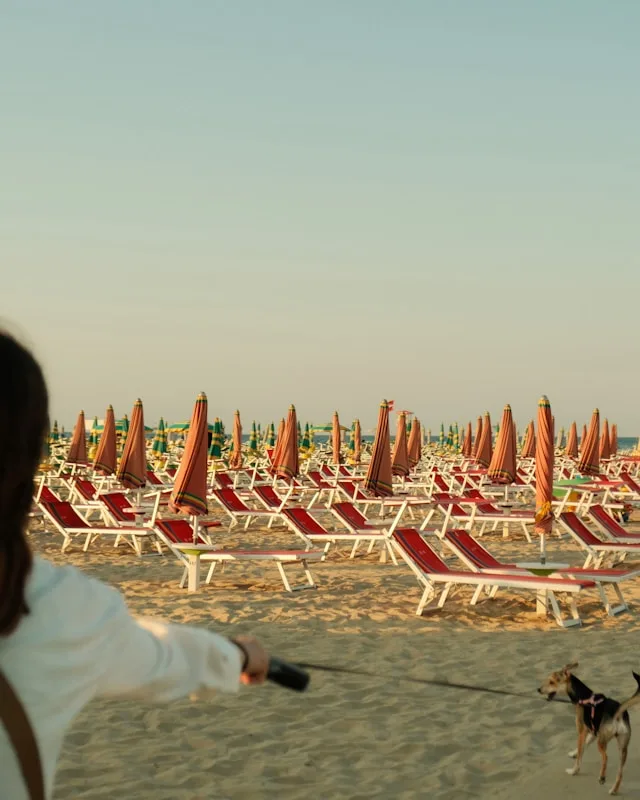
The beach economy operates from May through September. Italian labour law restricts seasonal hospitality contracts to eight months maximum, with mandatory 20-day breaks between renewals. The Rimini Fiera congress and exhibition circuit, by contrast, pushes the operational calendar deep into autumn and winter. Rimini Fiera hosted 42 trade events in 2024, generating 35% of the province's annual hospitality revenue through MICE tourism alone. The Fiera's €60 million expansion programme, running through 2027, is designed to extend this year-round anchor further.
Here is the tension the data reveals. Seventy-eight per cent of local hospitality employment remains tied to beach establishments that operate legally only five months per year. Beach workers lack transferable skills for congress servicing. Hoteliers who serve both seasons maintain dual staffing pools: one for sand and sun, another for trade exhibitions and corporate delegates. This redundancy destroys the economic efficiency of the year-round strategy the Fiera investment is meant to create.
For senior hiring leaders, the implication is direct. A General Manager capable of running a dual-season property must hold competencies that rarely overlap in one individual: high-volume beach resort operations, MICE sales and event logistics, sustainability compliance, and the digital revenue management skills needed to optimise pricing across wildly different demand profiles. The candidate who can do all of this is not browsing job boards. According to HVS Executive Search's 2024 Hospitality Leadership Report for Italy, 85% of qualified General Manager candidates at the 4-star level and above are passive. They are employed, performing, and not looking.
The seasonality constraint does not simply reduce the available months of employment. It reshapes the entire talent equation, making permanent executive roles harder to fill than they would be in a year-round market.
Where the Shortages Bite Hardest
The talent scarcity in Rimini's hospitality sector is not evenly distributed. It concentrates in three categories where demand is accelerating and supply has structurally collapsed.
Executive Chefs for High-Volume Operations
The shortage of executive chefs capable of managing 200-plus cover operations with allergen compliance and international cuisine proficiency stands at an estimated 35% of demand, according to Fipe-Confcommercio Rimini's 2024 competency survey. Mid-tier 4-star beachfront hotels report an average of 147 days to fill an Executive Chef position. That is more than double the 68-day average for front-desk managers in the same market.
The passive candidate rate for chefs with Michelin or Gambero Rosso recognition reaches 90%. These professionals operate entirely through personal networks and confidential referrals. A posted vacancy will not reach them. A standard recruitment process will not surface them. The search methodology must be fundamentally different from the approach that works for operational or administrative roles, which is why firms experienced in identifying the hidden majority of candidates who are not actively looking hold a material advantage in this segment.
Revenue Management Directors
The vacancy rate for Revenue Management Directors requiring advanced analytics capability, proficiency in IDeaS or Duetto pricing software, and German-English multilingual skills sits at 22%. Employed revenue management specialists receive two to three unsolicited recruiter approaches per month, according to Hosco's 2024 Hospitality Talent Market Report. The market is so competitive for this profile that candidates hold negotiating leverage rarely seen in Italian hospitality outside Milan.
This role has changed shape over the past three years. The implementation of AI-driven revenue management systems and IoT beach management platforms across Rimini's 4 and 5-star properties has created demand for a hybrid profile: part analyst, part technologist, part commercial strategist. The traditional revenue manager who understood Excel and occupancy cycles is no longer sufficient. The new role requires someone who can operate at the intersection of technology-enabled decision-making and hospitality commercial strategy, and that candidate pool is thin across all of Italy, not just Rimini.
Sustainability Compliance Managers
This is the starkest gap. Fewer than 15 qualified candidates exist locally for more than 40 open positions across 4 and 5-star properties seeking ESG certification. The role barely existed three years ago. It now sits at the centre of every serious capital investment decision in Rimini's hospitality sector, driven by EU Taxonomy requirements demanding Class A energy certification upgrades by 2030.
The skill set combines environmental engineering knowledge, EU regulatory fluency, waste reduction protocol design, and energy systems management. It does not exist as a standard hospitality career path. Candidates come from adjacent sectors: construction, environmental consulting, energy management. Recruiting them into hospitality requires a proposition that most Rimini employers have not yet learned to make. And the competition for these candidates is not limited to other hotels. It extends to every industry facing the same EU sustainability deadlines.
The Compensation Arithmetic That Drives Talent Away
Rimini's executive compensation sits in a structural deficit against every market it competes with for senior talent. Understanding the exact scale of this deficit is essential for any organisation trying to construct an offer that will actually land.
A Hotel General Manager at the operational level earns €75,000 to €95,000 annually in Rimini. At the complex or flagship 5-star level, the range extends to €110,000 to €150,000, with top-tier properties reaching €180,000 including performance bonuses. These figures trail Milan business hotels by 25 to 30% and Rome luxury properties by 15 to 20%, according to JLL Hotels and Hospitality's Italy Hospitality Salary Survey 2024.
For Food and Beverage Directors, the senior manager range sits at €55,000 to €70,000, rising to €85,000 to €110,000 at the executive level. Revenue Management Directors command €48,000 to €62,000 at senior specialist level, reaching €75,000 to €95,000 for cluster roles managing multiple properties. Sustainability Managers, still an emerging category, range from €45,000 to €58,000.
The domestic gap is painful. The international gap is devastating. Maldives and UAE resorts offer 50 to 80% net compensation premiums for equivalent GM roles after tax adjustments, plus accommodation packages valued at €40,000 to €60,000 annually. MSC Cruises and other international operators actively recruit at Rimini's hospitality schools, extracting talent before it has the chance to embed in the local market.
The cost of living arithmetic makes matters worse. While Rimini's housing costs are lower than Milan's, the seasonal employment model means workers must cover 12 months of expenses on eight months of wages. This effectively erodes the nominal salary in ways that year-round employers in Milan, Dubai, or the Maldives do not face. For a senior executive evaluating a career move and negotiating compensation, the calculation often favours leaving Rimini rather than staying.
This compensation deficit is not a problem that can be solved by offering 10% more. The gap is structural, and closing it requires rethinking the entire proposition: contract duration, housing support, career progression, and the quality of the role itself.
The Concession Reform That Could Reshape Everything
The most consequential regulatory event in Rimini's modern hospitality history is now unfolding. The 2021 decree mandating competitive tendering for beach concessions, upheld by EU courts in 2024, requires 40% of Rimini's shoreline concessions to undergo competitive tendering between 2026 and 2028.
The scale of disruption this represents cannot be overstated. Approximately 65% of Rimini's 1,033 beach establishments are family-owned SMEs operating on 15 to 20-year concessions granted before 2008. These are businesses built over generations, employing 30 to 50 seasonal workers each, operating on thin margins with deep local knowledge. Forced tendering may displace over 400 small operators, according to Confcommercio's 2024 position paper, consolidating control under hospitality conglomerates or external investors.
The Talent Implications of Consolidation
For the labour market, this is a bifurcation event. If large hospitality groups acquire consolidated concession portfolios, the demand profile shifts toward professional management: regional operations directors, multi-site F&B managers, compliance officers, and brand managers. These are corporate hospitality roles that family-run beach establishments never needed to fill. The talent pipeline for such roles does not exist locally because the business model that would have created it never existed here.
Simultaneously, the displacement of family operators removes a layer of informal, relationship-driven employment that has historically absorbed seasonal labour without formal recruitment processes. The market moves from a fragmented, informally managed workforce to a concentrated, professionally managed one. Every new concession holder will need to hire from scratch.
The Sustainability Paradox
There is a second tension embedded in this reform. Sixty per cent of the SMEs facing competitive tendering lack the capital for both concession tendering bonds (€100,000 to €500,000) and the green retrofitting that EU 2030 targets demand. A property cannot pursue environmental compliance and concession survival simultaneously on thin margins.
The likely outcome: Rimini achieves environmental compliance at the cost of the small-scale, character-driven hospitality model that defines its market positioning. The "serviced beach" experience that differentiates Rimini from open-access Mediterranean competitors may survive in form but change fundamentally in character. What this means for talent is that the sustainability compliance managers the market so desperately needs will be hired by the corporate consolidators, not by the family establishments being displaced. The talent shortage and the regulatory disruption are converging on the same employers.
The Original Synthesis: Capital Is Moving Faster Than Human Capital Can Follow
The analytical claim that emerges from combining these data points is this: Rimini's investment cycle and its talent cycle are operating on fundamentally different timescales, and the gap between them is widening rather than closing.
Capital can be deployed in months. A €200 million retrofitting programme can be approved, financed, and begun within a budget cycle. An exhibition centre expansion can break ground on schedule. An AI-driven revenue management system can be procured and installed.
But the sustainability manager who must certify the retrofitted building does not yet exist in sufficient numbers. The revenue management director who must operate the new pricing system requires a combination of analytical, technological, and multilingual skills that takes years to develop. The General Manager who must integrate beach operations with congress servicing with ESG compliance across a newly consolidated multi-site portfolio represents a profile so rare that the entire province may contain fewer than a dozen qualified individuals.
The University of Bologna's Rimini campus produces 400 tourism graduates annually. Seventy-five per cent leave within two years. The pipeline that is supposed to replenish this market is instead feeding Milan, Dubai, and the Maldives.
This is not a cyclical talent shortage that will correct as salaries rise. It is a systemic misalignment between infrastructure investment velocity and human capital development. The organisations that recognise this distinction will approach their hiring differently. Those that treat it as a conventional recruitment problem will continue to run searches that stall at 147 days and end without a hire.
What This Means for Hiring Leaders Operating in Rimini
For any executive responsible for filling senior hospitality roles in this market, several realities must inform strategy.
First, the passive candidate ratio in Rimini's most critical roles ranges from 75% to 90%. A traditional job posting will surface, at best, the bottom quartile of the available talent pool. The top candidates are employed, performing, and connected through personal networks that no job board or recruitment platform can access. Reaching them requires direct, confidential search executed by professionals who understand both the hospitality sector and the specific dynamics of this market.
Second, the compensation gap between Rimini and its competitors is not closing. Any offer strategy built around matching current market rates will lose candidates to Milan, Jesolo, and international markets. Organisations must construct total propositions that address the specific calculation a passive candidate makes: contract duration, housing support, career trajectory, role quality, and the working environment. A 5% salary increase against a 50% international premium is not a competitive proposition. An honest assessment of what it takes to move a senior executive who is not looking must anchor the offer design.
Third, the concession reform is about to create a wave of new demand for professional management profiles that have never existed at scale in this market. Organisations positioning to acquire consolidated beach concessions will need operations directors, compliance managers, and brand strategists. Those searches should start now, before the tendering process concludes and every consolidator enters the market simultaneously.
Fourth, the speed of search matters more in a seasonal market than in any other. A General Manager search that begins in January and closes in June has missed the entire summer operating season. In a market where the cost of a wrong or delayed senior hire is measured in lost revenue across a five-month window that cannot be recovered, the difference between a 30-day search and a 147-day search is existential.
KiTalent's approach to executive search across the hospitality and luxury sector is built for exactly this type of market: one where the candidates are passive, the timelines are compressed, and the search must reach professionals who are invisible to conventional methods. With a methodology that delivers interview-ready candidates within 7 to 10 days and a pay-per-interview model that eliminates upfront retainer risk, the firm operates at the pace this market demands. A 96% one-year retention rate across 1,450 completed placements ensures that the hire made in February is still performing in September.
For organisations competing for General Managers, Revenue Management Directors, Executive Chefs, or Sustainability Compliance Managers in Rimini's hospitality market, where the candidates you need are not visible and the cost of a slow search is measured in lost seasons, speak with our executive search team about how we approach this market.
Frequently Asked Questions
What is the average salary for a Hotel General Manager in Rimini in 2026?
Hotel General Manager compensation in Rimini ranges from €75,000 to €95,000 at the operational level, rising to €110,000 to €150,000 for complex or multi-property roles. Flagship 5-star properties can reach €180,000 including performance bonuses. These figures trail Milan by 25 to 30% and Rome by 15 to 20%. International resort markets in the Maldives and UAE offer 50 to 80% net premiums above Italian equivalents, which drives consistent executive attrition from Rimini toward international employers offering year-round contracts and accommodation packages.
Why is it so hard to hire executive chefs in Rimini?
Executive Chef recruitment in Rimini faces a 35% demand shortfall. The role requires managing 200-plus cover operations with allergen compliance and international cuisine proficiency. Average time-to-fill reaches 147 days for mid-tier 4-star properties. Ninety per cent of chefs with Michelin or Gambero Rosso recognition are passive candidates who rely on personal networks rather than job postings. Housing costs relative to seasonal wages and competition from international markets offering 2.5 to 3 times net compensation compound the difficulty.
How will the EU beach concession reform affect Rimini's hospitality sector?
The Bolkestein Directive implementation requires competitive tendering for 40% of Rimini's shoreline concessions between 2026 and 2028. Approximately 65% of the market's 1,033 beach establishments are family-owned SMEs that may lack the capital for tendering bonds of €100,000 to €500,000. Industry analysis suggests over 400 small operators face potential displacement, with consolidation shifting control toward larger hospitality groups. This will create new demand for professional management roles that barely exist in the current market.
What hospitality roles are most in demand in Rimini in 2026?
The three most acute shortages are Executive Chefs for high-volume operations (35% demand shortfall), Revenue Management Directors with AI pricing system proficiency (22% vacancy rate), and Sustainability Compliance Managers (fewer than 15 qualified local candidates for over 40 open positions). MICE integration specialists and multilingual F&B Directors are also in high demand. KiTalent's talent mapping methodology identifies qualified candidates in these categories through direct search rather than job advertising, reaching the 75 to 90% of professionals who are not actively looking.
How does Rimini's MICE sector affect hospitality employment?
Rimini Fiera generates 35% of the province's annual hospitality revenue through meetings, incentives, conferences, and exhibitions. The complex hosted 42 trade events in 2024, producing 1.4 million business visitor overnight stays. Its €60 million expansion programme through 2027 is designed to strengthen year-round demand. However, 78% of local hospitality employment remains tied to seasonal beach operations, creating a workforce mismatch where beach staff lack transferable skills for congress servicing and employers maintain costly dual staffing pools.
How can organisations compete for hospitality talent against international employers?
Competing against markets offering 50 to 80% compensation premiums requires a total proposition strategy rather than salary matching alone. Contract duration, housing support, career development pathways, and role quality must all feature in the offer. Speed matters equally: in a seasonal market, a search that closes in 30 days captures candidates that a 147-day search loses. Executive search firms specialising in direct approaches to passive candidates can compress timelines and access professionals that job boards and inbound applications never surface.