Savona's Port Automation Gamble: €280 Million in Technology, and the Talent Crisis It Created
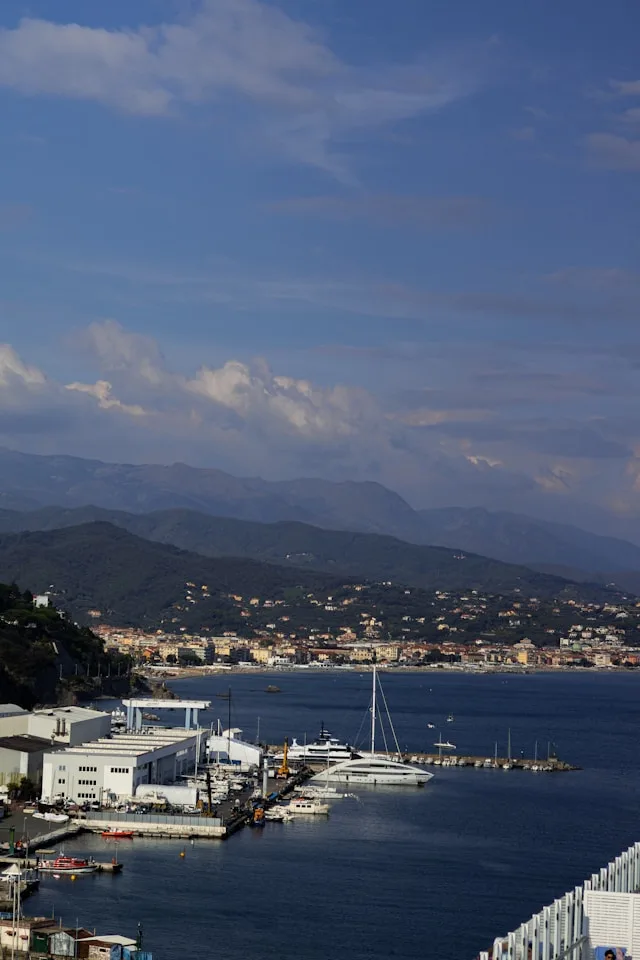
The Vado Gateway container terminal in Savona processed roughly 850,000 TEU in 2024. Automated stacking cranes and remote-controlled ship-to-shore systems run around the clock across a facility designed to handle 1.1 million TEU. The terminal sits at 77 to 80 per cent capacity utilisation, the deep-water berth draws 17.25 metres, and €280 million in Phase 2 expansion capital has already been spent. By almost every infrastructure measure, this is one of the most advanced container terminals in the Mediterranean.
Yet the facility that was built to reduce dependence on manual labour now faces a more acute hiring problem than the one it set out to solve. The traditional dockworker shortage has been partially addressed. In its place, a new category of scarcity has emerged: PLC engineers, SCADA specialists, automation maintenance technicians, and intermodal rail planners with sea-rail interface experience. These are roles that did not exist at this terminal five years ago. The talent pipeline for them barely exists in Italy today.
What follows is an analysis of how Savona's port logistics sector arrived at this paradox, what it means for the employers competing for a small pool of specialists, and what organisations hiring in this market need to understand before they begin a search that conventional methods are unlikely to complete.
The Automation Paradox at the Centre of Savona's Hiring Market
The most important analytical claim about Savona's port logistics market in 2026 is counterintuitive. It runs directly against the narrative that port authorities, terminal investors, and European infrastructure planners have promoted for the past decade.
The claim is this: the €280 million automation investment at Vado Gateway did not reduce the terminal's talent problem. It replaced one kind of worker with another kind that does not yet exist in sufficient numbers. Capital moved faster than human capital could follow.
Public discourse and port authority strategy documents continue to frame automation as a solution to labour cost and availability pressures. The evidence from the hiring market tells a different story. According to the Osservatorio del Lavoro della Regione Liguria, APM Terminals Vado maintained an open vacancy for a Senior Automation Maintenance Technician for eight months in 2024. The role required PLC programming expertise and port-specific safety certifications. It was eventually filled via internal transfer from the APM Terminals Rotterdam hub, not from the Italian labour market. Local trade publication Il Secolo XIX reported on the search difficulty in August 2024.
This is not an isolated case. For gantry crane operators with rubber-tired gantry and automated stacking crane certification, the average time-to-fill in the Savona basin exceeds six to seven months. A comparable general logistics role fills in two to three months. The automation premium on hiring difficulty is roughly double.
The implication for any organisation operating in Savona's industrial and manufacturing sector is stark. Every additional automated system installed at the terminal creates demand for maintenance and operations specialists who are already scarce. The investment that was supposed to ease workforce pressure has intensified it at the exact skill level where the market is thinnest.
Inside the Vado Gateway Ecosystem: Who Employs, Who Competes, Who Struggles
The Terminal and Its Ownership Structure
Vado Gateway is operated by APM Terminals Vado Holdings S.r.l., a joint venture split 50.1/49.9 between APM Terminals and Cosco Shipping Ports. The terminal employs approximately 450 people directly. Mediterranean Shipping Company serves as the anchor tenant, accounting for an estimated 60 to 65 per cent of throughput volume, though the facility operates as a multi-user terminal serving Ocean Network Express, Hapag-Lloyd, and feeder operators.
The broader Province of Savona hosts around 340 active logistics and transport enterprises employing roughly 8,500 people in port-related logistics, according to Unioncamere Liguria. Major freight-forwarding operations include Kuehne+Nagel, DHL Global Forwarding, and local anchor Fratelli Cosulich Group, which maintains a shipping agency and logistics hub in Vado Ligure.
The Supporting Cast and the Talent They Need
Beyond the terminal itself, the logistics basin includes Sotragu S.p.A. (dry bulk and general cargo, approximately 180 employees), Medway Italia (MSC-controlled rail operator, roughly 65 employees in Liguria), and coordination staff from Contship Italia Group. Kuehne+Nagel operates a regional distribution centre in Quiliano with approximately 120 staff.
Each of these employers draws from the same constrained talent pool. When Medway Italia needs an intermodal operations manager, it competes with Contship in La Spezia and with the inland terminals around Milan. When APM Terminals needs an automation engineer, it competes with every automated terminal in Northern Europe. The challenge of identifying and approaching passive candidates is compounded by the fact that qualified professionals in these roles are overwhelmingly employed, satisfied, and retained by contractual mechanisms including non-compete clauses and training payback agreements.
The small size of this cluster matters. A talent market of 8,500 people sounds adequate until you filter for the specific certifications, automation experience, and port-specific safety qualifications that the highest-value roles require. The effective available talent pool for the most critical positions numbers in the low hundreds across all of Italy.
Three Shortages, Three Different Problems
Automation Maintenance and Engineering
The most acute shortage sits in terminal automation: PLC engineers, SCADA specialists, and preventive maintenance managers for automated cargo handling equipment. According to Hays Italy's Digital Transformation in Logistics Report, an estimated 85 to 90 per cent of qualified candidates in the Italian market are passive. National unemployment in industrial automation sits below 2.5 per cent. Average tenure runs seven to nine years.
These figures describe a market where conventional executive recruiting methods consistently fail. Job postings reach the 10 to 15 per cent of the market that is actively looking. The other 85 per cent must be identified, mapped, and approached individually. A senior automation engineer in this market commands €55,000 to €75,000 in base salary, with an additional €8,000 to €12,000 premium for candidates holding port-specific safety certifications.
The scarcity is self-reinforcing. High average tenure means fewer professionals enter the visible job market each year. Rapid technology obsolescence means the specific skills required at Vado Gateway may not transfer cleanly from other industrial automation contexts. A PLC engineer from automotive manufacturing is not immediately deployable in a port environment without retraining and certification.
Intermodal Rail Planning
The second shortage category, intermodal rail planners with sea-rail interface experience, carries a passive candidate ratio of 75 to 80 per cent. These professionals are typically retained through non-compete clauses and training payback agreements by incumbent rail operators including Medway, Mercitalia, and TX Logistik.
The competitive intensity here was illustrated concretely in 2024. According to Lloyd's List Italia, Medway Italia recruited an Intermodal Operations Manager from Contship Italia's La Spezia operations in Q3 2024, reportedly offering a 25 to 30 per cent salary premium: an estimated €85,000 against a market rate of €65,000. This kind of premium, applied to a single hire, signals a market where normal salary benchmarks have disconnected from actual transaction prices. The posted range is one thing. What it actually costs to move a qualified person is another.
Maritime Sustainability and Compliance
The third shortage is the most extreme in percentage terms. For Maritime Sustainability Directors with EU ETS and Alternative Fuels Infrastructure Regulation compliance expertise, the passive candidate ratio exceeds 90 per cent. The total qualified talent pool in Italy numbers fewer than 200 professionals, according to Page Executive's Sustainability Practice assessment.
EU ETS Phase 4 inclusion of maritime transport has increased operational costs for carriers calling at Savona. Local forwarders face an additional €2 to €4 per TEU in carbon-handling costs, per European Commission implementation guidance. Every port operator in the Mediterranean now needs compliance leadership that barely existed as a career path five years ago. Roles at this level are filled almost exclusively through retained search or international relocation. They cannot be filled any other way, because the candidates do not apply.
What These Roles Pay: Compensation in a Market Where Money Alone Is Not Enough
Terminal Operations Director at VP level commands a base salary of €110,000 to €150,000 annually, with total compensation reaching €140,000 to €190,000 including bonus and long-term incentives. Roles requiring automation integration expertise carry a 15 to 20 per cent premium over traditional terminal management positions.
For Intermodal Directors at VP level, the base range sits at €95,000 to €130,000. However, Savona-based roles trade at a 10 to 12 per cent discount to equivalent positions in Milan or Genoa, reflecting lower cost of living and a smaller talent market.
At the specialist level, gantry crane operators earn a base of €32,000 to €38,000 under the national CCNL Logistica e Trasporti contract, rising to €45,000 to €55,000 with shift premiums and overtime.
These figures create a specific problem for Savona employers. The compensation gap between this market and its nearest competitors is not closing. Genoa pays 12 to 18 per cent more for equivalent terminal operations roles. Milan pays 25 to 30 per cent more for senior logistics engineers and supply chain directors, with materially stronger long-term incentive packages. Barcelona, for VP-level terminal directors and sustainability executives, offers 20 to 25 per cent higher total compensation with greater English-language working environment penetration, according to Drewry's Maritime HR Report.
Savona cannot compete on salary alone against Genoa, Milan, or Barcelona. The proposition that moves a passive candidate to this market must include something beyond base pay: the scale and modernity of the Vado Gateway operation, the autonomy that comes with a smaller cluster, or a role scope that a larger port's more segmented organisation cannot offer. Employers who lead their pitch with a number will lose to employers who lead with a career narrative. This is where the difference between a direct application and a headhunted approach becomes decisive.
Infrastructure Constraints That Shape the Talent Market
The talent shortages in Savona do not exist in isolation. They are shaped by physical infrastructure constraints that determine what the port can become and therefore what skills it will need.
The Rail Bottleneck
Rail capacity is the critical structural constraint. The Vado Ligure to San Giuseppe di Cairo line, connecting to the Turin-Genoa mainline, operates at 85 to 90 per cent capacity utilisation during peak hours with single-track sections limiting frequency. The terminal's on-dock rail facility can handle 16 trains daily. Rete Ferroviaria Italiana network constraints reduce feasible slots to 10 to 11 daily departures.
Current rail modal share for container traffic at Vado Gateway is 28 per cent. The Port Authority's strategic plan targets 40 per cent by 2030 to meet EU green corridor standards. But the single-track section between Albisola and Savona on the Genoa-Ventimiglia line remains the primary physical constraint. Without RFI's planned third track, delayed to 2028 or 2029, rail modal share cannot exceed 35 per cent regardless of how much the terminal invests.
This gap between regulatory ambition and physical capacity has a direct talent implication. Employers need intermodal planners who can optimise within severe constraints, not professionals accustomed to operating with excess capacity. The skill set required is different: it is closer to puzzle-solving under restriction than to scaling operations in open systems. Medway Italia plans to increase Savona-Novara-Melzo shuttle frequency from 12 to 18 weekly services by Q2 2026, but this expansion is contingent on RFI infrastructure upgrades that remain uncertain.
Road Congestion and Seasonal Disruption
Road access has deteriorated measurably. Average truck turnaround time from port to A10 highway increased from 32 minutes in 2019 to 47 minutes in 2024. Weight restrictions on A10 tunnels between Savona and Ventimiglia limit heavy container transport during peak tourist season, forcing costly nighttime operations. The pending Aurelia Bis highway project has been delayed to 2026 or 2027.
For talent acquisition leaders at port-adjacent logistics firms, this congestion is not merely an operational inconvenience. It shapes the quality-of-life proposition for candidates considering relocation. A senior automation engineer weighing a Savona offer against a Rotterdam or Barcelona opportunity will factor commute reliability and regional infrastructure quality into the decision.
The Regulatory Pressure That Is Creating Roles Faster Than the Market Can Fill Them
The EU's regulatory agenda for maritime decarbonisation is simultaneously the most important growth driver and the most acute talent pressure point for Savona's port cluster.
EU ETS Phase 4 applies to maritime transport through 2030. The Alternative Fuels Infrastructure Regulation mandates shore-power availability by 2030. Vado Gateway requires an estimated €30 to €40 million in additional investment to comply with AFIR, and the Blue Med hydrogen corridor initiative targets LNG-to-hydrogen bunkering transition by 2027, backed by €45 million in EU PNRR funding for shore-power and electrification.
Each of these regulatory requirements generates demand for professionals who combine technical engineering knowledge with compliance expertise and commercial awareness. The Chief Sustainability Officer role in a port logistics division did not meaningfully exist in Italy before 2022. It is now one of the most critical hires any terminal operator can make, and the national talent pool for it numbers below 200 qualified individuals.
This is the hiring environment where talent mapping becomes essential rather than optional. When the entire national pool for a critical role can be counted in the low hundreds, the question is not whether qualified people exist. They do. The question is whether your search methodology can identify them, determine which ones might consider a move, and construct a proposition compelling enough to initiate a conversation. A job posting published on a careers page will not accomplish this. It will reach the small fraction who happen to be looking. The other 90 per cent require a fundamentally different approach.
What Organisations Hiring in This Market Must Understand
The 2026 outlook for Savona's port logistics market carries a specific tension. The Western Ligurian Sea Port Authority forecasts 3 to 5 per cent volume growth for container traffic, contingent on Red Sea route stabilisation and recovery of Asia-Mediterranean trade lanes. Growth means more throughput, more automated equipment running at higher utilisation, more rail services to coordinate, and more regulatory obligations to meet. Every growth percentage point translates into additional demand for the exact professionals this market cannot find quickly.
The firms that will hire successfully in Savona's logistics market share three characteristics. First, they understand the compensation reality: Savona cannot match Milan or Genoa on base salary, so the offer must be structured around role scope, autonomy, and career trajectory. The hidden cost of a bad executive hire in a market this thin is amplified, because replacing a failed placement takes longer than the original search.
Second, they begin searches before the vacancy is urgent. In a market where time-to-fill for automation specialists exceeds six months, reactive hiring is structurally late. A proactive talent pipeline approach, where relationships with potential candidates are built before a role opens, is the only method that consistently delivers results within a reasonable timeframe.
Third, they use search methods calibrated to the passive candidate ratios that define this market. When 85 to 90 per cent of automation engineers and 90 per cent of sustainability directors are passive, any strategy that relies primarily on inbound applications is reaching, at best, the bottom 10 to 15 per cent of the available talent. The rest must be found through direct headhunting methodology that combines systematic market intelligence across AI-enhanced technology platforms with the human judgement required to approach a senior professional who is not looking for a job and convince them that a conversation is worth their time.
KiTalent works with organisations facing exactly this kind of market: high-value roles, thin talent pools, passive candidate ratios above 80 per cent, and a competitive environment where speed and method determine whether a search succeeds or stalls. With interview-ready candidates delivered within 7 to 10 days and a pay-per-interview model that removes the risk of upfront retainer commitments, the approach is designed for markets where conventional recruitment has already been tried and found insufficient. A 96 per cent one-year retention rate for placed candidates confirms that speed does not come at the expense of quality.
For organisations competing for automation, intermodal, and sustainability leadership in Savona's port logistics cluster, where the qualified talent pool is measured in hundreds rather than thousands and every month of vacancy translates directly into operational and regulatory risk, speak with our executive search team about how we approach this market.
Frequently Asked Questions
What are the hardest roles to fill in Savona's port logistics market?
Three role categories present the most acute hiring difficulty. Terminal automation specialists, including PLC engineers and SCADA experts, carry passive candidate ratios of 85 to 90 per cent and an average time-to-fill exceeding six months. Intermodal rail planners with sea-rail interface experience have passive ratios of 75 to 80 per cent and are typically retained through non-compete agreements. Maritime sustainability directors with EU ETS compliance expertise represent the most extreme scarcity, with a national Italian talent pool below 200 qualified professionals and passive ratios above 90 per cent.
What does a Terminal Operations Director earn in Savona?
A Terminal Operations Director at VP level in Savona commands a base salary of €110,000 to €150,000 annually. Total compensation including bonus and long-term incentives reaches €140,000 to €190,000. Roles requiring automation integration expertise carry a 15 to 20 per cent premium over traditional terminal management. However, equivalent roles in Genoa pay 12 to 18 per cent more, and Milan-based supply chain director positions pay 25 to 30 per cent more with stronger incentive structures.
Why is Savona's port automation making hiring harder, not easier?
Vado Gateway's €280 million automation investment replaced traditional manual roles with a smaller number of higher-skill positions. Automated stacking cranes and remote-controlled ship-to-shore systems require PLC programmers, SCADA specialists, and certified maintenance technicians. These specialists are scarcer than the dockworkers the automation displaced. National unemployment in industrial automation sits below 2.5 per cent, and the port-specific safety certifications required further narrow the available pool. The result is a more acute shortage in a more critical role category.
How does Savona compare to Genoa for port logistics careers?
Genoa offers a larger ecosystem at 2.6 million TEU versus Savona's approximately 1.1 million, broader career progression paths, and concentration of shipping line headquarters including MSC and Hapag-Lloyd Italy. Base salaries run 12 to 18 per cent higher for equivalent terminal operations roles. Savona's advantage lies in the modernity of the Vado Gateway facility, greater individual role scope in a smaller organisation, and lower cost of living. Senior candidates considering both markets should evaluate role autonomy alongside compensation.
What search approach works for port logistics executive hiring in Italy?
With passive candidate ratios exceeding 85 per cent for the most critical roles, executive search firms specialising in direct headhunting consistently outperform job advertising and recruitment agencies. KiTalent uses AI-enhanced talent mapping to identify qualified professionals across the full market, including candidates who are employed, not actively searching, and retained by contractual mechanisms. This systematic approach reaches the 85 to 90 per cent of qualified candidates who will never see a job posting.
What infrastructure constraints affect hiring decisions in Savona's port market?
Rail capacity on the Vado Ligure to San Giuseppe di Cairo line operates at 85 to 90 per cent utilisation with no deliverable expansion before 2028. Road congestion has increased average truck turnaround from 32 to 47 minutes since 2019. These constraints shape both the operational roles available and the quality-of-life proposition for candidates considering relocation. Organisations hiring in this market must factor infrastructure limitations into their candidate pitch, particularly when competing against better-connected locations.