Savona's Maritime Green Transition Is Hiring for Roles the Local Labour Market Cannot Fill
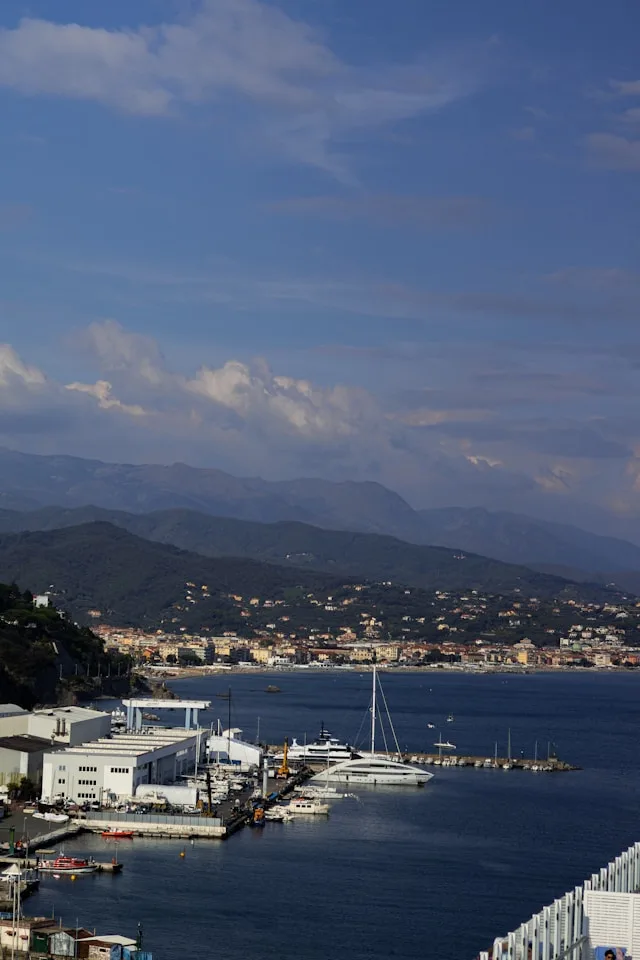
Savona's port system is midway through a €42 million infrastructure overhaul designed to make it one of Italy's first shore-power-enabled cruise terminals. The investment, co-funded through Italy's PNRR recovery programme and by Costa Crociere, is scheduled to activate at the Torrebianca cruise terminal by Q2 2026. It arrives alongside a 120-berth marina expansion at nearby Varazze and Grimaldi Lines' deployment of a hybrid ferry on the Sardinia route. By every capital expenditure measure, Savona's maritime cluster is accelerating.
The workforce required to operate this new infrastructure is not accelerating with it. The province of Savona lost 8.3% of its working-age population between 2015 and 2024. Maritime logistics job postings rose 34% over the same period, while qualified applicants fell 28%. The three hardest roles to fill are environmental compliance managers, yacht refit marine engineers, and LNG-certified terminal operations managers. None of these roles can be staffed from the seasonal hospitality pipeline that dominates Savona's training infrastructure. They require specialists who, in most cases, already hold permanent positions elsewhere and are not looking.
What follows is an analysis of the forces reshaping Savona's cruise, ferry, and yachting cluster: where the capital is going, why the talent is not following, and what hiring leaders operating in this market must understand before their next search.
Italy's Third Cruise Hub Faces a Capacity Ceiling
Savona-Vado Ligure is Italy's third-largest cruise port by passenger volume, handling approximately 1.2 million cruise passengers annually as of 2024, behind only Civitavecchia and Naples. The 2025 season confirmed what port operators had anticipated: the Stazione Marittima's single 300-metre quay can accommodate one mega-ship above 300 metres or two mid-size vessels below 280 metres. No additional berths are planned for 2026. During peak months, occupancy at the terminal exceeded 95%, forcing sequential berthing protocols that delayed turnarounds and compressed shore-side logistics windows.
This physical constraint creates a zero-sum dynamic for homeporting contracts. Costa Cruises' LNG-powered Costa Smeralda and Costa Toscana, each carrying 5,200 passengers, already saturate the Torrebianca terminal's baggage handling and customs clearance capacity when conducting simultaneous turnarounds. The terminal cannot grow into the newest generation of 350-metre-plus vessels. Royal Caribbean's Icon-class and MSC's World-class ships are physically excluded by the 340-metre length limit and 11-metre draft.
For hiring leaders, the implication is specific. Savona's maritime employers are not competing for the mega-ship segment. They are competing in the premium-large segment, where operational excellence and turnaround speed determine whether a cruise line renews its homeporting contract. That means the quality of terminal operations staff matters more here than at ports where sheer volume absorbs inefficiency.
Ferry and Freight: A Quiet Strategic Pivot
Grimaldi Lines and Corsica Ferries together handle roughly 800,000 ferry passengers annually on routes to Sardinia and Corsica. Grimaldi's 2026 deployment of the Cruise Smeralda hybrid ferry on the Savona-Porto Torres route increases freight capacity by 15% but passenger capacity by only 5%. The ratio signals a strategic pivot toward freight tourism, where revenue per vessel movement is less dependent on seasonal passenger peaks.
This shift has direct talent consequences. Freight-optimised operations require logistics coordinators, customs specialists, and hazardous-goods handlers whose skill sets differ materially from the guest services staff who dominate Savona's seasonal hiring pipeline. The port's labour market is being asked to supply two diverging talent profiles simultaneously, from a population base that is contracting.
The €42 Million Shore Power Gamble
The centrepiece of Savona's 2026 infrastructure programme is cold ironing: shore power connectivity that allows docked cruise ships to switch off their engines and draw electricity from the grid. The €42 million investment is split between €28 million in PNRR public funds and €14 million in private co-investment from Costa Crociere. Italy's Decreto Clima mandates shore power availability at major cruise ports by 2030. Savona's 2026 activation date puts it ahead of that deadline. If it hits it.
The technical challenge is not the electrical infrastructure itself. It is finding the people qualified to install, commission, and operate it. Shore power integration requires marine electrical engineers who understand both high-voltage shipboard systems and port-side grid architecture. This is not a standard electrician's qualification. It sits at the intersection of naval engineering, power systems engineering, and maritime safety certification. The research shows that environmental compliance managers with maritime experience already take 90 to 120 days to recruit in the Ligurian port cluster, more than double the 45 to 60 days for equivalent roles in manufacturing.
The regulatory pressure compounds the hiring pressure. Maritime transport entered the EU Emissions Trading System in 2024. Cruise and ferry operators must purchase allowances for 40% of their emissions now, rising to 100% by 2026. Compliance costs for Costa and Grimaldi operations through Savona are estimated at €8 to €12 million annually by 2026. Every month of delay in activating shore power is a month of emissions allowance costs that could otherwise be avoided. The financial consequences of failing to recruit the right compliance and engineering leaders are not hypothetical. They are quantifiable in millions of euros per year.
Why the Shore Power Talent Pool Is Almost Entirely Passive
Environmental compliance officers in the maritime sector combine EU ETS expertise with port operations knowledge. According to the Federazione del Mare's 2024 report on critical competencies in Italy's blue economy, qualified candidates are typically retained with non-compete clauses and 90- to 120-day notice periods. They are functionally unavailable to any active job market. LNG-certified terminal operations managers are similarly passive. The technology is recent enough that the pool of professionals holding both LNG safety certification and cruise terminal experience is small and almost exclusively employed.
The ratio of active to passive candidates for marine engineers with superyacht refit experience is estimated at 1:8 in Liguria, with unemployment in this specialism below 2%. The average tenure at current employer is 4.2 years. These are not professionals browsing job boards. They are professionals who must be identified, approached, and given a compelling reason to consider a move. The distinction between active and passive candidate markets is not academic in Savona. It determines whether a search produces candidates at all.
The Yacht Refit Sector: Higher Value, Lower Visibility
The analytical claim that this article's data most clearly supports, and that the data does not state directly, is this: Savona's maritime cluster is systematically under-investing in the talent pipeline for its highest-value, most resilient sector while over-investing in the pipeline for its most volatile one.
The yacht refit sector, anchored by San Giorgio del Porto's operations at Vado Ligure and supported by a network of subcontractors across the western Liguria yachting corridor, employs approximately 1,200 direct workers in the province. It offers year-round employment, wages growing at 4.2% annually, and stronger local economic multipliers than cruise hospitality, where wage growth runs at 1.8%. The refit sector's waiting list for 90-metre-plus superyacht slots at Savona extends 8 to 10 months. Demand is not the constraint. Labour is.
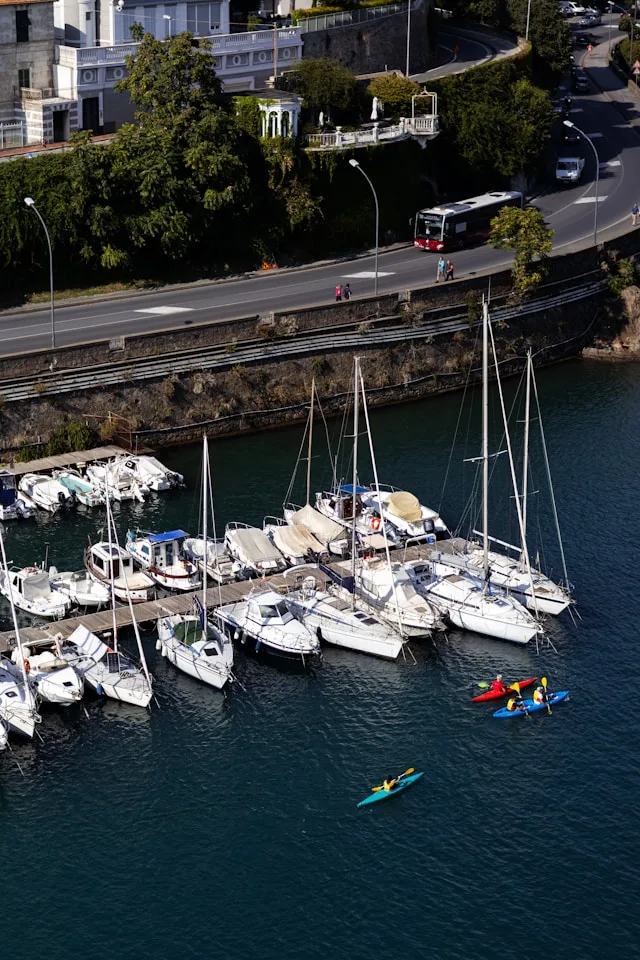
Yet public policy attention and vocational training resources remain overwhelmingly focused on cruise passenger volumes and Costa Crociere's homeporting strategy. The training pipeline feeds hospitality and guest services roles for the cruise sector. It does not feed the advanced manufacturing and engineering roles that the yacht refit sector needs. The Marina di Varazze expansion, adding 120 berths for 40- to 60-metre vessels by 2026, will increase demand for refit technicians at exactly the moment when the supply of qualified marine engineers is already running an 18 to 22% vacancy rate across refit yards in the region.
Viareggio Is Winning the Refit Talent War
Savona's yacht refit employers compete for the same specialists as Viareggio, 180 kilometres south, where the Azimut-Benetti and Perini Navi supply chains have created a dominant superyacht cluster. According to the Federazione del Mare's 2024 mobility report, Viareggio firms now offer signing bonuses of €5,000 to €8,000 for experienced yacht electricians. This practice has not yet become typical in Savona.
The Viareggio cluster also benefits from a stronger vocational training pipeline through Tuscany's Istituto Tecnico Nautico networks. Similar salary levels, lower cost of living, and a larger community of practice make it a more attractive destination for early-career marine engineers. Savona's refit sector is therefore fighting a two-front talent war: against Genoa for corporate and operations roles, and against Viareggio for the hands-on technical specialists who actually perform the refit work. The compensation benchmarking data shows that Genoa commands a 12 to 18% salary premium for equivalent terminal operations and engineering roles. Savona sits in the middle, paying less than Genoa and offering less community than Viareggio.
The Seasonality Trap and Its Retention Cost
Approximately 60% of cruise and ferry-related employment in Savona is seasonal, concentrated between April and October. Italy's CCNL Commercio/Turismo collective bargaining agreement mandates permanent contract conversion after 24 months of seasonal work, but employers report 35% turnover in guest-facing roles between seasons. The pattern is self-reinforcing: seasonal workers leave for year-round employment elsewhere, employers restart recruitment each spring, training investment evaporates, and service quality suffers during the early weeks of each season.
This volatility does not directly affect the executive and specialist roles that are hardest to fill. Environmental compliance managers and terminal operations directors are year-round positions. But it shapes the broader employment brand of Savona's maritime cluster. A senior marine engineer considering a move to Savona sees a labour market dominated by seasonal contracts, limited vertical career progression, and a port system that, for all its investment in physical infrastructure, has not built an equivalent reputation for investing in its people. The proposition required to move a passive candidate out of a stable position in Genoa or Viareggio must overcome that perception.
The A10 motorway bottleneck adds a practical deterrent. Cited by 78% of cruise operators in regional surveys as a peak Saturday constraint, the Autostrada dei Fiori is the primary passenger and provisioning corridor into the port. For professionals commuting from Genoa, this transforms a 30-kilometre distance into an unreliable daily journey. For those considering relocation, Savona's housing market offers lower costs than Genoa but fewer amenities and a smaller professional community. These are the friction costs that do not appear in salary benchmarks but determine whether a candidate accepts an offer.
What Savona's Maritime Roles Actually Pay
Compensation data for Savona's maritime cluster is not publicly disaggregated from the broader Genoa-Savona metropolitan labour market. The following ranges, drawn from the Michael Page Italy Salary Guide 2024 and the Hays Italy Maritime and Shipping Salary Report 2024, represent directional benchmarks for the Ligurian maritime cluster with premiums for cruise and yachting specialisations.
A Technical Director overseeing yacht refit operations commands €110,000 to €140,000 at the executive level, plus performance bonus, with senior specialists in the €65,000 to €80,000 range. Cruise Terminal Operations Managers at the executive level earn €90,000 to €120,000. Environmental Compliance Managers reach €85,000 to €110,000 at ESG Director level. Shore Excursions and Revenue Management Directors sit at €75,000 to €95,000.
Roles requiring dual competency in maritime operations and environmental compliance command 15 to 20% premiums above standard logistics management salaries. This premium reflects scarcity, not seniority. A compliance officer who understands both EU ETS reporting requirements and LNG bunkering safety protocols is worth more than someone who understands only one. The market is pricing this intersection accurately. It is not producing enough people who occupy it.
The Barcelona Factor
The most disruptive competitor for Savona's senior maritime talent is not Genoa or Viareggio. It is Barcelona. As a major Western Mediterranean cruise homeport competing for the same itineraries, Barcelona offers 25 to 35% higher gross salaries for cruise operations executives, an English-language working environment that attracts bilingual Italian talent, and hybrid remote and office arrangements for shore-side roles. These flexible arrangements are rare in Savona's hands-on port operations environment. For a senior Italian professional weighing a career move with international scope, Barcelona represents a qualitatively different proposition: higher pay, broader career options, and a city with deeper professional infrastructure.
This international draw compounds the domestic competition from Genoa. It means Savona's hiring leaders are not just competing within Liguria. They are competing across the Western Mediterranean for every senior operations and compliance hire.
What This Market Demands From Hiring Leaders
The convergence of infrastructure investment, demographic contraction, and regulatory pressure creates a hiring environment where conventional methods reach a fraction of the viable candidate pool. For the three most critical role categories in Savona's maritime cluster, the talent that matters is not on any job board. Marine engineers with superyacht refit experience are 88% passive. LNG-certified terminal operations managers are almost exclusively employed. Environmental compliance officers are retained behind non-compete clauses and 90-day notice periods.
A talent mapping approach that identifies where these specialists currently sit, what would motivate them to move, and what package is required to make the move rational is not a luxury in this market. It is a precondition for conducting a search that produces candidates. The alternative is a posting that runs for four to six months, attracts applicants from adjacent but not equivalent backgrounds, and ultimately fills the role with a compromise hire whose learning curve costs more than the search savings.
The capital committed to Savona's port system through 2026 is real. The shore power activation, the marina expansion, the hybrid ferry deployment, and the rising EU ETS compliance costs all require specific human capabilities to be present and functional on schedule. Delays in any of these programmes have direct financial consequences measured in regulatory fines, lost homeporting contracts, and refit revenue that moves to Viareggio or Genoa instead.
For organisations hiring in Savona's maritime cluster, where the candidate pool is small, predominantly passive, and contested across three geographies simultaneously, KiTalent delivers interview-ready executive candidates within 7 to 10 days through AI-powered identification of professionals who are not visible through conventional channels. With a 96% one-year retention rate and a pay-per-interview model that eliminates upfront retainer risk, speak with our executive search team about how we approach this market.
Frequently Asked Questions
What are the hardest maritime roles to fill in Savona?
The three most acute shortages are in environmental compliance managers with EU ETS and maritime law expertise, marine electrical engineers qualified for shore power integration, and LNG-certified cruise terminal operations managers. Environmental compliance roles take 90 to 120 days to fill in the Ligurian port cluster, more than double the time for comparable positions in manufacturing. Marine engineer vacancy rates across refit yards in the region run at 18 to 22%. These shortages reflect the intersection of multiple specialist disciplines rather than a general lack of candidates.
What do maritime executives earn in Savona and Liguria?
Executive-level compensation in Savona's maritime cluster ranges from €85,000 to €140,000 depending on the role. Technical Directors in yacht refit earn €110,000 to €140,000 plus performance bonus. Cruise Terminal Operations Managers at executive level earn €90,000 to €120,000. ESG Directors with maritime compliance expertise command €85,000 to €110,000. Dual-competency roles combining maritime operations and environmental compliance attract a 15 to 20% premium above standard logistics management pay.
How does Savona compete with Genoa for maritime talent?
Genoa offers 12 to 18% higher base salaries for equivalent operations and engineering roles, a larger employer base including Costa Crociere and MSC Cruises headquarters, and clearer vertical career progression to corporate positions. Savona's roles are operationally focused with limited upward mobility within the same employer. To compete, Savona employers must construct offers that address career trajectory and quality of life, not just base compensation. Executive search firms specialising in passive candidate identification can help hiring leaders reach professionals in Genoa who might consider a move to Savona for the right role.
What is cold ironing and why does it affect hiring in Savona?
Cold ironing, or shore power, allows docked ships to draw electricity from the port grid instead of running onboard engines. Savona's Torrebianca terminal is scheduled to activate shore power by Q2 2026, backed by €42 million in PNRR and private investment. The technology requires marine electrical engineers who understand both high-voltage shipboard systems and port-side grid architecture. This rare combination of skills has created a specialist talent bottleneck that standard recruitment channels cannot resolve.
Why is the yacht refit sector important for Savona's maritime economy?
The western Liguria yachting cluster employs approximately 1,200 direct workers in the province, offering year-round employment and wage growth of 4.2% annually compared to 1.8% in cruise hospitality. Superyacht refit slots at Savona carry an 8 to 10 month waiting list, indicating strong demand. The sector provides higher-value, more stable employment than seasonal cruise operations, yet receives less public training investment. For organisations building leadership teams in industrial and manufacturing sectors, the yacht refit segment represents one of Savona's most resilient economic anchors.
Are maritime candidates in Savona mostly active or passive job seekers?
The split depends entirely on the role. Seasonal guest services positions such as check-in agents and baggage handlers attract high volumes of active applicants. But the specialist and executive roles driving Savona's growth are overwhelmingly passive markets. Marine engineers with superyacht refit experience show an active-to-passive ratio of approximately 1:8, with unemployment below 2%. LNG-certified terminal managers and maritime environmental compliance officers are almost exclusively passive, often retained with non-compete clauses and 90-day-plus notice periods.