Stuttgart's Financial Services Hiring Problem: Engineering Capital That Cannot Fill Its Own Finance Technology Roles
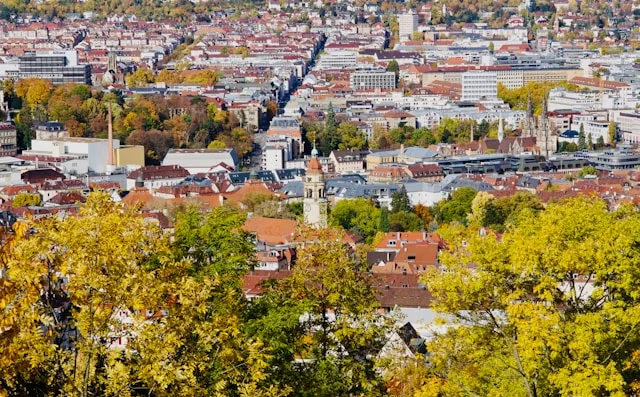
Stuttgart produces more engineering graduates per capita than any other German city. Its two anchor financial institutions, LBBW and Börse Stuttgart, are executing their most ambitious technology strategies in a decade. The regulatory calendar, led by DORA implementation since January 2025, has created mandatory hiring timelines that cannot be deferred. And yet the roles that matter most to these institutions remain open for five months or longer.
The contradiction is specific and stubborn. This is not a market lacking in technical talent. It is a market where technical talent does not flow into financial services. Stuttgart's industrial champions, Porsche, Bosch, Mercedes-Benz, and their tier-one suppliers, absorb engineering graduates with offers that financial institutions cannot match on brand, on mission, or on career trajectory. The 35% graduate retention rate in regional finance tells only part of the story. The more consequential figure is the one that does not appear in university surveys: the proportion of qualified candidates who never consider a financial services career in Stuttgart at all.
What follows is a ground-level analysis of the forces pulling Stuttgart's financial sector in two directions simultaneously. The traditional capital markets business remains profitable and stable. The technology, regulatory, and sustainability demands layered on top of it require a workforce that does not yet exist in sufficient numbers in this region. This article examines where the gaps are sharpest, what they cost, what competing markets are offering the same candidates, and what organisations hiring in Stuttgart's financial sector need to understand before they commit to a search.
The Two-Speed Financial Sector in [Baden-Württemberg](/baden-wurttemberg-germany-executive-search)
Stuttgart's financial sector is not shrinking. It is splitting. The traditional business of corporate lending, securities trading, and mortgage finance generates stable revenue but flat or declining headcount. The growth functions, compliance technology, digital assets, ESG advisory, and AI-driven credit analytics, are expanding rapidly but into a talent vacuum the region has never faced before.
LBBW, Germany's largest state-backed bank by total assets at €333 billion, recorded a pre-tax profit of €1.45 billion for 2024, up 8% year on year. Its corporate banking unit expanded loan volumes to Baden-Württemberg's automotive suppliers by 12% despite sectoral headwinds. The bank employs approximately 10,800 full-time equivalents across the Stuttgart region and remains the largest private-sector employer in local financial services.
Börse Stuttgart Group, operating with around 600 employees, maintained its position as Germany's second-largest securities exchange by trading volume in securitised derivatives. Its retail market share in listed derivatives held at approximately 60% through 2024, with €115 billion in trading volumes.
Where Growth Is Concentrating
The growth, and the hiring pressure, concentrates in three areas that barely existed as distinct functions five years ago.
First, digital assets. Börse Stuttgart Digital Exchange (BSDEX) now services more than 40 institutional clients for crypto custody and tokenised securities. The exchange plans to expand BSDEX into tokenised money market funds and real estate assets, projecting 50% revenue growth in digital assets by end of 2026. This expansion requires an estimated 80 to 100 additional blockchain infrastructure specialists and regulatory counsel. It represents the exchange's largest single hiring initiative since 2019.
Second, regulatory technology. DORA took effect in January 2025, mandating enhanced ICT risk management and incident reporting across all financial institutions. LBBW's 2026 strategic plan allocates €300 million for technology investment, primarily targeting DORA compliance infrastructure and AI-driven credit analytics. The bank projects net hiring of 200 to 250 IT specialists and risk managers against an annual attrition rate in these categories that already exceeds 15%.
Third, sustainable finance. LBBW has structured €8.2 billion in sustainable corporate bonds for regional manufacturing clients transitioning to electric vehicle production. The Stuttgart Stock Exchange launched a dedicated green bond segment in 2024, listing 45 instruments with combined volume of €12 billion. Every one of these instruments requires ESG data verification, taxonomy alignment, and ongoing reporting. The people who do that work are in extremely short supply.
The net effect is a sector projecting modest overall headcount growth of 2 to 3% for 2026, but with the composition of that growth concentrated entirely in specialisms where the candidate pool is thinnest.
The Translation Gap That Universities Cannot Close
This is the original analytical tension at the heart of Stuttgart's financial hiring problem, and it is the insight that most hiring leaders in the region have not fully absorbed. Stuttgart does not have a talent shortage in the conventional sense. It has a translation failure.
The city and its surrounding universities produce Germany's highest per-capita output of mechanical and software engineering graduates. The Federal Statistical Office confirms this. The quantitative skills these graduates possess, programming in Python, statistical modelling, systems architecture, are precisely the skills that LBBW, Börse Stuttgart, and DZ HYP need for their most critical open roles. The raw material exists in abundance.
But the translation from engineering competence to financial services capability requires 18 to 24 months of domain-specific upskilling. An engineer who can write excellent Python code cannot perform quantitative credit risk modelling without understanding Basel frameworks, BaFin reporting requirements, and the specific risk taxonomy of corporate lending. A systems architect who has designed cloud infrastructure for an automotive OEM cannot build DORA-compliant ICT resilience without understanding incident classification, third-party risk management, and the specific reporting obligations that came into force in January 2025.
The IHK Stuttgart Skills Gap Analysis published in 2024 documented this translation gap explicitly. Employers described it as the single largest constraint on their hiring plans. And the constraint is getting worse, not better, because DORA's compliance deadlines do not allow for 18-month onboarding programmes. The regulation is live now. The roles need to be filled by people who can operate from day one.
Why the Industrial Sector Wins the Competition for Graduates
The translation gap would matter less if financial institutions could attract graduates willing to make the transition. They largely cannot. Stuttgart's industrial employers, Porsche, Bosch, Mercedes-Benz, and the region's advanced manufacturing firms, offer engineering graduates something that banks and exchanges struggle to match: a sense of building physical products.
Compensation is comparable. Career trajectories in both sectors lead to senior technical or management roles within similar timeframes. But brand identity and mission clarity favour the industrial sector decisively. A software engineer at Porsche works on vehicle autonomy systems. A software engineer at LBBW works on credit risk models. Both are intellectually demanding. Only one generates the kind of narrative that attracts top engineering talent out of university.
The University of Stuttgart's alumni survey from 2023 showed only 35% of graduates remaining in regional finance roles after graduation. The rest move into automotive technology, industrial software, or leave the region entirely. This figure has not improved. And for the graduates who do stay, they are recruited into general technology roles rather than the hybrid regulatory-technical positions where the acute shortages sit.
Compensation Realities: What Stuttgart Pays and Where It Loses
Stuttgart's financial services compensation is competitive within the regional context. It is not competitive against the three markets that draw its most valuable senior professionals away. The gap is not uniform. It is widest in exactly the roles where shortages are most acute.
For Head of ESG or Sustainable Finance roles in corporate banking, senior specialists with 8 to 12 years of experience command base salaries of €115,000 to €135,000, with total compensation reaching €130,000 to €155,000 including bonus. At executive or VP level, where function leadership is involved, base salaries rise to €180,000 to €220,000, with total compensation of €220,000 to €280,000 plus long-term incentives at Landesbank-level institutions.
Chief Information Security Officers and Heads of ICT Risk, now the most urgently required profiles due to DORA, earn €125,000 to €150,000 at the senior specialist level and €200,000 to €260,000 in total compensation at executive level. These figures represent premiums of 15 to 20% above 2023 levels, reflecting the regulatory urgency.
Digital assets and blockchain infrastructure leads earn €110,000 to €140,000 at senior manager level, with a scarcity premium of 10 to 15% above traditional IT roles. At the executive level, Head of Digital Exchange Technology packages reach €190,000 to €250,000, with equity or virtual share participation at fintech subsidiaries.
The Frankfurt and Zurich Differential
These figures look reasonable until compared with what the same professionals earn in competing markets. Corporate banking relationship directors in Stuttgart earn total compensation of €240,000 to €320,000 at executive level, which according to the McLagan Regional Banking Compensation Survey lags Frankfurt by 18 to 22% for equivalent roles. Frankfurt draws 35 to 40% of Stuttgart's outbound senior finance talent, according to LinkedIn Talent Insights migration data from 2024.
The compensation differential with Zurich is more severe. The Swiss Banking Association's recruitment statistics indicate that senior wealth managers and private banking technology executives moving from Stuttgart to Zurich realise net compensation advantages of 40 to 60% after tax adjustment. Zurich is accessible within 2.5 hours by high-speed rail. For a senior professional weighing a career move, the calculation is straightforward.
Munich competes specifically for asset management and insurtech talent, offering compensation within 5% of Stuttgart but with the presence of Allianz Global Investors, Amundi Germany, and Munich Re. Berlin dominates fintech technical recruitment with lower cost of living, startup equity cultures, and remote-first policies that Stuttgart's traditional institutions struggle to offer.
The implication for any Stuttgart-based institution running a senior search is clear. Compensation alone will not close a search in this market. The counteroffer risk is real, but the larger risk is never reaching the candidate at all because they are already fielding offers from markets that pay materially more.
The DORA Effect: Regulation as a Hiring Accelerant
DORA's implementation in January 2025 created the sharpest single hiring pressure point in Stuttgart's financial sector in a decade. The regulation mandates enhanced ICT risk management frameworks, third-party risk oversight, and incident reporting protocols across all regulated financial entities. It is not optional and it is not deferrable.
The impact falls disproportionately on mid-sized institutions. DZ HYP AG, headquartered in Stuttgart with a €45 billion loan portfolio, has publicly stated that compliance costs will absorb 12 to 15% of its 2025 technology budget. This constraint is paradoxical: the regulation requires hiring specialists, but the cost of compliance restricts the budget available for those hires.
Across the Stuttgart administrative region, the Federal Employment Agency reported 1,400 unfilled vacancies in financial services and insurance as of Q4 2024. That figure represents a 23% increase from 2023. Average time-to-fill extended from 68 days to 94 days over the same period. For the specific roles that DORA demands, the picture is far worse.
The Five-to-Seven Month Search
Recruitment data aggregated by Hays Germany indicates that roles requiring both BaFin regulatory knowledge and Python or SQL programming skills at Stuttgart institutions typically take five to seven months to fill. Forty percent of these searches fail entirely and require restructuring of the role. The failure pattern is consistent: the candidate pool is so thin that by the time an institution assembles a shortlist, the strongest candidates have accepted offers elsewhere.
ICT risk and cybersecurity specialists occupy a 90% passive candidate market in the Stuttgart region. According to the Bitkom Federal IT Association's skills shortage analysis, unemployment in this specialism is effectively zero. Candidates transition directly between employers without active job searching. Average tenure is 4.2 years, with movement triggered exclusively by external solicitation.
For hiring leaders at Stuttgart's financial institutions, this creates a structural problem that traditional recruitment methods cannot address. Posting a role and waiting for applications reaches, at best, 10% of viable candidates. The other 90% must be identified, approached, and engaged through direct headhunting methods that reach professionals who are not looking.
Digital Assets: Building a Team Through Acquisition
Börse Stuttgart's digital asset strategy illustrates both the ambition and the constraint facing this market. BSDEX has grown to service more than 40 institutional clients for crypto custody and tokenised securities. The exchange's 2026 roadmap calls for expansion into tokenised money market funds and real estate assets. The blockchain infrastructure talent required for this expansion does not exist in Stuttgart in sufficient numbers.
According to reporting by Finance Forward, Börse Stuttgart Digital Exchange competed publicly for blockchain infrastructure architects against crypto-native firms and international exchanges. The exchange ultimately resorted to acquiring development teams through asset purchases, including the acquisition of Commerzbank's blockchain custody assets in 2023, rather than filling roles individually. This approach, buying companies to acquire their people, is an unusual arrangement that signals the depth of the talent constraint.
The retention challenge compounds the hiring challenge. Hired digital talent at BSDEX faces a specific risk: BaFin's conservative regulatory timeline for crypto custody licensing and MiCA implementation has created approval bottlenecks of 12 to 18 months. Product launches stall. Engineers sit idle on projects that are technically ready but regulatory blocked. Meanwhile, less regulated crypto-native firms in Berlin or Zurich extend offers with immediate deployment. The exchange may be forced to pay retention premiums for capacity that regulation prevents it from using.
This tension between digital expansion and regulatory friction represents one of the most consequential dynamics in Stuttgart's financial sector. Institutions are hiring for the future while regulation holds them in the present. The hidden cost of losing an executive hire in this context goes beyond replacement cost. It includes lost institutional knowledge of the regulatory approval process itself.
ESG and Green Finance: The Emerging Hiring Frontier
Baden-Württemberg's €5 billion Green Finance Cluster initiative, launched in 2023, has accelerated sustainable finance activity across Stuttgart's financial institutions. LBBW's €8.2 billion in sustainable corporate bond issuance and the Stuttgart Stock Exchange's new green bond segment, with 45 listed instruments at €12 billion combined volume, represent material business expansion.
The talent required to sustain this expansion sits at the intersection of financial analysis, environmental science, and EU regulatory expertise. Senior ESG Analyst and Sustainability Risk Manager positions at regional banks remain unfilled for an average of 140 to 160 days, according to IHK Stuttgart labour market data. Comparable general credit analyst roles fill in 75 days. The gap is not incremental. It is a factor of two.
The passive candidate ratio for ESG and sustainability finance specialists in Stuttgart is estimated at 85%. Qualified professionals hold positions at LBBW, DZ BANK Group, or the sustainability finance teams at industrial corporates like Porsche and Bosch. They receive three to five unsolicited approaches per month. Active job applications represent only 15% of the viable candidate pool.
For an institution planning a senior ESG hire in Stuttgart, the arithmetic is unforgiving. The candidate you need is currently employed, content, and already being courted by your competitors. They will not apply to a job posting. They will not appear on a recruiter's database. Reaching them requires talent mapping that identifies them by name and a proposition that addresses not only compensation but role scope, reporting line, and the credibility of the institution's sustainability commitment.
What Stuttgart's Financial Institutions Need to Do Differently
The convergence of regulatory deadlines, digital expansion, and green finance growth has created a hiring environment where conventional search methods consistently underperform. The data is specific. Forty percent of specialist searches fail entirely. Time-to-fill has extended by 38% in a single year. The passive candidate ratio in the most critical roles exceeds 85%.
Stuttgart's financial institutions are not competing against each other for talent. They are competing against Frankfurt's compensation premiums, Zurich's tax advantages, Munich's brand-name asset managers, and Berlin's startup culture. The candidates they need are already employed, already being approached by multiple parties, and already anchored in roles they find satisfying.
The response to this environment cannot be incremental. Increasing a posted salary by 10% does not move a passive candidate who is not reading job postings. Expanding a recruiter panel does not help when every recruiter is drawing from the same visible 15% of the market. What moves the outcome is reaching the 85% of candidates who must be found through direct identification and approach.
KiTalent works with financial institutions across European markets facing exactly these constraints: high passive candidate ratios, regulatory hiring deadlines, and competition from multiple geographies for the same individuals. Using AI-enhanced talent mapping, KiTalent delivers interview-ready executive candidates within 7 to 10 days, reaching the senior professionals who do not appear on any job board or recruiter database. The pay-per-interview model means institutions pay only when they meet qualified candidates, not before.
For organisations hiring senior leadership in banking and capital markets in Stuttgart, where DORA compliance officers are functionally unobtainable through traditional channels and ESG specialists field multiple offers within 48 hours, start a conversation with our executive search team about how we approach this market. With a 96% one-year retention rate across 1,450 executive placements, KiTalent delivers not only speed but durability in markets where both are scarce.
Frequently Asked Questions
What is the average time to fill senior financial services roles in Stuttgart?
The Federal Employment Agency reported average time-to-fill of 94 days for financial services vacancies in the Stuttgart administrative region as of Q4 2024, up from 68 days the prior year. Specialist roles take considerably longer. Senior ESG Analyst and Sustainability Risk Manager positions average 140 to 160 days. Regulatory technology roles requiring both BaFin knowledge and programming skills average five to seven months, with 40% of searches failing entirely. These figures reflect a market where qualified candidates are overwhelmingly passive and already engaged by competing employers before most institutions begin their search.
Which roles are hardest to hire in Stuttgart's financial sector?
Three role categories present the most acute hiring challenges. ICT Risk Managers and Compliance Automation Engineers for DORA implementation operate in a market with effectively zero unemployment and a 90% passive candidate ratio. Senior ESG Analysts and Sustainability Risk Managers require a rare intersection of financial, environmental, and regulatory expertise. Blockchain infrastructure architects for digital asset platforms face competition from crypto-native firms and international exchanges offering faster deployment timelines. KiTalent's talent mapping approach identifies candidates in these specialisms through direct market intelligence rather than job board advertising.
How does Stuttgart financial services compensation compare to Frankfurt?
Stuttgart compensation for senior financial services roles lags Frankfurt by 18 to 22% at executive level for equivalent corporate banking positions, according to the McLagan Regional Banking Compensation Survey. The differential is most pronounced in investment banking and asset management, where Frankfurt offers both higher base salaries and larger variable components. Stuttgart's CISO and ICT Risk roles have narrowed the gap due to DORA urgency, with premiums of 15 to 20% above 2023 levels, though Frankfurt retains advantages in international connectivity and English-language working environments.
What impact has DORA had on Stuttgart's financial services hiring?
DORA, effective from January 2025, has created the sharpest single hiring pressure in Stuttgart's financial sector in a decade. It mandates enhanced ICT risk management, third-party oversight, and incident reporting. DZ HYP AG stated compliance costs would absorb 12 to 15% of its 2025 technology budget. LBBW has allocated €300 million for related technology investment and projects net hiring of 200 to 250 IT specialists and risk managers. The regulation has disproportionately impacted mid-sized institutions, which face the same requirements as larger banks with smaller teams and tighter budgets.
How can companies attract passive finance talent in Stuttgart?
With 85 to 90% of qualified candidates in Stuttgart's most critical financial roles classified as passive, standard recruitment methods reach a fraction of the available pool. Effective approaches require direct identification of named candidates through executive headhunting, propositions that address role scope and career trajectory alongside compensation, and speed. In a market where top candidates receive three to five approaches monthly, the ability to present a compelling opportunity within days rather than weeks determines whether an organisation reaches the strongest candidates before they commit elsewhere.
Is Stuttgart's fintech sector growing?
Stuttgart's fintech ecosystem comprises an estimated 120 to 150 active firms with concentrations in trade finance, insurtech, and embedded finance for the automotive sector. Total fintech employment remains below 3,000, compared to over 15,000 in Berlin, reflecting the market's B2B and infrastructure orientation rather than consumer-facing scale. Growth is concentrated in digital asset infrastructure through BSDEX and in green finance platforms supporting industrial decarbonisation. The sector's trajectory favours specialist roles at the intersection of financial regulation and technology rather than broad-based headcount expansion.