Surabaya Logistics Hiring: Why the Port's Biggest Investment Created Its Hardest Talent Problem
Tanjung Perak Port handled 3.89 million TEU in 2024, cementing Surabaya's position as Indonesia's second-busiest container gateway and the primary corridor for Eastern Indonesian trade. Pelindo III's semi-automated Teluk Lamong Terminal represents IDR 2.8 trillion in yard cranes, gate systems, and terminal automation. Cold-chain warehouse operators committed IDR 800 billion to pharmaceutical-grade expansion in the Rungkut industrial district. By every capital measure, Surabaya's logistics sector is scaling.
Yet the roles required to operate, maintain, and govern these investments are proving harder to fill than the infrastructure was to build. Certified customs brokers with Level II PPJK qualifications now take 90 to 120 days to place. Cold-chain operations managers with pharmaceutical GDP certification remain open for 75 to 95 days, with employers paying relocation packages worth 40% of base salary to move candidates from Jakarta. The automation that was supposed to reduce headcount at Teluk Lamong has instead replaced dockworkers with mechatronics engineers and terminal operating system specialists who barely exist in East Java's talent pool. Capital moved faster than human capital could follow.
What follows is a ground-level analysis of why Surabaya's logistics sector is caught between accelerating investment and a workforce that has not yet caught up. It examines where the gaps are sharpest, what they cost, and what organisations operating in this market need to understand before they attempt their next senior hire.
A Port Running at Capacity in More Ways Than One
The Tanjung Perak Port Complex operates at approximately 85% effective capacity as of early 2025. Container dwell times average 4.2 days for imports and 2.8 days for exports, both above the national efficiency target of 3.5 days. The port handles 62% of all cargo destined for Sulawesi, Maluku, and Papua, according to the Indonesian National Shipowners' Association. For Eastern Indonesia, Surabaya is not merely an important port. It is the port.
This dominance carries a structural consequence for hiring. Every operational inefficiency at Tanjung Perak creates downstream pressure on human capital. The port access road along Tanjung Perak Raya handles 18,000 truck movements daily against a designed capacity of 12,000, generating average queuing delays of 3.5 hours for container pickup. Truck turnaround times at port gates increased from 45 minutes to 68 minutes over the course of 2024, even as container throughput grew 6.2%.
The implication is counterintuitive. Surabaya's port is growing and getting slower at the same time. Throughput rose, but every additional container took longer to move through the gate, onto a truck, and into the hinterland. This is not a problem that more cranes can solve. It is a problem that requires intermodal coordination leadership, supply chain architects who can redesign truck-rail-sea handoffs, and operations directors capable of managing a system where 78% of hinterland transport moves by road and only 12% by rail. Those leaders are the scarcest resource in Surabaya's logistics sector.
The Hinterland Bottleneck Nobody Can Recruit Around
Rail freight on the Java network receives less than 15% of total track capacity, with passenger services taking priority. The Surabaya-Pasuruan freight line operates at just 60% capacity because of track sharing. The planned Surabaya Dry Port in Mojokerto, intended to relieve pressure by moving container processing inland, faces land acquisition delays with no confirmed completion date.
Average truck speeds on the Surabaya-Gresik-Pasuruan toll road during peak hours sit between 18 and 25 km/h. The Indonesian Logistics Association projects hinterland congestion will worsen by 8 to 12% before the partial completion of the Surabaya Outer Ring Road provides relief, likely not until late 2026 at the earliest. For any organisation moving goods through East Java, the road network is the binding constraint. It dictates warehouse location decisions, shift patterns, driver retention, and the kind of operations manager needed to run a system built around permanent congestion.
What this means for hiring leaders: the most valuable logistics executives in Surabaya are not the ones who can run a clean warehouse. They are the ones who can run a clean warehouse while the road outside it is jammed for three hours every morning. That operational resilience is a skill set, and it is not listed on any job description template imported from Jakarta or Singapore.
The Automation Paradox at Teluk Lamong
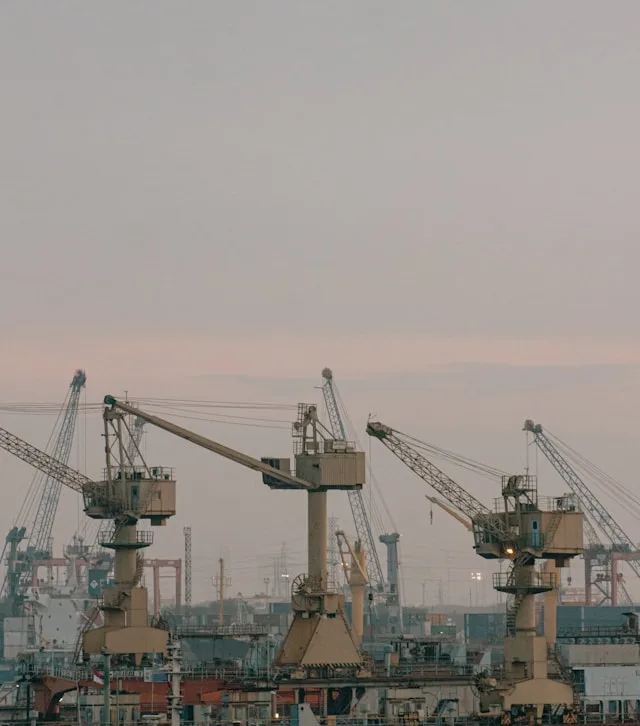
Pelindo III's IDR 2.8 trillion investment in Teluk Lamong's semi-automated rubber-tired gantry cranes and gate systems was designed to reduce dependence on manual labour for basic container handling. On paper, automation cut demand for general dockworkers by 25 to 30%. In practice, the terminal now reports acute shortages of the higher-skilled technicians and engineers needed to maintain and operate the systems that replaced them.
This is the analytical core of Surabaya's logistics talent challenge. The investment did not reduce the workforce. It replaced one category of worker with another that does not yet exist in sufficient numbers. Mechatronics engineers capable of servicing automated RTG cranes, terminal operating system specialists, and port automation engineers are not produced by East Java's vocational education system at anything close to the rate Teluk Lamong requires. The AP3I Skills Gap Survey in 2024 identified this mismatch explicitly: general logistics employment statistics show no shortage, but the specific technical roles generated by automation are among the hardest to fill anywhere in Indonesian port operations.
Pelindo III's IDR 4.2 trillion capacity expansion, including the Kalimas Terminal modernisation and additional container yards scheduled for partial completion by Q3 2026, will add 1.2 million TEU of annual capacity. Each increment of automation in that expansion will deepen the same skills deficit. The capital plan is impressive. The talent pipeline to staff it does not yet exist.
Cold-Chain Expansion and the GDP Certification Cliff
Demand for pharmaceutical and food-grade cold storage in Surabaya grew 18% year-on-year in 2024. Refrigerated warehouse vacancy sits below 5%, indicating a market where capacity is almost fully absorbed. PT Mega Global Cold Storage and Wahana Cold Storage have announced a combined IDR 800 billion expansion targeting compliance with EU Good Distribution Practice standards for vaccine exports.
A Facilities Problem That Became a People Problem
The cold-chain shortage is no longer about square metres and pallet positions. It is about the people qualified to run facilities at pharmaceutical standards. Operations managers with dual competencies in temperature-controlled logistics across the full range of minus 25°C to positive 25°C and GDP compliance represent a vanishingly small talent pool in Surabaya. Positions typically remain open for 75 to 95 days. Employers are paying 25 to 35% salary premiums to attract candidates from competitors, and in at least one documented case, according to market reports, a Surabaya cold storage operator recruited an operations manager from a competing facility in Jakarta with a housing allowance equivalent to 40% of base salary.
The competitive dynamics here are worth understanding in detail. Surabaya's cold-chain operators are not just competing with each other. They are competing with Singapore and Kuala Lumpur, where USD-denominated packages run 3.5 to 4.0 times higher than Surabaya rates for Indonesian bilingual talent with GDP certification. Roughly 15% of Surabaya-based senior cold-chain managers are estimated to relocate to Singapore or Kuala Lumpur for regional roles each year. That outflow is small in percentage terms but devastating in absolute numbers, because the pool was small to begin with.
The Halal Logistics Overlay
Indonesia's mandatory halal certification deadline for food and beverage products arrives in 2026. This regulatory requirement adds a new layer of compliance to cold-chain operations. Halal Supply Chain Management certification is now a hiring criterion for warehouse and distribution managers handling food-grade products. The supply of professionals who hold both GDP and HSCM credentials in Surabaya is, for practical purposes, negligible. Firms that need both are assembling compliance teams from scratch or poaching from adjacent industries rather than finding ready-made candidates.
The Customs Brokerage Consolidation
Surabaya's customs brokerage sector is entering a period of forced consolidation. The Ministry of Finance's planned 2026 implementation of mandatory Authorized Economic Operator certification for all bonded logistics centre operators is expected to eliminate approximately 30% of non-compliant small operators. The compliance cost, estimated at IDR 200 to 400 million per facility, is not trivial for smaller brokers operating on thin margins.
For hiring, the consequence is bifurcation. The brokers who survive will need to absorb the clients of those who do not. That means scaling customs clearance teams quickly while the pool of qualified professionals is contracting, not expanding. Only 34% of active customs brokers in East Java hold Level II PPJK certification, according to the Indonesian Customs Brokers Association's 2024 membership survey. Demand for bonded warehouse operations increased 40% over the same period.
A Senior Customs Clearance Manager search in Surabaya now typically takes 90 to 120 days. These roles require Level II PPJK certification from the Directorate General of Customs plus fluency in the INSW electronic filing protocols and the InaSWA platform. Despite the fact that 89% of customs declarations are now submitted electronically, the professionals who can manage the compliance interface between digital systems and physical cargo flows are not abundant. The hidden 80% of passive talent applies with particular force here: roughly 80% of qualified Level II customs brokers are passively employed, with average tenure of 4.2 years. Active vacancy postings attract three to five qualified applicants per role. Eighty-five percent of hires occur through headhunting or referral networks.
This is a market where posting a job and waiting for applications is a strategy designed to fail.
The Jakarta Premium and Surabaya's Retention Problem
Surabaya's compensation structure for logistics roles runs consistently below Jakarta equivalents. A Head of Customs and Trade Compliance in Surabaya commands IDR 800 million to 1.2 billion annually, compared to IDR 1.2 to 1.8 billion for the same role in Jakarta, according to Michael Page Indonesia's 2024 compensation data. A Senior Customs Broker Manager earns 75 to 80% of the Jakarta equivalent.
The discount reflects Surabaya's lower cost of living. But it does not reflect Surabaya's lower complexity. The operational challenges of managing customs clearance through Tanjung Perak, where dwell times exceed national targets and hinterland congestion adds hours to every shipment, are arguably more demanding than the equivalent role at Tanjung Priok. A professional running bonded warehouse operations in Surabaya handles double-handling logistics for transshipment cargo and manages compliance across the Eastern Indonesia feeder network. That is not a simpler job. It is a harder job at a lower price.
The Brain Drain Calculus
Jakarta offers 30 to 40% compensation premiums for equivalent positions but requires 40 to 50% higher cost-of-living expenditure. The net financial advantage of a Jakarta move is smaller than the gross salary gap suggests. What Jakarta does offer, however, is a clearer career trajectory to regional ASEAN roles. Senior Surabaya talent with eight or more years of experience faces a specific choice: stay in a market with limited vertical progression, or move to Jakarta or Singapore where the next step, regional director, Southeast Asia operations lead, is architecturally available.
For VP Supply Chain Operations roles with regional responsibility for Eastern Indonesia, Surabaya-based multinationals pay IDR 1.0 to 1.5 billion annually, with companies such as DHL and Kuehne+Nagel offering 15 to 20% premiums for bilingual candidates. Batam competes differently, using Free Trade Zone tax incentives to offer 15 to 20% lower gross salaries while delivering higher net take-home pay through zero VAT and import duty exemptions. This draws mid-level warehouse operations managers out of Surabaya's electronics logistics sector.
The result is a salary negotiation environment where Surabaya employers must compete not on headline compensation alone but on total proposition: housing, schooling, career pathway, and the quality of the operational challenge itself.
Digital Logistics and the 35% Hiring Surge
Supply chain technology roles across Surabaya's logistics sector grew by an estimated 35% year-on-year in 2024. Local platforms such as Andalin, an integrated freight forwarding platform, and multinational project logistics firms are driving demand for SAP Extended Warehouse Management implementation leads, TMS specialists, and digital supply chain analysts.
This cohort behaves differently from the passive customs brokers and cold-chain managers. Digital supply chain analysts show a 60% active candidate ratio, changing roles every 2.1 years on average. They are mobile, market-aware, and responsive to job advertising. The talent challenge here is not visibility. It is specificity. Local 3PLs report search failures for SAP EWM leads who combine Indonesian logistics operational experience with bilingual capabilities. These searches typically stall after 60 days, forcing firms to hire remote Jakarta-based consultants at 50% cost premiums.
The gap between what Surabaya's logistics firms need from their digital hires and what the local market produces reflects a deeper pattern. Indonesia's logistics technology adoption is running ahead of its logistics technology education. The INSW and InaSWA platforms have digitised 89% of customs declarations. The professionals who can integrate those digital workflows with physical warehouse operations, the ones who understand both the code and the cargo, are produced nowhere near fast enough for a sector growing at this rate.
For organisations building digital logistics capability in Surabaya, the practical question is whether to recruit locally and develop, recruit from Jakarta at premium rates, or bring in international talent through cross-border executive search. Each option carries distinct cost, timeline, and retention implications.
What Surabaya's Logistics Hiring Market Demands in 2026
Surabaya's logistics talent market in 2026 is shaped by three forces converging simultaneously. Port automation is creating roles that East Java's education system does not produce. Cold-chain and halal certification requirements are layering new compliance obligations onto an already thin specialist pool. And the AEO mandatory certification deadline is about to consolidate the customs brokerage market, concentrating demand for certified brokers at exactly the moment supply is tightest.
The organisations that will hire successfully in this market are the ones that recognise a fundamental reality. The traditional executive search approach of posting a role, collecting applications, and building a shortlist reaches at most 15 to 20% of the viable candidate pool in Surabaya's most critical logistics functions. The rest, the 80% of certified customs brokers who are passively employed, the cold-chain managers with five-year tenures at established firms, the mechatronics engineers maintaining automated cranes at Teluk Lamong, are not looking. They must be found.
KiTalent's approach to executive hiring across industrial and manufacturing sectors is built for exactly this kind of market. AI-powered talent mapping identifies the passive candidates that job boards miss. A pay-per-interview model means clients only pay when they meet qualified candidates, not when a search begins. Interview-ready candidates are delivered within 7 to 10 days. In a market where the average specialised logistics search runs 75 to 120 days, that compression is not incremental. It changes the outcome.
For organisations competing for customs compliance leadership, cold-chain operations management, or supply chain technology talent in Surabaya's freight and logistics market, where the strongest candidates have not updated a CV in years and the cost of a slow search is measured in lost contracts and compliance exposure, speak with our executive search team about how we approach this market. KiTalent has completed over 1,450 executive placements globally with a 96% one-year retention rate. In a market where 25 to 35% salary premiums are the norm for poaching and relocation packages run to 40% of base salary, placing the right leader the first time is not a hiring preference. It is a financial imperative.
Frequently Asked Questions
What logistics roles are hardest to hire in Surabaya in 2026?
Three categories present the greatest difficulty. Certified customs brokers with Level II PPJK certification take 90 to 120 days to place, with only 34% of active brokers in East Java holding the required qualification. Cold-chain operations managers with pharmaceutical GDP certification remain open for 75 to 95 days due to competing demand from Singapore and Kuala Lumpur. Supply chain digitisation specialists with SAP EWM experience and bilingual capabilities regularly stall after 60 days, forcing employers to hire Jakarta-based consultants at 50% cost premiums. KiTalent's direct headhunting methodology reaches the passive professionals these searches typically miss.
How does Surabaya logistics compensation compare to Jakarta?
Surabaya logistics compensation runs 20 to 35% below Jakarta equivalents across most senior roles. A Head of Customs and Trade Compliance earns IDR 800 million to 1.2 billion in Surabaya versus IDR 1.2 to 1.8 billion in Jakarta. However, Jakarta's cost of living is 40 to 50% higher, narrowing the net gap. Multinationals such as DHL and Kuehne+Nagel pay 15 to 20% premiums above Surabaya market rates for bilingual VP-level supply chain talent with regional Eastern Indonesia responsibility.
Why are passive candidates dominant in Surabaya's logistics market?
Approximately 80% of qualified Level II customs brokers and 70% of cold-chain operations managers are passively employed with average tenures exceeding four years. Active job postings attract only three to five qualified applicants per role. Eighty-five percent of hires in certified customs brokerage occur through headhunting or referral networks. This makes passive candidate identification through talent mapping essential rather than optional for any senior logistics search in Surabaya.
What is the AEO certification impact on Surabaya customs brokerage hiring?
The Ministry of Finance's mandatory Authorized Economic Operator certification for bonded logistics centre operators, planned for 2026, is expected to eliminate roughly 30% of non-compliant small operators. Compliance costs run IDR 200 to 400 million per facility. Surviving firms will need to absorb displaced clients, creating sudden demand for certified customs clearance teams at a time when the qualified pool is already constrained. This regulatory deadline is accelerating senior hiring across the brokerage subsector.
How does port automation affect logistics hiring in Surabaya?
Pelindo III's semi-automated Teluk Lamong Terminal reduced demand for basic container handling labour by 25 to 30%. However, the same facility now faces acute shortages of mechatronics engineers, automated RTG crane technicians, and terminal operating system specialists. Automation did not shrink the workforce. It replaced one type of worker with another that East Java's education system does not yet produce in sufficient numbers. This pattern will deepen as the IDR 4.2 trillion Tanjung Perak expansion adds further automated capacity through 2026.
What is the best approach to executive search in Surabaya's logistics sector?
Given that the most critical roles have passive candidate ratios of 70 to 80%, conventional job advertising reaches a fraction of the viable pool. Effective executive search in Surabaya requires direct identification of candidates through market intelligence and talent mapping, not waiting for inbound applications. KiTalent delivers interview-ready candidates within 7 to 10 days using AI-enhanced sourcing, compressing timelines that typically run 75 to 120 days in this market.