Surabaya's Manufacturing Boom Is 40 Kilometres From the Talent Pool That Serves It
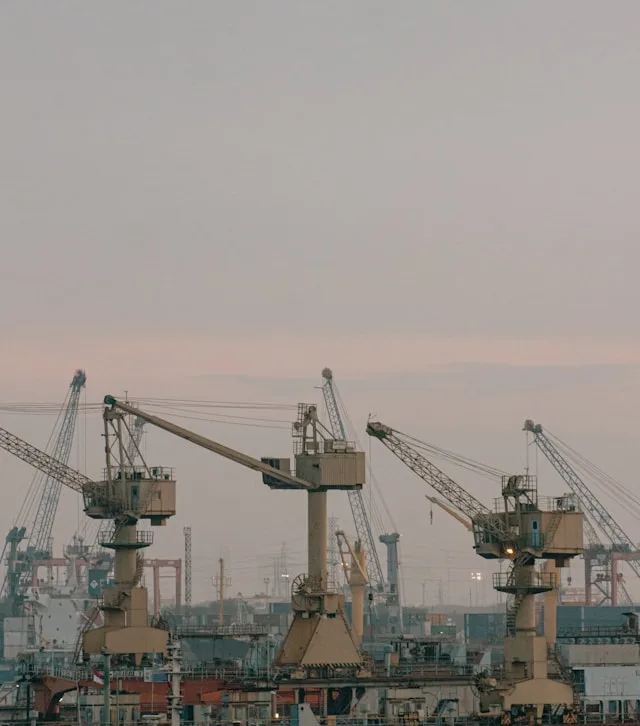
Surabaya's light manufacturing sector absorbed USD 892 million in foreign direct investment through the first nine months of 2024. That figure represented a 12% year-on-year increase. Yet 70% of the new manufacturing investment between 2022 and 2024 landed not in Surabaya itself but in the Gresik and Sidoarjo corridor, drawn by newer toll road networks and the deep-sea port facilities at JIIPE. The factories are moving outward. The administrative centre, the corporate headquarters, the supplier coordination hubs, and the talent pool remain anchored to Rungkut.
This spatial fracture is not merely a logistics challenge. It is rewriting the talent requirements for every manufacturer operating in the greater Surabaya metropolitan area. A Senior Plant Manager who once oversaw a single facility in Rungkut now needs multi-site capability spanning 40 to 60 kilometres. An Automation Engineering Manager must implement Industry 4.0 systems in a greenfield Gresik facility while maintaining legacy lines in a congested urban estate with 95% occupancy. The roles have changed. The candidate pool has not caught up.
What follows is a ground-level analysis of how this spatial reconfiguration, combined with wage dynamics, regulatory pressure, and a persistent Jakarta talent drain, has created one of Southeast Asia's most misunderstood executive hiring markets. The data reveals a market where capital investment flows freely while the human capital required to operate it remains acutely scarce, and where the gap between the two is widening in ways that aggregate statistics do not capture.
The Hollow Core: Where Surabaya's Manufacturing Actually Happens Now
The term "hollow core" describes what has happened to Surabaya's manufacturing geography with precision. Rungkut Industri, the city's historic industrial estate spanning more than 150 hectares, still hosts over 40 operational facilities. Maspion Group, the anchor conglomerate employing approximately 12,000 workers across its Surabaya-Gresik operations, maintains its corporate headquarters there. But the production centre of gravity has shifted decisively.
Industrial land in Rungkut now costs IDR 3.5 to 4.5 million per square metre. In western Gresik, comparable land runs IDR 1.2 to 1.8 million, according to Colliers Indonesia's H1 2024 industrial market report. That cost differential, combined with occupancy rates exceeding 95% in established Surabaya zones, has made expansion within the city physically impossible for most manufacturers. New entrants have no choice but to locate outside it.
JIIPE and the Gresik Corridor
The Java Integrated Industrial and Port Estate in Gresik now spans 2,933 hectares. It hosts Maspion's major production expansion alongside several Korean and Japanese auto-parts investors. The Maspion Industrial Estate in Manyar, Gresik, adds another 300 hectares dedicated to metal processing and home-appliance manufacturing. Panasonic Gobel Indonesia operates a major facility in Gresik employing over 3,500 workers. The auto-component cluster, including operations from Yutaka Manufacturing, Sanden, and Denso subsidiaries, collectively employs more than 8,000 specialised manufacturing workers across the greater Surabaya zone.
The Administrative Lag
The consequence for executive hiring is specific and measurable. Corporate headquarters, finance functions, and strategic planning teams remain in Rungkut. Production, quality control, and logistics operations sit 40 to 60 kilometres away. This is not a commuting inconvenience. It is a structural requirement that any senior manufacturing leader in this market must now manage daily. The executives who can do this effectively, who can bridge legacy operations and greenfield expansion simultaneously, are precisely the executives in shortest supply.
Average industrial estate utilisation across Greater Surabaya stands at 87%, with premium Gresik facilities reaching 94%. The physical infrastructure is filling. The leadership infrastructure required to run it has not kept pace.
The Talent Equation: Demand Up 34%, Supply Up 12%
The numbers describe a market accelerating away from its own workforce. Job postings for manufacturing management roles in Surabaya increased 34% year-on-year in the third quarter of 2024. Applicant volumes rose only 12%. That 22-percentage-point gap is not closing. It is compounding.
Senior Plant Manager roles requiring 15 or more years of experience and multi-site oversight in the home-appliance sector routinely remain unfilled for 120 to 150 days, according to Michael Page Indonesia's 2024 manufacturing talent report. The equivalent role in Jakarta fills in approximately 60 days. The Surabaya search takes twice as long in a market where the cost of an empty seat is measured in production downtime, not just recruitment fees.
For Automation Engineers with PLC and SCADA expertise specific to home-appliance assembly, the ratio is even starker. For every ten vacancies posted for candidates with five to eight years of experience, only three qualified applicants respond. Eighty per cent of successful placements come from passive candidate identification rather than applications. These are professionals recruited out of existing employment, not people browsing job boards.
Quality Directors holding IATF 16949 certification represent what market data describes as an effectively 100% passive market. There is no active candidate pool. Every hire requires direct headhunting from a competitor firm or from the automotive sector.
The original synthesis this data supports is not simply that talent is scarce. It is that the spatial reconfiguration of Surabaya's manufacturing base has created a new category of executive role that barely existed five years ago, while simultaneously making the existing talent pool less accessible. The factories moved. The job descriptions changed. The candidate base did neither.
The Jakarta Suction Effect and What It Costs
Surabaya's talent challenge cannot be understood without understanding Jakarta's gravitational pull. The compensation differential between the two markets is not narrowing. At the VP Operations and Manufacturing Director level, Jakarta offers IDR 1,600 to 2,400 million per annum against Surabaya's IDR 960 to 1,440 million. That is a 40 to 67% premium for a comparable role.
The gap persists at every seniority band. Senior Plant Managers in Surabaya earn IDR 480 to 720 million. In Jakarta, the same role commands IDR 720 to 1,080 million. Automation Engineering Managers earn IDR 360 to 540 million in Surabaya versus IDR 480 to 720 million in Jakarta.
These differentials are well understood. What is less well understood is the pipeline damage they cause upstream. According to the 2023 ITS Tracer Study, only 35% of engineering graduates from Institut Teknologi Sepuluh Nopember, Surabaya's premier technical university, remain in the city for their first job. The rest migrate to Jakarta. This is not a retention problem at the executive level. It is a pipeline problem that manifests ten to fifteen years later when the candidates who should have become Senior Plant Managers in Surabaya were never in the market to begin with.
Surabaya-based employers have responded with non-monetary compensation structures. Market benchmarking data from Mercer's 2024 Total Remuneration Survey shows senior executive packages in the region now routinely include housing allowances of IDR 15 to 25 million per month, private international school subsidies, and guaranteed bonus structures. These benefits partially offset the base salary gap but do not eliminate it.
The real cost of the Jakarta drain emerges in the 15 to 20% annual attrition rate among high-potential manufacturing managers. These are not people leaving the industry. They are leaving the city. The data from LinkedIn's workforce analysis of the East Java manufacturing cohort shows a clear pattern: mid-career managers build operational expertise in Surabaya's factories, then cash it in for a Jakarta role with multinational corporate exposure and a material pay increase. The counteroffer dynamic that plays out in this market is particularly acute because the gap is not just about money. It is about perceived career trajectory.
Regulatory Pressure: TKDN, CBAM, and the Skills That Do Not Exist Yet
The regulatory environment facing Surabaya's manufacturers in 2026 is creating demand for skills that the local talent market has had no time to develop. Two regulatory forces are converging simultaneously, and neither has a ready workforce attached to it.
Local Content Requirements and Vendor Development
The Ministry of Industry's TKDN mandates require home-appliance manufacturers to reach 60 to 80% local content depending on product category, under Permenperin No. 3/2024. This forces manufacturers to develop local supplier networks. The problem is that approximately 60% of tier-2 and tier-3 suppliers within the 50-kilometre radius of Surabaya city centre currently lack the technical capability to meet these standards without costly vendor development programmes.
The executives who can run these programmes, professionals with deep supply chain integration experience who understand both the regulatory framework and the operational reality of developing local suppliers, are rare. This is not a standard procurement role. It requires someone who can simultaneously manage regulatory compliance, supplier technical capability building, and production timeline pressures. The role is specific to markets where local content regulation intersects with manufacturing complexity, and there is no established career pathway producing candidates in volume.
The EU Carbon Border Adjustment Mechanism
The EU's CBAM regulations, effective from 2026, impose carbon tariffs on aluminium and steel imports. This directly threatens Surabaya's metal-intensive manufacturing base. Maspion Group and Indal Aluminium Industry both rely on coal-intensive smelting processes. Compliance demands professionals with Life Cycle Assessment and carbon accounting expertise.
These sustainability operations roles are new to Surabaya's manufacturing sector. The candidates who hold this expertise in Indonesia are overwhelmingly based in Jakarta, working for consulting firms or multinational sustainability teams. Attracting them to Surabaya requires a proposition that goes well beyond standard salary negotiation. It requires making the case that Surabaya's manufacturers are where the real implementation work is happening, not just the advisory work.
The Industry 4.0 Mandate and the Automation Talent Cliff
The Ministry of Industry's Making Indonesia 4.0 roadmap incentives for smart factory adoption become mandatory for tax holiday extensions in 2026. This is not an aspiration. It is a compliance deadline. Manufacturers that do not demonstrate measurable progress toward automation, IoT implementation, and Manufacturing Execution Systems integration will lose their tax incentives and face competitive disadvantage against firms that have invested.
The demand for Industrial Automation Engineers, IoT specialists, and MES integration professionals was already acute before this mandate. The 4:1 passive-to-active candidate ratio for automation specialists with home-appliance manufacturing experience describes a market where four out of every five hirable candidates must be found through direct headhunting approaches rather than job advertising.
A pattern documented by Korn Ferry Indonesia's industrial practice describes manufacturers restructuring their entire reporting lines to retain scarce technical talent. Firms with 500 or more employees in the sector have begun creating "Head of Digital Manufacturing" roles that report directly to the CEO rather than through the traditional operations hierarchy. This is not organisational design innovation. It is a retention mechanism. Senior engineers with advanced technology implementation experience demand strategic influence as a condition of staying. Manufacturers are conceding it because the alternative is losing them entirely.
The Making Indonesia 4.0 mandate will intensify this dynamic through 2026 and beyond. Every manufacturer in the region now needs the same category of specialist at the same time. The supply has not moved. Capital investment in automation has outpaced the human capital required to implement it. Factories are being built for Industry 4.0 operations, but they are being staffed by an Industry 2.5 talent market.
The Wage Competitiveness Paradox: Why FDI Keeps Flowing Into a Talent Desert
This is the tension that makes Surabaya's manufacturing market genuinely unusual. Foreign direct investment grew 12% year-on-year through September 2024 despite specialised wage inflation of 8 to 12% annually. The East Java Manufacturing PMI remained in expansionary territory for 14 consecutive months through December 2024. Bank Indonesia's East Java economic outlook projects 5.5 to 6.2% growth in the metal and fabricated metal products subsector for 2026.
Capital is still arriving. Talent is still leaving.
The explanation lies in Tanjung Perak. The port handled 4.2 million TEUs in 2023, with 35% of containerised exports comprising manufactured goods. Surabaya-based manufacturers enjoy a 15 to 20% logistics cost advantage versus Jakarta-based competitors shipping through Tanjung Priok for intra-ASEAN trade, according to the Indonesia Logistics Association's East Java analysis.
Investors are making a rational short-term calculation. The logistics savings justify the investment even as labour costs rise. But the talent shortage data indicates that these logistics savings are not being reinvested into wage competitiveness sufficient to retain talent against Jakarta. This is the paradox: the very advantage that attracts capital investment is not being deployed to solve the human capital problem that threatens operational sustainability.
The completion of the Krian-Legundi-Bunder-Manyar toll road segment in the first half of 2025 is expected to reduce logistics costs from Sidoarjo industrial zones to Tanjung Perak by a further 25%. This will attract more investment. It will not produce more Senior Plant Managers, more Automation Engineers, or more Quality Directors with IATF certification. Each new facility that opens in the Gresik corridor adds demand to a talent pool that has been shrinking in relative terms for years.
The minimum wage environment adds further pressure. East Java's wage council has signalled potential double-digit increases for the 2025 to 2026 period, threatening cost competitiveness against Vietnam and Central Java, where Semarang already offers wages 15% below Surabaya's. The labour cost advantage that initially drew manufacturers to East Java is eroding from both directions: upward pressure from minimum wage policy and the living wage movement, and lateral pressure from regional competitors.
What This Means for Hiring Leaders Operating in This Market
The organisations that will fill their most critical manufacturing leadership roles in Surabaya's 2026 market share three characteristics. They understand the spatial dimension of the talent problem. They have accepted that the compensation structure must include non-monetary components calibrated to Surabaya's specific conditions. And they are reaching the 85 to 90% of qualified candidates who are not actively looking.
The spatial dimension matters because the role specifications have changed. A Plant Director posting that describes a single-site role in Rungkut will attract a different, and smaller, candidate pool than one that accurately describes multi-site oversight across Surabaya and Gresik. The executive search process must map candidates against the real geography of operations, not the administrative address of the headquarters.
The compensation structure matters because cash alone does not close the Jakarta gap. Housing allowances, education subsidies, and guaranteed bonus structures are now table stakes for senior roles. But the most effective retention lever, according to the restructuring patterns documented across this sector, is role design. Creating positions with direct CEO reporting lines and genuine strategic influence retains senior technical talent that money alone cannot hold.
The passive candidate dimension matters most of all. At the VP level and above, 85 to 90% of qualified candidates are passive. For Quality Directors with IATF certification, the figure approaches 100%. No job posting reaches these candidates. No applicant tracking system surfaces them. They are found through systematic talent mapping of competitor organisations, supply chain partners, and adjacent sectors.
KiTalent's approach to markets like Surabaya's manufacturing sector begins with this reality. Our AI-enhanced direct search methodology identifies passive candidates across the full employer ecosystem, not just the obvious competitors. We deliver interview-ready leadership candidates within 7 to 10 days, with a pay-per-interview model that eliminates the retainer risk that makes search firms hesitant to take on complex regional mandates. Our 96% one-year retention rate reflects the depth of candidate assessment that executive hiring in industrial and manufacturing sectors requires.
For organisations competing for operations directors, automation engineering leaders, or quality directors in Surabaya's manufacturing market, where the production has moved but the talent has not followed, start a conversation with our executive search team about how we approach this specific market.
Frequently Asked Questions
Why is it so difficult to hire senior manufacturing leaders in Surabaya?
The difficulty stems from three converging factors. First, the physical relocation of production to Gresik and Sidoarjo has created multi-site role requirements that narrow the qualified candidate pool. Second, Jakarta offers 40 to 50% salary premiums for comparable roles, drawing senior talent out of East Java at a rate of 15 to 20% annually. Third, at the VP and Plant Director level, 85 to 90% of qualified candidates are passive and not visible through job postings. Filling these roles requires targeted headhunting methodology that reaches candidates who are employed and not actively looking.
What does a Senior Plant Manager earn in Surabaya compared to Jakarta?
Senior Plant Managers in Greater Surabaya earn IDR 480 to 720 million per annum, based on 2024 salary survey data. The equivalent role in Jakarta commands IDR 720 to 1,080 million, a premium of 40 to 50%. Surabaya employers increasingly bridge this gap through non-monetary benefits including housing allowances of IDR 15 to 25 million per month, international school subsidies, and guaranteed bonus structures. Total compensation packages for senior roles in Surabaya are narrowing the effective gap, though base salary differentials remain material.
How is the Making Indonesia 4.0 policy affecting manufacturing hiring in East Java?
The Ministry of Industry's smart factory adoption incentives become mandatory for tax holiday extensions in 2026. This forces every manufacturer in the region to hire IoT specialists, MES integration professionals, and Industrial Automation Engineers simultaneously. The existing candidate pool shows a 4:1 passive-to-active ratio for these roles. Manufacturers are restructuring reporting lines, creating Head of Digital Manufacturing positions with direct CEO access, to attract and retain the few qualified candidates available.
What is the JIIPE industrial estate and why does it matter for Surabaya's talent market?
JIIPE is the Java Integrated Industrial and Port Estate in Gresik, a 2,933-hectare development with integrated deep-sea port facilities. It hosts Maspion Group's major production expansion and several international auto-parts investors. Its growth exemplifies the "hollow core" phenomenon where production moves outward while administrative functions remain in Surabaya. This spatial split creates demand for executives who can manage operations across multiple sites separated by 40 to 60 kilometres.
How does KiTalent approach executive search in Surabaya's manufacturing sector?
KiTalent uses AI-enhanced talent mapping to identify passive candidates across the full employer ecosystem in Greater Surabaya, Gresik, and Sidoarjo. Because 85 to 90% of qualified senior manufacturing candidates are not actively searching, traditional job advertising reaches only a fraction of the viable market. KiTalent delivers interview-ready candidates within 7 to 10 days through a pay-per-interview model, with full pipeline transparency and weekly reporting. Our 96% one-year retention rate reflects the rigour of assessment required in markets where the cost of a failed hire is measured in production downtime.
What role does Tanjung Perak port play in Surabaya's manufacturing competitiveness?
Tanjung Perak handled 4.2 million TEUs in 2023, with 35% of containerised exports comprising manufactured goods. Surabaya-based manufacturers gain a 15 to 20% logistics cost advantage over Jakarta competitors for intra-ASEAN trade. This advantage continues to attract foreign investment despite rising labour costs. However, the logistics savings are not being redirected into the wage premiums needed to retain senior talent against Jakarta's pull, creating a paradox where capital investment grows while the leadership talent required to operate new facilities remains scarce.