Szczecin Marine Engineering: PLN 78 Million in Green Transition Funds and No One Qualified to Spend It
Szczecin's marine engineering cluster sits on an unusual problem. The money is there. The West Pomeranian Voivodeship has allocated PLN 78 million from Poland's KPO recovery funds for green maritime transition. Remontowa Gryfia completed a PLN 45 million dock modernisation in late 2024. Techmors announced a PLN 12 million CNC plate processing expansion. Yet as of late 2025, utilisation of public transition funds stood at just 35%. The capital arrived. The people who could deploy it did not.
This is not the familiar story of an industrial cluster starved of investment. It is the less visible and more difficult story of an industrial cluster where the binding constraint has shifted from hardware to human capability. Szczecin's repair yards and metal fabrication SMEs can secure contracts. They can access financing. What they cannot do, with growing frequency, is staff the roles that turn funding into operational capacity. Certified marine welders, LNG systems engineers, retrofit project managers, and the senior leaders who coordinate complex marine conversions are absent from the local labour market in numbers that now threaten the cluster's ability to capture the regulatory retrofit wave arriving through 2026 and 2027.
What follows is a structured analysis of the forces reshaping Szczecin's marine engineering sector: the regulatory drivers creating demand, the demographic and competitive pressures draining supply, the specific roles and skills where the gap is most acute, and what organisations operating in this market need to understand before their next critical hire.
A Repair Economy at an Inflection Point
Szczecin's maritime industrial base operates as a repair-dominant, newbuild-limited ecosystem. Approximately 45 to 55 registered enterprises work across shipbuilding, ship repair, and metal treatment, employing roughly 3,800 to 4,200 direct workers in core maritime functions as of late 2024. The city does not compete for container ship or cruise vessel construction. It lacks the covered building halls and automated panel-line production systems that would make such competition viable against Asian and Turkish yards.
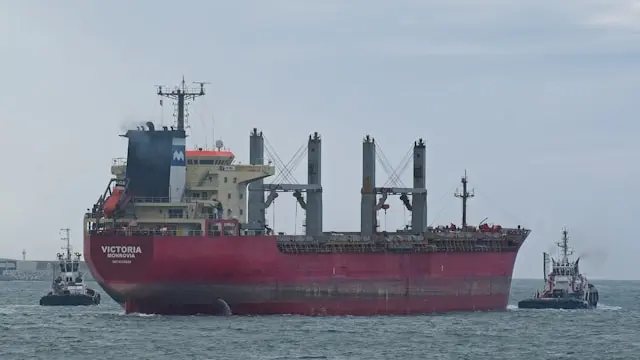
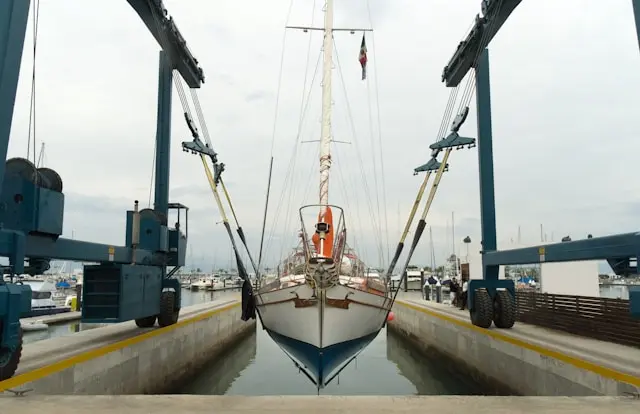
What Szczecin does have is heavy repair infrastructure. The Na Ostrowiu repair zone offers 1,200 metres of quay length with depths of 8.5 to 10.5 metres, heavy-lift capacity to 500 tonnes, and a direct rail connection to the Baltic-Adriatic corridor. Remontowa Gryfia, the anchor tenant and subsidiary of Gdańsk-based Remontowa Holding, operates three floating docks including a 45,000-tonne capacity facility. The yard runs at 75 to 85% dock occupancy, well above the Baltic repair yard average of around 60%.
The 2025 order book told the story clearly. Gryfia secured contracts for 12 chemical tanker repairs and 3 LNG bunkering vessel conversions. The work was heavily weighted toward regulatory compliance retrofitting: EU ETS preparation, FuelEU Maritime readiness, scrubber installations, and energy efficiency technology upgrades driven by tightening IMO carbon intensity regulations. Repair volumes through 2026 are projected to grow 4 to 6% year on year as these regulations force extended dry-docking across the European fleet.
This is the inflection point. Demand is arriving. The question is whether Szczecin's cluster can staff the work that demand creates. The answer, increasingly, is that it cannot without a fundamentally different approach to finding and securing talent.
The Hub-and-Spoke Fragility Beneath the Surface
Remontowa Gryfia is not just the largest employer in Szczecin's marine cluster. It is the order gatekeeper and contract allocator for 30 to 40 active metal fabrication and outfitting SMEs. Firms like Stalrem, Techmors, and Marinex operate as tier-2 and tier-3 suppliers, providing steel processing, piping, and electrical outfitting on leaseholds within the Port of Szczecin-Świnoujście Authority industrial zones.
This hub-and-spoke structure creates a specific vulnerability. When Gryfia's Q2 2024 financial results showed a 12% revenue decline year on year due to gaps in the tanker repair cycle, the effect transferred immediately to 20 to 30% capacity underutilisation in local SME subcontractors. The cluster's fortunes rise and fall with a single order book.
Post-Bankruptcy Fragmentation Still Constraining Scale
The physical infrastructure compounds this dependency. When Stocznia Szczecińska went bankrupt in 2002, its real estate was parcelled among 14 separate property owners. The resulting fragmentation prevents coordinated heavy infrastructure investment. No single 200-metre covered building hall exists in the former shipyard territory, which eliminates any path into large yacht or cruise vessel newbuild markets. Smaller dry docks and slipways in this zone, now operated by consortiums like Polskie Przemysły Stoczniowe, struggle with sub-40% utilisation due to fragmented ownership and lack of synchronised heavy lifting equipment.
Defence Work Locked Behind Certification Barriers
A potential diversification pathway exists through NATO naval repair contracts, including Polish Navy MCMV vessels and allied port calls. But access requires NATO Facility Security Clearance and EU SECRET-level personnel certifications. Fewer than 10 Szczecin SMEs currently hold these certifications, locking out the majority of the cluster from high-margin defence work that Gdynia yards capture instead. For firms considering the investment in certification, the constraint is not just cost. It is finding personnel who can pass the clearance process and hold the technical qualifications simultaneously.
The structural picture is one where Szczecin's marine cluster has genuine physical assets and a rising demand trajectory, but operates within constraints that concentrate risk and limit the pathways for growth. The talent market is where those constraints bite hardest.
The Demographic Cliff That Capital Investment Cannot Reach
The most consequential data point in Szczecin's marine engineering market is not a contract value or a utilisation rate. It is a percentage: 35% of current skilled trades workers in Szczecin-based maritime firms are aged 55 or over. Shipwrights, pipefitters, marine electricians. The people who actually perform the work that repair contracts require are approaching retirement in concentrations that make workforce planning look more like triage.
The replacement pipeline is insufficient. Zachodniopomorski Uniwersytet Technologiczny (ZUT) produces 80 to 100 naval architecture and marine engineering graduates annually. It is the only institution in the region offering these degrees. But only 40 to 50% of graduates remain in Szczecin after completing their studies. And here is the tension that matters most: of those who stay, a material proportion leave the maritime sector entirely for IT, logistics, or emigration within three years.
This is the original synthesis that the aggregate data obscures. Szczecin does not face a simple labour shortage. It faces a sectoral attractiveness deficit. The numerical supply of qualified graduates exists. Eighty to one hundred people per year complete relevant degrees at ZUT. But the historic prestige of shipbuilding has eroded faster than compensation has adjusted, and the result is a market where trained professionals choose not to enter the industry that trained them. The paradox is real: supply exists on paper while effective labour market matching fails in practice.
The hidden 80% of passive talent problem is acute here, but it operates differently than in financial services or technology. In those sectors, passive candidates are content in similar roles elsewhere. In Szczecin's marine cluster, many of the people with the right qualifications have left the sector entirely. They are passive not because they are satisfied in competing marine roles, but because they have moved to industries that pay more, demand less physical presence, and carry higher social status among their peer cohort.
Where Talent Drains To: A Three-Tier Competitive Field
The outflow of skilled marine engineering professionals from Szczecin follows predictable geographic and economic logic. Understanding where talent goes is essential for any organisation attempting to hire in this market.
Domestic: The Tri-City Pull
Gdańsk and Gdynia are the primary domestic competitors. Remontowa Holding's headquarters sit in Gdańsk, and the Tri-City yards offer 15 to 25% salary premiums for equivalent roles, larger project portfolios including cruise ship repairs and naval contracts, and superior international connectivity through Gdańsk airport. Approximately 60% of ZUT naval architecture graduates leave Szczecin for the Tri-City within three years of graduation. The migration pattern concentrates in the 28 to 40 age band: mid-career engineers with enough experience to command premium compensation elsewhere but not yet anchored by senior-level responsibilities in Szczecin.
Regional Baltic: Klaipėda and Rostock
Lithuanian yards in Klaipėda are increasingly routing Western shipowner repair contracts and offer comparable cost of living with higher net wages due to Lithuanian tax incentives for maritime workers. Active recruitment of Polish welders and project managers from Szczecin is documented by the Lithuanian Ship Repair Association. German yards in Rostock present an even starker differential. MV Werften and Neptun Werft offer 2.5 to 3 times the gross salary multiple for German-speaking engineers and project managers, targeting Szczecin's bilingual technical talent in the 35 to 50 age bracket.
Global Offshore: The North Sea Rotation Drain
The most structurally damaging outflow is to Norwegian and Danish offshore wind and oil service companies, which recruit Polish marine electricians and welding inspectors for rotational work. The compensation differential is severe: €4,000 to €6,000 monthly net for offshore rotation versus PLN 12,000 to 15,000 gross (approximately €2,800 to €3,500) for equivalent local permanent roles. This creates what the regional labour market analysis describes as a "transient workforce." Skilled trades professionals work six to nine months abroad, then return to Szczecin for local employment during off-seasons. They are technically present in the local market but unavailable for permanent roles. Any employer counting them in their talent pool is miscounting.
For hiring leaders in this market, the competitive field means that a compensation offer benchmarked to Szczecin norms is not competing against Szczecin norms. It is competing against Gdańsk premiums, Lithuanian tax advantages, German salary multiples, and Norwegian offshore rates. The counteroffer trap operates at regional scale here: a candidate approached for a permanent Szczecin role is weighing it against options that may pay two to three times more, even accounting for rotation schedules and time away from home.
The Roles That Cannot Be Filled: Specifics and Consequences
The Szczecin maritime sector posted approximately 340 to 380 unique job vacancies in Q3 2024, representing a 22% increase year on year. The aggregate number masks severe concentration in three critical shortage categories.
Certified Marine Welders: 45 Positions Open Since Q2 2024
Offshore-grade welding positions requiring EN 1090 EXC4 certification and high-strength steel (S690) capability have been persistently vacant. The certified welding inspector pool (IWE/EWE level) is approximately 70 to 75% passive, with unemployment in this segment below 2% nationally. According to the Polish Welding Association, candidates in this category move primarily through network referrals and union hall dispatch rather than online applications. Job postings are functionally invisible to this population.
The consequence was visible in August 2024. According to the West Pomeranian Business Observatory, a consortium of Szczecin SMEs including Marinex and Techmors suspended a joint venture for offshore wind transition piece fabrication after six months of recruitment. The search for five certified welding inspectors produced only two viable candidates in the Polish market. Both accepted positions with Vestas operations at compensation approximately 40% higher than what the consortium could offer.
Marine Project Managers: 12 to 15 Senior Roles Open Beyond 90 Days
Retrofit and conversion project management at the senior specialist level (8 to 12 years experience) commands PLN 18,000 to 24,000 monthly gross, with project completion bonuses of 10 to 20%. At the executive level, Technical Directors and Directors of Production earn PLN 35,000 to 50,000 monthly gross. The qualified candidate pool is estimated at 85 to 90% passive. These professionals hold stable employment with Remontowa in Gdańsk, Navantia, or classification society surveyor roles and do not respond to job advertisements. Average tenure in their current roles exceeds five years.
The practical implication is that executive search through direct headhunting is not a premium option for these roles. It is the only viable method. A job posting for a senior marine retrofit project manager in Szczecin will reach, at best, 10 to 15% of the qualified candidate universe. The other 85% must be identified, approached, and engaged individually.
Marine Electrical Engineers: The LNG Certification Bottleneck
Medium-voltage and LNG systems electrical engineering positions show fewer than 5% applicant-to-hire ratios. Senior specialists earn PLN 15,000 to 20,000 monthly gross; department heads earn PLN 28,000 to 38,000. The constraint is certification specificity. A marine electrical engineer must combine IEC 61892 offshore electrical standards experience with maritime classification society liaison capability across DNV, Lloyd's Register, or Bureau Veritas. Locally, this combination is almost non-existent.
Remontowa Gryfia's experience illustrates the depth of the problem. According to job posting data on Pracuj.pl and LinkedIn, as noted in the 2024 Regional Labour Market Analysis by PUP Szczecin, the company maintained an open vacancy for a Project Engineer in LNG Bunkering Systems for over 10 months. The role requires dual certification in pressure systems (UDT) and LNG cryogenics. The recruitment process reportedly stalled at the finalist stage twice due to accepted counter-offers from competitors in Gdańsk and Norwegian offshore contractors.
The Green Transition's Hidden Workforce Paradox
The regulatory environment creating demand for Szczecin's repair capabilities is simultaneously creating a skills requirement that the local workforce cannot yet meet. This is the deepest structural tension in the market.
FuelEU Maritime and EU ETS compliance retrofitting are driving repair volumes. But the retrofits themselves require competencies in alternative fuel systems, hydrogen fuel cell maintenance, methanol engine servicing, and digital energy management. ZUT's curriculum lacks modules on alternative maritime fuels. The European Maritime Safety Agency's 2024 Skills Study identifies a three to five year lag before local training infrastructure can produce technicians capable of servicing the retrofit demands arriving in 2026 through 2028.
The green transition funds allocated through KPO are financing hardware: shore power infrastructure, digital twinning capabilities, welding automation for offshore wind specifications. But the "soft infrastructure" of training remains underdeveloped. The 35% fund utilisation rate as of late 2025 is not a story about bureaucratic delay alone. According to the Marshal's Office of West Pomerania and the regional SME survey conducted by ARR Szczecin, the low absorption reflects genuine managerial and technical capability gaps in SMEs whose average turnover is PLN 5 to 15 million. These firms lack the internal capacity to design the projects that would draw down the funds.
This creates a paradox that traditional talent acquisition approaches cannot resolve. The money exists to modernise. The regulatory demand exists to justify modernisation. But the people required to plan, manage, and execute modernisation projects are the same people who are in critically short supply. Capital investment in the absence of human capital to deploy it is not investment. It is allocation without absorption.
The compensation data tells the same story from a different angle. According to Portal Stoczniowy reporting from June 2024, Techmors recruited a Senior CNC Operator from Stalrem by offering a 35% base salary premium, moving compensation from PLN 8,500 to PLN 11,500 monthly gross. The move triggered retaliatory salary adjustments across three local metal fabrication SMEs. This pattern, confirmed by Antal Poland's 2024 manufacturing sector data showing 30 to 40% premiums for CNC programming skills, demonstrates a market where firms are not just competing for external talent. They are cannibalising each other's existing workforce at escalating cost, without expanding the total pool by a single person. Organisations caught in this cycle need to understand why executive recruiting methods fail in markets where the candidate pool is this constrained.
What Hiring Leaders in This Market Must Do Differently
The conventional approach to filling marine engineering roles in Szczecin has been to post vacancies on Pracuj.pl, wait for applications, and select from whoever responds. The evidence from this market is that this approach reaches approximately 10 to 25% of the qualified candidate pool at the specialist level and below 15% at the senior and executive level.
For an employer seeking a certified welding inspector, the relevant population moves through network referrals and union dispatch. For a retrofit project manager, the candidate is employed, satisfied, and invisible to job boards. For an LNG systems engineer, the combination of certifications required is so specific that the total addressable market in Poland may number in the dozens, not hundreds.
Three adjustments are necessary for any organisation hiring critical marine engineering talent in this market.
First, salary benchmarking against the real competitive set. Szczecin employers benchmarking compensation against local norms are competing with Gdańsk premiums, Lithuanian tax advantages, and North Sea offshore rates. A compensation package that looks competitive within the city is uncompetitive within the actual decision set of the candidates you need. The PLN 18,000 to 24,000 range for a senior marine project manager must be evaluated against the PLN 35,000+ available for equivalent roles in Tri-City or the €8,000 to €11,700 monthly available in German yards.
Second, proactive talent pipeline development rather than reactive vacancy filling. In a market where 35% of the skilled workforce is within a decade of retirement and graduate retention runs below 50%, organisations that wait until a role opens to begin searching will consistently lose. The firms that retain and attract in this environment are those building relationships with potential candidates 12 to 24 months before they need them.
Third, search methodology matched to candidate behaviour. In a market where passive candidate ratios run 70 to 90% for critical roles, and where the most qualified professionals respond to direct approaches from trusted networks rather than job advertisements, the method of identifying and engaging candidates determines whether an organisation reaches the full talent pool or only the fraction that happens to be looking.
For organisations operating in Szczecin's marine engineering cluster, where the candidates who can deploy PLN 78 million in green transition investment are not visible on any job board and the window for capturing regulatory retrofit demand is narrowing, start a conversation with our executive search team about how KiTalent approaches markets where 85% of the talent you need is not actively looking. KiTalent delivers interview-ready leadership candidates within 7 to 10 days through AI-powered talent mapping that identifies passive professionals across borders and sectors, with a 96% one-year retention rate on placed candidates. In a market where a single misfire costs six months and a poaching cycle, that precision matters.
Frequently Asked Questions
What is the current state of Szczecin's marine engineering job market in 2026?
Szczecin's marine engineering cluster employs approximately 3,800 to 4,200 direct workers across 45 to 55 registered enterprises focused on ship repair, metal fabrication, and marine outfitting. Repair volumes are growing 4 to 6% year on year, driven by IMO and EU regulatory compliance retrofitting. However, critical shortages persist in certified marine welders, LNG systems engineers, and senior retrofit project managers. The market is repair-dominant with limited newbuild activity, and Remontowa Gryfia remains the anchor employer with 800 to 900 direct staff. Hiring competition extends beyond Szczecin to Gdańsk, Klaipėda, Rostock, and North Sea offshore operations.
Why is it so hard to hire marine engineers in Szczecin?
Three factors converge. First, 35% of the skilled trades workforce is aged 55 or over, creating an imminent retirement wave with insufficient replacement. Second, only 40 to 50% of ZUT's annual naval architecture graduates remain in Szczecin, with many leaving the maritime sector entirely for IT or logistics. Third, compensation in competing markets runs 15 to 200% higher than Szczecin norms, with Norwegian offshore roles paying roughly double the local rate. The result is a market where 70 to 90% of qualified candidates for critical roles are passive and unreachable through conventional job postings.
What do marine project managers earn in Szczecin?
Senior specialist marine project managers with 8 to 12 years of experience earn PLN 18,000 to 24,000 monthly gross (approximately €4,200 to €5,600), plus project completion bonuses of 10 to 20%. At the executive level, Technical Directors and Directors of Production command PLN 35,000 to 50,000 monthly gross (€8,200 to €11,700) plus annual bonus and company car. These figures are sourced from Antal Poland and Sedlak & Sedlak salary reports for the Pomeranian industrial sector. KiTalent's market benchmarking service can provide current comparisons across competing Baltic markets.
How does offshore wind development affect Szczecin's marine talent market?
Poland's Bałtyk offshore wind zones are generating fabrication demand for transition pieces and secondary steel structures. However, Szczecin contractors are losing share to Gdańsk and Danish yards due to welding certification gaps for high-grade offshore steel. Offshore wind developers also compete directly for the same certified welders and inspectors that repair yards need, typically offering 40% salary premiums. In 2024, a consortium of Szczecin SMEs suspended a joint venture offshore wind project after failing to recruit five certified welding inspectors over six months.
What is the best way to recruit senior marine engineering talent in Poland?
For roles where 85 to 90% of qualified candidates are passive, direct headhunting and executive search are the only methods that reach the full candidate pool. Job postings on platforms like Pracuj.pl access at most 10 to 25% of the qualified population for specialist marine roles. Effective recruitment in this market requires cross-border candidate identification across Poland, the Baltic states, and Scandinavia; compensation benchmarking against the true competitive set including offshore rates; and engagement cycles that account for counter-offer risk from current employers and international competitors.
What impact does the EU green transition have on Szczecin's shipyard workforce needs?
FuelEU Maritime and EU ETS regulations are driving increased repair and retrofit volumes, creating demand for scrubber installations, energy efficiency technology, and alternative fuel system conversions. However, the workforce capable of executing these retrofits does not yet exist in sufficient numbers locally. ZUT's curriculum lacks alternative maritime fuel modules, and the European Maritime Safety Agency identifies a three to five year training lag. West Pomeranian KPO funds of PLN 78 million have been allocated for green maritime transition, but utilisation remains low due to the managerial and technical capability gaps in SMEs that would need to absorb the investment.