Szczecin's Maritime Logistics Paradox: PLN 2.3 Billion in Port Investment and Not Enough People to Operate It
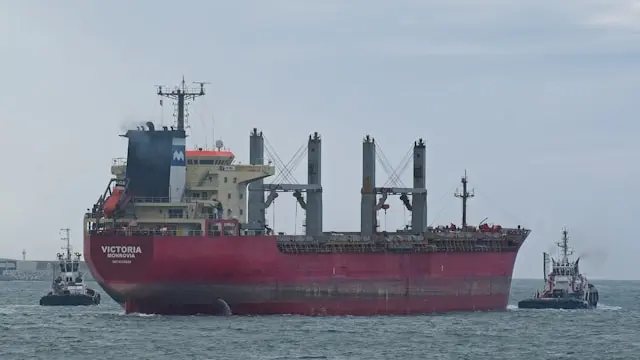
Szczecin's port complex moved 36.2 million tonnes of cargo in 2023. The Polish government and European Union have committed over PLN 2.3 billion to the city's rail, fairway, and terminal infrastructure through 2026. Container throughput projections show 8 to 12% annual growth. By every capital measure, this is a port ascending. By every talent measure, it is a port struggling to staff the roles that make that ascent possible.
The core tension is not a generic shortage. It is a specific mismatch between what the investment demands and what the local labour market can supply. Semi-automated crane systems and gate automation have reduced terminal stevedoring headcount by 12% since 2021, but the roles that replaced them require PLC programming, SCADA expertise, and cryogenic engineering certifications that the regional talent pool cannot fill at the rate employers need. Vessel Traffic Service operators sit vacant for 95 to 120 days. Intermodal coordinators take 2.3 times longer to hire than the national logistics average. The capital is arriving faster than the people who know how to deploy it.
What follows is an analysis of the forces reshaping Szczecin's maritime logistics sector, the employers driving that change, and what senior leaders need to understand before they make their next hiring decision in this market. The picture is more complex than it appears from the investment headlines alone, and the implications for anyone building a leadership team in this corridor are immediate.
The Port Complex in 2026: Scale, Structure, and the Cargo Mix Shift
The Szczecin port and logistics market sits at an inflection point defined by two simultaneous transitions. The first is physical: the Oder River fairway deepening project to 12.5 metres remains incomplete, limiting Szczecin's inner port to Panamax-class vessels with a maximum draft of 9.3 metres. That restriction excludes roughly 60% of the global container fleet and forces expensive lightering operations for fully laden ships. Świnoujście, by contrast, offers 15 metres of draft and handles the complex's deepwater requirements, including the expanded LNG terminal now rated at 8.3 billion cubic metres of annual regasification capacity.
The second transition is compositional. Bulk commodities still dominate the cargo mix at 62% of total volume, with liquid bulk at 28% and containerised or general cargo at just 10%. But the direction is shifting. Thermal coal transshipment, which accounts for 22% of Szczecin's cargo volume, faces terminal decline as Polish utilities move toward LNG and renewables under EU Emissions Trading System phase-out schedules. The Energy Regulatory Office's National Energy and Climate Plan projects a 15% decrease in coal handling by 2026. That is not a distant risk. It is a current business model threat for dedicated bulk terminals.
Container Growth Against Physical Limits
Container throughput remains modest at roughly 180,000 TEU, a fraction of the 2.4 million TEU handled by DCT Gdańsk. Industry projections from the Polish Chamber of Maritime Industry suggest 8 to 12% annual container growth through 2026, but this is contingent on completion of the deepwater container terminal feasibility study still under review by the Port Authority. Without a terminal capable of receiving post-Panamax vessels without lightering, Szczecin's container ambitions face an infrastructure ceiling that no amount of demand can push through alone.
The LNG Terminal as an Over-Capitalised Anchor
The Świnoujście LNG terminal, operated by Polskie LNG S.A., completed its third storage tank in late 2023, expanding capacity substantially. This facility is critical to Poland's energy security strategy and to the port complex's long-term cargo diversification. But its current throughput runs below the expanded design capacity, creating a situation where the terminal is over-capitalised relative to actual utilisation. The specialised workforce of 180 cryogenic engineers and process safety professionals it maintains is small, highly compensated, and effectively impossible to recruit from the open market.
The investment story, in other words, is real. The question is whether the people required to execute it are available. For hiring leaders in this sector, the cargo mix shift means the roles that mattered five years ago are not the roles that matter now. The coal terminals that once anchored employment are shrinking. The automation, intermodal, and LNG functions that are growing require entirely different skill profiles.
Where the Talent Gaps Are Deepest
The maritime logistics cluster in the West Pomeranian Voivodeship directly employed approximately 18,400 people as of mid-2024. That figure represents a 2.1% year-over-year increase but remains 4% below pre-pandemic peaks. The headline number, however, obscures a deeper bifurcation. General logistics and freight forwarding coordinators show an active candidate ratio of 60%, with high mobility between employers. At the other end, Vessel Traffic Service operators and maritime pilots exhibit 90 to 95% passive candidate characteristics, with average tenure exceeding 12 years and near-zero unemployment.
The hardest roles to fill sit in three categories: technical maritime operations, intermodal engineering, and digitalisation. According to Antal Poland's logistics salary data, specialised VTS operator positions and automated crane maintenance technicians remain vacant for 95 to 120 days on average. Generic logistics coordinator roles fill in 40 to 45 days. That 2.3x differential in time-to-fill tells hiring leaders exactly where the constraint binds.
Port Automation Engineers: The 75% Passive Problem
Approximately 75% of qualified PLC and SCADA specialists in the Szczecin market are passively employed. They are not looking. They are not on job boards. They are not responding to postings. They are, however, recruitable for 25 to 35% salary premiums, according to Devire's 2024 Talent Market Report on industrial automation. This means that any search strategy built around job advertising reaches, at best, one quarter of the viable candidate pool. The remaining three quarters require direct identification and approach.
The retirement demographic compounds the problem. The talent pool of candidates with five or more years of Oder River navigation experience contracted by an estimated 8% in 2024 due to retirements, even as job postings for port operations managers and intermodal coordinators in the region increased 34% year-over-year. The pipeline is narrowing at the top while demand expands at the base.
The Original Analytical Claim: Capital Moved Faster Than Human Capital Could Follow
The most important dynamic in this market is not visible in any single data point. It emerges from combining three: PLN 2.3 billion in committed infrastructure investment, a 12% decline in traditional stevedoring headcount, and a simultaneous 18% growth in intermodal coordination and customs brokerage roles. Together they reveal a fundamental sequencing failure. The investment in automation and infrastructure modernisation has not reduced the workforce. It has replaced one kind of worker with another that does not yet exist in sufficient numbers. The capital moved faster than human capital could follow.
This is not a temporary lag. The Maritime University of Szczecin graduates 850 maritime officers, logistics engineers, and port management specialists annually. But the curriculum alignment survey conducted in 2024 shows that proficiency in Navis N4 terminal operating systems, Konecranes or Liebherr crane automation interfaces, and PLC programming for port machinery is only now being integrated into degree programmes. The graduates entering the market in 2026 and 2027 will be the first cohort with meaningful exposure to the technologies that the port complex has already installed. The gap between what employers need today and what the education pipeline produces today is measured in years, not months.
For any organisation building or maintaining a leadership team in Szczecin's maritime sector, this sequencing mismatch is the defining hiring constraint. You cannot recruit experience that the training system has not yet produced. What you can do is identify and approach the small number of professionals who acquired these skills on the job, often at competitor firms, and construct a proposition compelling enough to move them. That requires a different method than traditional job advertising can deliver.
Compensation: What Roles Pay and Why the Gdańsk Gap Matters
Compensation in Szczecin's maritime logistics sector follows a clear hierarchy, and understanding it is essential for any hiring leader benchmarking an offer.
At the senior specialist and manager level, terminal operations managers and berth planners earn PLN 168,000 to 228,000 annually, with additional shift premiums for 24/7 operations coverage. Intermodal coordinators and rail freight managers sit slightly lower at PLN 156,000 to 204,000. Port automation engineers and systems analysts command PLN 180,000 to 264,000, reflecting the scarcity premium attached to their skills.
At the executive and VP level, directors of terminal operations earn PLN 420,000 to 600,000 annually, plus management incentive plans tied to EBITDA and safety metrics that typically add 20 to 40% of base salary. Supply chain directors and COOs in logistics command PLN 360,000 to 540,000, with meaningful premiums for German-Polish bilingual candidates managing cross-border operations. The nascent port digitalization officer role, where it exists at all, sits at PLN 384,000 to 480,000, though most port digitalisation functions still report into CTOs at the holding company level rather than operating as standalone C-suite positions.
The Tri-City Compensation Drain
The most consequential compensation benchmark for Szczecin hiring leaders is not internal. It is external, specifically the gap with Gdańsk and Gdynia. Terminal operations managers in the Tri-City metropolitan area earn PLN 18,000 to 22,000 monthly, a 35 to 45% premium over Szczecin's PLN 12,000 to 15,000 for equivalent roles. That differential is large enough to overcome the 40% higher housing costs in Gdańsk, particularly for senior executives with families who value the international schooling options and career trajectory opportunities that come with managing operations at a 2.4 million TEU deepwater terminal.
The Hamburg factor amplifies this drain further. German port operations executives earn 2.5 to 3.0 times the gross salary of their Szczecin counterparts, with EUR 85,000 to 120,000 standard for roles that pay PLN 300,000 to 400,000 in Szczecin. For Szczecin's bilingual maritime engineers and VTS operators, the pull toward Hamburg's Container Terminal Altenwerder and its advanced automation exposure is considerable. The compensation gap between Szczecin and its nearest competitors is not closing. It is widening fastest at exactly the seniority level where the most critical roles sit.
This makes the counteroffer dynamic particularly treacherous. An employer in Szczecin that identifies a strong internal candidate for promotion may find that candidate already in conversation with a Gdańsk or Hamburg recruiter, and the proposition required to retain them has shifted from a 10% raise to a fundamental restructuring of role scope and compensation.
The Three Competitors Pulling Talent Out of Szczecin
Szczecin's talent leakage is not diffuse. It flows through three specific channels, each requiring a different response from hiring leaders.
Gdańsk: The Deepwater Career Magnet
DCT Gdańsk and Baltic Container Terminal Gdynia handle volumes that dwarf Szczecin's container operations. For an ambitious terminal operations professional, the career trajectory available in the Tri-City means exposure to mega-ship operations, international carrier relationships, and a scale of decision-making that Szczecin's 180,000 TEU cannot offer. The lateral hiring pattern is well established. Reports indicate that OT Logistics and competing forwarders have engaged in aggressive lateral recruitment from Gdańsk, offering relocation packages and 20 to 25% salary premiums to secure candidates with Baltic container terminal experience. The fact that Szczecin employers must pay a premium to recruit from a market that already pays more tells you everything about the relative bargaining positions.
Hamburg: The Automation and Salary Ceiling
Hamburg offers not only higher compensation but also qualitatively different work. Port automation professionals who move to Hamburg gain exposure to systems and operating environments that are one to two generations ahead of what Szczecin currently deploys. For a PLC or SCADA specialist, that exposure translates directly into career capital. The English-language working environment further reduces friction for Polish maritime engineers who already operate in a multilingual context. This channel disproportionately drains the exact automation talent Szczecin's investment programme most urgently needs.
Berlin: The Technology Defection
The third channel is the least obvious and potentially the most damaging. E-commerce logistics hubs and SaaS logistics technology firms in Berlin and Brandenburg offer software engineering roles with remote and hybrid flexibility that Szczecin's asset-heavy, physically present port operations cannot match. This channel does not compete for port operators. It competes for the IT talent that maritime logistics firms need for digitalisation and automation initiatives. A port systems analyst who could build predictive maintenance models for quay cranes can also build demand forecasting models for a Berlin-based fulfilment company, earn a comparable salary, and work from home three days a week. The port sector's inability to offer that flexibility is a systemic disadvantage in the competition for digital talent.
Infrastructure Investment and the Coordination Bottleneck
The headline investment figures are substantial. ZPMSiŚ has budgeted PLN 890 million for 2025 to 2026 infrastructure work, with 45% directed at rail access improvements and 30% at quay reconstruction. The Polish government's National Reconstruction Plan has allocated EUR 340 million to the Szczecin node of the Baltic-Adriatic TEN-T corridor, targeting E65 rail line modernisation by late 2026. By any measure, this is the largest infrastructure investment Szczecin's port has received in its modern history.
Yet operational data tells a more complicated story. Rail dwell times for intermodal units at Szczecin Gądów terminal increased 18% in 2024 compared to 2023. Barge utilisation of the Oder waterway sits at just 45% of theoretical capacity due to draft restrictions. The Szczecin-Poznań railway line operates at 78% capacity during peak periods, with single-track sections limiting container train frequency to 12 pairs daily against demand for 18 to 20 pairs. Capital allocation alone is not resolving these bottlenecks.
The binding constraint is increasingly regulatory coordination rather than funding. The rail infrastructure requires alignment between PKP Polskie Linie Kolejowe (the Polish rail infrastructure manager), German DB Netz for cross-border sections, and multiple waterway authorities. Track gauge standardisation, electrification schedules, and cross-border interoperability protocols involve separate agencies with separate timelines. A hiring leader reading this should understand the implication: the intermodal development manager role, which requires fluency in German and Polish and expertise in EU TEN-T corridor regulations, is not a nice-to-have position. It is the role that determines whether PLN 890 million in capital investment produces operational results or creates expensive infrastructure that sits underutilised because the hinterland connections were not coordinated in parallel.
For organisations managing talent pipelines in this sector, the infrastructure timeline also creates a planning horizon. The professionals hired in 2026 to manage these expanded rail and quay assets will need to be in place before the infrastructure is operational. Recruiting after completion means starting operations with an untested team. Recruiting now means carrying salary cost against assets not yet generating revenue. That tension defines the hiring calendar for every terminal operator and logistics provider in the region.
What Hiring Leaders in Szczecin's Maritime Sector Must Do Differently
The conventional approach to filling senior maritime logistics roles in Szczecin does not work for the positions that matter most. A job posting for a port automation engineer reaches, at best, 25% of the qualified market. A posting for a VTS operator reaches less than 10%. The professionals who can fill these roles are employed, embedded in long-tenure positions, and not monitoring job boards. They must be identified directly, assessed for willingness to consider a move, and presented with a proposition that addresses not just compensation but career trajectory, operational scope, and the specific infrastructure investment story that makes Szczecin's next five years materially different from its last five.
The German-language requirement adds another layer of difficulty. The intermodal development manager role, the cross-border rail freight coordinator, and several senior terminal operations positions require functional bilingual capability. This is not a skill that can be screened from a CV database. It requires conversational assessment by a recruiter who understands both the linguistic and the operational context. Generic recruitment approaches fail here because they cannot evaluate the intersection of technical competency, language capability, and willingness to relocate or remain in a market that pays less than its competitors.
KiTalent's approach to executive search in industrial and manufacturing sectors directly addresses this challenge. Using AI-powered talent mapping to identify passive candidates across the Baltic maritime corridor, KiTalent delivers interview-ready leadership candidates within 7 to 10 days. The pay-per-interview model means organisations only pay when they meet qualified candidates, eliminating the upfront retainer risk that makes retained search prohibitive for mid-market terminal operators and logistics providers. With a 96% one-year retention rate and over 1,450 executive placements completed across 200+ organisations globally, this is a methodology built for markets where the talent you need is not visible and the cost of a slow search is measured in infrastructure sitting idle.
For organisations competing for terminal operations directors, intermodal development managers, or port digitalisation officers in Szczecin's maritime logistics cluster, where the strongest candidates are passive, bilingual, and weighing offers from Gdańsk and Hamburg simultaneously, start a conversation with our executive search team about how to reach the candidates that conventional methods cannot.
Frequently Asked Questions
What are the biggest hiring challenges in Szczecin's maritime logistics sector?
The most acute challenges sit in three areas: technical maritime operations, intermodal engineering, and port digitalisation. Vessel Traffic Service operators and automated crane maintenance technicians remain vacant for 95 to 120 days on average, compared to 40 to 45 days for generic logistics roles. Approximately 75 to 95% of candidates in the most critical roles are passive, meaning they are employed and not actively searching. Talent leakage to Gdańsk (offering 35 to 45% higher salaries) and Hamburg (offering 2.5 to 3x compensation) compounds the difficulty. Firms relying on job postings alone reach a fraction of the available talent pool.
What do port operations executives earn in Szczecin in 2026?
Terminal operations directors earn PLN 420,000 to 600,000 annually, plus management incentive plans worth 20 to 40% of base salary. Supply chain directors and logistics COOs command PLN 360,000 to 540,000, with premiums for German-Polish bilingual candidates. Senior specialists such as terminal operations managers earn PLN 168,000 to 228,000, while port automation engineers earn PLN 180,000 to 264,000. These figures trail Gdańsk equivalents by 35 to 45% and Hamburg equivalents by 150 to 200%, making retention and recruitment a persistent challenge requiring strategic compensation benchmarking.
How does Szczecin's port compare to Gdańsk for maritime careers?
Gdańsk handles 2.4 million TEU annually compared to Szczecin's 180,000 TEU, offering qualitatively different career exposure to mega-ship operations and international carrier relationships. Compensation is 35 to 45% higher for equivalent roles. Housing costs are 40% higher in Gdańsk, but the net compensation advantage and international schooling options attract senior professionals with families. Szczecin's advantage lies in its infrastructure investment pipeline and emerging intermodal corridor roles that offer scope unavailable in more mature ports.
What skills are most in demand for Szczecin's port sector?
The highest demand is for proficiency in Navis N4 terminal operating systems, PLC programming for port machinery, and Konecranes or Liebherr crane automation interfaces. Dangerous goods certification covering IMDG Code for maritime and RID/ADR for rail and road is required for approximately 35% of senior operational roles. Synchromodal planning expertise combining short-sea shipping with rail and barge, and familiarity with CIM/SMGS rail consignment procedures, are critical for the growing intermodal function. German language fluency is essential for cross-border corridor management roles.
How can executive search help fill maritime logistics leadership roles in Szczecin?
When 75 to 95% of qualified candidates in critical maritime roles are passive, direct headhunting methods outperform job advertising by reaching the professionals who are employed and not searching. KiTalent uses AI-enhanced talent mapping across the Baltic maritime corridor to identify and approach candidates with the specific technical, linguistic, and operational profiles these roles require. The pay-per-interview model eliminates retainer risk, and interview-ready candidates are typically delivered within 7 to 10 days, a critical advantage when vacancy durations of 95 to 120 days represent months of underutilised infrastructure investment.
What is the outlook for Szczecin's port employment through 2026?
Employment will grow in specialised functions while declining in traditional manual roles. Container terminal automation has already reduced stevedoring headcount by 12% since 2021, offset by 18% growth in intermodal coordination and customs brokerage. Coal transshipment faces a projected 15% decline by 2026 under EU ETS phase-out schedules, threatening bulk terminal employment. The net effect is a workforce that may remain flat or shrink in aggregate while experiencing severe shortages in automation maintenance, digitalisation, and intermodal planning roles. This bifurcation requires hiring strategies that target specific skill profiles rather than volume recruitment.