Szczecin's Offshore Wind Paradox: PLN 1.5 Billion in Infrastructure, Not Enough Specialists to Run It
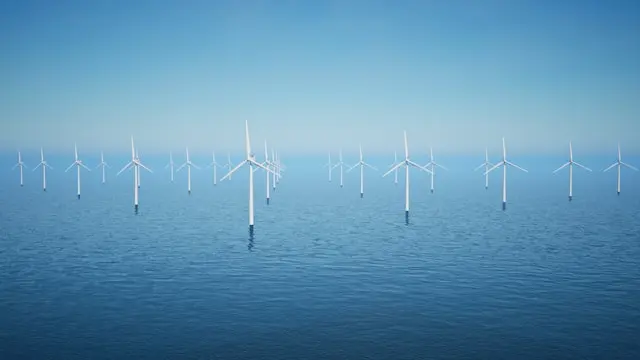
Szczecin's port authority and private developers have committed over PLN 1.5 billion to heavy-lift quays, logistics parks, and vessel retrofit facilities designed to serve Poland's 11 GW offshore wind pipeline. Terminal B3 in Swinoujscie is coming online. Panattoni's 85,000 square metre Offshore Wind Logistics Park nears completion. Remontowa Holding is spending PLN 300 million on service operation vessel retrofit capability. The physical infrastructure is arriving on schedule or close to it.
The workforce is not. Job postings for offshore wind roles in Szczecin rose 240% year-on-year through the second half of 2024. Senior project manager vacancies sit open for 180 to 240 days. HSE managers with GWO certification command a 40% premium over their onshore equivalents, and firms are importing heavy-lift specialists from Gdańsk and German Baltic ports at salary premiums of 25 to 35% above local rates. West Pomerania's regional unemployment rate stands at 8.1%, well above the Polish average, yet the people who are unemployed are not the people the offshore wind sector needs.
What follows is an analysis of the forces shaping Szczecin's emergence as a Baltic offshore wind service hub, why its talent market is splitting into two disconnected realities, and what organisations hiring in this region must understand before committing to searches that conventional methods cannot complete.
A Port Complex Built for Offshore Wind, Constrained by Geography
Szczecin's position in Poland's offshore wind supply chain requires careful distinction from the marketing language surrounding it. The city sits 65 kilometres inland from the Baltic Sea via the Świna strait. Its inner harbours handle maintenance, assembly, and logistics. Swinoujscie, the outer port twin, handles deep-water transhipment for heavy offshore wind components. The draft differential tells the story concisely: 12.5 metres at Swinoujscie versus a maximum of 9.15 metres at Szczecin's quays.
This is not a limitation that investment can overcome. The Oder River's draft and the 16.5 metre air clearance at the Siadło Dolne bridge permanently prevent transport of assembled turbine blades longer than 85 metres to Szczecin without specialised tilting equipment. Full nacelle assembly and jacket foundation load-out are physically impossible without dismantling bridges, a cost that no developer will absorb.
What Szczecin Actually Does
The result is a port complex whose offshore wind role is genuine but bounded. Cable marshalling. Nacelle pre-assembly at the Łasztownia logistics hub. O&M vessel berthing. Service operation vessel retrofit. Break-bulk handling for foundation components via DFDS's heavy-lift ro-ro services. These are real, growing activities. They are not, however, the primary fabrication role that some promotional materials suggest. No major monopile foundation manufacturing contracts had been publicly awarded to Szczecin-based entities for the Baltica projects as of early 2025, with developers continuing to source primary steel from Spain, Portugal, and Germany.
The Infrastructure Investment Bet
The PLN 1.2 billion port authority investment programme running through 2027 is concentrated on making Swinoujscie's Terminal B3 operational for heavy-lift offshore wind logistics, with 15-metre water depth and a 50-hectare storage yard. The Szczecin inner port development focuses on what the geography allows: cable storage, pre-assembly, and support vessel logistics. Panattoni's logistics park in Szczecin-Dąbie serves nacelle and blade storage rather than fabrication.
Whether this infrastructure bet pays off depends on a question no amount of concrete can answer: will fabrication contracts materialise as Poland's 70% local content requirement tightens, or will the Oder River's physical constraints permanently cap Szczecin's share of the value chain? The answer shapes every hiring decision in this market. An organisation staffing for logistics and O&M support faces a different talent challenge than one staffing for heavy fabrication. As of 2026, the evidence points firmly toward the former.
Poland's 11 GW Pipeline and the Pre-Construction Surge
Poland's offshore wind programme is one of the largest in the Baltic. The Baltica cluster (Equinor and Polenergia's 1.5 GW Baltica 2 and 3), FEW Baltic II (1.08 GW from Polenergia), and Orlen's projects collectively represent an 11 GW pipeline that will reshape the country's energy mix over the coming decade. For Szczecin, 2026 marks the pre-construction surge for Baltica 2, scheduled for commissioning in 2027.
This is the period when demand for O&M vessel berthing, cable storage, and technician accommodation services accelerates sharply. According to the Offshore Wind Energy Center (OWEC), the Szczecin-Swinoujscie cluster was projected to support 3,500 to 4,500 direct jobs by end of 2026, contingent on fabrication contracts materialising. Even without those contracts, the logistics and marine services ramp-up alone represents a tripling of the 1,200 to 1,500 direct FTEs employed in the cluster as of late 2024.
Grid Delays and the Stop-Start Risk
The pipeline's scale is real. Its timing is less certain. Delayed onshore grid reinforcement by PSE (Polskie Sieci Elektroenergetyczne) slowed final investment decisions for Baltica 2 and 3, temporarily freezing fabrication contract awards. According to WindEurope's Polish Offshore Wind Outlook, connection conditions for Baltica 2 were pushed to early 2025. For Szczecin employers, this creates a stop-start dynamic that is particularly corrosive for workforce planning. You cannot recruit a senior project manager for a 180-day search, onboard them, and then pause the project that justified the hire.
The regulatory environment compounds the uncertainty. Poland's Offshore Wind Act mandates 70% local content by 2030, but the definition of "local" remains ambiguous. Whether it means Polish or EU content affects whether Szczecin firms compete with domestic suppliers or with Danish and German companies operating through Polish subsidiaries. This ambiguity is not academic. It determines which contracts flow to Szczecin yards and which do not, and by extension, which roles need to be filled locally.
The Two Labour Markets of West Pomerania
Here is the analytical claim that makes Szczecin's situation genuinely unusual among European offshore wind hubs: the region's high general unemployment and its acute specialist shortage are not contradictory signals. They are evidence that the offshore wind sector is creating a parallel labour market that has almost no connection to the existing local workforce.
West Pomerania's 8.1% unemployment rate, reported by GUS in November 2024, sits well above the Polish national average of 5.2%. In most industries, this slack would ease hiring. In offshore wind, it is irrelevant. The unemployed population lacks GWO certifications, offshore medical clearances, and the English or German language skills that every serious offshore wind role requires. The qualified workforce is either fully employed within the cluster, working in Gdańsk's more established maritime sector, or earning three to four times as much in Hamburg or Esbjerg.
This is not a hiring shortage in the conventional sense. It is a knowledge and certification gap that cannot be closed by posting more vacancies or raising salaries incrementally. The Maritime University of Szczecin launched a specialised Offshore Wind Energy postgraduate programme in October 2024, but its first graduates will not enter the workforce for at least 18 months. Capital moved faster than human capital could follow, and the result is a market where PLN 1.5 billion in physical infrastructure sits waiting for a workforce that does not yet exist in sufficient numbers to operate it.
Where the Shortages Are Most Acute
The Hays Poland Renewable Energy Salary Guide for 2025 recorded 340 active offshore wind vacancies in Szczecin in December 2024, a 240% increase from the same period in 2023. Four role categories account for the most severe shortages and the longest time-to-fill.
Offshore Wind Project Managers
Senior project managers with 15 or more years of experience and an offshore wind construction track record represent the deepest gap. Vacancies in this category typically remain open for 180 to 240 days, compared to 45 to 60 days for equivalent shipbuilding project managers in the same market. The required profile is narrow: FIDIC contract management experience, marine coordination capability, GWO BST certification, and C1-level English at minimum. At the director level, employers need candidates with P&L responsibility, experience with Polish regulatory compliance under the Offshore Wind Act, and relationships with PSE and the Maritime Office.
Compensation at the senior manager level runs PLN 22,000 to 32,000 gross per month (roughly €5,100 to €7,400), plus project bonuses of 15 to 20%. At director and country manager level, packages reach PLN 45,000 to 65,000 gross per month (€10,400 to €15,100), with annual bonuses of 30 to 50% and long-term incentive plans for those employed by publicly traded parent companies.
The passive candidate ratio at director level is extreme: an estimated 5:95 active-to-passive split. These candidates are employed by Equinor, Ørsted, or RWE and will not appear on any job board. They are recruited through direct executive search or they are not recruited at all.
HSE Managers with GWO Certification
HSE managers certified to GWO standards and holding ISO 45001 Lead Auditor qualifications are in critically short supply across the entire Baltic offshore wind sector, not only in Szczecin. The active-to-passive ratio sits at approximately 10:90. Average tenure in current roles is 4.2 years. Unemployment among qualified HSE professionals is below 2%.
Compensation for offshore wind construction HSE managers in Szczecin runs PLN 20,000 to 30,000 gross per month, a 40% premium over onshore construction HSE roles in the same city. The premium reflects both scarcity and the additional requirements: offshore medical clearance, trilingual capability in Polish, English, and German, and willingness to work on rotation.
Heavy-Lift Operations and Welding Specialists
Marine operations managers and heavy-lift supervisors require IMO STCW certification, jack-up vessel experience, and supervision of 500-tonne-plus crane operations. German and English bilingual capability is essential given the cross-border nature of Baltic projects. Compensation ranges from PLN 18,000 to 28,000 gross per month at the manager level, with offshore day rates of €350 to €450 when on rotation.
EN 1090 EXC4 certified welding engineers represent a different kind of shortage. The general welding pool in Szczecin shows a 70:30 active-to-passive ratio, but quality-certified specialists who can work on offshore steel structures are overwhelmingly passive. According to the Polish Wind Energy Association, several Szczecin logistics firms have introduced four-day work weeks for specialised welding teams specifically to prevent migration to Gdańsk or international projects. This is an extraordinary accommodation for industrial roles in the Polish market, and it signals how far employers are willing to restructure operations to retain scarce skills.
The Compensation Reality: Competitive Locally, Vulnerable Internationally
Szczecin's compensation packages are competitive within Poland. They are not competitive internationally, and the gap is widening at exactly the seniority level where the most critical shortages sit.
A senior offshore wind project manager in Szczecin earns PLN 22,000 to 32,000 gross per month. The equivalent role in Hamburg commands €60,000 to €90,000 annually, translating to roughly 2.5 to 3 times the Szczecin figure. Esbjerg pays 3 to 4 times Polish levels. Polish marine specialists with German language skills frequently migrate to Hamburg for career progression, according to Germany's Bundesagentur für Arbeit.
The cost-of-living differential partially offsets this. Housing costs in Szczecin run approximately 40% below Gdańsk and 60% below Hamburg. Proximity to family networks retains mid-level talent. But the retention advantage breaks down at the senior and executive level, where career trajectory becomes the deciding factor. Szczecin lacks major developer headquarters. The strategic decisions that shape Poland's offshore wind programme are made in Warsaw, Stavanger, and Copenhagen. A director-level professional who stays in Szczecin gains operational experience but loses visibility. Over a five-year career arc, the cost of that trade-off compounds.
This creates a structural ceiling effect. Szczecin can develop mid-career talent. It struggles to retain it once that talent reaches the seniority where international mobility becomes attractive and possible. The organisations hiring at senior level in this market are not competing with other Szczecin employers. They are competing with Hamburg, Esbjerg, and the international rotation contracts that let professionals earn Danish wages while maintaining a Polish home base.
Meanwhile, wage inflation is eroding the cost advantage that makes Szczecin attractive in the first place. Skilled maritime wages in the region grew 12% year-on-year in 2024, according to the National Bank of Poland. PLN volatility against the euro further complicates budgeting for firms whose revenue is denominated in euros but whose payroll is in zloty.
What This Means for Organisations Hiring in Szczecin's Offshore Wind Sector
The conventional approach to hiring in a market with 8.1% unemployment would be to post roles, wait for applications, and select from a comfortable surplus. In Szczecin's offshore wind sector, that approach will fail for every role above a general fabrication welder.
The data is unambiguous. At director level, 95% of viable candidates are passive. At HSE manager level, 90% are passive. Even among marine engineers, the experienced cohort with STCW certification trends heavily passive, with only new Maritime University graduates actively seeking roles. The 80% of senior professionals who never appear on job boards is not a hypothetical figure in this market. It is closer to 90% for the roles that matter most.
A search for an offshore wind project director in Szczecin requires reaching into employer organisations across the Baltic, identifying professionals who are not looking, and building a proposition that addresses the career trajectory concern, not just the compensation question. The four-day work week experiment among Szczecin welding firms illustrates a broader truth: retaining talent in this market requires more than matching a counteroffer. It requires solving a structural problem that money alone cannot fix.
For organisations with leadership vacancies in the offshore wind supply chain, whether in Szczecin, Gdańsk, or the broader Baltic region, the cost of a slow or conventional search is measured in project delays. A 180-day vacancy for a construction project manager on a programme scheduled for 2027 commissioning is not merely an HR inconvenience. It is a critical path risk.
KiTalent delivers interview-ready executive candidates within 7 to 10 days through AI-enhanced talent mapping that identifies passive professionals across the full Baltic offshore wind market. With a pay-per-interview model that eliminates upfront retainer risk and a 96% one-year retention rate for placed candidates, the approach is built for markets where the talent is real but invisible to conventional sourcing.
For organisations competing for offshore wind leadership in Szczecin or Poland's broader energy transition sector, where the candidates you need are working for your competitors across three countries and will not respond to a job advertisement, speak with our executive search team about how we approach this market.
Frequently Asked Questions
What offshore wind jobs are available in Szczecin in 2026?
Szczecin's offshore wind job market centres on marine services, logistics, and supply chain support rather than primary fabrication. The highest-demand roles include offshore wind project managers, GWO-certified HSE managers, heavy-lift operations supervisors, and EN 1090 EXC4 welding engineers. The Szczecin-Swinoujscie cluster supports an estimated 3,500 to 4,500 direct jobs as the pre-construction surge for Baltica 2 accelerates. Entry-level logistics and general fabrication roles are more accessible, while senior specialist and director-level positions require extensive offshore wind track records and certifications.
What do offshore wind professionals earn in Szczecin?
Senior project managers earn PLN 22,000 to 32,000 gross per month, with project bonuses of 15 to 20%. Directors and country managers earn PLN 45,000 to 65,000 gross per month, with annual bonuses of 30 to 50%. HSE managers with GWO certification command PLN 20,000 to 30,000 gross, a 40% premium over onshore construction HSE roles. Marine operations managers earn PLN 18,000 to 28,000 plus offshore day rates of €350 to €450. Compensation in Szczecin runs 10 to 15% below Gdańsk and substantially below Hamburg or Esbjerg for equivalent seniority.
Why is it hard to hire offshore wind specialists in Szczecin?
The difficulty stems from a severe skills mismatch. West Pomerania has 8.1% unemployment, but the unemployed population lacks GWO certifications, offshore medical clearances, and the English or German language proficiency required for offshore wind roles. Qualified specialists are either fully employed, working in Gdańsk, or earning substantially higher wages in Hamburg or Esbjerg. Senior project manager searches typically run 180 to 240 days. KiTalent's direct headhunting methodology reaches the passive candidates who will never appear on a Polish job board.
How does Szczecin compare to Gdańsk for offshore wind careers?
Gdańsk offers a more established maritime cluster, deeper water ports at Oksywie, existing engineering offices for Ørsted and Equinor, and base salaries 10 to 15% higher than Szczecin for equivalent roles. Gdańsk also has a stronger expatriate community and the Politechnika Gdańska talent pipeline. Szczecin's advantages are lower cost of living, proximity to German Baltic markets, and the emerging logistics and O&M vessel support infrastructure centred on the Swinoujscie deep-water terminal. Career trajectory at senior level currently favours Gdańsk or Warsaw.
What certifications are needed for offshore wind roles in Poland?
Core certifications vary by role. GWO Basic Safety Training is a baseline requirement across most offshore positions. HSE managers need ISO 45001 Lead Auditor qualifications and offshore medical clearance. Marine operations managers require IMO STCW certification. Welding engineers need EN 1090 EXC4 certification for offshore steel structures. Project managers benefit from FIDIC contract management credentials. All roles above mid-level require English at C1 level, and German language capability is a material advantage given cross-border project coordination with German Baltic ports.
What is Poland's local content requirement for offshore wind?
Poland's Offshore Wind Act mandates 70% local content by 2030, designed to ensure domestic suppliers capture a meaningful share of the value chain from the country's 11 GW pipeline. However, ambiguity remains over whether "local" means Polish-origin or EU-origin content. This distinction directly affects whether Szczecin firms compete primarily with other Polish suppliers or with Danish and German companies operating through Polish subsidiaries. Resolution of this definition will shape which fabrication and service contracts flow to the Szczecin-Swinoujscie cluster and which are captured elsewhere.