Terni's Metalworking Paradox: 25% Youth Unemployment and 1,200 Technical Roles Nobody Can Fill
Terni's industrial district closed 2025 with 412 active metalworking enterprises, roughly 8,900 direct employees, and more than 1,200 technical positions that went unfilled for the year. In a region where one in four young people has no job, the district's CNC machines, robotic welding cells, and heat treatment furnaces are running below capacity because the people trained to operate them do not exist in sufficient numbers.
This is not a labour shortage in the conventional sense. Umbria has people. What it does not have is a pipeline that converts the region's 25.4% youth unemployment into the 5-axis CNC programmers, ASME-certified welding engineers, and PLC maintenance technicians that the district's employers need today and will need in greater numbers by the end of 2026. The mismatch between what the education system produces and what the factory floor requires has become the single largest constraint on the district's growth, more binding than energy costs, more consequential than AST's production cycles, and harder to solve than either.
What follows is a ground-level analysis of the forces reshaping Terni's metalworking and precision manufacturing talent market: where the gaps sit, why capital investment has not closed them, what the competition for scarce technical leaders looks like across Italian geographies, and what hiring executives in this district must do differently to secure the people who will determine whether their firms modernise or stall.
A District Built on Steel, Now Rebalancing Away from It
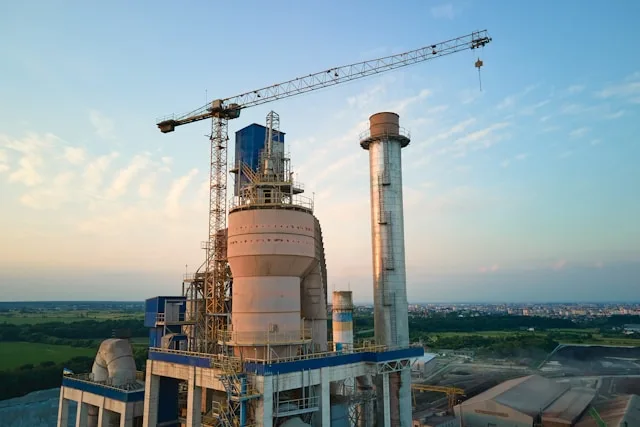
Terni's formal designation as a Distretto Industriale della Meccanica dates to 2002, but the industrial ecosystem predates the label by decades. The district's production mix reflects deep specialisation: forged and machined components account for 34% of output, industrial valves and fluid control systems for 21%, precision gears and transmission systems for 18%, and custom industrial machinery for 15%.
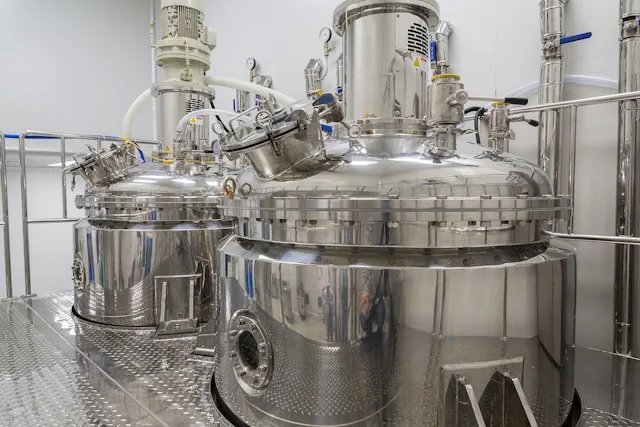
The critical shift underway is one of dependency. AST, the stainless steelworks employing approximately 2,380 people, remains the gravitational centre of the local supply chain. But district export intensity has now reached 47% of total turnover, with railway components flowing through the Peroni/Wabtec supply chain, pharmaceutical autoclaves through Fedegari, and pressure equipment through Omera into chemical and petrochemical end markets. The diversification is real.
It is also incomplete. Banca d'Italia's analysis of the district found that a 10% contraction in AST production volume still correlates with a 4.2% decline in SME revenues within two quarters. That correlation has halved over the past decade, but it has not disappeared. And AST itself operates at roughly 75% capacity utilisation under a complex Arvedi/Acciaierie d'Italia ownership structure that faces ongoing EU state aid scrutiny. Any hiring executive in the district must price this volatility into their talent strategy.
The Export Cluster Pulling Ahead
The bifurcation in the district's 2026 outlook tells the real story. Prometeia's baseline scenario projects modest overall growth of 1.5 to 2.1% in district value-added. But that average obscures a widening gap. Large integrated suppliers to AST face margin compression from steel price volatility. Meanwhile, precision engineering SMEs serving pharmaceutical and food equipment markets anticipate 4 to 5% revenue growth, driven by North American and Asian export demand.
This split matters for talent because the two halves of the district are now competing for the same limited pool of technical specialists. A senior welding engineer certified to ASME IX standards is as valuable to a Fedegari pharmaceutical autoclave as to an AST supply chain forging shop. The export cluster can offer more stable order books and better growth trajectories. The AST-dependent cluster can offer proximity and familiarity. Neither can offer enough qualified candidates.
The Skills Mismatch That Capital Cannot Solve
Here is the analytical claim that sits at the centre of this market's problem: the €34 million in PNRR funds allocated to Terni-area metalworking SMEs for decarbonisation equipment is accelerating the very crisis it was intended to relieve. Every new robotic welding cell, every hydrogen-ready heat treatment furnace, every interconnected manufacturing system installed with public money creates demand for a technician who does not yet exist in the local labour market. Capital moved faster than human capital could follow, and the gap is widening with each investment cycle.
The numbers make this concrete. The district is projected to increase industrial robot density from 85 units per 10,000 employees to over 120 by end of 2026, according to the International Federation of Robotics. Yet only 23% of district SMEs report successful implementation of interconnected manufacturing systems. The constraint is not funding. It is the absence of people who can integrate, programme, maintain, and troubleshoot the systems that the funding pays for.
Where the Education Pipeline Breaks
Umbria's youth unemployment rate of 25.4% as of mid-2024 would suggest an enormous pool of available workers. The Terni district's simultaneous inability to fill 1,200 technical positions annually tells a different story.
The gap is specific and measurable. The roles going unfilled require 5-axis CNC programming competence with Fanuc or Siemens control expertise. They require ASME IX or EN ISO 9606-1 welding certifications for stainless steel and exotic alloys. They require PLC programming in Siemens TIA Portal or Rockwell platforms combined with industrial robotics troubleshooting. Regional Istituti Tecnici Industriali are not producing graduates with these competencies in anything close to the required volume.
The young technicians who do acquire these skills face a further problem. Bologna and Modena offer 18 to 25% salary premiums for equivalent roles, with career progression trajectories through Ferrari, Lamborghini, and Ducati supply chains that Terni cannot match. Milan and Turin offer 30 to 40% premiums at the executive level. The pipeline is not just thin. It leaks northward at every stage.
Three Roles That Define the Scarcity
The talent crisis is not distributed evenly across the district. Three role categories concentrate the most acute hiring failures and carry the highest consequences for operations.
CNC Multi-Axis Programmers
Positions requiring 5-axis CNC machining centre operation with CAM software proficiency in Mastercam or Esprit remain open for an average of 110 to 140 days in the Terni district. The equivalent role in Bologna's mechanical cluster fills in 75 days. That 35 to 65-day gap represents lost production capacity, delayed order fulfilment, and contract penalties that compound across the district's 412 firms.
The scarcity is not a matter of compensation alone. The qualified candidates either do not exist locally or have already been recruited to Northern Italian clusters that can offer both higher pay and denser professional networks. A typical Terni employer running a conventional job posting for this role is reaching, at best, the 40 to 45% of candidates who are actively looking. The other 55 to 60% are employed and not scanning job boards.
Specialised Welding Engineers
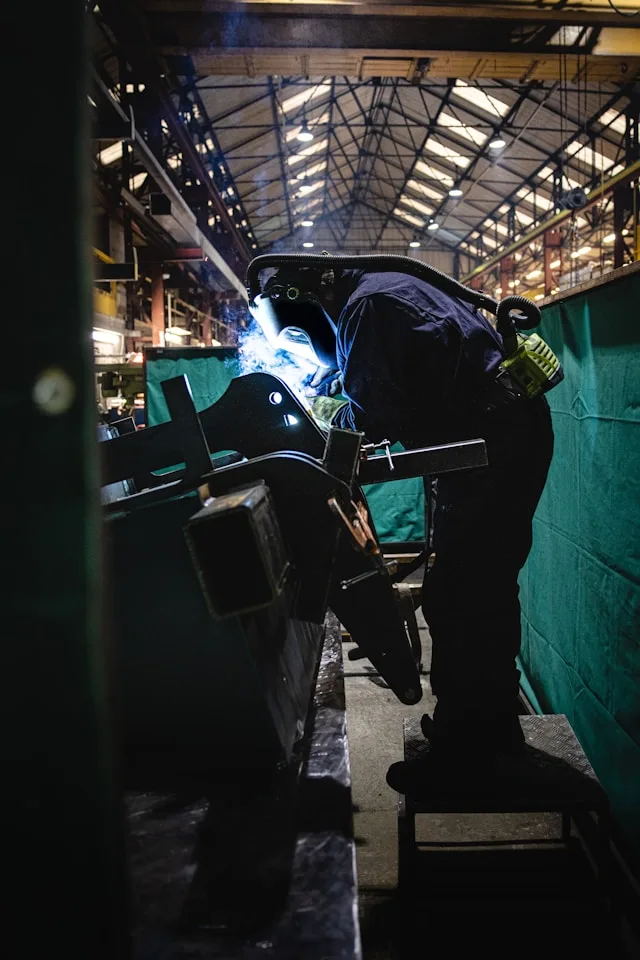
Roles requiring ASME IX or EN ISO 9606-1 certification for stainless steel and exotic alloys exhibit vacancy durations exceeding 90 days. District employers report a 73% failure rate on initial recruitment attempts. The compensation premium required to secure a qualified candidate runs 25 to 30% above standard CCNL Metalmeccanica rates, and even at that premium, candidates are scarce.
The passive candidate ratio in this specialism sits at approximately 70%. Average tenure in current roles exceeds seven years. These professionals change employers rarely, and when they do, they are typically moving for reasons that have nothing to do with job boards: a relocation, a family circumstance, or a direct approach from someone they trust. Conventional recruitment channels are structurally incapable of reaching them.
Automation Maintenance Technicians
Demand for maintenance technicians with combined PLC programming and industrial robotics troubleshooting capabilities exceeds supply by an estimated 3.5 to 1 ratio. This is the role category most directly affected by the district's automation investment wave. Every new robot installed without a qualified technician to maintain it becomes a liability rather than a productivity gain.
The maintenance manager specialism is even more constrained. An estimated 80 to 85% of qualified candidates with PLC and robotics integration experience are passive. They are employed. They are not looking. And their current employers, aware of the scarcity, are building retention packages designed to make them expensive to move. For any firm attempting to fill these roles through traditional recruitment methods, the probability of failure is high.
The Demographic Clock That Cannot Be Reset
The district's workforce demographics are not a background statistic. They are the mechanism that transforms every other challenge from difficult to urgent.
The average age of metalworking employees in the Terni district is 47.3 years. That is 3.2 years older than the Italian manufacturing average of 44.1. Thirty-eight percent of the workforce is over 50. Workers under 30 represent just 11% of the technical workforce. These numbers describe a district that will lose a third or more of its experienced workforce to retirement within the next decade, with no replacement generation of comparable size or skill level entering behind them.
The training data compounds the problem. Participation in adult training programmes among workers over 45 is declining across the region, according to INAPP's survey of regional professional development. The workers closest to retirement are the least likely to retrain on the Industry 4.0 systems their employers are installing. The workers most likely to retrain are the young technicians who, if they acquire modern competencies, become immediately attractive to Northern Italian employers offering superior compensation.
This creates a demographic trap. Training the existing workforce is insufficient because participation is falling. Training new entrants is insufficient because they leave. The district needs to simultaneously retain its experienced workers, accelerate skills transfer before they retire, and find a way to recruit mid-career specialists from outside the region to fill the gap between generations.
Compensation Realities and Geographic Competition
Compensation in Terni's metalworking sector must be understood relative to its competitors, not in isolation. The district's ability to attract and retain technical and executive talent depends entirely on how its offers compare with what Bologna, Milan, Turin, and even nearby Perugia can provide.
The Northern Premium
At the specialist level, Bologna and Modena offer 18 to 25% salary premiums for equivalent mechanical engineering roles. At the executive level, Milan and Turin offer 30 to 40% premiums. The cost-of-living differential partially offsets this gap, but only partially. A senior automation engineer in Terni earning €72,000 knows that an equivalent role in Milan pays €95,000 or more. Even after adjusting for Milan's higher housing costs, the net advantage favours the northern employer.
The compensation data for executive roles in manufacturing tells a similar story. A Plant Manager or Direttore di Stabilimento in Terni commands a base of €65,000 to €85,000 at the senior specialist level, with total cash reaching €75,000 to €95,000. At the executive level, a Direttore Operativo earns €110,000 to €145,000 base, with total remuneration reaching €130,000 to €180,000 for units exceeding 200 employees. These figures are competitive within Umbria but lag Northern Italian equivalents.
Technical Directors face a 15 to 20% premium for candidates holding dual competencies in mechanical engineering and digital transformation. A Technical Manager in Terni earns €58,000 to €72,000 base. The executive tier reaches €95,000 to €125,000. Supply Chain Directors at export-oriented SMEs command €85,000 to €115,000, reflecting the complexity of managing multi-tier supply chains serving both AST and international OEMs.
Perugia: The Closer Threat
The more immediate competitive threat comes not from Milan but from Perugia, 45 kilometres away. The regional capital offers 5 to 10% salary premiums over Terni with growing mechatronics and aerospace sectors, including a Leonardo subsidiary presence. Mid-level technical talent seeking urban amenities without a full relocation to Northern Italy is being captured by Perugia employers offering shorter commutes and marginally better compensation.
This proximity competition is particularly damaging because it operates below the threshold at which most retention strategies activate. A firm losing a technician to Milan expects a 30% salary gap and may accept the loss as structural. A firm losing a technician to Perugia for a 7% raise and a shorter drive is losing a retention battle it could have won with a modest counteroffer or restructured package. But most district SMEs lack the HR sophistication to identify the risk before the resignation arrives.
Energy Costs, Carbon Regulation, and the Compliance Talent Gap
The district's modernisation challenge extends beyond automation. Energy and environmental regulation are creating an entirely new category of skill requirements that the existing workforce was never trained to meet.
Energy costs for industrial consumers stabilised at €85 to €95 per megawatt-hour in late 2024, according to Gestore Mercati Energetici. That is down from the 2022 crisis peaks but still 40% above 2019 averages. This persistent elevation is driving the investment in energy-efficient forging and heat treatment technologies funded by the PNRR allocation.
But the regulatory burden extends further. The EU Emissions Trading System Phase IV and the impending Carbon Border Adjustment Mechanism are escalating compliance costs across the supply chain. AST's electric arc furnaces face carbon costs projected at €45 to €60 per tonne of CO2 by 2026, with pass-through effects on local forging and heat treatment subcontractors. SMEs lacking carbon accounting capabilities risk exclusion from AST's certified supplier lists entirely.
This creates demand for professionals with ISO 50001 implementation experience, hydrogen-ready heat treatment process knowledge, and carbon accounting competencies. These skill sets barely existed in the district five years ago. Today they are becoming prerequisites for supplier certification. The district needs quality professionals who understand both the Pressure Equipment Directive 2014/68/EU and emerging carbon reporting requirements, and who can implement energy management systems in facilities that were designed for a different era.
The talent to fill these roles is not sitting in Terni's unemployment statistics. It must be found through direct identification and approach, often from firms in Northern Italy or abroad that are further along the green transition curve.
What Terni's Hiring Executives Must Understand
The convergence of these forces produces a market condition that conventional talent acquisition methods cannot adequately address. The district's most critical roles sit at the intersection of technical depth, regulatory knowledge, and digital fluency. The candidates who hold all three are almost universally employed, well compensated relative to their local market, and invisible to job advertising.
Quality Directors with aerospace certification carry a 75% passive candidate ratio. Maintenance Managers with PLC and robotics integration experience sit at 80 to 85% passive. Senior Welding Engineers at 70% passive. These are not candidates who will respond to a job posting on InfoJobs or LinkedIn. They must be identified through systematic talent mapping, approached with a proposition specific to their career situation, and moved through a process designed for professionals who were not looking to move.
The district's SMEs face a compounding disadvantage. Higher borrowing costs, 40 to 60 basis points above Emilia-Romagna benchmarks according to Banca d'Italia, constrain their ability to invest in both automation equipment and the talent to operate it simultaneously. The firms that solve the talent problem first will capture disproportionate value from the modernisation cycle. The firms that do not will find themselves owning machines they cannot run, holding certifications they cannot maintain, and watching their most capable people leave for competitors who moved faster.
For organisations in Terni's metalworking district facing searches where the right candidate is not visible on any job board and the cost of a vacant technical leadership role compounds with every quarter, start a conversation with our executive search team about how KiTalent approaches executive hiring in industrial and manufacturing markets. With a methodology built around AI-enhanced direct headhunting that delivers interview-ready candidates within 7 to 10 days and a 96% one-year retention rate across 1,450 placements, KiTalent reaches the passive specialists and senior leaders that conventional recruitment consistently misses.
Frequently Asked Questions
What are the hardest metalworking roles to fill in Terni in 2026?
The three most difficult categories are 5-axis CNC programmers with Fanuc or Siemens control expertise, where vacancies average 110 to 140 days; ASME IX or EN ISO 9606-1 certified welding engineers for stainless steel and exotic alloys, with a 73% initial recruitment failure rate; and automation maintenance technicians combining PLC programming and industrial robotics troubleshooting, where demand exceeds supply at a 3.5 to 1 ratio. All three are constrained by insufficient technical education output and competition from Northern Italian clusters offering substantially higher compensation.
Why does Terni have high youth unemployment alongside unfilled technical vacancies?
The 25.4% youth unemployment rate in Umbria coexists with 1,200 unfilled technical positions because the gap is a skills mismatch, not a labour surplus. Regional technical institutes are not producing graduates with the specific CNC, welding certification, and PLC programming competencies that the industrial district requires. Young people who do acquire these skills frequently emigrate to Bologna, Milan, or Turin, where salaries run 18 to 40% higher depending on role and geography.
How does Terni metalworking compensation compare to Northern Italy?
Terni offers competitive compensation within Umbria but lags Northern Italian benchmarks materially. Bologna and Modena pay 18 to 25% premiums for equivalent mechanical engineering specialists. Milan and Turin pay 30 to 40% premiums at the executive level. Even Perugia, just 45 kilometres away, offers 5 to 10% premiums. A Plant Manager in Terni earns €65,000 to €85,000 base at the senior level, while the same role in Milan commands €85,000 to €110,000 or more.
What is driving demand for new skill sets in Terni's metalworking district?
Three forces are converging. First, €34 million in PNRR decarbonisation funding is installing energy-efficient forging and heat treatment technologies that require digital integration expertise. Second, EU ETS Phase IV and the Carbon Border Adjustment Mechanism are creating demand for carbon accounting and ISO 50001 implementation skills. Third, the district's push to raise industrial robot density from 85 to 120 units per 10,000 employees by end of 2026 requires automation specialists the local workforce does not currently include.
How can Terni manufacturers reach passive candidates who are not actively job seeking?
Approximately 70 to 85% of qualified candidates in Terni's most critical technical specialisms are passive, meaning they are employed and not responding to job advertisements. Reaching them requires direct identification through structured talent mapping and executive search rather than job board advertising. KiTalent's methodology uses AI-powered talent mapping to identify and approach these professionals directly, delivering interview-ready candidates within 7 to 10 days through a pay-per-interview model that eliminates upfront retainer risk.
What role does AST play in Terni's metalworking talent market?
AST remains the dominant local employer with approximately 2,380 staff and over 120 direct supply chain SMEs. Its influence on the talent market is gravitational: production changes at AST ripple through district employment within two quarters. However, the district's export intensity has reached 47% of turnover, meaning firms serving pharmaceutical, railway, and energy clients are increasingly competing with AST-linked employers for the same limited pool of certified welding engineers, CNC specialists, and maintenance technicians.