Terni's Stainless Steel Cluster Has a Talent Problem That Local Unemployment Cannot Solve
Terni province reports an unemployment rate of 8.2%, well above the Italian national average. The metallurgical cluster anchored by Acciai Speciali Terni, Italy's only integrated stainless steel works, cannot fill its most critical technical and leadership roles. These two facts are not contradictory. They describe a labour market that is oversupplied with generalist workers and critically short of the specialists who keep a 900,000-tonne-per-year EAF operation running, modernising, and compliant with some of the most demanding environmental regulations in global steelmaking.
The tension at the heart of this market is not simply a shortage. It is a mismatch between the talent a region produces and the talent its anchor employer now requires. Arvedi Group's €300 million investment programme is pushing AST toward digitalised rolling mills, hydrogen-ready direct reduction technology, and carbon-accounting capabilities that did not exist as job categories five years ago. The ITS Alessandro Volta technical institute graduates roughly 80 technicians per year. That pipeline feeds a cluster of 120 to 150 suppliers across a 30-kilometre radius, but it was designed for the skills profile of a previous industrial era.
What follows is a ground-level analysis of the forces reshaping Terni's metallurgical talent market in 2026: the investment driving demand, the demographic and geographic forces constraining supply, the compensation dynamics that govern candidate movement, and what organisations operating in or hiring for this cluster need to understand before they launch their next search for a process engineer, an automation architect, or a decarbonisation director.
Italy's Only Integrated Stainless Works and the Cluster It Sustains
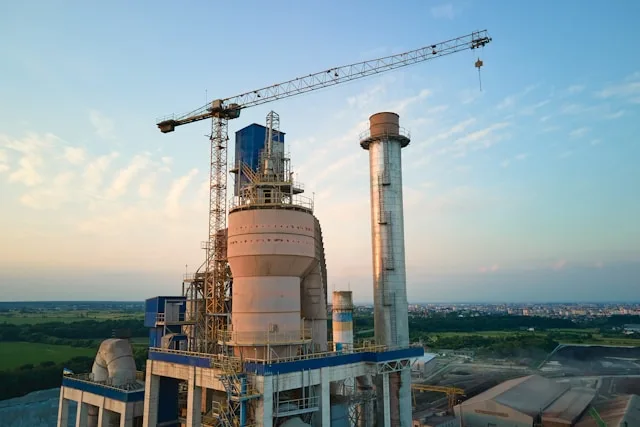
AST's position in the Italian steel sector is unusual. It is not one of several regional producers competing for the same labour pool. It is the single integrated stainless steel facility in the country, producing flat stainless products through an electric arc furnace route, hot rolling, and cold finishing lines. Roughly 2,400 workers are employed directly. An estimated 6,500 to 7,000 additional jobs depend on the surrounding supply chain of scrap processors, maintenance contractors, and logistics providers.
This concentration creates a distinctive labour market dynamic. When AST invests, the entire cluster hires. When AST contracts, the entire cluster feels it. There is no second major employer to absorb displaced specialists or to provide a competitive market for their skills locally. The roughly 85% share of regional metallurgical output by value that AST commands, according to the Umbria Region Statistical Office, means that talent strategy for the cluster and talent strategy for AST are functionally the same conversation.
The Arvedi Investment Programme
Arvedi Group acquired AST from ThyssenKrupp in December 2021 for €130 million. The industrial plan that followed commits €300 million between 2022 and 2026 to three priorities: digitalisation of the rolling mills, efficiency upgrades to the EAF, and preliminary engineering for hydrogen-ready direct reduction. Each of these priorities carries a distinct talent requirement. Digitalisation demands PLC programmers, SCADA specialists, and data analysts. EAF optimisation requires metallurgical process engineers with specific electric arc furnace experience. Hydrogen readiness requires competencies that barely exist anywhere in the European steel sector, let alone in central Italy.
The CRM2 Expansion Decision
A proposed second cold rolling mill expansion would add an estimated 150 to 200 direct positions. As of early 2026, environmental permitting delays related to particulate emissions remain unresolved. This single decision shapes the short-term hiring outlook for the entire district. If approved, it triggers a concentrated burst of demand for industrial manufacturing talent across plant engineering, installation management, and commissioning specialisms. If delayed further, it extends the current period of investment uncertainty that makes recruiting experienced professionals from Northern Italy or abroad materially harder.
The permitting question is not academic. AST operates under an Integrated Environmental Authorization that has drawn scrutiny from local environmental groups, and the Regional Environmental Protection Agency's review remains pending. For any candidate evaluating a relocation to Terni, the status of this expansion is a signal about the plant's long-term trajectory.
The Decarbonisation Paradox: How Compliance Investment Could Accelerate Offshoring
The most consequential analytical tension in this market sits at the intersection of climate regulation and global competition. It is a paradox that every senior leader in European steelmaking must understand, and it is playing out with particular intensity in Terni.
AST's EAF route produces approximately 0.4 to 0.6 tonnes of CO2 per tonne of steel. This is materially lower than the blast furnace route used by many Asian and Turkish competitors. In theory, this lower carbon intensity should be a competitive advantage as the EU Carbon Border Adjustment Mechanism reached full implementation in January 2026. In practice, the picture is more complicated.
CBAM's verification costs and the potential for scrap price inflation under the new regulations may actually disadvantage Italian producers. Turkish and Asian competitors with less stringent environmental compliance face delayed enforcement or weaker carbon accounting standards. EUROFER's 2024 Economic Report warned explicitly about carbon leakage risks for European producers. The projected cost of EU ETS carbon credits exceeding €100 per tonne of CO2 equivalent by 2026 adds direct operating cost pressure.
Here is the paradox: Arvedi is spending €300 million to make AST compliant with a regulatory framework designed to protect European producers. But if that framework fails to prevent carbon leakage, the investment accelerates the cost disadvantage rather than closing it. The capital deployed on hydrogen-ready technology and carbon accounting systems raises AST's cost base in the short term. If Chinese competitors, whose exports to the EU grew 14% year-over-year through 2024 despite anti-dumping measures, continue to face weaker enforcement, that cost increase yields no competitive return.
What the Paradox Means for Talent
This is not an abstract policy question. It shapes every senior hiring decision in the cluster. A candidate considering a relocation to Terni to lead the green steel transition needs to believe the EU regulatory framework will hold. A CTO evaluating whether to commit the next decade of their career to hydrogen metallurgy at an Italian plant needs confidence that the investment will not be rendered uncompetitive by regulatory asymmetry.
The organisations trying to hire these leaders must therefore sell not just the role and the compensation package, but a credible thesis about the plant's future under CBAM. This is a conversation most industrial recruiters are not equipped to have. It requires the kind of market intelligence and talent mapping that goes well beyond a job specification.
The Workforce Cliff: Demographics Are Compounding the Skills Mismatch
Roughly 35% of AST's workforce is aged 50 or above. Replacement rates in the 25-to-35 age bracket are insufficient. The FIM-CISL union has flagged what it calls a "knowledge cliff" in tacit metallurgical expertise. This is the kind of accumulated operational knowledge that cannot be codified in a training manual or transferred in a six-month handover.
The demographic problem intersects with the skills mismatch in a way that multiplies the impact of both. The retiring cohort possesses deep expertise in traditional metallurgical processes. The roles replacing them require not only that traditional knowledge but also competencies in digitalisation, predictive maintenance, and environmental compliance that the departing workers never needed. The replacement is not one-for-one. Each retirement removes a specialist and creates demand for a hybrid professional who may not yet exist in sufficient numbers anywhere in the European market.
Fondimpresa's 2024 metallurgy sector forecast found that hydrogen metallurgy expertise and carbon accounting capabilities are effectively absent in the local labour pool. Only 12% of the local technical workforce holds certifications in IoT-enabled maintenance systems, according to the ITS Alessandro Volta's own skills assessment. These are not marginal gaps. They describe a workforce that was built for the analogue era of steel production being asked to operate a digitally integrated, environmentally regulated, hydrogen-transitioning facility.
The investment in automation and green technology has not reduced the workforce AST needs. It has replaced one type of worker with another type that does not yet exist in sufficient numbers. Capital has moved faster than human capital could follow, and the demographic wave is removing the experienced professionals who might have bridged the transition.
Compensation: What It Costs to Move a Specialist to Terni
The compensation data tells a clear story about why passive candidate identification matters more in this market than in most. Terni operates at a 15 to 20% discount to Northern Italian industrial hubs. For a Senior Process Engineer in metallurgy, the local range sits at €72,000 to €95,000 base salary, with a production bonus of 10 to 15%. A Plant Maintenance Manager commands €85,000 to €110,000, with company car and long-term incentive plans vesting over three years.
At the executive level, an Operations Director earns €160,000 to €220,000, with variable compensation of 20 to 30% tied to EBITDA and safety targets. A Chief Technical Officer or Engineering VP sits at €180,000 to €250,000, with meaningful differentiation based on multinational experience and language skills in English and German.
The Relocation Premium
The headline discount to Northern Italy obscures a more specific dynamic. When organisations in this cluster need to recruit from outside Umbria, the effective premium required to secure a relocation is substantial. According to reporting in Il Sole 24 Ore's career supplement, Marcegaglia Terni offered a compensation premium estimated at 25 to 30% above standard Terni market rates to secure a Plant Engineering Manager from the Brescia district. That premium reflects not just salary arbitrage but the cost of convincing a specialist to leave a market with multiple employers, career mobility, and established professional networks for a single-employer cluster in central Italy.
For sustainability and ESG leadership roles, the premium is even steeper. An Environmental Affairs Director commands 25 to 35% above traditional operations roles at equivalent seniority, according to Willis Towers Watson's 2024 compensation data. The regulatory complexity driving that premium is only intensifying as CBAM, ETS pricing, and hydrogen transition planning converge.
The German Pull
The most aggressive competitor for Terni's specialist talent is not another Italian city. It is Germany. ThyssenKrupp and SMS Group actively recruit Italian stainless steel specialists, offering total compensation packages 40 to 50% above Terni levels net of cost-of-living adjustments, according to the German Economic Institute's 2024 Labour Migration Report. The language barrier provides some insulation. German proficiency is required, and not all Italian metallurgists possess it. But for those who do, the financial case for relocation is overwhelming, and the career progression opportunities in North Rhine-Westphalia or Bavaria dwarf what a single-employer cluster can offer.
This creates a structural asymmetry in the talent market. Terni must pay above its natural level to attract talent from Brescia, Turin, or Milan. And even at elevated levels, it competes with German employers who can offer 40 to 50% more. The effective candidate pool for senior roles narrows to professionals with specific reasons to be in central Italy, combined with the exact technical profile the role requires. That intersection is very small.
Why Job Boards Fail in This Market
The passive candidate ratio in Terni's critical specialisms is extreme. Approximately 75 to 80% of qualified Senior Metallurgical Process Engineers, Automation Architects, and ESG Directors are employed and not actively looking. Average tenure at current employers exceeds seven years. Job board postings yield less than 15% of successful placements for senior technical roles in heavy industry, according to Hays Italy's 2024 hiring trends report.
A high-voltage electrical maintenance technician vacancy at a Tier-1 AST supplier ran for more than 11 months without being filled, a pattern identified across the district by Confindustria Umbria's 2024 skills gap survey. The combination of PES/PAV certification and heavy industrial experience that the role demands is not a profile that responds to job advertisements. These professionals are embedded in operational teams where their departure would create immediate production risk, which means their current employers are actively working to retain them, and they are not browsing job boards.
The failure of conventional executive recruiting methods in this market is not a marginal inefficiency. It is a systemic breakdown. The candidates who matter most are invisible to the tools most organisations use to find them. Direct headhunting, where specialists are identified, mapped, and approached individually with a proposition tailored to their specific situation, is the only method that reliably reaches the 80% of the market that is not actively looking. In a cluster where 120 to 150 suppliers compete for the same narrow pool of certified technicians and experienced engineers, the organisation that reaches candidates first has a decisive advantage over the one that posts and waits.
For organisations evaluating how to approach an executive search in this environment, the starting point is understanding that the talent pool is small, concentrated, and almost entirely passive. The method must match the market.
What Hiring Leaders in Terni's Cluster Must Do Differently
The convergence of these forces creates a hiring environment unlike most industrial markets. A single dominant employer anchors the entire cluster. The investment programme is creating demand for skills that the local training infrastructure was not designed to produce. Demographics are removing experienced workers faster than the system can replace them. Compensation must overcome a structural discount to Northern Italy and a massive gap versus Germany. And the most qualified candidates are not looking.
Build a Relocation Proposition, Not Just a Compensation Package
Compensation alone will not move a senior process engineer from Brescia to Terni at a 25 to 30% premium. The proposition must address the career trajectory question directly. What does the next five years look like at AST under the Arvedi investment programme? What does leadership of a green steel transition offer that an equivalent role at a multi-site Northern Italian group does not? The candidate who relocates to lead hydrogen metallurgy at Italy's only integrated stainless works is making a career-defining bet. The organisation must make the case for that bet explicitly.
Treat the Demographic Cliff as a Succession Planning Emergency
The 35% of the workforce aged 50 and above is not a future problem. It is a current crisis in knowledge transfer. Every retirement without a structured handover destroys tacit operational expertise that cannot be recreated. Organisations in this cluster should be investing in proactive talent pipeline development for the roles that will open in the next three to five years, not waiting until a departure is imminent to begin a search.
Accept That Green Transition Roles Require an International Search
Hydrogen metallurgy expertise and advanced carbon accounting capabilities do not exist in the Terni labour pool. They barely exist in Italy. Filling these roles means searching across the European steel sector, and potentially beyond it. The compensation premiums of 25 to 35% for ESG and sustainability leadership reflect the genuine scarcity of these profiles. Any search that limits itself to candidates within commuting distance or even within the Italian market will fail. International executive search capability is not optional for these roles. It is the baseline requirement.
How KiTalent Approaches Markets Like Terni
Single-employer clusters with narrow specialist talent pools and high passive candidate ratios represent exactly the market conditions where traditional recruitment methods break down most visibly. A job posting in a market where 80% of target candidates are not looking and average tenure exceeds seven years is not a hiring strategy. It is a formality.
KiTalent's approach to executive hiring in industrial manufacturing begins with AI-powered talent mapping that identifies qualified professionals across the full European industrial base, not just those who happen to be visible on job boards or recruitment databases. In a market like Terni, where the effective candidate pool for a Senior Metallurgical Process Engineer or an Automation Architect may number in the low hundreds across the continent, identifying and reaching every viable candidate is not a luxury. It is the difference between a successful search and an 11-month vacancy.
KiTalent delivers interview-ready executive candidates within 7 to 10 days, with full pipeline transparency and weekly reporting. The pay-per-interview model means organisations only invest when they meet qualified candidates. With a 96% one-year retention rate across 1,450 completed executive placements, the approach is built for markets where the cost of a wrong hire or a failed search carries operational consequences that extend far beyond the HR department.
For organisations in Terni's stainless steel cluster facing searches for metallurgical process engineers, automation specialists, or green transition leaders where the local market cannot deliver, start a conversation with our industrial practice team about how we map and reach the candidates this market requires.
Frequently Asked Questions
What is the salary range for a Senior Process Engineer in Terni's stainless steel sector?
A Senior Process Engineer specialising in metallurgy at Terni earns €72,000 to €95,000 base salary, with a production bonus of 10 to 15%. This sits approximately 15 to 20% below equivalent roles in Northern Italian hubs such as Brescia or Milan. At the executive level, Operations Directors command €160,000 to €220,000 with variable compensation tied to EBITDA and safety targets. Sustainability and ESG leadership roles carry a further 25 to 35% premium above traditional operations positions due to regulatory complexity. For detailed benchmarking in industrial sectors, KiTalent's market benchmarking service provides role-specific compensation intelligence.
Why is it so hard to hire metallurgical specialists in Terni despite high local unemployment?
Terni province's 8.2% unemployment rate masks a severe mismatch. The available labour pool consists largely of generalist workers, while the metallurgical cluster requires certified high-voltage technicians, EAF process engineers, and automation specialists with heavy industrial experience. These profiles take years to develop and cannot be substituted with general industrial workers. Roughly 75 to 80% of qualified specialists are already employed and not actively seeking roles, with average tenure exceeding seven years.
What impact does CBAM have on Terni's stainless steel hiring?
The EU Carbon Border Adjustment Mechanism, fully implemented in January 2026, creates both opportunity and risk. AST's EAF route has lower carbon intensity than blast furnace competitors, but CBAM verification costs and potential scrap price inflation may erode that advantage if enforcement against Turkish and Asian competitors proves uneven. For hiring, CBAM drives acute demand for carbon accounting specialists and ESG directors, roles where expertise is effectively absent in the local market and commands a 25 to 35% compensation premium.
How does Terni compete with Northern Italy and Germany for steel industry talent?
Terni faces a structural compensation disadvantage. Brescia offers 18 to 22% higher salaries for equivalent metallurgical roles. German employers such as ThyssenKrupp and SMS Group offer packages 40 to 50% above Terni levels. To compete, Terni employers must build relocation propositions that go beyond salary, emphasising leadership of AST's green steel transition and the career distinctiveness of running Italy's only integrated stainless works. Direct headhunting methods are essential to reach passive candidates who would not otherwise consider the move.
What is the best way to recruit senior technical roles in Terni's metallurgical cluster?
Job boards yield less than 15% of successful placements for senior technical roles in heavy industry. With 75 to 80% of target candidates passive and average tenure exceeding seven years, only direct executive search and headhunting reliably reach the right professionals. KiTalent's AI-powered talent mapping approach identifies qualified candidates across the full European industrial base and delivers interview-ready shortlists within 7 to 10 days. This is particularly critical for roles in hydrogen metallurgy, AI-enabled industrial automation, and environmental compliance where the candidate pool is both small and geographically dispersed.
What green steel skills are most in demand at Terni's stainless steel cluster?
The most acute shortages are in hydrogen metallurgy expertise, carbon accounting and ETS management, and digital twin implementation for predictive maintenance. Fondimpresa's 2024 sector forecast found hydrogen metallurgy competencies effectively absent in the local labour pool. Only 12% of Terni's technical workforce holds IoT-enabled maintenance certifications. These gaps will intensify as Arvedi's €300 million investment programme advances toward hydrogen-ready direct reduction, making international search the only viable sourcing strategy for senior green transition roles.