Trnava's Automotive Sector Is Automating to Replace Workers It Cannot Find, Then Cannot Find the Engineers to Run the Automation
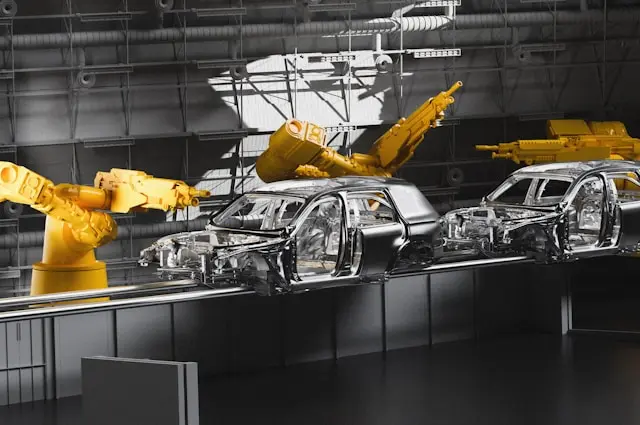
Stellantis poured €45 million into robotic welding cells and automated guided vehicles at its Trnava plant in 2024 alone. The investment cut manual handling positions by 12% while output held steady at 285,000 vehicles. On paper, this is a textbook answer to a structural labour shortage in a district where unemployment sits at 3.2% and the automotive sector absorbs a third of all industrial jobs. The robots arrived. The production lines kept moving. The problem, supposedly, was solved.
It was not. The same plant that automated away hundreds of operator roles now cannot hire the PLC programmers, robotics technicians, and high-voltage battery specialists it needs to keep that automation running. Job postings for automation engineers in Trnava District rose 47% year-over-year through late 2024 while candidate applications fell 12%. Average time-to-fill for a senior automation engineer exceeds 90 days in Trnava, double the equivalent in Bratislava. The factory floor is more automated than ever. The talent required to maintain, programme, and extend that automation is scarcer than the assembly workers it replaced.
What follows is an analysis of the force reshaping Trnava's automotive cluster: an automation investment cycle that has not reduced the workforce so much as replaced one kind of worker with another that does not yet exist in sufficient numbers. For hiring leaders across Stellantis's supplier park and the broader Central European automotive sector, this article explains where the gaps are sharpest, why conventional hiring methods fail in this market, and what it takes to fill the roles that determine whether a €200 million EV transition stays on schedule or stalls.
The Stellantis Anchor: A Plant in Transition
Stellantis Slovakia's Trnava facility has operated since 2006, producing the Peugeot 208, Citroën C3, and Opel Corsa across an installed capacity of 300,000 units annually. The plant ran at 95% capacity utilisation in 2024. It is not underperforming. It is not shrinking in output terms. But its workforce composition is changing faster than at almost any comparable European assembly site.
Permanent headcount stood at approximately 3,100 employees plus 400 temporary agency workers as of late 2024. That figure was 3,400 in 2022. The 8% reduction came not from production cuts but from capital substitution. The welding shop now operates at 85% automation, up from 78% in 2022, with 1,200 robots covering 2,100 welding stations. Engineering and technical positions, by contrast, grew 15% over the same period, from 420 to 483 full-time equivalents.
BEV Production and the STLA Small Platform
The shift to battery electric vehicles is the structural driver behind this workforce transformation. BEV variants represented 18% of Trnava output in 2024, up from 12% in 2023, following a €130 million retooling investment completed in late 2023. Stellantis has confirmed Trnava as a BEV-dedicated site for its STLA Small platform, with full transition to electric-only production now scheduled for 2026. Internal combustion engine variants are being phased out through the first half of this year.
This is not a gradual evolution. It is a platform replacement. The next-generation e-208 and its derivative models require battery pack integration capabilities that did not exist at the facility two years ago. Battery pack assembly, currently supplied from Poland and Hungary, is under evaluation for localisation. An additional €200 million in capital expenditure is allocated for 2025 and 2026, directed primarily at battery assembly line integration and paint shop emissions reduction.
The investment is enormous. The production outlook is stable. The question is whether the humans required to operate and maintain this transformed facility can be found in a labour market that was already tight before a single battery cell arrived.
The Paradox at the Centre of Trnava's Talent Market
This is the original analytical claim that underpins this article, and it is not stated in any single data source: Stellantis and its suppliers are investing in automation specifically to solve a demographic labour shortage, but the automation transition itself is bottlenecked by the same talent scarcity it was designed to overcome. Capital moved faster than human capital could follow.
The logic runs as follows. Trnava District's unemployment rate of 3.2% is well below the Slovak national average of 4.9%. The region's working-age population is projected to decline 12% by 2040 due to ageing and emigration toward Bratislava and the Czech Republic, according to Slovak Statistical Office demographic forecasts. Assembly operators were becoming harder to recruit every year. Automation was the rational response. But every new robotic welding cell requires a programmer. Every automated guided vehicle system requires maintenance engineers with specific certifications. Every high-voltage battery line requires technicians certified to EN 50618 standards.
The pool of professionals with these certifications in the Trnava region is vanishingly small. According to the Slovak Chamber of Commerce and Industry's regional survey from late 2024, 68% of Trnava-based automotive manufacturers reported critical difficulty filling automation engineering roles. Average vacancy periods for these positions reached 4.5 months.
The proposed solution to one shortage created a deeper shortage in a more specialised category. That is the paradox, and it is not unique to Trnava. But Trnava's version is more acute than most, because the BEV transition and the automation investment are happening simultaneously, compressing the demand surge into a window of 18 to 24 months.
The Supplier Cluster: Where Density Creates Competition
The Stellantis Park Trnava, a 45-hectare supplier zone within five kilometres of the assembly plant, hosts approximately 12 Tier-1 suppliers. The largest include Yanfeng Slovakia (interiors and cockpits, roughly 800 employees), Valeo Slovakia (thermal systems, 400 employees), Faurecia Slovakia (seating, 300 employees), and SNOP Slovakia (plastic components, 200 employees). Yanfeng announced a €30 million expansion in 2024 to supply sustainable interior materials, adding further demand for technical staff.
A Cluster Competing with Itself
The density that makes Trnava's supplier park logistically efficient also makes it a talent pressure cooker. When every major employer within a five-kilometre radius needs the same PLC programmers, the same quality managers with IATF 16949 certification, and the same maintenance technicians familiar with Kuka and ABB systems, the result is internal poaching rather than external recruitment.
The pattern is visible in compensation data. According to salary benchmarks published by Hays and confirmed by reporting in Trend.sk, Yanfeng Slovakia hired three senior PLC programmers from Valeo's Trnava facility in the first half of 2024, offering salary premiums of 25 to 30%. Monthly gross compensation moved from approximately €3,200 to €4,100, with remote-hybrid working arrangements offered for programming work. This is a pattern consistent with the counteroffer dynamics that characterise talent-short markets everywhere, but compressed into a geographic area where every employer can see the others' car parks.
Composition Gaps in the Cluster
The supplier cluster's composition reveals a further constraint. Trnava's park is concentrated in plastics, interiors, and climate systems. It has lower density in traditional metal stamping and wiring harnesses compared to the Bratislava or Žilina automotive regions. Metal stamping for Trnava vehicles is largely supplied internally by Stellantis or imported from French and Spanish plants. Wiring harnesses are predominantly sourced from the Nový Jičín region of the Czech Republic and Banská Bystrica.
This means certain specialist maintenance and tooling skills, particularly those related to progressive stamping and complex wiring harness assembly, are not developed locally. Tool and die makers appear on every list of acute shortage categories. They are not produced in sufficient numbers by the local training infrastructure, and the specialists who do exist are being drawn toward higher-paying markets elsewhere. The cluster is self-contained for logistics. It is not self-contained for talent.
The Compensation Gap That Widens at the Top
Trnava's compensation discount relative to Bratislava is not a flat percentage. It deepens at exactly the seniority levels where the most critical roles sit. This is the dynamic that hiring leaders in Trnava's automotive sector must understand before they set budgets or make offers.
At the senior automation engineer level (individual contributors with seven or more years of experience), Trnava's salary benchmarks range from €3,200 to €4,200 per month gross. The equivalent role in Bratislava commands €4,500 to €6,000. The discount is 25 to 30%.
At the plant maintenance manager level, the gap widens slightly: €4,500 to €5,800 in Trnava versus €6,200 to €8,000 in Bratislava, a 27% discount. At the quality director level, the gap hits 31%: €7,500 to €11,000 versus €11,000 to €15,000. At the plant director level, it reaches 33%: €8,000 to €12,000 versus €12,000 to €18,000.
Trnava's housing costs are approximately 40% lower than Bratislava's, which partially offsets the compensation gap for candidates willing to live locally. But many of the professionals Trnava needs do not live in Trnava. Approximately 18% of Trnava District residents already commute to Bratislava for work, facilitated by a 45-minute motorway connection. The commuter flow runs in the wrong direction.
A senior automation engineer weighing a Trnava offer against a Bratislava alternative faces a calculation where the headline salary difference is €1,300 to €1,800 per month. Even after adjusting for housing, the net financial case for Trnava is marginal at best. And Bratislava offers international schools, a larger expatriate community, and more career optionality. Trnava lacks all three. For executive and senior technical candidates evaluating cross-border opportunities, the relocation proposition becomes harder still.
Why Conventional Search Methods Fail Here
The passive candidate ratio tells the story. According to Hays Slovakia's 2024 data, 80 to 85% of qualified senior automation engineers in the Trnava region are employed and not actively seeking roles. For BEV battery engineers, the figure is 90%. These specialists are typically locked into 24-month retention agreements at Stellantis, Volkswagen, or Samsung SDI facilities in the region. For plant directors and VP-level operations leaders, the passive rate reaches 95%.
This means that posting a vacancy and waiting for applications reaches, at best, one in five viable candidates for an automation engineering role. For battery engineers, it reaches one in ten. For plant directors, it reaches essentially no one.
The 90-Day Problem
The data confirms this. Senior automation engineer searches in Trnava exceed 90 days on average, double the 45-day benchmark in Bratislava. The extended timeline is not caused by slow internal processes. It is caused by the absence of active candidates. Firms relying on visible applicant pools and job advertising are fishing in a pond that holds 15% of the available talent while the remaining 85% is employed, satisfied enough not to look, and unreachable through any conventional channel.
According to reporting in Hospodárske noviny, Stellantis Slovakia publicly acknowledged that its recruitment campaign for 120 battery assembly technicians attracted only 73 qualified applicants over a three-month period. The company offered a €1,500 signing bonus for external HV-certified candidates. Even with the premium, the roles could not be filled externally. Stellantis ultimately implemented a six-month internal upskilling programme for existing ICE assembly workers.
The lesson is specific. In a market where the unemployment rate is 3.2%, the passive candidate ratio exceeds 80% for every critical technical role, and the nearest competing labour market pays 25 to 35% more, the traditional executive search playbook breaks down entirely. The candidates you need are not reading job boards. They are not attending career fairs. They are inside competitor facilities, often within the same five-kilometre supplier park, and the only way to reach them is through direct, targeted, intelligence-led sourcing.
The Competitive Drain: Bratislava, Brno, and Stellantis Internal Mobility
Trnava's talent scarcity is compounded by three competing markets that draw from the same pool.
Bratislava and the VW Gravitational Pull
Volkswagen Slovakia's Bratislava plant and the broader Bratislava technology sector represent the primary drain. LinkedIn talent migration data for 2024 shows that 23% of engineers leaving Trnava automotive employers relocated to Bratislava, primarily to VW Slovakia or Kia Slovakia positions in Žilina. Bratislava offers not just higher salaries but a broader industrial base, stronger expatriate infrastructure, and a technology sector that competes for the same automation and software engineering talent that automotive and technology employers both need.
The Czech Border Effect
The Czech Republic's Moravian-Silesian region, home to Hyundai's Nošovice plant, and the Mladá Boleslav cluster around Škoda, compete directly for tool and die makers and senior maintenance technicians. Net wages in the Czech Republic run 15 to 20% higher after currency conversion. Cross-border commuting is feasible, with Brno only 60 kilometres away. Language compatibility between Czech and Slovak eliminates the friction that might otherwise slow cross-border movement.
The Internal Mobility Trap
Perhaps the most specific retention risk comes from within Stellantis itself. The company's internal mobility programmes allow Trnava engineers to transfer to the Tychy plant in Poland with 20% salary increases. The Katowice agglomeration surrounding Tychy has a population of 2.2 million, compared to Trnava's 65,000, offering a fundamentally different scale of career opportunity and personal infrastructure. For a senior engineer in Trnava considering their next move, the internal transfer option often outweighs external offers from local employers because it preserves tenure, benefits, and institutional knowledge while delivering a material salary increase.
This creates a situation where Trnava is not only competing against external employers but against its own anchor company's internal talent marketplace. The retention challenge is multi-directional.
The EV Transition's Real Employment Effect
Public discourse around the BEV transition frequently emphasises green job creation. Regional development communications from Stellantis and from the Trnava Self-Governing Region reference new battery assembly roles and sustainable materials processing as evidence that the EV transition preserves manufacturing employment.
The employment data tells a different story. Direct manufacturing headcount at Stellantis Trnava declined from 3,400 in 2022 to 3,100 in late 2024, an 8% reduction, despite stable production volumes and rising BEV share. Projections indicate further decline to 2,800 to 2,900 by the end of 2026. Stellantis projects a net loss of 400 to 500 mechanical assembly positions by 2027, offset by only 150 to 200 new technical roles.
At the supplier level, headcount growth of 5 to 8% is projected in high-voltage battery handling and lightweight materials, driven partly by Yanfeng's expansion. But this growth applies to specific technical functions, not to aggregate employment.
The BEV transition in Trnava is materially labour-displacing at the aggregate level. It creates fewer jobs than it eliminates. The jobs it creates require qualifications that the local education pipeline does not yet produce at scale. The University of Trnava's Faculty of Mechanical Engineering graduates approximately 450 students annually, with 30% in automotive-focused programmes. That yields roughly 135 graduates per year against a regional employer base that needs hundreds of specialists in new categories. The Slovak University of Technology in Bratislava is a stronger source for electrical engineering, but the 60-kilometre commute means these graduates face the same Bratislava salary pull as every other candidate.
What This Means for Hiring Leaders in Trnava's Automotive Cluster
The situation facing automotive and industrial employers in Trnava is specific and measurable. The candidate pool for every critical technical and leadership role is overwhelmingly passive. Compensation benchmarks lag the primary competing market by 25 to 35% at senior levels. The geographic area is small enough that every employer draws from the same pool, creating zero-sum internal competition. The demographic trajectory is negative. The BEV transition is compressing demand for new skill categories into an 18-to-24-month window.
Conventional job advertising reaches a fraction of the viable candidate base. Internal training programmes, as Stellantis's own battery technician experience demonstrates, require six months or longer to produce results and do not address the immediate need for experienced specialists. Cross-border sourcing faces currency and lifestyle competition from Czech and Polish markets.
For organisations competing for automation engineers, HV battery specialists, quality directors, and plant leadership in this market, the search method determines the outcome. The roles are real. The candidates exist. They are employed, they are not looking, and they must be found through direct, intelligence-led identification and approach rather than through any passive advertising channel.
KiTalent's executive search methodology for industrial and manufacturing sectors is built for precisely this kind of market. Through AI-enhanced talent mapping, KiTalent identifies and engages the passive candidates who represent 85 to 95% of the viable pool for senior automotive roles. Clients receive interview-ready candidates within 7 to 10 days under a pay-per-interview model that eliminates upfront retainer risk. With a 96% one-year retention rate across 1,450 completed placements, the approach is designed for markets where the cost of a failed or delayed hire is measured not in recruitment fees but in production line downtime and programme delays.
For hiring leaders responsible for filling automation engineering, BEV specialist, or plant leadership roles in Trnava's automotive cluster, where the candidates you need are inside competitor facilities and the window for filling roles aligned to the STLA Small platform launch is narrowing, speak with our executive search team about how we approach this market.
Frequently Asked Questions
Why is it so difficult to hire automation engineers in Trnava, Slovakia?
Trnava District's unemployment rate sits at 3.2%, well below the national average. The automotive sector absorbs 34% of industrial employment. For automation engineers specifically, 80 to 85% of qualified candidates are passive, meaning they are employed and not actively job seeking. Job postings for these roles rose 47% year-over-year through late 2024 while applications fell 12%. Average time-to-fill exceeds 90 days, double the Bratislava benchmark. The supplier park's geographic density means every major employer competes for the same small pool of PLC programmers and robotics technicians within a five-kilometre radius.
What does the Stellantis BEV transition mean for jobs in Trnava?
Stellantis is transitioning Trnava to a BEV-dedicated site for its STLA Small platform, with ICE production ending by mid-2026. Employment data shows this is net labour-displacing: headcount dropped 8% from 2022 to 2024 despite stable output. Projections indicate a further decline to 2,800 to 2,900 workers by end of 2026. New roles in battery assembly and software-defined vehicle architectures are being created, but they number 150 to 200 against the elimination of 400 to 500 mechanical assembly positions. The transition demands specialists the local market does not yet produce at scale.
How does Trnava automotive compensation compare to Bratislava?
Trnava automotive roles carry a 25 to 35% compensation discount versus equivalent positions in Bratislava. A senior automation engineer earns €3,200 to €4,200 monthly in Trnava versus €4,500 to €6,000 in Bratislava. At plant director level the gap widens to 33%. Trnava's housing costs are 40% lower, partially offsetting the difference. However, 18% of Trnava residents already commute to Bratislava for higher wages, suggesting the cost-of-living advantage is not enough to retain senior talent.
What skills are most in demand for Trnava's automotive sector in 2026?
The four most acute shortage categories are automation and robotics engineers (PLC programmers and Kuka/ABB technicians), high-voltage battery technicians with EN 50618 certification, tool and die makers experienced in progressive stamping and injection mould maintenance, and quality managers certified in IATF 16949 and ISO 26262 functional safety. Emerging demand also covers CFRP processing for lightweighting and embedded systems expertise for software-defined vehicle architectures. KiTalent's talent mapping capabilities help employers identify where these specialists sit across the Central European automotive corridor.
How can companies recruit passive automotive talent in Slovakia?
In Trnava's automotive market, passive candidates represent 85 to 95% of the viable pool for senior technical and leadership roles. Job postings and career fairs reach only the remaining fraction. Effective recruitment requires direct sourcing through executive search methodologies that map competitor workforces, identify specific individuals by certification and experience profile, and engage them with a proposition tailored to their circumstances. For BEV battery engineers, who are often locked into 24-month retention agreements, the approach and timing of contact are as important as the offer itself.
What are the main risks facing Trnava's automotive sector?
Four risks dominate: the labour mismatch created by simultaneous automation investment and automation engineer scarcity; electricity grid constraints limiting new battery assembly capacity; regulatory pressure from Euro 7 standards and EU CO₂ fleet targets that could trigger production reallocation away from Slovakia; and a demographic decline projecting a 12% drop in the region's working-age population by 2040. For employers, the most immediate risk is the 2026 BEV platform launch timeline colliding with a talent market that cannot fill the roles required to support it.