Trnava's Logistics Boom Has a Workforce Problem No Job Board Can Solve
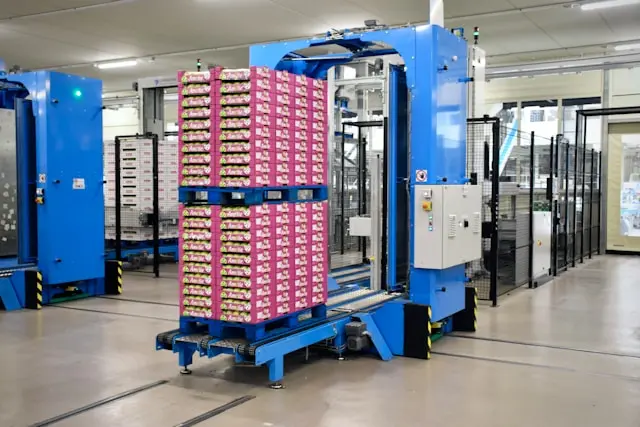
Trnava's modern logistics stock reached approximately 380,000 square metres by late 2024, with vacancy rates compressing to 4.2%. Capital continues to flow in. CTPark expanded by 45,000 square metres. Prologis leased a 32,000 square metre facility to DHL Supply Chain. A further 120,000 square metres sit in the development pipeline for 2026. By every measure of physical infrastructure and investor confidence, this small Slovak city 45 kilometres northeast of Bratislava has established itself as a serious Central European distribution node.
Yet the hiring data tells a different story. A warehouse operations manager role requiring SAP EWM experience and German language skills takes 127 days to fill in Trnava. Automation maintenance technician positions carry a 34% vacancy rate across the industrial zone. Supply chain directors are 90% passive, meaning they are employed, not looking, and invisible to conventional recruitment methods. The buildings are going up. The people to run them are not arriving at the same pace.
This is not a generic labour shortage article. What follows is a ground-level analysis of why Trnava's logistics sector is structurally unable to staff its most operationally critical roles, where the talent is actually going, and what organisations hiring in this market need to understand before they commit to searches that conventional methods cannot close.
The Market That Looks Abundant but Is Not
Trnava Region's unemployment rate stood at 3.1% in late 2024, below the Slovak national average. Eastern Slovakia continues to supply in-migration to the region. At first glance, this suggests a labour market with available capacity. The aggregate picture, however, masks a bifurcation that defines every hiring decision in Trnava's logistics and industrial sector.
Entry-level warehouse operative roles remain active candidate markets. Roughly 60 to 70% of people in these roles are open to new positions or actively searching. Recruitment at this tier, while not effortless, functions through job boards and staffing agencies. The constraint is not availability but quality matching.
The picture inverts entirely at the management and technical specialist level. Senior warehouse managers with automation expertise are 80 to 85% passive. Supply chain directors and operations VPs are approximately 90% passive. These professionals are employed, tenured at an average of 4.2 years with their current employer, and show low responsiveness to advertised vacancies. They will not appear on any job board. They will not respond to a LinkedIn InMail from an unknown recruiter. Reaching them requires direct headhunting methods built around individual identification and confidential approach.
This is the core tension: the region has labour, but not the labour that determines whether a 45,000 square metre automated fulfilment centre actually runs at capacity. The buildings are a capital expenditure problem. The people are a search methodology problem. Most organisations in this market are treating the second problem as if it were the first.
Why the D1 Corridor Is Both Trnava's Greatest Asset and Its Immediate Liability
Trnava's logistics proposition rests on the D1 motorway, Slovakia's primary east-west freight artery connecting Bratislava to Žilina and the Polish border. The 45-minute drive-time catchment from Trnava encompasses 2.1 million consumers, including Bratislava's affluent population and the Austrian border region. For e-commerce operators promising next-day delivery across Slovakia, western Hungary, and lower Austria, the location is close to optimal.
Capacity Saturation on the Trnava Bypass
The D1 bypass section at Trnava handles approximately 85,000 vehicles daily, with heavy goods vehicles comprising 18 to 22% of traffic during peak freight hours. According to data from the National Motorway Company of Slovakia, this section operates at 105 to 110% of designed capacity during weekday peaks, producing average HGV delays of 25 to 35 minutes.
For general merchandise distribution, a 30-minute delay is an inconvenience. For automotive just-in-time logistics serving Stellantis's production lines, it is a potential line stoppage. The tolerance for delay in JIT and JIS operations is measured in minutes, not hours. Every minute of buffer that logistics providers must build into their delivery windows is a minute of cost.
The Widening Project Paradox
The D1 widening between Trnava and Hlohovec will expand the road from four lanes to six. Completion is not scheduled until late 2027. During the construction window of 2025 through 2027, the Slovak Ministry of Transport projects average traffic speeds through the corridor will fall a further 15 to 20%, with increased accident-related disruption. This creates a paradox any hiring leader needs to understand: the infrastructure that will make Trnava more competitive after 2027 is making it less reliable right now.
Some time-sensitive automotive logistics operations may divert toward rail-dependent alternatives in Žilina or air-freight hubs during this window. That diversion affects not just goods flow but talent flow. If a logistics director is evaluating two offers, one in a corridor under active construction disruption and one in a stable corridor elsewhere, the construction timeline becomes a recruitment obstacle as well as a transport one.
The Automotive Anchor: Stellantis and Its Gravitational Pull on Talent
Stellantis Slovakia's manufacturing complex in Trnava spans 3.5 million square metres and produces over 300,000 vehicles annually. It is, by a wide margin, the single largest driver of specialised logistics demand in the region. The automotive logistics cluster it supports includes GEFCO Slovakia (1,200 regional employees), CEVA Logistics (85,000 square metres of dedicated warehousing across three facilities), and Kuehne+Nagel (contract logistics for component suppliers including Magna and ZF).
This cluster creates enormous demand for logistics professionals with automotive-specific competencies: sequencing, line-feeding, JIT scheduling, and quality-controlled component handling. It also creates a gravitational field that distorts the broader talent market.
The Poaching Dynamic
The typical pattern, documented across recruitment analytics in the region, involves German automotive suppliers poaching warehouse operations managers from 3PL providers with salary premiums of 25 to 30% and signing bonuses equivalent to two months' salary. This one-directional talent flow is systematic, not episodic. A 3PL invests in training a manager, develops their WMS implementation skills over three to four years, and then loses them to an automotive OEM or Tier 1 supplier that can pay materially more.
The 3PL sector in Trnava is therefore not just competing for talent against the external market. It is functioning as an unpaid training pipeline for the automotive cluster. This dynamic is a well-documented failure mode in executive recruiting across sectors where a dominant employer sets compensation benchmarks that satellite employers cannot match.
Cyclicality Risk
The dependency carries a second risk. Stellantis production volumes fluctuated by minus 12% in Q3 2024 year-on-year, according to the Automotive Industry Association of the Slovak Republic, driven by EV transition delays. If production shifts toward electric vehicle platforms requiring fundamentally different supply chain configurations, dedicated JIT warehousing faces potential vacancy. The logistics talent market in Trnava would then face simultaneous surplus in automotive-specific roles and continued shortage in automation and e-commerce specialisms. The two halves of the market would move in opposite directions.
Compensation Reality: What Logistics Leadership Actually Earns in Trnava
Compensation data for Trnava's logistics sector reveals a market that is cheaper than Bratislava but not cheap enough to offset its talent retention challenges. The discount is narrowing, and in the roles that matter most, it may already be insufficient.
Manager and Specialist Level
A senior warehouse manager or operations manager with five to eight years of experience earns €42,000 to €58,000 annually in base salary in Trnava. This represents approximately a 15% discount to equivalent roles in Bratislava. A supply chain analyst or logistics planner with German and English bilingual capability commands €38,000 to €52,000, with German proficiency alone adding a 12 to 15% premium over English-only candidates.
These figures illustrate a critical point for hiring leaders setting compensation bands. The bilingual premium is not a negotiation tactic deployed by candidates. It is a market price set by scarcity. The local vocational system does not produce German-speaking logistics professionals in sufficient numbers. Those who exist command a price that reflects their rarity, and understanding where market benchmarks actually sit before entering a search prevents the most common cause of offer rejection: a package that was competitive two years ago but is not competitive now.
Director and Executive Level
Operations directors with multi-site responsibility and 200-plus direct reports earn €78,000 to €110,000 annually, with automotive sector employers at the upper end and retail or 3PL employers at the lower. Supply chain directors with regional scope and C-suite exposure reach €95,000 to €135,000, though most roles at this level sit in Bratislava. Trnava-based positions typically cap at €115,000 unless attached to a Stellantis-tier anchor.
The implication is clear. Trnava cannot attract director-level talent from Bratislava on salary alone. The compensation gap is too wide, and Bratislava offers vertical mobility through its deeper ecosystem of multinational headquarters. A Trnava-based role must offer something Bratislava cannot: operational scope, decision-making autonomy, or a defined path to regional leadership. Organisations that treat compensation as the only lever will lose every salary negotiation against a Bratislava-based alternative.
The Three-Border Talent Drain
Trnava does not compete for logistics talent in isolation. It sits within practical commuting or relocation distance of three wealthier markets, each pulling candidates in a different direction.
Bratislava: The Gravitational Centre
Bratislava offers 18 to 25% higher base salaries for equivalent logistics management roles. It provides a deeper ecosystem of multinational headquarters and more opportunities for career progression. According to University of Trnava alumni career tracking data, approximately 30 to 35% of the region's logistics management graduates migrate to Bratislava-based employers within three years of their first hire.
Bratislava firms increasingly offer hybrid working arrangements of two to three days remote. Trnava's logistics roles require physical warehouse presence. This asymmetry in working conditions compounds the salary differential. A candidate weighing a Trnava operations manager role against a Bratislava supply chain planning role is comparing not just €48,000 versus €57,000, but also five days on-site versus three. The counteroffer from the Bratislava employer does not even need to be generous. The structural advantages do the work.
Brno: The Czech Alternative
Brno, 120 kilometres northwest, competes specifically for German-speaking technical logistics talent. Salaries run approximately 20% higher than Trnava with lower living costs than Vienna. Cross-border commuting from the Trnava region to Brno among logistics professionals increased 15% year-on-year according to the Czech Statistical Office. This is not a theoretical threat. It is a measurable, accelerating flow of exactly the bilingual technical professionals Trnava needs most.
Vienna: The Senior Poacher
The Vienna region does not compete for volume. Only 10 to 15% of Trnava's logistics workforce engages in cross-border commuting to Austria. The barrier is cost of living. Where Vienna competes is at the senior end. Vienna-based employers recruit Slovak logistics directors with compensation packages 2.5 to 3 times Trnava market rates, particularly for roles requiring EU customs and regulatory expertise. A supply chain director earning €110,000 in Trnava faces a €275,000 to €330,000 proposition from Vienna. The mathematics of that decision are not subtle.
This three-directional drain means Trnava's effective talent pool for management and specialist roles is smaller than its resident population suggests. Any search strategy that assumes the available pool equals the resident pool will undercount viable candidates by a material margin. The candidates are not hidden because they lack ambition. They are hidden because they have already moved, are planning to move, or are employed in roles where they are not looking.
The Automation Gap: Capital Moved Faster Than Human Capital Could Follow
Here is the analytical observation that does not appear in any single data point but becomes visible when they are combined: Trnava's logistics operators invested heavily in warehouse automation between 2022 and 2025, deploying AutoStore systems and automated sortation equipment in e-commerce facilities. This investment was rational. It reduced per-unit handling costs and met the throughput requirements of next-day delivery promises. But it did not reduce the workforce. It replaced one kind of worker with another that does not yet exist in sufficient numbers.
The automation maintenance technician vacancy rate of 34% across Trnava's industrial zone tells the story. These roles require PLC programming skills and robotics maintenance competence. Local vocational institutes supply only 40% of the required technical specialists. Employers have responded by restructuring shift patterns to three-crew rotations and offering company-subsidised housing to attract candidates from Czech technical institutes.
These are not marginal adaptations. They are systemic signals that the talent pipeline is broken at the technical specialist level. A logistics operator that has invested €5 million in automated sortation equipment and cannot hire the technicians to maintain it does not have a recruitment problem. It has an asset utilisation problem. The capital is deployed but cannot generate its intended return because the human capital required to operate it was never there.
This gap will not close through job advertising. The candidates who can programme a PLC and maintain an AutoStore system in Central Europe are already employed. They are overwhelmingly passive. Reaching them requires targeted talent mapping that identifies individuals by technical certification and current employer, not by job-seeking status.
What Hiring Leaders in Trnava Must Do Differently
The combination of factors this article has described, the three-border talent drain, the automotive poaching cycle, the automation skills gap, and the 80 to 90% passive candidate ratio at management level, creates a market where conventional approaches to executive and specialist recruitment reliably fail.
A job board posting for a warehouse operations manager in Trnava reaches, at best, the 15 to 20% of qualified candidates who happen to be actively looking. It misses the 80% who are employed, satisfied enough not to browse job sites, but potentially open to a compelling proposition delivered directly. The 127-day average time-to-fill for these roles is not evidence that the market is slow. It is evidence that the method is wrong.
Three adjustments change the outcome in this market.
First, compensation benchmarking must reflect the three-border competitive reality, not the Trnava local market. If a warehouse operations manager can earn 25% more in Bratislava and work hybrid, the Trnava offer must compensate with something specific: greater operational scope, faster promotion trajectory, or equity-adjacent incentives in the employing organisation. Matching Bratislava's base salary without matching its lifestyle proposition is insufficient.
Second, search methodology must be built around direct identification of passive candidates. In a market where 90% of supply chain directors are not looking, a retained or contingent executive search approach that maps the market, identifies individuals by competence and language capability, and approaches them confidentially is not a premium service. It is the only method that reaches the candidate pool.
Third, speed matters more in Trnava than in larger markets. The pool is smaller. When a qualified candidate becomes available, either through a restructuring, a relocation, or a shift in personal circumstances, multiple employers in the Trnava-Bratislava corridor will identify them simultaneously. KiTalent's model of delivering interview-ready candidates within 7 to 10 days, with full pipeline transparency and weekly reporting, is designed for exactly this competitive dynamic. In a market this tight, the firm that presents first wins.
For organisations building logistics operations in Trnava's industrial zone, where the candidates you need are passive, multilingual, and being courted by employers in three countries simultaneously, start a conversation with our search team about how we approach this specific market. KiTalent has completed over 1,450 executive placements with a 96% one-year retention rate. In a market where the cost of a wrong hire includes losing both the individual and the 127 days it took to find them, that retention rate is not a statistic. It is a risk reduction.
Frequently Asked Questions
What is the average salary for a logistics operations director in Trnava?
An operations director with multi-site responsibility and over 200 direct reports earns €78,000 to €110,000 annually in base salary in the Trnava region as of 2024 data. Automotive sector employers pay at the upper end of this range, while 3PL and retail logistics employers sit at the lower end. Supply chain directors with regional scope can reach €115,000 in Trnava, though equivalent Bratislava roles pay up to €135,000. The 15 to 20% salary differential between Trnava and Bratislava narrows at the most senior levels but does not disappear.
Why is it so hard to hire warehouse managers in Trnava?
The difficulty stems from three converging factors. First, 80 to 85% of qualified warehouse managers in the region are passive candidates who are not actively job seeking. Second, German automotive suppliers systematically recruit operations managers from 3PLs with 25 to 30% salary premiums, draining the available pool. Third, the specific combination of SAP EWM or Manhattan Associates WMS experience with Slovak and German bilingualism limits the eligible population to a very small group. These roles require direct headhunting methodology rather than job board advertising to reach viable candidates.
How does Trnava compare to Bratislava for logistics and warehousing?
Trnava offers warehouse rents approximately 15 to 20% below Bratislava and lower operating costs for labour-intensive fulfilment operations. However, Bratislava provides 18 to 25% higher salaries for equivalent management roles, a deeper multinational employer ecosystem, and hybrid working arrangements that operational warehouse roles in Trnava cannot match. Trnava's vacancy rates compressed to 4.2% in late 2024, indicating very tight supply. The decision between the two markets depends on whether an operator prioritises cost efficiency or talent access.
What automation skills are most in demand in Trnava's logistics sector?
PLC programming and robotics maintenance skills are the most critically short. The deployment of AutoStore systems and automated sortation equipment in e-commerce fulfilment centres has created demand for technicians that local vocational institutes cannot meet. Only 40% of the required technical specialists are produced locally. Vacancy rates for automation maintenance technicians reached 34% across the Trnava industrial zone. Employers have begun offering company-subsidised housing and recruiting from Czech technical institutes to address the shortfall.
How can companies attract logistics talent to Trnava from Bratislava or abroad?
Compensation alone is unlikely to close the gap with Bratislava, where base salaries are materially higher and hybrid working is increasingly standard. Successful attraction strategies combine competitive total compensation with advantages Bratislava cannot offer: greater operational autonomy, faster career progression, and direct exposure to C-level decision-making in industrial and manufacturing environments. For international candidates, particularly from Czech technical institutes, company-subsidised housing and relocation support have proven effective. A structured talent pipeline approach that builds relationships with target candidates before a vacancy opens reduces time-to-fill and improves acceptance rates.
What role does executive search play in Trnava's logistics hiring market?
In a market where 90% of supply chain directors and 80% of senior warehouse managers are passive candidates, executive search is not a premium option but a functional necessity. Job board advertising reaches only the 10 to 20% of the qualified population that is actively looking. KiTalent's approach combines AI-powered talent mapping with direct candidate identification to reach the professionals who are employed, performing well, and not visible through conventional channels. With interview-ready candidates delivered within 7 to 10 days, this model matches the speed required in a market where qualified candidates are identified by multiple employers simultaneously.