Västerås Electrification: Why a SEK 500 Million Investment Cannot Fill the Roles That Run It
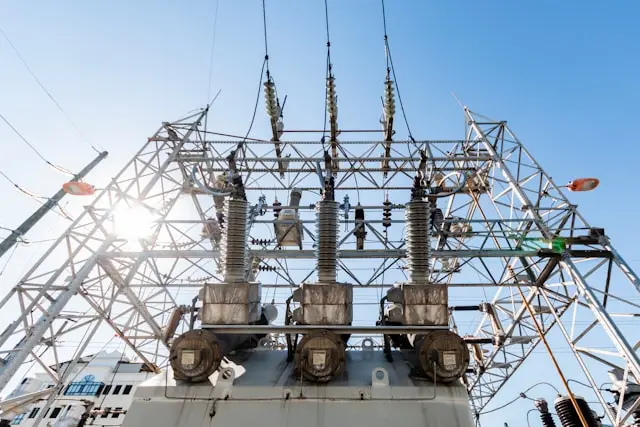
Västerås now hosts the world's largest power transformer manufacturing facility, a global R&D headquarters for grid integration, and a half-billion-kronor capital expansion programme already underway. By every capital metric, this is a market accelerating. By every talent metric, it is stalling.
The paradox is specific and measurable. The city's electrical engineering sector posted 340 to 380 open vacancies requiring high-voltage or power systems expertise by late 2024, a 45% increase over two years. Senior power systems engineer roles take an average of 94 days to fill, more than 50% longer than the national engineering average. Power electronics specialist positions sit open for six to nine months. The investment is real. The people to execute it are not available in sufficient numbers, and the conventional methods of finding them are not working.
What follows is a structured analysis of the forces reshaping Västerås as a global centre for electrification and power technology, the specific talent dynamics that make this market unlike any other in Northern Europe, and what senior hiring leaders need to understand before they commit to a search in a city where 90% of the candidates they need are not looking.
The Ownership Shift That Changed Everything
The story of Västerås as an electrification hub requires a correction that many hiring leaders still have not internalised. ABB, the name synonymous with this city's industrial identity for decades, sold its Power Grids division to Hitachi for $7.8 billion between 2020 and 2022. ABB retains roughly 1,400 employees in the city focused on motors, generators, and industrial drives. But the high-voltage infrastructure business, the anchor of the regional talent market, now belongs to Hitachi Energy.
This matters for hiring leaders because the talent attraction narrative has fractured. ABB's brand recognition among European power systems engineers is enormous. Hitachi Energy, despite being operationally larger in Västerås with approximately 3,200 employees, carries less brand equity in European engineering circles. Candidates in Zurich, Munich, or Mannheim who might have considered a move to Västerås under the ABB name now require a different conversation. According to reporting in Dagens Industri, Hitachi Energy has responded to this by recruiting aggressively from competitors, offering compensation premiums of 25 to 35% above German market rates to secure HVDC specialists for North Sea offshore wind projects.
A Market That Grew Under Foreign Ownership
The public narrative following ABB's divestiture leaned toward industrial decline. The operational reality contradicts it entirely. Hitachi Energy has committed SEK 500 million or more to Västerås facility expansion through 2026, targeting digital transformer monitoring systems and increased HVDC converter transformer production capacity. Employment in the direct sector has grown, not contracted. The facility's global importance within the Hitachi corporate structure appears to have increased since the acquisition.
This creates a specific tension in talent mapping exercises for the region. Candidates researching Västerås encounter outdated narratives about ABB's departure alongside current evidence of expanding investment. Hiring leaders who fail to address this confusion proactively, in the first conversation with a prospective candidate, lose credibility before they have made their case.
ABB's Remaining Footprint
ABB's reduced presence, down from an estimated 3,000 or more during the Power Grids era, still matters to the local talent ecosystem. The Motion division's 1,400 employees in Västerås work on electric motors and drives that share overlapping engineering disciplines with Hitachi Energy's transformer and grid work. Engineers move between the two organisations. When one raises compensation, the other feels the pressure within months. The city effectively operates as a two-employer duopoly for senior electrical engineering talent, with Siemens Energy's 450-person operation and Vattenfall Eldistribution's 300-person design centre filling supporting roles but lacking the scale to set market terms.
That duopoly structure has consequences. It means the 40 to 50 specialised suppliers in the region, from transformer component manufacturers to high-voltage testing equipment firms, recruit from the same constrained pool. The cost of a failed senior hire cascades further in a concentrated market than it would in a diversified one.
The Grid Modernisation Surge and Its Talent Implications
Svenska Kraftnät's investment plan to increase Sweden's transmission grid capacity by 40% before 2030, backed by a budget exceeding SEK 100 billion, is the demand catalyst that makes Västerås's talent constraints urgent rather than merely persistent. The orders are arriving. The manufacturing capacity to fulfil them is constrained not by equipment or floor space but by the people qualified to design, build, and commission the products.
The EU Electricity Market Design Reform, implemented in 2024, and Sweden's alignment with the EU Green Deal industrial plan are compounding this demand. Both regulatory frameworks accelerate the need for grid flexibility solutions, the exact category of product that Västerås manufacturers specialise in: FACTS devices, HVDC converters, and digital grid management systems. According to Swedenergy's industry analysis, the regulatory tailwinds are expected to sustain elevated demand through at least 2028.
Sector employment is projected to grow 8 to 12% through 2026, translating to 400 to 600 additional roles concentrated in HVDC systems engineering, power electronics R&D, and grid automation software architecture. These are not entry-level manufacturing positions. They require specialists whose formation takes a decade or longer.
The Experience Gap: Why Graduate Numbers Mask the Real Problem
Here is the analytical claim that sits at the centre of this market's dysfunction, and it is counter-intuitive enough to require explanation.
Mälardalen University produces 180 to 220 MSc graduates annually in relevant electrical engineering disciplines. On paper, this pipeline is statistically adequate. The university's "Future Energy" research profile and direct collaboration with Hitachi Energy's R&D centre suggest the pipeline should be not just adequate but well-targeted.
It is not solving the problem.
The shortage in Västerås is not a volume problem. It is a seniority problem created by stability. Senior engineers at Hitachi Energy and ABB exhibit average tenure lengths exceeding eight years, far above national engineering averages. This stability, which looks healthy in a retention report, has created a blocked promotion pipeline. Mid-level engineers who cannot advance leave the region entirely, moving to Stockholm, Gothenburg, or international markets where upward mobility exists. The graduates entering the system lack the senior mentors who would normally accelerate their development. The result is a workforce with a hollow middle: plenty of juniors, a fixed cohort of immovable seniors, and almost nobody in between.
This is not a shortage that recruitment alone can solve. When employers including Hitachi Energy and ABB Motion fill power electronics specialist roles by recruiting directly from Mälardalen University's doctoral programmes rather than from experienced labour markets, as documented in MDH's 2024 Industry Collaboration Report, they are confirming that the experienced candidate market has effectively ceased to function through conventional channels. The 80% of qualified professionals who are not actively seeking roles in most markets becomes 90% or higher in Västerås's core specialisms.
What the Compensation Data Actually Reveals
General engineering salaries in Sweden increased 3.2% in 2024 through collective bargaining outcomes. That figure tells you almost nothing about what is happening in Västerås's electrification sector.
HVDC specialist roles in the region commanded 12 to 15% increases over the same period. International recruitment premiums reached 25% or more. The aggregate wage data suggests a stable labour market. The specialism-level data reveals bubble-like acceleration in a narrow band of critical roles, the kind of micro-market dysfunction that sector averages are designed to conceal.
Senior Specialist and Executive Compensation Bands
The compensation structure for Västerås's core electrification roles, based on data from Sveriges Ingenjörer salary surveys and executive search firm reporting from 2024, breaks down as follows.
For high-voltage power systems engineering, a senior specialist or principal engineer with 15 or more years of experience commands a base salary of SEK 950,000 to 1,200,000 annually. A VP or Head of Technology for grid integration sits at SEK 1,800,000 to 2,400,000. In power electronics R&D, a senior hardware engineer earns SEK 850,000 to 1,050,000, while an R&D director overseeing a global product line reaches SEK 1,600,000 to 2,100,000. Senior project managers for high-voltage infrastructure earn SEK 900,000 to 1,100,000, with VP-level project execution roles reaching SEK 1,700,000 to 2,200,000.
The International Compensation Squeeze
These figures carry a specific strategic vulnerability. Västerås employers pay a 10 to 15% premium over national Swedish engineering averages. Yet they sit 20 to 25% below equivalent roles in Zurich, London, or Munich, according to Mercer's Global Engineering Compensation Survey. When international markets including Warsaw and Prague, which are emerging as Siemens Energy engineering hubs, offer 40 to 60% compensation premiums paired with lower personal tax burdens for high earners, the calculus for a senior Swedish engineer becomes uncomfortable.
The conventional response is to point to Västerås's lower cost of living, with housing running 30 to 40% cheaper per square metre than Stockholm. This argument works for mid-career professionals establishing families. It does not work for the senior HVDC architects who could double their effective take-home pay in Zurich. These are the candidates where salary negotiation dynamics become exercises in total life proposition rather than package comparison.
Stockholm, the primary domestic competitor, offers 15 to 20% higher compensation for power electronics roles through employers including Northvolt and Vattenfall headquarters. It also offers something Västerås cannot match: dual-career opportunities for partners. At least one major Västerås employer has already responded by establishing satellite R&D offices in Stockholm for software engineering talent unable to relocate, according to Dagens Industri's reporting. The hardware engineering stays in Västerås. The software talent has started drifting away.
The Three Roles That Define the Constraint
The talent constraint in Västerås is not evenly distributed. Three role categories concentrate the worst of the problem, and each presents a distinct challenge for executive search methodology.
HVDC Systems Engineers
This is a market with an estimated 90% or higher passive candidate ratio. The professionals who design and commission high-voltage direct current systems are employed, compensated well enough to stay, and not monitoring job boards. Their average tenure at Hitachi Energy and Siemens Energy exceeds eight years. Critical skills include PSCAD/EMTDC simulation, transient network analysis, and insulation coordination. Each of these takes years to master. There is no accelerated training pathway.
The demand driver is immediate: offshore wind grid connections require HVDC expertise that terrestrial grid engineers do not possess. Hitachi Energy's reported recruitment of three senior HVDC specialists from Siemens Energy locations in Zurich and Mannheim between 2023 and 2024 illustrates the lengths and premiums required to move these candidates.
Power Electronics Hardware Engineers
The specialism here is wide bandgap semiconductors, specifically silicon carbide and gallium nitride applications for medium-voltage drives. These are the technologies enabling the next generation of grid power conversion. The roles in Västerås sit open for six to nine months as a documented norm.
The geographic competition for this profile is fierce. Stockholm draws these engineers toward Northvolt and Scania. Gothenburg draws them toward Volvo Group and ABB Marine. Linköping pulls them toward Saab and Siemens Energy. Västerås must compete with three Swedish cities that each offer larger overall labour markets and, in most cases, higher compensation.
Grid Automation Software Architects
This is the category where AI and technology sector dynamics intersect with heavy industrial engineering. Grid automation requires fluency in IEC 61850 protocols, substation automation, and cybersecurity for operational technology networks. The demand driver is the digitalisation of Sweden's aging grid infrastructure. The constraint is that software engineers with OT security experience can typically earn more in pure technology roles in Stockholm, where the cultural and professional ecosystem for software talent is deeper.
The satellite office response from at least one major Västerås employer, splitting hardware engineering from software development across cities, is a structural adaptation to this reality. It works for now. It creates coordination costs that compound over time.
Supply Chain Fragility as a Talent Multiplier
The talent constraint does not exist in isolation. It compounds with supply chain fragility to create a risk profile that hiring leaders need to understand before committing to expansion in this market.
Grain-oriented electrical steel, the core material in transformer manufacturing, is in global shortage. Västerås facilities rely on imports from Nippon Steel and POSCO, subject to EU steel tariff uncertainties. The EU Critical Raw Materials Act introduces new domestic content requirements that may force qualification of European suppliers. The problem is that high-grade GOES suppliers in Europe are effectively non-existent. Copper price volatility, with LME prices up 18% year-on-year through 2024, compresses margins despite strong order books.
Environmental permitting adds a further constraint. Expansion of high-voltage testing facilities faces noise and electromagnetic field emission regulations, with processing times from Länsstyrelsen Västmanland averaging 14 to 18 months. A firm that commits to capacity expansion today cannot begin commissioning new test facilities until late 2027 at the earliest.
These supply chain pressures intensify the talent constraint because they shift the employer's needs. When materials are scarce and permitting is slow, the value of an engineer who can optimise existing production, who can extract more from current capacity rather than waiting for new capacity, increases. That is a different profile from the engineer who designs new product lines. Both are scarce. The firms that need both simultaneously face a compounded search problem that conventional recruiting approaches consistently fail to solve.
What This Market Requires From a Search Strategy
The Västerås electrification talent market presents a specific combination of characteristics that determines what works and what fails in a senior search.
First, the passive candidate ratio in core roles exceeds 85%. Any search strategy that begins with job postings and waits for inbound applications will reach fewer than one in ten qualified candidates. The mathematics are unambiguous. A 94-day average time-to-fill for senior power systems roles, against a national engineering average of 62 days, is the measurable cost of using methods designed for active candidate markets in a market where active candidates barely exist.
Second, the geographic competition operates on multiple axes simultaneously. A candidate in Västerås weighs not just compensation but career progression, dual-career options, lifestyle, and long-term sector stability. The ownership change narrative creates doubt that must be addressed proactively. A search process that treats these objections as afterthoughts rather than central to the engagement strategy loses candidates at the final stage, the most expensive point at which to lose them. Understanding what triggers a counteroffer and how to pre-empt it is particularly critical in a market where the two dominant employers watch each other's hiring moves closely.
Third, the experience gap means that the most valuable candidates are often not where a hiring leader would expect. The mid-career professionals who left Västerås for Stockholm or Gothenburg five years ago because promotion paths were blocked may now have the seniority that local employers desperately need. International search capability matters because the Swedish engineers who moved to Zurich or Munich for compensation may be open to returning if the proposition addresses the reasons they left.
KiTalent's approach to markets with these characteristics is built around direct headhunting methodology that identifies and engages passive candidates before they appear on any public platform. In a market where 90% of the target population is invisible to job boards, the ability to deliver interview-ready candidates within 7 to 10 days is not a service differentiator. It is the minimum viable approach. Across 1,450 or more executive placements, with a 96% one-year retention rate, the method has been tested in precisely the kind of concentrated, high-specialism market that Västerås represents.
For organisations competing for HVDC systems leadership, power electronics R&D talent, or grid automation architecture in one of Europe's most constrained engineering markets, speak with our executive search team about how we approach this sector. The candidates you need are employed, not searching, and not visible through any conventional channel. Reaching them requires a method built for that reality.
Frequently Asked Questions
What is the average salary for a senior power systems engineer in Västerås?
A senior specialist or principal engineer with 15 or more years of experience in high-voltage power systems engineering earns a base salary of SEK 950,000 to 1,200,000 annually in Västerås, based on 2024 survey data from Sveriges Ingenjörer. VP and Head of Technology roles in grid integration reach SEK 1,800,000 to 2,400,000. These figures include a 10 to 15% premium over national Swedish engineering averages, reflecting talent scarcity in the region's core electrification specialisms. They remain 20 to 25% below equivalent roles in Zurich or Munich.
Why is it so hard to hire HVDC engineers in Sweden?
HVDC systems engineering requires a combination of PSCAD/EMTDC simulation expertise, transient network analysis capability, and insulation coordination knowledge that takes a decade or more to develop. An estimated 90% of qualified professionals are passive, meaning they are employed and not actively seeking new roles. Average tenure at major employers exceeds eight years. The talent pipeline produces graduates in adequate numbers, but the experience required for senior HVDC roles cannot be compressed. Firms must engage candidates directly rather than relying on job postings.
How has Hitachi Energy's ownership of the Västerås facility affected hiring?
Hitachi Energy acquired ABB's Power Grids division for $7.8 billion between 2020 and 2022, making Västerås the global centre of excellence for power transformers under new ownership. Hitachi Energy has invested SEK 500 million or more in facility expansion and grown employment to approximately 3,200 in the city. However, the transition from the ABB brand, which carried decades of recognition among European engineers, to the Hitachi Energy name has created talent attraction challenges that require proactive candidate engagement to overcome.
What roles are hardest to fill in Västerås electrification manufacturing?
Three role categories concentrate the most acute shortages. HVDC systems engineers for offshore wind grid connections face 90% or higher passive candidate ratios. Power electronics hardware engineers specialising in silicon carbide and gallium nitride semiconductors remain open for six to nine months as a documented norm. Grid automation software architects with IEC 61850 protocol and OT cybersecurity expertise are drawn to Stockholm's larger technology ecosystem. Each category requires dedicated executive search rather than conventional recruitment.
How does Västerås compare to Stockholm for engineering careers?
Stockholm offers 15 to 20% higher compensation for power electronics roles through employers including Northvolt and Vattenfall headquarters. It also provides stronger dual-career opportunities and a deeper cultural ecosystem. Västerås counters with housing costs 30 to 40% lower per square metre, shorter commutes, and direct access to the world's largest power transformer manufacturing facility. For engineers in high-voltage specialisms, Västerås offers project scale and technical depth that Stockholm cannot match. The choice depends on career stage, specialism, and personal priorities.
Can executive search firms access passive HVDC and power systems talent?
Specialist executive search is the primary viable method for engaging HVDC, power electronics, and grid automation candidates in this market. With fewer than 10% of qualified candidates actively applying to postings, any approach built around market benchmarking and direct identification of employed professionals outperforms job advertising by a wide margin. KiTalent's AI-enhanced talent mapping and direct headhunting methodology is designed for exactly this type of concentrated, high-specialism market where the conventional playbook cannot reach the candidates who matter.