UAQ Free Trade Zone Hiring in 2026: The Cost Advantage That Disappears When You Try to Staff It

Umm Al Quwain's Free Trade Zone sells a straightforward proposition: operate at 30 to 40 percent less than Dubai. Licensing fees run AED 8,000 to 12,000 annually, roughly half the cost of a comparable JAFZA package. Warehousing rents follow the same pattern. For trading SMEs moving building materials, automotive parts, and consumer goods through GCC and African corridors, the arithmetic has been persuasive enough to attract an estimated 200 to 300 active licensees. On paper, UAQ FTZ looks like the rational choice for cost-sensitive operations that do not need Jebel Ali's scale.
The problem appears the moment those operations need to hire anyone with specialised skills. Supply Chain Manager roles in northern Emirates free zones typically sit open for 90 to 120 days. Equivalent positions in Dubai fill in 45 to 60 days. Employers routinely pay 15 to 25 percent above standard market rates just to attract logistics supervisors from Dubai, then add housing allowances to compensate for UAQ's limited residential amenities. According to JLL's UAE Industrial Occupier Cost Analysis, when talent acquisition costs are fully loaded, UAQ FTZ operating costs drop to only 12 to 15 percent below Dubai. The headline savings shrink to a fraction of what the licensing brochure promises.
What follows is an analysis of how this cost-talent tension is reshaping UAQ FTZ's operating model in 2026, what it means for every employer trying to staff a warehouse, a production line, or a trade compliance function in this zone, and why the firms that treat this as a pure cost play are the ones most likely to find themselves unable to deliver on the contracts that brought them here.
The Zone's Real Tenant Profile and What It Means for Talent Demand
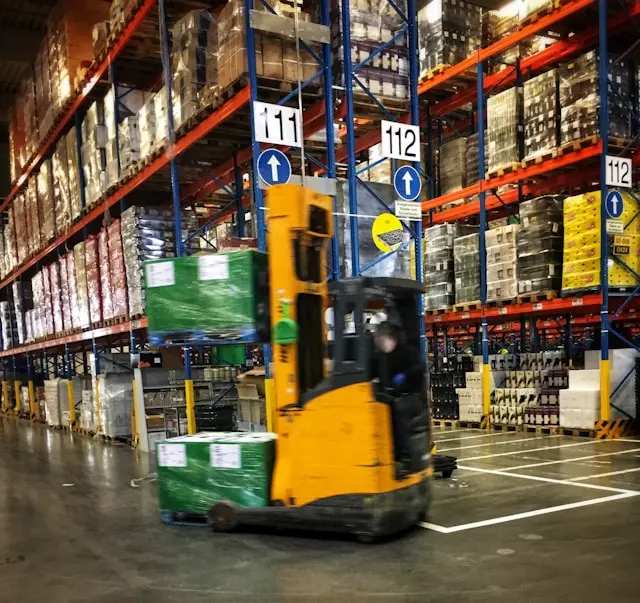
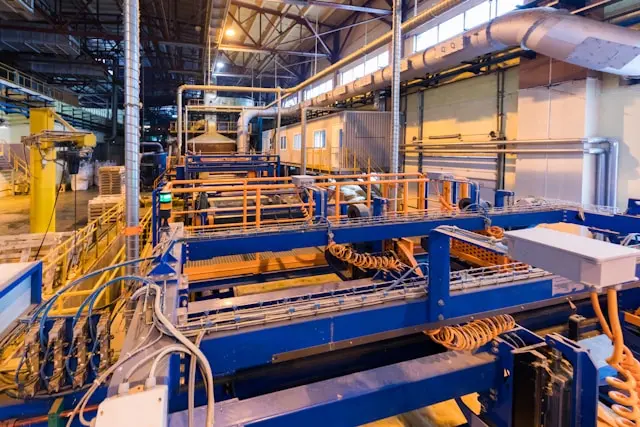
Understanding who actually operates in UAQ FTZ is essential before discussing who they need to hire. The zone's tenant base breaks into three categories. Trading SMEs make up 60 to 70 percent, focused on construction materials, foodstuffs, and consumer goods re-export. Light manufacturing accounts for 20 to 25 percent: packaging, plastic injection moulding, and metal fabrication serving regional construction. Warehousing and third-party logistics providers fill the remaining 10 to 15 percent, serving northern Emirates retail and construction supply chains.
This composition tells a specific story. UAQ FTZ is not a technology hub. It is not an advanced manufacturing cluster. It is a trading and light assembly zone where most operations are family-owned or SME-scale. The talent requirements that flow from this profile are mid-level and senior operational roles: supply chain managers who understand GCC customs, plant supervisors who can run a CNC line, trade documentation specialists fluent in UAE Federal Customs Authority systems. These are not roles that attract graduates eager to build a career. They require experience that takes seven to ten years to accumulate.
The mismatch is embedded in the zone's design. UAQ FTZ has optimised for cost-sensitive tenants, but cost-sensitive tenants still need experienced operators. The zone's pricing attracts businesses that cannot afford to pay Dubai rates. Those same businesses then discover they must pay Dubai rates, or close to it, to attract the talent that keeps their operations running.
Ahmed Bin Rashid Port reinforces this constraint. Handling approximately 0.5 million tonnes of non-containerised cargo in 2023, it is a break-bulk and project cargo operation. Jebel Ali, by comparison, processed 13.8 million TEUs in the same period according to DP World's annual report. The port's 7-metre maximum draft excludes mainline container vessels entirely, forcing reliance on Dubai feeder connections. For logistics professionals building a career, this infrastructure ceiling limits the complexity and scale of the work available. It narrows the candidate pool further still.
Why the Talent Shortage Is Not a Recruitment Problem
The instinct when roles go unfilled for 90 to 120 days is to blame the recruitment process. Post on more platforms. Offer a better package. Work with more agencies. In UAQ FTZ, the problem sits deeper than process.
An 80,000-Person Emirate Competing with a 3.5 Million-Person City
Umm Al Quwain's resident population is approximately 80,000 people. The emirate simply does not contain enough technical and managerial professionals to staff its free zone from local supply. Every mid-to-senior hire requires reaching into Dubai or Sharjah commuting pools, competing directly with employers in those cities who offer shorter commutes, better lifestyle amenities, and stronger career progression.
The passive candidate ratios tell the rest of the story. According to Korn Ferry's UAE Logistics Sector Briefing, 85 to 90 percent of qualified VP and Director-level supply chain candidates are employed and not actively applying. For Senior Manufacturing Engineers, 75 percent are passive. Job postings reach, at best, the remaining fraction. And within that fraction, active applicants for UAQ-based roles frequently lack the GCC-specific regulatory experience that makes them effective from day one.
This is where the hidden 80 percent of passive talent becomes more than a theoretical problem. In markets like Dubai, a strong employer brand and competitive package can occasionally draw passive candidates through inbound channels. In UAQ, there is no inbound channel that reaches the right people. Every critical hire must be identified, approached, and persuaded individually.
The Counteroffer Wall
Even when UAQ employers identify the right candidate and make a competitive offer, the data shows they lose approximately 60 percent of final-round candidates to Dubai-based counteroffers, according to Michael Page's UAE Candidate Behaviour Survey. The counteroffer trap is particularly damaging in this market because candidates already have reservations about the move. A counteroffer from their current Dubai employer does not just match the money. It removes the perceived risk of relocating to a smaller emirate with fewer career options if the role does not work out.
The professionals who do accept UAQ positions tend to cite housing cost savings and commute reduction as their primary drivers, not career trajectory or compensation. UAQ residential costs run 40 to 50 percent below Dubai, and for candidates already living in Ajman or northern Sharjah, the daily commute calculation shifts in UAQ's favour. But this self-selecting candidate pool skews toward professionals optimising for lifestyle, not advancement. Employers filling senior roles need candidates motivated by the work itself. The overlap between those two populations is thin.
Compensation: The Numbers Behind the Paradox
UAQ employers typically offer 10 to 15 percent below Dubai base salaries, offset by lower housing costs. But the roles hardest to fill do not follow this discount pattern. They follow a premium pattern.
For Supply Chain and Logistics functions, Senior Specialists and Managers earn AED 18,000 to 28,000 in base monthly salary across the UAE, with total compensation including allowances reaching AED 22,000 to 35,000. At Executive and VP level, base salaries range from AED 35,000 to 55,000, with total packages of AED 45,000 to 75,000, according to Hays and Mercer compensation surveys. Light Manufacturing follows a similar trajectory: Senior Plant Managers earn AED 20,000 to 30,000 base, while Directors of Manufacturing command AED 40,000 to 60,000.
The critical detail is what happens at the margins. Negotiating compensation for candidates with temperature-controlled supply chain expertise in pharma or food logistics means paying 25 to 30 percent above standard logistics rates. These premiums exist because the specialism sits at the intersection of logistics operations and regulatory compliance, and the candidate pool is especially shallow.
For UAQ FTZ employers, the arithmetic becomes punishing. A trading SME that moved to the zone to save AED 150,000 annually on licensing and warehousing rent may find itself spending AED 100,000 or more in salary premiums, recruitment fees, and housing allowances to fill a single senior supply chain role. The cost advantage narrows to a point where the question becomes whether the remaining savings justify the operational friction of operating in a zone where every critical hire takes twice as long.
This is the analytical point that does not appear in any single data source but emerges from combining them: UAQ FTZ's cost advantage is real for capital. It is largely illusory for talent. The zone has inadvertently created a business model that works brilliantly for companies that need space and poorly for companies that need people. The firms that thrive here are the ones whose operations are capital-intensive relative to their headcount. The firms that struggle are the ones whose competitive advantage depends on the quality of a small number of skilled professionals.
The Regulatory Pressure Compressing the Value Proposition
Corporate Tax and the Qualifying Income Test
The UAE's 9 percent Corporate Tax, effective since June 2023, has added a layer of compliance complexity that directly affects UAQ FTZ's positioning. Free zone entities must maintain "Qualifying Free Zone Person" status to benefit from the 0 percent rate. Trading companies that sell into mainland UAE markets face potential tax exposure under Cabinet Decision No. 55 of 2023, reducing the zone's tax-advantage value proposition.
This regulatory shift has created immediate demand for a specific profile: Finance Directors who understand both free zone structuring and UAE Corporate Tax compliance. These professionals are scarce across the entire UAE, and UAQ FTZ must compete for them against Dubai firms that can offer more complex work, larger teams, and clearer career paths. The executive hiring challenge in industrial and manufacturing operations is compounded when the regulatory environment is itself in transition.
Emiratisation in a Zone Without Enough Emiratis
UAE government mandates require logistics and manufacturing firms to meet Emiratisation targets of 2 to 4 percent of workforce, depending on sector and company size. In an emirate of 80,000 people with a small Emirati population concentrated outside the free zone's operational areas, compliance becomes cost-prohibitive for SMEs. Larger employers in Dubai and Abu Dhabi absorb available Emirati candidates through the Nafis programme's subsidised salary structures. UAQ employers compete for the same candidates without the same government-backed incentives.
The visa processing differential compounds the problem further. UAQ FTZ visa processing averages 15 to 20 working days. Dubai free zones process the same paperwork in 3 to 5 days. For an employer that has finally identified and secured a specialist CNC operator or customs clearance expert, a three-week visa delay introduces risk that the candidate accepts another offer before their paperwork clears.
The Competitive Squeeze from Every Direction
UAQ FTZ does not exist in isolation. It competes for tenants and talent against zones that have been investing aggressively to capture the same cost-sensitive SME segment.
RAKEZ in Ras Al Khaimah offers similar cost structures with licensing fees approximately 15 to 20 percent below Dubai, but with meaningfully better highway connectivity to both Dubai and Abu Dhabi. Hamriyah Free Zone in Sharjah is a direct competitor for light manufacturing tenants, offering deep-water port capabilities and established petrochemical clusters that UAQ cannot match. Ajman Free Zone has undercut UAQ on pricing, with annual packages as low as AED 5,500 to 8,000. Each of these competitors is also a competitor for talent. Sharjah's established industrial ecosystem and larger labour pool give Hamriyah a hiring velocity advantage that UAQ cannot replicate through pricing alone.
The talent implications of this competitive squeeze are concrete. When a qualified warehouse automation specialist considers two offers at similar salary levels, one in Sharjah's Hamriyah zone and one in UAQ, the Sharjah position typically offers a deeper peer network, more potential future employers within commuting distance, and a more established industrial community. UAQ must either pay a premium to overcome this or accept that it will consistently lose head-to-head competitions for the same candidates. Understanding why executive recruiting efforts fail in secondary markets requires acknowledging that the problem is often locational, not methodological.
What the 2026 Trajectory Actually Looks Like
The trajectory into 2026 offers modest volume growth in one segment and continued stagnation in another.
E-commerce fulfilment warehousing is projected to grow 12 to 15 percent in demand as SME operators seek lower-cost alternatives to Dubai South and Abu Dhabi's KIZAD. This is real growth, and it creates real hiring demand for warehouse managers, inventory systems specialists, and last-mile logistics coordinators. The zone's 2024 expansion of multi-tenant warehousing units targeting e-commerce fulfilment SMEs was a direct response to this demand signal.
Manufacturing, however, remains structurally constrained. Power capacity limitations of an estimated 50MW prevent the zone from attracting energy-intensive operations. Advanced manufacturing requires reliable, scalable utilities infrastructure that UAQ does not currently provide. The UAE's "Operation 300bn" industrial strategy emphasises advanced manufacturing diversification and high-value exports, but UAQ's infrastructure channels its tenants toward low-margin commodity trading and basic assembly rather than the strategic upgrading that national policy envisions.
For hiring leaders, this bifurcation matters. The e-commerce fulfilment growth creates demand for a newer category of logistics professional: candidates who understand warehouse management systems, RFID inventory tracking, and basic automation integration. These skills overlap with those demanded by Dubai's larger fulfilment operations. UAQ employers entering this segment will compete for the same candidates at a locational disadvantage, repeating the pattern that already defines the zone's talent market.
How to Actually Hire in This Market
The conventional approach to hiring in UAQ FTZ follows a predictable and largely unsuccessful pattern. An employer posts a role on Gulf-facing job boards, receives applications predominantly from candidates without GCC experience, screens out 80 percent, interviews the remainder, and either settles for a second-choice candidate or loses the first choice to a Dubai counteroffer. The cycle restarts. Annual turnover for light manufacturing technicians in UAQ runs 25 to 30 percent, compared to 18 to 20 percent in Sharjah's Hamriyah Free Zone. The recruitment machine runs continuously without building durable capability.
The alternative requires accepting three realities about this specific market. First, every senior hire must be directly sourced through targeted headhunting because the passive candidate ratios make job advertising structurally insufficient. Second, the value proposition to candidates must be specific and honest: this is a role offering lower housing costs, shorter commute times from Ajman and northern Sharjah, and the autonomy that comes with a senior position in a smaller operation. Trying to compete with Dubai on prestige or career trajectory will fail. Third, speed matters disproportionately in this market. The hidden cost of a prolonged vacancy is amplified when operations are SME-scale, because a single unfilled role represents a larger share of total capability.
Organisations that have built talent pipelines for their UAQ operations rather than hiring reactively report materially better outcomes. Mapping the market before a vacancy opens means knowing which candidates in Dubai and Sharjah are already dissatisfied with their commute, already considering a move north, already open to the trade-offs that UAQ requires. This is not speculative. It is the difference between a 45-day search and a 120-day search.
For organisations competing for supply chain leadership, manufacturing expertise, and trade compliance specialists in the UAQ Free Trade Zone, where the candidates with the right experience are overwhelmingly passive and the margin for a slow search is measured in lost operational capacity, start a conversation with our executive search team about how KiTalent approaches secondary-tier UAE markets. With a pay-per-interview model that eliminates upfront retainer risk and a methodology built for reaching the professionals who are not visible on any job board, KiTalent delivers interview-ready candidates within 7 to 10 days. Our 96 percent one-year retention rate reflects the quality of the match, not just the speed of the introduction.
Frequently Asked Questions
What types of companies operate in Umm Al Quwain Free Trade Zone?
UAQ FTZ hosts approximately 200 to 300 active licensees, predominantly trading SMEs focused on construction materials, foodstuffs, and consumer goods re-export to GCC and African markets. Light manufacturing firms account for 20 to 25 percent of tenants, operating in packaging, plastic injection moulding, and metal fabrication. Warehousing and third-party logistics providers make up the remaining 10 to 15 percent. The zone's tenant profile is characterised by cost-sensitive SMEs rather than large multinationals or advanced manufacturing operations, reflecting its positioning as a lower-cost alternative to Dubai and Abu Dhabi free zones.
How long does it take to fill senior logistics roles in UAQ FTZ?
Supply Chain Manager roles in northern Emirates free zones typically remain open for 90 to 120 days, roughly double the 45 to 60 day average for equivalent positions in Dubai logistics hubs. The extended timeline reflects UAQ's small local labour pool of approximately 80,000 residents, the need to recruit from Dubai and Sharjah commuting pools, and the 60 percent final-round candidate loss rate to Dubai-based counteroffers. Direct executive search methods that identify and approach passive candidates before a vacancy becomes critical can compress these timelines materially.
What salaries do supply chain executives earn in the UAE?
Senior Specialist and Manager-level supply chain roles command AED 18,000 to 28,000 in monthly base salary across the UAE, with total compensation reaching AED 22,000 to 35,000 including allowances. Executive and VP-level positions range from AED 35,000 to 55,000 base, with total packages of AED 45,000 to 75,000. UAQ-based employers typically offer 10 to 15 percent below Dubai base rates, offset by lower housing costs. Specialists with temperature-controlled supply chain expertise command 25 to 30 percent premiums above standard logistics rates.
How does UAQ FTZ compare to other UAE free zones for cost?
UAQ FTZ licensing fees range from AED 8,000 to 12,000 annually, compared to AED 15,000 to 25,000 at JAFZA in Dubai. However, when talent acquisition costs are included, the total operating cost differential narrows to 12 to 15 percent, according to JLL analysis. RAKEZ in Ras Al Khaimah and Ajman Free Zone have further compressed UAQ's pricing advantage, with Ajman offering packages as low as AED 5,500. The pure cost comparison must account for talent availability, visa processing speed, and infrastructure quality to reflect true operational cost. KiTalent's market benchmarking capability helps hiring leaders factor talent costs into free zone location decisions.
What are the biggest hiring challenges in Umm Al Quwain?
Three factors dominate. First, the emirate's small population forces employers to recruit externally, competing directly with Dubai and Sharjah for the same candidates. Second, Emiratisation requirements are disproportionately difficult for SMEs in a small emirate with limited local workforce. Third, visa processing times of 15 to 20 working days create risk that secured candidates accept competing offers during the administrative delay. These structural barriers make proactive talent mapping and pipeline building essential rather than optional for UAQ FTZ employers.
Why do candidates choose UAQ over Dubai for logistics and manufacturing roles?
Professionals who accept UAQ-based positions over Dubai alternatives predominantly cite housing cost savings and commute reduction as their primary motivations. UAQ residential costs run 40 to 50 percent below Dubai, and candidates living in Ajman or northern Sharjah find shorter daily commutes. Career trajectory and compensation are rarely cited as deciding factors. For employers, this means the value proposition must be built around lifestyle efficiency and operational autonomy rather than competing with Dubai on prestige or long-term career development.