Vicenza's Goldsmithing Cluster Is Running Out of the Hands That Built It
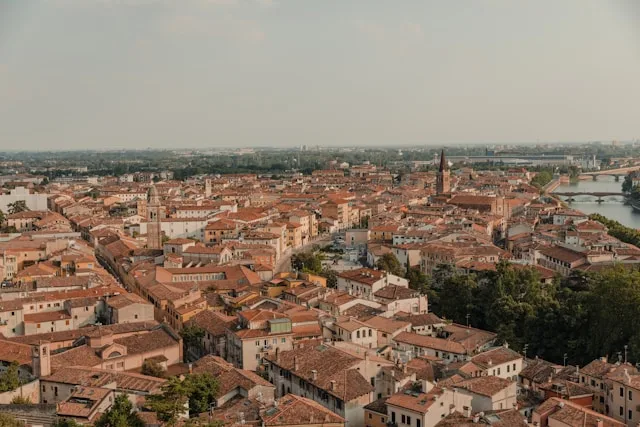
Vicenza province exported €8.1 billion in jewelry and precious metals in 2024. Its Chiampo Valley hosts 45 jewelry enterprises per 1,000 residents, a density that exists nowhere else in Europe. The Vicenzaoro trade fair, anchored at the Fiera di Vicenza, drew 56,000 professional buyers from 136 countries to its January 2025 edition alone. By every commercial measure, this is a cluster at the peak of its global relevance.
Yet the workshops producing that output are struggling to fill roles that should be the most desirable in Italian manufacturing. A master goldsmith search in Vicenza now averages 127 days to fill. Job postings for skilled goldsmiths and jewelry technicians rose 34% between January 2024 and October 2025, while candidate applications fell 12%. The average age of a master goldsmith in the province is 54. Only 23% of workshops report having a succession plan. The commercial engine is running, but the artisan workforce powering it is ageing out faster than it can be replaced.
What follows is a ground-level analysis of why Vicenza's jewelry and luxury goods sector faces a talent crisis that compensation alone cannot solve, where the deepest gaps sit, and what organisations hiring leadership and specialist production talent in this market need to understand before they commit to a search.
The Cluster That Cannot Pay Its Way Out of a Shortage
Standard labour market theory predicts that when demand outstrips supply, wages rise until equilibrium is restored. Vicenza's goldsmithing sector has defied this prediction for three consecutive years.
Despite the 127-day average time-to-fill for master goldsmiths and a 34% surge in open positions, base salary growth for senior artisans has remained between 2.5% and 3.5% annually. Italy's inflation rate reached 4.5% in 2024. In real terms, the most sought-after artisans in Vicenza are earning less each year, even as the difficulty of replacing them intensifies.
The reason is systemic. Ninety-four percent of Vicenza's jewelry enterprises employ fewer than 50 people. Most are family-owned. Their payroll flexibility is structurally limited. A firm with €3 million in annual revenue and 15 employees cannot unilaterally offer a 35% premium to attract a master goldsmith from Valenza Po without destabilising its entire compensation structure. The handful of luxury houses that can pay those premiums do so selectively, as Damiani reportedly did when it secured a CAD and Prototyping Director after an 11-month search, according to industry reporting in Oro&Lavoro magazine. But the vast majority of employers in this cluster are trapped: they need talent they cannot afford to attract, in a market where the talent itself is not actively looking.
This is the analytical spine of Vicenza's hiring challenge. The shortage is real. The inability to resolve it through compensation is also real. And the gap between the two is widening, not closing.
Why Artisan Prestige No Longer Compensates for Below-Market Pay
For decades, the Vicenza model relied on non-monetary compensation to retain its workforce. Artisan prestige. Workshop autonomy. Flexible hours. The pride of working within one of the world's most respected manufacturing clusters. These factors historically kept master goldsmiths in their workshops even when Valenza Po or Milan offered materially higher salaries.
That equilibrium is breaking down. A younger generation of skilled workers, trained in CAD/CAM alongside traditional bench skills, is making different calculations. Milan offers 40 to 50% higher compensation for equivalent seniority, plus hybrid work arrangements that simply do not exist in a manufacturing-intensive province. Arezzo offers lower housing costs and a larger SME base that provides entrepreneurial exit opportunities. Geneva and Paris offer international careers at compensation levels Vicenza cannot approach.
The result is a "sticky low-equilibrium trap" where wages remain below market-clearing levels because most employers cannot raise them, while the candidates who might be attracted at those wages are being pulled toward geographies that can. The candidates who remain are disproportionately older, more settled, and less mobile. They are also, by definition, closer to retirement.
Inside the Chiampo Valley: A Manufacturing Heartland Facing Its Generational Cliff
The Chiampo Valley municipalities of Chiampo, Trissino, San Pietro Mussolino, and Vestenanova account for 38% of Vicenza province's jewelry sector employment. This is where gold chain production, machine-made components, and semi-finished goods originate before moving through the distributed manufacturing networks that define the Vicenza model.
The density is extraordinary. Approximately 1,200 active jewelry enterprises operate in the Chiampo Valley alone. The specialisation runs deep: casting houses, setting workshops, polishing operations, and chain-making facilities cluster within kilometres of each other, sharing supply chains and subcontracting relationships that have evolved over generations. Large brands like Damiani subcontract 60 to 70% of production steps to these specialised SMEs, making the cluster's health inseparable from the output quality of every luxury house it serves.
The Average Age Problem
The workforce data from INPS reveals the scale of the generational challenge. The average master goldsmith in the province is 54 years old. The Scuola Orafa Ambrosiana's Vicenza campus trains approximately 120 students annually in stone-setting and CAD/CAM technologies. Even if every graduate entered and remained in the Vicenza cluster, 120 new entrants per year cannot replace the retirement wave now building across a workforce of 18,000 to 20,000.
The 23% succession planning rate compounds the problem. In a sector where three-quarters of workshops have no documented plan for leadership transition, the risk is not merely a talent shortage. It is a knowledge extinction event. Micro-pavé setting techniques, proprietary alloy formulations, and hand-finishing methods accumulated over decades exist primarily in the hands and memories of practitioners who will leave the workforce within ten years. When they go, so does the capability that commands premium pricing in international markets.
This is not a problem that traditional talent acquisition methods can address through volume. It requires a fundamentally different approach to finding, assessing, and securing the small number of qualified professionals who possess both the technical mastery and the willingness to work within Vicenza's economic constraints.
The Roles That Define the Crisis
Not every position in Vicenza's jewelry sector is equally difficult to fill. The crisis concentrates in four specific role categories, each with distinct market dynamics and passive candidate characteristics.
Master Goldsmiths with Micro-Pavé Specialisation
This is the hardest hire in the cluster. An estimated 85% of qualified candidates are employed and not actively seeking new roles, according to Page Executive's Jewelry and Luxury Search Practice. Average tenure with current employers runs 14 years. Job postings receive fewer than five qualified applications per vacancy, compared to 50 or more for general manufacturing roles. Ninety percent of successful placements in this category occur through direct headhunting rather than applications.
Senior specialists with 15 or more years of experience command €55,000 to €72,000 in base salary plus production bonuses. At the executive level, a Technical Director managing 50 or more artisans can reach €130,000 at the top luxury houses. The gap between these figures is where most searches fail: a €72,000 specialist is often unwilling to accept the management burden of a €110,000 director role, while candidates who could command €130,000 are already employed at the firms that pay it.
CAD/CAM Jewelry Designers
The intersection of traditional goldsmithing knowledge and digital design fluency defines this shortage. The role Damiani spent 11 months filling required expertise in Matrix and RhinoGold software combined with bench-level understanding of how designs translate into physical production. According to industry reporting, the eventual hire came from a competing firm in Valenza Po at a 35% premium above standard market compensation.
Seventy-five percent of senior CAD/CAM designers in the province are passive candidates. Unemployment in this category sits below 2%. Internal promotion rates within firms are high, and candidates typically carry three to six month notice periods, making fast search execution even more critical. Senior-level compensation ranges from €48,000 to €65,000, with VP of Design and Technical Innovation roles reaching €95,000 to €125,000. Equity participation is increasingly common in family-owned enterprises transitioning to professional management.
Certified Gemologists
Forty percent of gemologist searches in the province fail outright, according to Federorafi's Bollettino del Lavoro. A consortium of five Trissino manufacturers reportedly abandoned an eight-month search for a Senior Gemologist, choosing instead to outsource gemological services to a Milan laboratory. The search collapsed because salary expectations exceeded €90,000 annually, a figure the consortium deemed unsustainable for a shared service arrangement.
The passive candidate ratio for gemologists holding FGA or GIA international certification sits at approximately 80%. These professionals frequently maintain private clienteles or consulting relationships alongside their primary employment, reducing their visibility on any job board or recruitment platform. Chief Gemologist and Purchasing Director roles range from €75,000 to €95,000, with high variability based on the purchasing volume the individual controls.
Production Managers with Industry 4.0 Experience
This is the only critical role category where an appreciable share of candidates are actively looking. Approximately 40% are in the active market, driven by broader manufacturing sector mobility. But the subset with jewelry-specific knowledge remains predominantly passive. Only 31% of Vicenza's SMEs have implemented Industry 4.0 technologies such as CNC integration and 3D printing, compared to 58% in Valenza Po. This gap means the province needs production managers who can lead digital transformation, but the firms most likely to attract them are the ones that have already transformed.
The compensation for Operations Directors sits between €95,000 and €130,000, with premiums for candidates experienced in lean manufacturing and digital integration. General Manager roles in mid-size manufacturing command €120,000 to €160,000 base, plus profit-sharing averaging 20 to 30% of base salary.
The Competitors Pulling Talent Away from Vicenza
Vicenza does not lose talent to a single competitor. It loses talent in four different directions, each attracting a different segment of the workforce.
Valenza Po, in Piedmont's Alessandria province, draws senior artisans seeking career progression and higher pay. The concentration of ultra-high-end maisons including Bulgari manufacturing and Cartier suppliers means Valenza offers 15 to 25% salary premiums for equivalent roles, plus the brand prestige that strengthens a CV for future moves. Senior artisans commute or relocate from Vicenza to Valenza for roles paying above €100,000, a threshold few Vicenza SMEs can match.
Arezzo offers a different proposition entirely. With 25,000 or more jewelry workers and housing costs 20% below Vicenza, Tuscany's jewelry capital attracts younger workers who see a larger SME base as a path to entrepreneurship. The OroArezzo fair provides commercial infrastructure that competes directly with Vicenzaoro for exhibitor attention, and the overflow production already migrating from capacity-constrained Vicenza manufacturers is strengthening Arezzo's pull.
Milan takes the designers and digital specialists. Corporate headquarters functions, marketing roles, and design positions offer 40 to 50% higher compensation, plus lifestyle advantages and hybrid work arrangements that a manufacturing-focused cluster cannot replicate. Junior and mid-level CAD operators see Milan as the natural next step.
Geneva and Paris compete for the very top of the market. Senior gemologists and international sales executives face offers with 40 to 60% higher compensation, international school access, and the gravitational pull of the LVMH and Kering ecosystems. Language barriers limit this competition for Italian-native production talent, but for commercially oriented executives, it is very real. Export and Sales Director roles in Vicenza offer €85,000 to €120,000 base with commission structures reaching €150,000 to €200,000 for top performers in the U.S. and Middle East markets. Geneva matches or exceeds these figures with lower personal tax burdens.
This four-directional talent drain means that solving the Vicenza shortage requires not one strategy but several, each calibrated to the specific pull factor it must counter.
Regulation, Risk, and the Structural Pressures Reshaping the Cluster
The talent shortage does not exist in isolation. It interacts with regulatory, environmental, and economic pressures that are simultaneously raising the cost of operating in the Chiampo Valley and constraining the cluster's ability to grow its way out of the problem.
Traceability and Compliance Costs
Italy's Legge 7/2024, effective January 2025, requires blockchain-based traceability for gold sourcing in compliance with the EU Conflict Minerals Regulation. Implementation costs for SMEs range from €15,000 to €40,000 per enterprise. For a micro-workshop with annual revenue under €1 million, this is a material capital expenditure that competes directly with the funds available for compensation increases or hiring incentives. The regulation creates demand for compliance expertise that did not previously exist in the cluster, adding yet another scarce skill to the list.
Environmental Permitting Delays
The Chiampo Valley carries the legacy of historical cyanide use in gold processing. ARPAV, the regional environmental protection agency, now imposes 18 to 24 month permitting delays for new workshops, compared to six months in 2019. This constrains physical expansion at precisely the moment when 62% of local manufacturers report capacity limitations. Firms that could theoretically add production capacity to meet order backlogs are instead waiting years for permission to build, while competitors in Arezzo and Valenza Po face less restrictive environments.
Gold Price and Working Capital Strain
With gold prices exceeding $2,700 per ounce through late 2024 and into 2025, working capital requirements for raw materials have increased 60% since 2022. Four medium-sized Vicenza manufacturers entered concordato preventivo in 2024, according to Il Sole 24 Ore, citing metal price hedging failures. For SMEs operating on thin margins, the combination of higher material costs, regulatory compliance expenditure, and environmental permitting delays leaves almost no financial headroom for the compensation adjustments that talent market conditions demand.
The original synthesis this analysis requires is this: Vicenza's goldsmithing crisis is not a hiring problem dressed up as a skills shortage. It is a structural incompatibility between the economic model that made the cluster successful and the labour market conditions that now govern it. The distributed SME model that created extraordinary manufacturing density also created 1,800 employers, each too small to compete individually for scarce talent. The artisan prestige that retained workers for decades cannot offset real-term pay declines indefinitely. The regulatory and environmental costs that landed disproportionately on micro-enterprises have consumed the capital that might otherwise fund competitive offers. Every strength of the Vicenza model has become, simultaneously, its constraint.
What This Means for Organisations Hiring in Vicenza's Jewelry Sector
The hiring executive approaching this market for the first time, or the Vicenza-based manufacturer attempting to fill a leadership role through conventional channels, faces a specific set of realities that require a different method.
First, the candidate pool for critical roles is almost entirely passive. Eighty-five percent of master goldsmiths with micro-pavé specialisation, 80% of certified gemologists, and 75% of senior CAD/CAM designers are employed and not looking. Job postings, recruitment advertising, and inbound applications will reach at most 15 to 25% of viable candidates. The remaining 75 to 85% must be identified, mapped, and approached directly.
Second, the geographic complexity is real. The right candidate for a Vicenza role may currently sit in Valenza Po, Arezzo, Milan, or Geneva. Each geography carries different compensation expectations, relocation considerations, and career motivations. A search confined to the province will miss the majority of the qualified market. A search that spans multiple Italian jewelry clusters and international markets requires methodology and reach that most local agencies and internal HR functions do not possess.
Third, speed matters disproportionately. In a market where 127 days is the average time-to-fill, the firms that move fastest capture the candidates that move at all. By the time a slow search assembles a shortlist, the strongest candidates have already accepted offers elsewhere. The cost of a failed search in this cluster is not merely the recruitment fee. It is the production capacity left idle, the order backlog that migrates to Arezzo, and the client relationship that weakens when delivery timelines slip.
KiTalent's approach to markets like Vicenza's jewelry cluster is built for exactly these conditions. AI-enhanced talent mapping identifies passive candidates across competing clusters and international markets within days rather than months. Interview-ready candidates are presented within 7 to 10 days, with a pay-per-interview model that eliminates upfront retainer risk for the hiring organisation. The 96% one-year retention rate for placed candidates reflects a methodology that assesses fit at the depth this market requires, not merely availability.
For organisations competing for artisan leadership, technical design directors, or senior gemologists in a market where traditional executive recruiting methods consistently underperform, speak with our executive search team about how we approach this sector. The candidates you need are not on any job board. They are in workshops in Trissino, laboratories in Valenza, and design studios in Milan. Reaching them requires a method built for passive, specialist markets.
Frequently Asked Questions
Why is it so difficult to hire master goldsmiths in Vicenza province?
Approximately 85% of qualified master goldsmiths in Vicenza are passive candidates, employed and not actively seeking new roles. Average tenure with current employers is 14 years. The province's SME-dominated structure means most employers cannot offer the compensation premiums needed to attract candidates from competing clusters like Valenza Po. Job postings for these roles receive fewer than five qualified applications per vacancy, and successful placements overwhelmingly occur through direct headhunting approaches rather than advertising. The 127-day average time-to-fill reflects these compounding constraints.
What salaries do senior jewelry executives earn in Vicenza?
Compensation varies considerably by role. Technical Directors managing 50 or more artisans earn €85,000 to €130,000. General Managers of mid-size manufacturers command €120,000 to €160,000 base plus profit-sharing of 20 to 30%. Export and Sales Directors earn €85,000 to €120,000 base, with total compensation reaching €150,000 to €200,000 through commissions on U.S. and Middle East markets. VP of Design and Technical Innovation roles range from €95,000 to €125,000, with equity participation increasingly offered in firms transitioning from family to professional management.
How does Vicenza compete with Valenza Po for jewelry talent?
Vicenza and Valenza Po are Italy's two primary jewelry manufacturing clusters, and they compete directly for senior artisans, designers, and production leaders. Valenza offers 15 to 25% salary premiums for equivalent roles, stronger luxury brand prestige from employers like Bulgari and Cartier suppliers, and higher Industry 4.0 adoption. Vicenza's advantages include its Vicenzaoro trade fair, a denser SME subcontracting network, and proximity to northeast Italy's broader manufacturing ecosystem. Senior candidates weighing the two clusters typically consider career trajectory and brand association alongside pure compensation.
What is the biggest risk to Vicenza's jewelry cluster over the next decade?
The generational transition crisis. The average master goldsmith in the province is 54 years old, and only 23% of workshops have succession plans. The Scuola Orafa Ambrosiana's Vicenza campus trains 120 students annually, insufficient to replace the retirement wave building across a workforce of 18,000 to 20,000. Combined with regulatory compliance costs from Legge 7/2024, environmental permitting delays of 18 to 24 months for new facilities, and gold price volatility straining SME liquidity, the cluster faces a decade of compounding constraints. Organisations that do not build proactive talent pipelines now will face acute capability gaps within five years.
How can KiTalent help with executive hiring in Vicenza's jewelry sector?
KiTalent uses AI-enhanced talent mapping to identify passive candidates across Vicenza, Valenza Po, Arezzo, Milan, and international markets, reaching the 75 to 85% of qualified professionals who are not visible on job boards. Interview-ready candidates are delivered within 7 to 10 days under a pay-per-interview model with no upfront retainer. With a 96% one-year retention rate across 1,450 or more executive placements globally, KiTalent's methodology is designed for precisely the kind of specialist, passive market that defines luxury goods executive recruitment.
What impact does Italy's gold traceability regulation have on hiring in this sector?
Legge 7/2024, effective January 2025, requires blockchain-based traceability for gold sourcing. Implementation costs range from €15,000 to €40,000 per SME, consuming capital that might otherwise fund competitive compensation. The regulation also creates new demand for compliance and supply chain transparency expertise that barely existed in the cluster before 2025. Manufacturers now need professionals who understand both precious metals supply chains and digital traceability systems, a combination that very few candidates possess and that adds another layer of scarcity to an already constrained market.