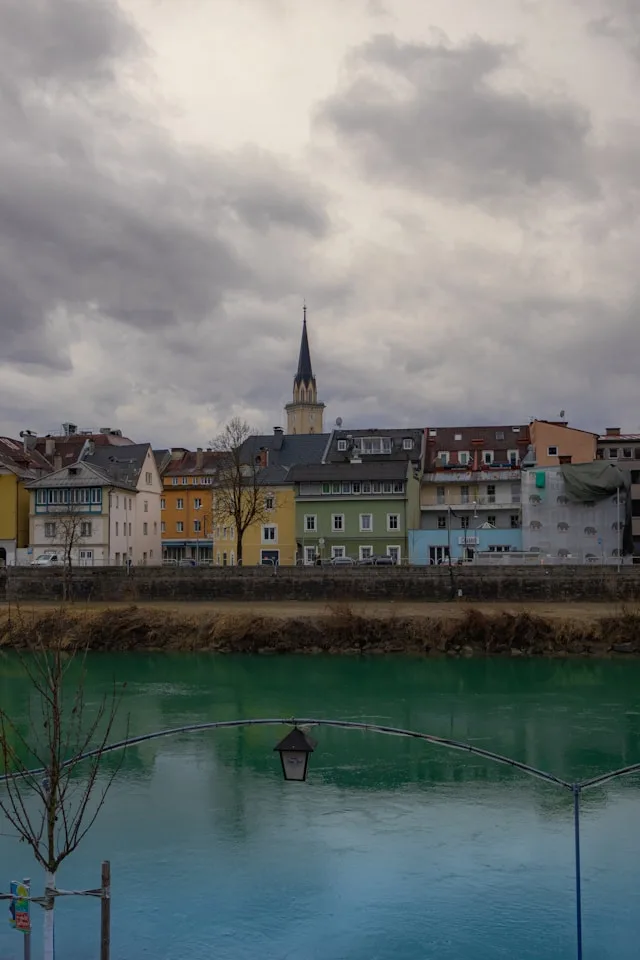
Vienna's Tourism Sector Has Hit a Ceiling: The Workforce Crisis That Investment Alone Cannot Fix

Vienna's tourism economy processed 16.2 million overnight stays in 2024, within striking distance of the 2019 peak. The Austria Center Vienna and Messe Wien posted 18% combined revenue growth. ICCA data ranks the city third globally for international association congresses. By every demand metric, the recovery is effectively complete.
Yet the sector cannot grow. Hotel investment volume in 2024 reached only €180 million, barely half the €340 million recorded in 2019. New supply is expanding at less than 2% annually. The Vienna Tourist Board's own 2026 forecast of 17.0 to 17.3 million overnight stays depends explicitly on the sector finding 3,000 to 4,000 additional full-time employees it does not currently have. The Vienna Convention Bureau confirmed that several congress inquiries in 2025 were turned away because the city could not guarantee sufficient hotel availability during peak periods.
What follows is a structured analysis of the forces constraining Vienna's tourism and MICE sector, the specific roles and skills the market cannot fill, and what these conditions mean for senior leaders responsible for hiring and retaining the executives who run this industry. The picture that emerges is not a labour shortage in the conventional sense. It is a systemic mismatch between the kind of talent the sector now requires and the pipeline that exists to supply it.
The Demand Recovery That Supply Cannot Match
Vienna's tourism numbers tell a story of success that masks a deeper problem. The city's 150-plus hotels compete for approximately 45,000 registered tourism employees against a backdrop of demographic decline in Austria's working-age population. STR Global data for 2024 shows RevPAR in the upscale segment at €95 to €110, with occupancy rates stabilising between 72% and 76%. The 4-star superior and 5-star categories are driving this performance. Budget and midscale properties, meanwhile, face margin compression from energy costs that remain 35 to 40% above 2019 levels and from a 7.5% minimum wage increase negotiated in 2024.
The new supply entering the market barely registers. The Ruby Sofie Vienna added 120 rooms in mid-2025. The Nordic Hotels expansion at Vienna Central Station brought another 200 rooms by end of 2025. Combined, these represent less than 2% annual growth in a market where demand is pressing against hard capacity limits. JLL's Austria Hotel Investment Market report for 2024 attributes the investment caution to "operational complexity," a polite term for the fact that institutional investors see a sector where the hidden cost of a bad executive hire or a chronic vacancy at general manager level can erode the return on a €50 million property acquisition.
This is the core tension in Vienna's hospitality and tourism market: demand recovery has not triggered supply expansion because the workforce required to operate new capacity does not exist in sufficient numbers. Capital is available. Guests are available. Staff are not.
Where the Shortages Are Most Acute
Operational Specialists: Kitchens Under Pressure
The most visible shortage sits in professional kitchens. Austria's Public Employment Service (AMS) reports 4,200 unfilled chef positions nationally, with Vienna absorbing 35% of that deficit. The vacancy duration for skilled kitchen positions in Vienna has stretched to 87 days, compared to 34 days in 2019. Across the luxury segment, recruitment cycles for executive chef roles now run six to nine months, more than double the pre-pandemic norm of three to four months.
The consequences are tangible. Industry reporting indicates a pattern across luxury properties where retained search mandates for executive chefs fail to produce viable shortlists after four months. Properties respond by promoting sous-chefs before they are ready or engaging interim kitchen leadership at daily rates of €800 to €1,200. Neither solution is sustainable. A prematurely promoted sous-chef managing a 500-cover banqueting operation and a multi-outlet kitchen represents a retention risk and a quality risk simultaneously.
Executive chefs with Michelin or Gault Millau credentials are among the most passive candidates in the market. Fewer than 10% are actively looking at any given time. Average tenure sits at 4.2 years, and mobility is triggered almost exclusively by compensation premiums that competitors in Munich or Zurich can more easily offer.
Technical-Commercial Hybrids: Revenue and ESG
The second shortage tier involves roles that did not exist in their current form five years ago. Directors of revenue management now require fluency in systems like IDeaS or Duetto alongside Python or SQL capability for pricing analytics. The shift toward total revenue management, optimising not just room revenue but food, spa, and event yield simultaneously, demands a cross-functional leader who can present to a property owner's board. These roles command €100,000 to €140,000 at cluster director level and take progressively longer to fill as the required skill set widens.
ESG and sustainability directors represent an even sharper scarcity. The EU Corporate Sustainability Reporting Directive requires hotels with more than 250 employees or €40 million turnover to report Scope 1 through 3 emissions from their 2024 financial year onward. Compliance setup costs run €150,000 to €300,000 per property, according to Deloitte Austria's CSRD readiness study. The hotels that need these directors most urgently are finding that hospitality does not produce them. Searches stall at three to four months, and employers increasingly recruit from industrial sectors like manufacturing and energy, accepting candidates who understand carbon accounting and GHG Protocol but have never managed a hotel operation.
The irony is that ESG directors show the highest active candidate rate of any senior hospitality role in Vienna, at 40 to 50%. But active does not mean qualified. The pool of professionals who combine CSRD reporting competence, BREEAM In-Use certification knowledge, and the change management capability to lead a green transition inside a unionised hospitality workforce is vanishingly small.
MICE Sales Leadership: The Client Relationship Problem
The third tier involves senior sales leaders who manage the corporate and pharmaceutical congress accounts that underpin Vienna's global MICE ranking. A Director of MICE Sales in Vienna must understand Salesforce or Delphi CRM, pharmaceutical compliance codes (specifically EFPIA requirements), space yield management, and diplomatic protocol for UN and international organisation events. The language requirement alone narrows the field: German C1, English C2, with French an advantage.
Industry reporting in Trend magazine and compensation data from Kienbaum Consultants indicate that major hotel groups in Vienna have engaged in direct poaching of senior MICE sales managers from competitors, offering 20 to 25% base salary premiums with guaranteed bonus structures to secure candidates capable of managing €5 million-plus corporate accounts. Non-compete clauses of six to twelve months in Austrian employment contracts further constrain mobility. An active MICE sales candidate in this market often signals a distressed exit, which makes the passive talent pool the only reliable source for quality hires.
This is a market where the 80% of qualified candidates who are not actively looking represent not a statistical curiosity but the entire viable search universe for senior roles.
The Compensation Paradox
Vienna's executive hospitality compensation sits in a specific position within the German-speaking world. It is high enough to attract regional talent from Bratislava, Budapest, and Prague, where minimum wages are a fraction of Vienna's €1,974 monthly floor. It is not high enough to retain top-tier talent against Munich or Zurich.
The gap is widest at exactly the seniority level where it matters most. An executive chef in Vienna earns €80,000 to €110,000, with premium properties reaching €130,000 for Michelin-starred profiles. In Munich, the equivalent range is €110,000 to €150,000. In Zurich, the premium expands further, and the ultra-high-net-worth service standards offer career trajectory benefits that no Vienna property can replicate. For MICE sales directors, Dubai presents an even more extreme differential: €150,000 to €200,000 tax-free against Vienna's €95,000 to €135,000 gross. HVS compensation data for Germany, Austria, and Switzerland confirms this 25 to 35% base salary premium consistently across senior operations and culinary roles.
Hotel general managers at five-star properties represent the apex of the market. Vienna pays €140,000 to €220,000 for a GM role at a 150-plus-room luxury property, with the Ritz-Carlton and Park Hyatt reportedly reaching €250,000 including performance bonuses. These figures exceed the Austrian collective agreement (Kollektivvertrag) minimums by 40 to 100%, but they still sit below what the same profile commands in the largest global gateway cities.
The result is a market that imports from the east and exports to the west. Vienna gains frontline and supervisory staff from Central Europe. It loses its best-trained senior leaders to higher-paying German-speaking markets or to the tax-free environments of the Gulf. The pipeline between these two flows does not refill fast enough to keep the middle layer, the directors and department heads who become the next generation of GMs, at adequate strength.
Understanding how to negotiate compensation effectively in this environment requires knowing precisely where Vienna sits on this continuum. A competitive offer in Vienna is not one that matches Munich. It is one that combines compensation with quality-of-life factors, career development commitments, and housing support that offset the headline gap.
The Retirement Wave No One Is Replacing
The original synthesis this data supports is not about shortage itself. It is about timing. Austria's tourism workforce has a median age of 44.7 years, and 28% of current hotel managers are eligible for retirement within the next decade. At the same time, graduate programme vacancy rates at major chains run at 40%. The sector is simultaneously losing its most experienced operators and failing to attract replacements into its training pipeline.
This creates a problem that cannot be solved by recruitment alone.
The senior general managers and executive chefs retiring in the next five to eight years carry institutional knowledge about Austrian labour law, Kollektivvertrag negotiation, union relations, and the diplomatic protocol demands specific to Vienna's UN and congress ecosystem. These competencies are not transferable through a two-week onboarding programme. They are accumulated over decades. When a 58-year-old GM at a five-star congress hotel retires, the property does not simply need to fill a role. It needs to replace a relationship network spanning convention bureau contacts, municipal government liaisons, owner representatives, and a staff of 200 who have worked under that leader for years.
The recruitment market treats this as a search problem. It is a knowledge problem. The institutional capability walking out the door cannot be recruited back in at any price because the professionals who carry it are a finite and shrinking group. The counteroffer dynamics that play out when a competitor tries to poach a senior GM are symptoms of this deeper issue. Every successful poach does not create a new leader. It moves an existing one, leaving a gap behind.
For any organisation planning its talent pipeline in this market, the implication is that succession planning must begin years before the vacancy appears. By the time a search launches, the best candidates are already committed elsewhere.
Regulation and Cost Pressures Reshaping the Operating Model
Labour Law Complexity
Vienna's hospitality sector operates under one of Europe's most regulated labour frameworks. The Arbeitszeitgesetz imposes strict limits on Sunday and holiday work across Vienna's 14-plus annual public holidays. Shift rotations become engineering exercises, and overtime premiums of 150 to 200% of the tariff rate make scheduling errors expensive. The 2024 Kollektivvertrag negotiations added a 7.5% minimum wage increase, compressing margins most severely in the three-star segment where room rates cannot absorb the cost.
For senior leaders, this regulatory environment demands a specific competency profile. A hotel general manager in Vienna must understand Austrian collective agreement negotiation at a level that goes well beyond standard HR knowledge. This is a legal and industrial relations skill set. Candidates from international hotel groups who have operated exclusively in less regulated markets often struggle with the Austrian system, and the transition into a Vienna GM role requires deliberate preparation that most search processes do not account for.
Sustainability as an Operating Requirement
The City of Vienna's Climate Protection Act requires municipal event venues to achieve climate neutrality by 2030. Private suppliers who wish to retain city contracts must decarbonise or lose access to the Austria Center Vienna and Messe Wien event ecosystem, which generates 12,000 indirect jobs. This is not a voluntary certification programme. It is a commercial requirement that will reshape vendor relationships across the sector.
Simultaneously, hotels report 12 to 18% RevPAR premiums for properties holding EU Ecolabel or Green Globe certification. Corporate clients increasingly require green credentials in their RFP processes. Yet the association congress segment, which accounts for the largest volume of MICE bookings, exhibits extreme price sensitivity. Academic and public-sector organisers resist rate increases. The hotel that invests €300,000 in CSRD compliance and building decarbonisation must recover that cost from a market where its highest-volume clients will not pay more.
This tension between sustainability investment and price elasticity will define which properties thrive in the next five years and which stagnate. The executives who can manage both sides of that equation, combining operational sustainability leadership with commercial pragmatism, are the scarcest profiles in the market.
What This Means for Hiring Leaders in Vienna's Hospitality Sector
The conventional approach to executive recruitment in the hospitality sector has relied on a combination of industry networks, job advertising, and retained search firms working from existing databases. In Vienna's current market, this approach reaches a fraction of the viable candidate pool.
General managers at five-star properties are 80 to 85% passive. Executive chefs with serious culinary credentials are fewer than 10% active. MICE sales directors with the required language and compliance profile are constrained by non-compete clauses that make them invisible to conventional search for six to twelve months after any role change. The only segment with meaningful active candidate flow is ESG and sustainability, and there the challenge is qualification rather than availability.
A search process that begins with job advertising and waits for inbound applications will consistently miss the candidates who matter most. The reasons executive searches fail in this market are specific: the target candidates are employed, satisfied, and not monitoring job boards. They will move for the right opportunity, but the right opportunity must be presented to them directly, with a proposition tailored to their specific situation, not posted on a careers page and left to attract interest.
The time cost of a failed search in this sector is not abstract. A five-star property without a general manager for six months loses ground on owner relations, staff retention, and commercial performance simultaneously. A congress hotel that cannot fill a MICE sales director role during the Q1 and Q4 booking peaks, which account for 65% of annual congress activity, forfeits revenue that cannot be recovered.
For organisations competing for hospitality leadership talent in Vienna, where the qualified candidate pool is overwhelmingly passive and the compensation environment requires precision to compete against Munich, Zurich, and Dubai, KiTalent's approach to AI-enhanced talent mapping identifies and engages candidates who are not visible through any conventional channel. With a model that delivers interview-ready candidates within 7 to 10 days and a 96% one-year retention rate across 1,450-plus executive placements, the method is built for exactly this type of constrained, passive-dominated market. To discuss how this applies to your current or upcoming search, start a conversation with our executive search team.
Frequently Asked Questions
What are the hardest hospitality roles to fill in Vienna in 2026?
The most difficult roles sit in three categories. Executive chefs in the luxury segment face recruitment cycles of six to nine months, with fewer than 10% of qualified candidates actively looking. MICE sales directors with German C1 and English C2 language skills, pharmaceutical compliance knowledge, and corporate account management experience are constrained by non-compete clauses. ESG and sustainability directors who combine CSRD reporting capability with hospitality operational knowledge are so scarce that employers regularly recruit from manufacturing and energy sectors instead.
What does a hotel general manager earn in Vienna?
At five-star properties with 150 or more rooms, general managers earn €140,000 to €220,000 per year including typical bonus. Top-tier luxury properties such as the Ritz-Carlton and Park Hyatt reach €250,000 or above with performance incentives. Operations managers at the senior specialist level earn €75,000 to €95,000. These figures exceed Austria's collective agreement minimums by 40 to 100% but remain 25 to 35% below equivalent roles in Munich and Zurich.
Why is Vienna losing senior hospitality talent to other cities?
Munich and Zurich offer 25 to 35% base salary premiums over Vienna for executive chefs and senior operations managers. Dubai attracts MICE sales directors with tax-free packages of €150,000 to €200,000 against Vienna's €95,000 to €135,000 gross. Vienna compensates through lower relative cost of living and quality of life, but these factors do not always offset the headline gap for senior candidates evaluating a career move.
How does KiTalent approach executive search in Vienna's hospitality sector?
KiTalent uses AI-enhanced direct headhunting to reach the passive candidates who represent 80 to 85% of qualified hospitality leaders in Vienna. Rather than relying on job advertising or database searches, the firm maps the full market of eligible candidates and approaches them directly with tailored propositions. The pay-per-interview model means clients pay only when they meet qualified candidates, and the process typically delivers interview-ready shortlists within 7 to 10 days.
What impact does the EU CSRD have on Vienna's hotel sector?
Hotels with more than 250 employees or €40 million turnover must report Scope 1 through 3 emissions beginning with their 2024 financial year data. Compliance setup costs run €150,000 to €300,000 per property. This has created urgent demand for sustainability directors who understand carbon accounting and ESG reporting frameworks, but the hospitality sector has not historically produced these professionals. The result is a new category of executive role requiring cross-sector recruitment.
Is Vienna's MICE and congress sector still growing?
Vienna ranks third globally in the ICCA city rankings for international association congresses. Major events including the European Congress of Radiology are confirmed for 2026. However, growth is now constrained by capacity rather than demand. The Vienna Convention Bureau has confirmed that some congress inquiries were declined in 2025 due to insufficient hotel availability during peak periods. The sector's ability to grow depends directly on resolving the workforce shortages that prevent existing and new properties from operating at full capacity.