Villach's Semiconductor Expansion Has a Binding Constraint: The Engineers Who Do Not Exist Yet
Infineon Technologies Austria AG completed its €1.6 billion Fab 300 expansion in 2021. By late 2025, the facility had reached break-even on 300mm silicon carbide wafer production. Demand from BMW, Hyundai, and the broader electromobility supply chain exceeds what the line can produce. Capital is not the problem. Demand is not the problem. The constraint that now governs whether Villach delivers on its next phase of growth is the availability of roughly 400 to 500 technical professionals who, as of 2026, largely do not exist within recruiting distance of the plant.
This is not a generic shortage story. Villach presents a specific and instructive case of what happens when a multi-billion euro capital programme runs ahead of the human capital required to operate it. Carinthia's working-age population is contracting at the fastest rate of any Austrian state. The local university system produces approximately 280 relevant STEM graduates per year against a regional demand of 450. And the housing vacancy rate in Villach sits at 1.2%, making relocation of external talent a logistical problem before it is even a compensation problem.
What follows is an analysis of the forces reshaping this cluster, the employers driving that change, and what senior leaders need to understand before they make their next hiring or retention decision in one of Europe's most strategically important semiconductor locations.
The Anchor Fab and the Cluster It Sustains
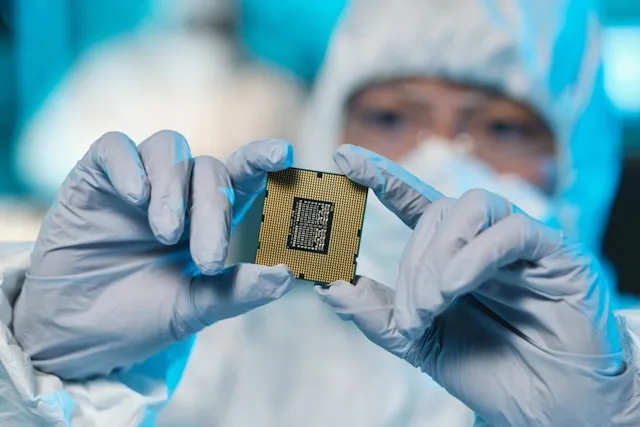
Villach's microelectronics cluster is, in practical terms, a single-anchor system. Infineon Technologies Austria AG operates its Austrian headquarters in the city alongside the only 300mm power semiconductor fabrication facility in Europe. The site employs approximately 4,500 people and produces power discretes and logic ICs targeting automotive electrification and renewable energy infrastructure.
The surrounding ecosystem is real but thin. Lam Research Austria maintains around 180 employees in Villach, focused on equipment service and application engineering. KAI, the applied research centre jointly funded by Infineon and the Austrian Research Promotion Agency, employs roughly 120 researchers specialising in power electronics packaging and reliability testing. SPT Production Technologies, with around 85 employees, builds die bonding and packaging equipment. AT&S, headquartered in Leoben, maintains substantial supplier relationships into the cluster from nearby Styria.
The Silicon Alps Network
The Silicon Alps Cluster coordinates 120 member companies across Carinthia and Styria, with Villach as its geographic centre. It manages the "Power Electronics" flagship initiative under the EU Important Project of Common European Interest (IPCEI) funding framework. This coordination matters because it represents the institutional infrastructure through which EU Chips Act funding flows into the region.
But the cluster's backend operations tell a different story from its front-end strength. High-volume outsourced semiconductor assembly and test (OSAT) capability is concentrated in Asia and Eastern Europe, not in Villach. The cluster excels at wafer fabrication and process development. It does not house the full semiconductor value chain. This matters for talent because it limits the career paths available to professionals who might otherwise consider Villach as a long-term home.
The region's above-average productivity, at €98,000 gross value added per employee versus the Austrian average of €74,000, confirms that the people working here are highly skilled and highly productive. The question is whether there will be enough of them to sustain the next expansion cycle.
Why Capital Has Outrun the Workforce
The analytical spine of this article rests on a single observation that the research data supports but does not state directly: Villach's semiconductor expansion has inverted the normal relationship between investment and output. In most industrial contexts, capital investment creates capacity, which creates output, which creates jobs, which attracts workers. In Villach, the capital has arrived. The demand exists. The cleanroom space is being converted. But the binding constraint on output is now human, not financial. Every additional euro invested in SiC epitaxy equipment yields zero additional wafers until a qualified process engineer is standing in front of it.
This inversion is not temporary. It is embedded in the demography of the region and the physics of the skills required. A senior SiC process integration engineer cannot be trained in a bootcamp. The expertise requires a decade of accumulated knowledge in hot-wall CVD, defect engineering, and MOSFET trench design. The pipeline that produces these individuals runs through doctoral programmes and multi-year apprenticeships inside operating fabs. Shortening that pipeline is not a matter of funding. It is a matter of time that money cannot compress.
Infineon has signalled its intention to convert additional cleanroom space in Villach for SiC epitaxy, contingent upon EU Chips Act funding approval and resolution of grid stability concerns. The company projects a need for 400 to 500 additional technical hires by the end of 2026. Against this, the Carinthian Chamber of Commerce (WKO Kärnten) forecasts a gap of 1,200 qualified engineers and technicians in electronics and mechatronics across the region by 2026. Thirty-five percent of the current technical workforce is aged 50 or over.
The retirement wave alone will remove experienced talent faster than the university system can replace it. Alpen-Adria-Universität Klagenfurt produces roughly 45 electrical engineering graduates annually. Combined with the broader Carinthian university output of approximately 280 relevant STEM graduates per year, the supply meets barely 60% of the 450-person annual demand before accounting for any expansion hiring at all.
The Vacancy Data: 142 Days and Counting
The Villach microelectronics cluster posted 1,847 job vacancies in technical occupations in the twelve months to October 2024, a 23% increase year-over-year. The average time-to-fill for senior engineering roles reached 142 days, compared to 89 days for equivalent positions in Vienna. That 53-day gap is not explained by bureaucratic differences. It reflects a fundamentally different candidate market.
Process Engineering: Seven to Nine Months Open
Senior Process Integration Engineer roles, particularly those requiring SiC epitaxy specialisation, typically remain open for seven to nine months. According to WKO Kärnten's September 2024 survey, 68% of regional electronics employers reported engineering vacancies exceeding six months. This is consistent with the sustained recruitment advertising observed from the anchor fab for "Senior Process Engineer, Wide Bandgap Semiconductors" across multiple platforms since Q2 2024.
Automation Specialists: The Internal Poaching Cycle
The cluster's smaller employers face a specific and damaging pattern. Specialists in Siemens TIA Portal and SECS/GEM fab automation are targeted by the anchor employer at salary premiums of 18 to 25% above collective agreement levels, according to WKO Kärnten's labour market monitoring. According to Der Standard, reporting in August 2024 under the headline "Kampf um Chip-Spezialisten," retention bonuses of €15,000 to €20,000 have reportedly been offered to secure acceptance in such poaching moves. The smaller equipment suppliers and system integrators then face their own replacement searches in an even thinner market.
This internal talent recycling does not create new capacity. It redistributes existing capacity from suppliers to the anchor, weakening the ecosystem's ability to support expansion.
When Searches Fail Entirely
The most instructive example from the research involves a Head of Cleanroom Logistics and AMHS role. The position required expertise in 300mm fab intralogistics and specific knowledge of Daifuku and Muratec automated material handling systems. According to German trade publication Elektroniknetz, reporting in June 2024, the role remained unfilled through an eight-month search window during 2023 and 2024. It was ultimately restructured into two separate positions, one engineering-focused and one operations-focused, with the engineering component partially relocated to a Dresden facility where the candidate pool is deeper.
That restructuring is a signal. When an employer with 4,500 on-site workers and a global brand cannot fill a single specialised role in eight months, the market is not merely tight. It is functionally depleted at certain skill intersections. The implications for any organisation attempting to hire senior technical talent in this region are severe.
The Passive Candidate Problem
The vacancy duration data becomes explicable when viewed against the passive candidate profile of this market. In most professional sectors, a reasonable mix of active and passive candidates means that job advertising captures some proportion of the qualified population. In Villach's semiconductor market, that proportion approaches zero for the most critical roles.
Process Integration Engineers with SiC or GaN specialisation are estimated at 75 to 80% passive, meaning they are not actively searching. These specialists typically hold tenures of ten years or more at Infineon or international competitors, with voluntary turnover of only 3 to 4% annually. Cleanroom automation and AMHS specialists present an even more extreme profile: an estimated 80 to 90% passive market. Public job postings for these roles generate fewer than two qualified applicants per month.
Senior Equipment Engineers with eight or more years of specific Applied Materials or Lam Research tool expertise are rarely active. The mixed market that does exist skews toward early-career professionals with three to five years of experience, often seeking to transition from memory to power semiconductor sectors. These candidates are useful but cannot fill the senior roles that constrain expansion.
The unemployment rate among electronics engineers in Carinthia stands at 1.8%, against 4.8% general unemployment. Average sector tenure is 7.2 years. These figures confirm that strategic hiring for Villach must target passive candidates through direct search rather than job board advertising. Any firm relying on inbound applications in this market is reaching, at best, 10 to 15% of the qualified talent pool. The other 85% must be found, approached, and persuaded individually.
This is the market condition that makes conventional recruitment methods structurally inadequate. It is also the condition that makes the cost of a failed or slow executive search disproportionately high, because every month an engineering leadership role sits empty is a month of delayed SiC production ramp.
Compensation: Competitive Locally, Vulnerable Regionally
Villach's compensation structure is competitive within Austria but structurally exposed to cross-border competition from three directions. Understanding this dynamic is essential for any organisation building an offer to attract external talent.
Specialist and Manager Level
A Senior Process Integration Engineer in wide bandgap semiconductors commands a base salary of €88,000 to €115,000 in Villach, with total compensation reaching €105,000 to €135,000 including bonus and stock options. Senior Equipment Engineers on 300mm tools earn base salaries of €82,000 to €108,000, with total compensation of €98,000 to €128,000. Cleanroom Operations Managers, carrying night shift and weekend responsibility, earn base salaries of €75,000 to €95,000, with shift premiums adding 15 to 20%.
Executive and VP Level
A VP Operations or Plant Manager for a 300mm fab earns total compensation of €220,000 to €300,000, with base salaries of €180,000 to €230,000, bonus of 20 to 30%, and long-term incentives. A VP Technology Development in power semiconductors commands €250,000 to €340,000, with material equity components for external hires from competitors such as STMicroelectronics or Wolfspeed. Directors of Supply Chain and Logistics with cross-border export focus earn €160,000 to €210,000 in total compensation.
The Regional Drain
These figures are not low in absolute terms. But they are materially below what the same professionals can earn within a few hours' drive. Dresden offers 20 to 25% higher base salaries for equivalent process engineering roles, ranging from €110,000 to €140,000. Munich offers a 30 to 35% premium at executive level, with VP total compensation of €300,000 to €400,000. Munich's cost of living is 45% higher than Villach, which partially offsets the gross salary gap, but partially is not fully.
The most acute drain, however, may be toward Switzerland. Power electronics PhDs from the Carinthian University of Applied Sciences frequently relocate to Zurich for graduate roles paying CHF 95,000 to €115,000 equivalent, versus Austrian entry salaries of €48,000 to €52,000. ETH Zurich's pipeline, combined with ABB and Hitachi Energy's power electronics cluster, pulls early-career talent away before it ever enters the Villach ecosystem. The tax-adjusted net difference narrows to 20 to 25%, according to UBS's Prices and Earnings Report, but the negotiation dynamics at the point of offer still favour the Swiss employer.
Villach's retention advantage is cost of living and quality of life. Its retention disadvantage is career trajectory. With limited alternative employers within a 100km radius, professionals who want to change roles often must change cities. Infineon counters this through three-year vesting stock schedules, but golden handcuffs create their own problem: they retain bodies while eroding engagement among professionals who feel geographically trapped.
The Structural Constraints Beyond Talent
The talent gap does not exist in isolation. Three additional constraints compound the hiring challenge and shape the decision calculus for any leader considering Villach as a location for expanded operations or a senior hire.
Energy Costs and Grid Limitations
Austria's industrial electricity prices remain at €0.212 per kWh, excluding taxes and levies, according to E-Control Austria. This is 35% above the EU average and compares to €0.158 in Germany and €0.089 in France. For an energy-intensive semiconductor fab consuming 50 to 100 GWh annually, this cost differential is material to unit economics.
The Villach region faces a specific additional constraint. The 110kV supply to the Infineon site requires reinforcement estimated at €40 million by Netz Kärnten, with permitting timelines extending to 2027. This means further fab expansion faces a physical electricity delivery constraint in addition to the price constraint. The Austrian Renewable Energy Expansion Act (EAG) subsidies have partially offset costs for large consumers, covering 30 to 40% of energy costs, but approval delays for 2024 and 2025 subsidy tranches have created cash-flow uncertainty for expansion planning.
The tension here is unresolved: Austria's energy cost position theoretically disadvantages semiconductor manufacturing, yet Infineon continues to expand energy-intensive SiC production rather than relocating to nuclear-powered France or hydro-powered Scandinavia. The explanation is partly the stickiness of existing infrastructure and the sunk cost of Fab 300. But the economic rationality of this expansion depends on permanent state aid at levels that have not been permanently guaranteed.
Regulatory Risk: PFAS and Export Controls
Two regulatory developments create forward-looking risk. The proposed EU REACH restrictions on per- and polyfluoroalkyl substances (PFAS) threaten the supply chain for fluorinated gases used in semiconductor etching. Villach facilities rely on NF3 and SF6, for which no technically viable alternatives exist at scale. According to SEMI Europe's PFAS Restriction Impact Assessment, a blanket ban would pose an existential risk to local production.
Separately, EU export controls on wide-bandgap semiconductors, implemented in October 2023 under Regulation (EU) 2021/821, have increased compliance costs and documentation delays for shipments to certain Asian manufacturing partners. For a cluster that depends on cross-border supply chains for both inputs and outputs, these compliance layers add friction that compounds the logistics challenges of a landlocked location.
Housing: The Hidden Relocation Barrier
Villach's housing vacancy rate stands at 1.2%, compared to a national average of 4.1%. This single statistic transforms the talent acquisition challenge. Even if a qualified SiC engineer in Dresden or Zurich is open to relocation, the practical question of where they would live becomes a barrier that no signing bonus can fully address. For organisations planning to recruit externally, a relocation support programme that includes housing assistance is not a perk. It is a prerequisite.
What This Means for Senior Hiring Leaders
The convergence of these dynamics creates a market where the conventional search playbook produces predictably poor results. Posting a role on a job board in Villach's semiconductor market reaches, at best, 15% of qualified candidates. The other 85% are passive, employed, and not scanning listings. At the senior level, that figure rises to 90%.
For organisations operating within the Silicon Alps cluster or contemplating investment in Carinthia's semiconductor capabilities, three realities should govern hiring strategy.
First, talent mapping must precede any search. In a market this concentrated, the qualified candidate universe for a given role may number in the low dozens across all of Europe. Knowing who they are, where they work, and what would move them is not a competitive advantage. It is a basic operational requirement.
Second, speed determines outcomes. At 142 days average time-to-fill for senior engineering roles, every week of delay increases the probability that the strongest candidate in a thin pool accepts an alternative offer. Firms with search processes designed to deliver interview-ready candidates within days rather than months operate at a fundamental advantage in this environment.
Third, the offer must address more than compensation. The housing constraint, the career trajectory concern, and the cost-of-living comparison with competitor regions all factor into a candidate's decision. A comprehensive relocation package, a clear progression path, and a credible narrative about the site's strategic importance within the broader organisation are non-negotiable components of any offer that will move a passive senior candidate.
KiTalent's track record in executive search across industrial and manufacturing sectors is directly relevant to the dynamics described here. With a 96% one-year retention rate across 1,450 completed placements and a methodology built around identifying and engaging the passive candidates who never appear on any job board, KiTalent addresses precisely the market condition that makes Villach's talent gap so resistant to conventional methods.
For organisations hiring into Villach's semiconductor cluster, where the candidate pool is measured in dozens rather than hundreds and the cost of a delayed search is measured in quarters of lost production ramp, speak with our executive search team about how we approach this market.
Frequently Asked Questions
What makes Villach's semiconductor talent market different from other European clusters?
Villach is a single-anchor cluster dominated by Infineon Technologies Austria AG, which employs approximately 4,500 people at its site. Unlike Dresden, which has 20,000 semiconductor professionals across multiple employers, Villach's qualified technical candidate pool numbers roughly 2,500 across all of Carinthia. This concentration means fewer alternative employers, longer average tenures, and an extremely high passive candidate ratio. At the senior process engineering level, an estimated 75 to 80% of qualified candidates are not actively searching. Reaching them requires direct headhunting methods rather than job board advertising.
What do senior semiconductor engineers earn in Villach compared to Dresden or Munich?
A Senior Process Integration Engineer in Villach earns total compensation of €105,000 to €135,000. The equivalent role in Dresden commands €130,000 to €165,000, a 20 to 25% premium. Munich executive roles carry a 30 to 35% premium, with VP-level total compensation reaching €300,000 to €400,000 versus Villach's €220,000 to €300,000. However, Munich's cost of living is 45% higher than Villach's, partially offsetting the gross salary gap. The Swiss market presents the widest differential at entry level, where Zurich graduate salaries more than double Austrian equivalents.
How long does it take to fill a senior semiconductor engineering role in Villach?
Average time-to-fill for senior engineering roles in the Villach microelectronics cluster reached 142 days as of late 2024, compared to 89 days for equivalent positions in Vienna. Specialist roles requiring SiC epitaxy expertise typically remain open for seven to nine months. In at least one documented case, a senior AMHS logistics leadership role went unfilled for eight months before being restructured into two positions and partially relocated to Dresden.
Why is housing a barrier to semiconductor recruitment in Villach?
Villach's housing vacancy rate stands at 1.2%, against a national Austrian average of 4.1%. This severely limits the practical ability of external candidates to relocate, even when compensation is competitive. Employers recruiting from outside Carinthia increasingly need to offer structured relocation support including temporary housing assistance. Without this, the relocation friction alone can cause a negotiated offer to collapse at the final stage.
What is the EU Chips Act's impact on Villach semiconductor hiring?
Infineon's planned further expansion in Villach, part of a broader €2 billion investment programme, is contingent upon European Commission approval under the IPCEI framework. If approved, this expansion would require 400 to 500 additional technical hires by end of 2026 in a region already facing a projected deficit of 1,200 qualified engineers and technicians. The EU Chips Act accelerates capital deployment but does not address the labour supply constraint, creating a situation where investment in facilities outpaces the availability of people to operate them.
How can companies access passive semiconductor candidates in Austria's Carinthia region?
With electronics engineer unemployment at 1.8% in Carinthia and average sector tenure at 7.2 years, the vast majority of qualified candidates are employed and not searching. Public job postings for specialised cleanroom automation roles generate fewer than two qualified applicants per month. Effective hiring in this market requires AI-enhanced talent mapping to identify the full candidate universe, direct approach through confidential channels, and a search process calibrated for speed. KiTalent delivers interview-ready candidates within 7 to 10 days through exactly this methodology, reaching the senior professionals who never appear on any job board.